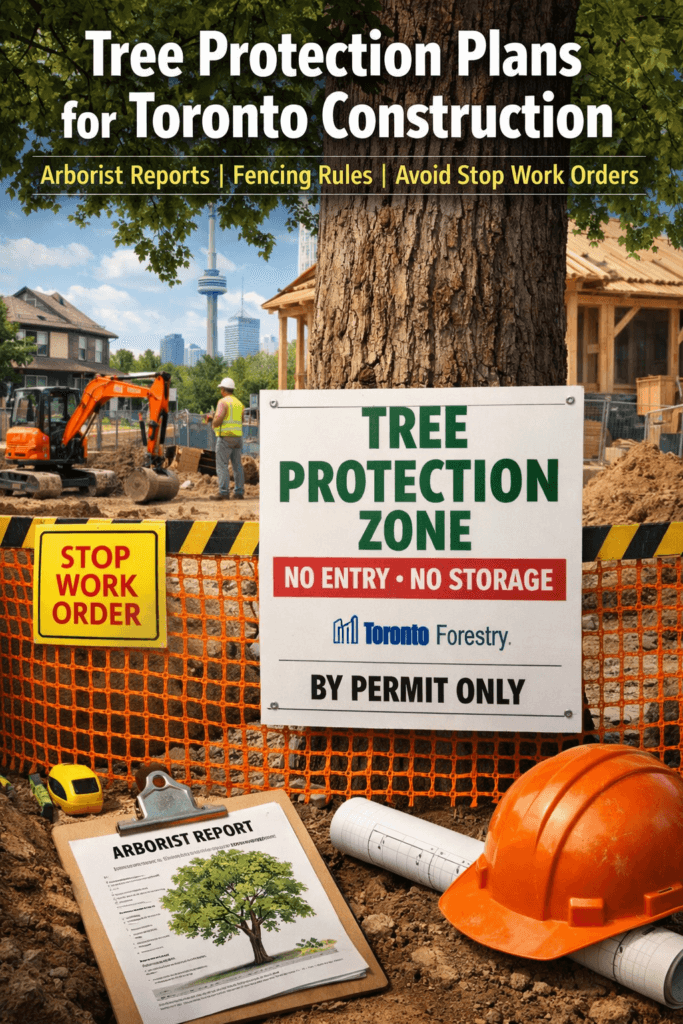
Tree Protection Plans in Toronto: Construction Bylaws, Fencing, and How to Avoid Stop Work Orders
Planning a renovation, addition, driveway, or backyard project in Toronto? Your biggest surprise might not be the price of lumber. It might be a mature maple quietly controlling your entire schedule. Toronto takes tree protection seriously, and if your project impacts roots, trunks, or canopies, you may need documentation and permits before work begins. This guide explains what a tree protection plan Toronto typically includes, when an arborist report Toronto is needed, what “tree protection fencing” actually means on site, and the common mistakes that trigger delays. It is practical, homeowner-friendly, and yes, it includes a little humor because bylaws are not known for their comedy.Why Tree Protection Matters in Toronto (Even If You Love Sunlight)
Toronto’s Urban Forestry team enforces rules designed to protect trees on private property, City streets, and ravine protected areas. The City’s goal is simple: prevent unnecessary injury, preserve canopy, and reduce unsafe work around trees during construction. For homeowners, the goal is also simple: keep your project moving and avoid enforcement action. A tree can be “injured” without being cut down. Root cutting, grade changes, trenching, storing materials on roots, or driving heavy equipment over the root zone can all cause long-term decline. Trees play the long game. They can look fine now, then fail later. That is exactly what the City wants to prevent.Which Toronto Rules Apply to Your Project?
Private property trees
Toronto generally protects many private trees based on size, measured as DBH (diameter at breast height). If you are injuring or removing a protected private tree, you typically need authorization first. This is where homeowners often run into trouble because “I am not removing it” is not the same as “I am not injuring it.”Street trees (City owned)
If a tree is on the City road allowance or boulevard, it may be a street tree even if it feels like it is “part of your front yard.” Street trees are protected, and you cannot remove or injure them without City authorization. If your contractor plans to excavate near a street tree, you want that addressed up front, not after the mini-excavator arrives.Ravine and natural feature areas
If your property is in a ravine protected area, the rules can be stricter and can apply to trees of any size. Activities like removing vegetation, placing fill, or changing grade can require a ravine permit. If you have slopes, wooded lots, or ravine adjacency, treat this as a “check first” situation.What Is a Tree Protection Plan (And Why Builders Keep Talking About It)?
A tree protection plan Toronto is a site-specific document, usually prepared by an arborist, showing: which trees are on or near the work area, which trees are protected, what protection measures will be installed, and how construction will avoid damaging critical root zones. Depending on the project, you might also hear “tree preservation plan,” “tree protection fencing,” or “tree preservation plans and fencing.” In real life, these terms often point to the same outcome: clear site instructions that keep people and equipment away from trees that must remain.What the plan typically includes
- Tree inventory: species (if known), size, condition, and location
- Identification of protected trees (private, street, ravine related)
- Protection measures: fencing layout, signage, and site controls
- Construction notes: where excavation is allowed, where it is not, and how to handle roots if encountered
- Mitigation steps: pruning recommendations, monitoring, and post-construction checks when needed
When You May Need an Arborist Report or Tree Protection Fencing
If your project touches the ground near mature trees, you should assume some level of tree documentation may be required. Common triggers include:- Additions, underpinning, and basement work that impacts roots
- Driveway widening, new hardscapes, patios, decks, and retaining walls
- Pool installs, cabanas, and trenching for utilities
- Fence installations that involve post digging near trees
- Projects close to a street tree, even if work is on “your side”
How to Measure DBH (Quickly) Before You Call Anyone
DBH is measured at 1.4 metres above ground on the trunk. If you want a fast estimate:- Measure 1.4 metres up the trunk from ground level.
- Measure the trunk circumference at that height with a tape.
- Divide circumference by 3.14 to estimate diameter (DBH).
- If the tree has multiple stems, measure the stems individually. If one stem meets the protected threshold, treat it as protected.
The Compliance Game Plan: 7 Steps That Save Time (And Stress)
1) Confirm tree ownership and location
Determine whether trees are private, street, or ravine protected. If boundaries are unclear, get clarity early. Guessing about ownership is how neighbour relationships turn into cold wars.2) Identify which trees are protected
Protection can depend on DBH, location, and bylaw category. If your project needs a building permit, assume tree questions will show up. This is where Toronto tree bylaw compliance starts to matter.3) Bring in a qualified arborist for documentation
The right arborist can assess tree condition, identify risks, and prepare documentation aligned with City expectations. For some projects, the arborist report is the anchor document that everything else depends on.4) Build your project design around tree protection
It is cheaper to adjust a drawing than to rebuild a driveway after you hit major roots. Smart designers route trenches, foundations, and grades away from critical tree areas.5) Submit permits and keep records organized
If a permit is required, apply before work begins. Keep approvals, plans, and site notes accessible. If you ever get an inspection visit, having documents ready makes the conversation shorter and friendlier.6) Install protection fencing before equipment arrives
This is the big one. Tree protection fencing is not a “later” task. It is a “before anything” task. Contractors love efficiency. Trees love stability. Fencing is the compromise.7) Monitor during construction
Even good crews make mistakes when schedules get tight. If your plan requires monitoring or staged sign-off, follow it. A small correction early can prevent a big problem later.Common Mistakes That Trigger Enforcement or Delays
If you want to avoid the “why is my job site suddenly quiet” experience, watch out for these:- Starting excavation before installing tree protection fencing
- Storing soil, bins, or materials inside the protected root zone
- Driving heavy equipment repeatedly over roots
- Changing grade around the base of the tree without guidance
- Cutting roots, then backfilling like nothing happened
- Over-pruning for clearance, then calling it “maintenance”
- Assuming a tree near the sidewalk is “yours” without checking
What Homeowners Should Ask a Contractor Before Work Starts
You do not need to be an arborist to ask smart questions. Use this checklist:- Which trees are protected and which bylaw applies?
- Where is the fencing going, and when will it be installed?
- What is the plan if roots are encountered during excavation?
- Where will materials be stored to avoid tree root zones?
- Who is responsible for keeping the tree protection barriers intact?
- Do we need permits or approvals before demolition or digging?
How Toronto Tree Services Helps (Without Making It Complicated)
If you want to do this properly without drowning in paperwork, we connect homeowners with qualified pros who handle permits, documentation, and safe on-site practices. If you need a plan for construction, your best starting point is often an assessment and documentation. Related services on TorontoTreeServices.ca: The big win is predictability. When trees are handled correctly, you reduce risk, avoid delays, and keep your build on track. That is good for your budget and your blood pressure.Outbound Authority Links (Official and Useful)
If you like reading the source material (or you need it for your builder), here are reliable references:- City of Toronto: Tree and Ravine Protection
- City of Toronto: How to Apply for a Tree or Ravine Permit
- City of Toronto: When to Apply for a Tree or Ravine Permit
- Tree Protection Policy and Specifications for Construction Near Trees (PDF)
- Guidelines for Completing an Arborist Report (PDF)
- Toronto Municipal Code: Chapter 813 (Trees) (PDF)
- Toronto Municipal Code: Chapter 658 (Ravine and Natural Feature Protection) (PDF)