Tree Protection Plans in Toronto: How Toronto Tree Rules Affect Construction Projects
A useful way to approach tree protection plans in Toronto is to start with property conditions, safety concerns and any local rules that apply. Planning a renovation, addition, driveway, pool, deck, garage, or backyard project in Toronto? The biggest surprise may not be the price of materials. It may be the mature tree sitting quietly beside your work area. If your project could affect roots, trunks, branches, a City street tree, or a ravine-regulated area, you may need City authorization and supporting documents before work begins.
For the construction-stage details, see the guide to protecting trees during construction in Toronto.
This guide explains how Toronto tree bylaw rules can affect construction projects, when an arborist report Toronto request may come up, what homeowners should check before excavation, and the common mistakes that cause permit delays or enforcement problems. It is written for property owners who want practical answers before a contractor, designer, or machine shows up on site.
Why Toronto Tree Rules Matter During Construction
Toronto’s Urban Forestry rules are designed to reduce unauthorized tree injury and removal on private property, City streets, and ravine-regulated land. For homeowners, the goal is more practical: understand the rules early so your project does not stall after drawings, deposits, contractor bookings, or permit planning are already underway.
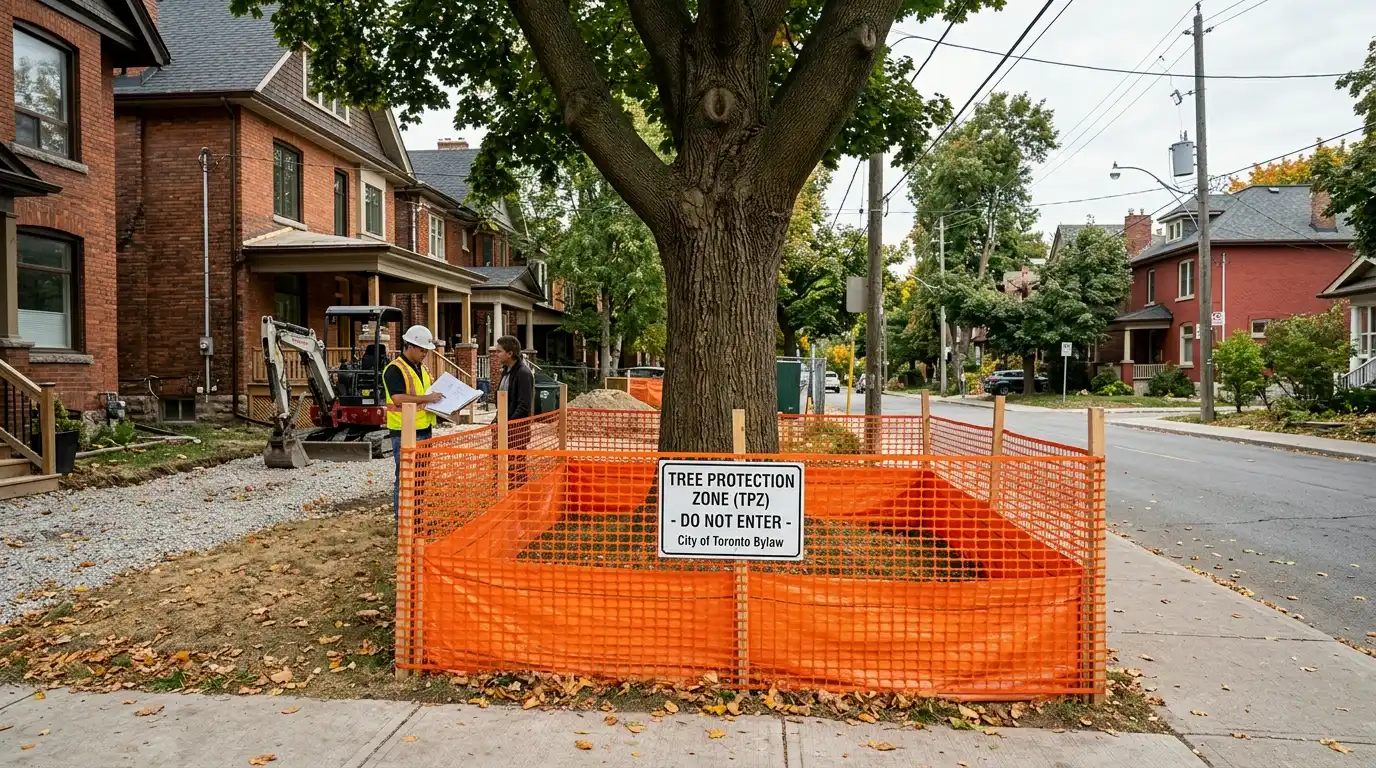
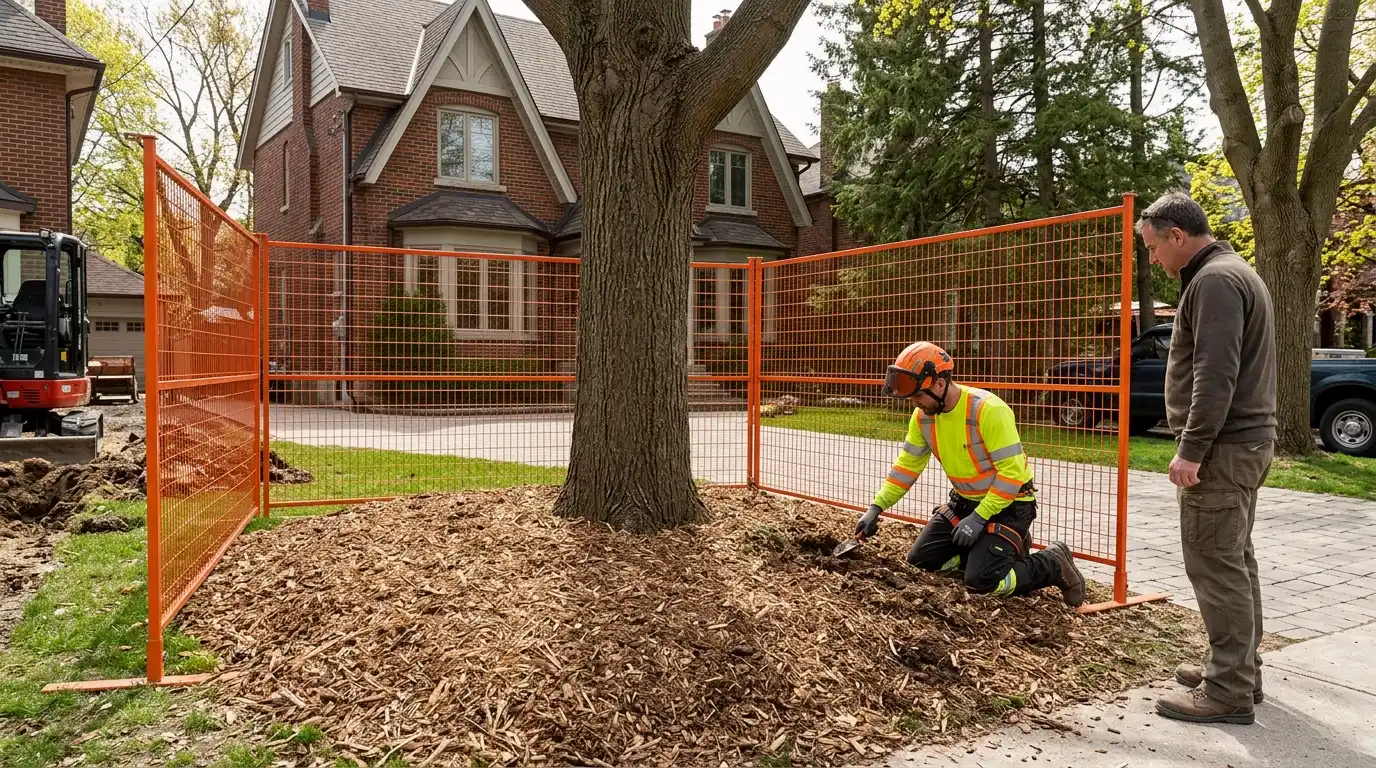
A tree can be injured even when it is not cut down. Root cutting, grade changes, trenching, material storage, heavy equipment movement, and careless excavation can all damage a tree. In many cases, the damage is not obvious right away. A tree can look fine during construction and decline later, which is one reason the City treats construction-related tree impacts seriously.
Which Toronto Rules May Apply to Your Project?
Private property trees
Toronto protects private trees that are 30 cm or more in diameter, measured at 1.4 metres above ground. If your project may injure or remove a protected private tree, you generally need City authorization first. This is where homeowners often run into trouble because “the project is not removing it” is not the same as “the project is not affecting it.”
Street trees owned by the City
If a tree is on the City road allowance or boulevard, it may be a City-owned street tree even if it feels like it belongs to the front yard. City street trees are protected regardless of size. If your contractor plans to dig, trench, widen a driveway, install utilities, or work close to a street tree, that should be reviewed before work starts.
Ravine and natural feature areas
If your property is in or near a ravine or natural feature protected area, the rules can be stricter. The City’s ravine rules can apply to trees and vegetation of any size, and activities such as removing vegetation, placing fill, changing grade, or altering drainage may require a ravine permit. If your lot has slopes, wooded areas, valley land, or ravine adjacency, treat it as a check-first situation.
Construction Work That Can Trigger Tree Bylaw Concerns
Tree issues often appear during the building permit, demolition, renovation, or landscaping stage. The closer the work is to a regulated tree, the more likely it is that the City, a designer, a contractor, or a qualified arborist will raise questions.
Common triggers include:
- Additions, underpinning, and basement work near mature trees
- Driveway widening, resurfacing, new parking pads, and walkway changes
- Patios, retaining walls, decks, pools, cabanas, and detached structures
- Utility trenching, drainage work, and service upgrades
- Fence posts, grading changes, or excavation near trunks and roots
- Projects near a City street tree, even if the work is mainly on private property
- Any work in or near a ravine-regulated area
If your project touches the ground near a mature tree, it is safer to check the requirements early instead of assuming the tree is outside the scope of the work.
When an Arborist Report May Be Needed
An arborist report Toronto may be requested when a project involves a protected private tree, a City tree, or tree-related concerns tied to construction. The report may document tree species, size, condition, location, proposed work, expected impacts, and recommendations that relate to the City’s review.
For official requirements, review the City’s tree and ravine permit application instructions before starting the process.
How to Measure DBH Before You Ask for Help
DBH means diameter at breast height. In Toronto, it is commonly measured at 1.4 metres above ground on the trunk. If you want a quick estimate before speaking with anyone:
- Measure 1.4 metres up the trunk from ground level.
- Measure the trunk circumference at that height with a tape.
- Divide the circumference by 3.14 to estimate the diameter.
- If the tree has multiple stems, note each stem and ask for proper guidance before assuming the tree is exempt.
This is not a substitute for a qualified arborist assessment, but it helps you understand whether the tree may be close to Toronto’s protected private tree threshold.
The Compliance Game Plan: 7 Steps That Save Time
1) Confirm tree ownership and location
Determine whether nearby trees are private trees, City street trees, boundary trees, or trees in a ravine-regulated area. If property lines are unclear, get clarity early. Guessing about ownership can create project delays and neighbour disputes.
2) Identify which trees may be regulated
Tree rules depend on size, location, ownership, and bylaw category. If your project needs a building permit, demolition permit, driveway permit, or substantial grading, assume tree questions may come up during review.
3) Speak with a qualified arborist where needed
A qualified arborist may assess tree condition, identify potential bylaw concerns, and discuss documentation requirements with the property owner. For some projects, the arborist report becomes one of the key documents used to support the permit process.
4) Adjust the design before construction starts
It is usually easier to revise a drawing than to fix a conflict after excavation begins. Designers and contractors may need to route trenches, hardscaping, foundations, and grade changes away from sensitive tree areas.
5) Submit permit materials before work begins
If City authorization is required, do not start work first and try to fix it later. Keep applications, drawings, reports, emails, approvals, and City reference numbers organized. Clear records make inspections and follow-up conversations easier.
6) Keep work areas controlled
Before machinery, bins, soil piles, or construction materials arrive, confirm where they can safely go. Many tree-related problems happen because the contractor needs quick storage space and the tree area becomes the easiest target.
7) Monitor the site during construction
Even careful contractors can make mistakes when schedules get tight. If the City, a qualified arborist, or approved documents require specific site controls, make sure everyone on site understands them before work begins.
Common Mistakes That Trigger Enforcement or Delays
If you want to avoid a quiet job site and a frustrated contractor, watch for these common mistakes:
- Starting excavation before confirming whether trees are regulated
- Storing soil, bins, pavers, lumber, or equipment close to major roots
- Driving heavy equipment repeatedly around mature trees
- Changing grade around the base of a tree without proper review
- Cutting roots and backfilling as if nothing happened
- Over-pruning for construction clearance and calling it routine maintenance
- Assuming a tree near the sidewalk is privately owned without checking
- Beginning demolition, digging, or hardscaping before City requirements are clear
Most of these issues happen because they are convenient in the moment. Unfortunately, convenience does not protect a project from bylaw enforcement, delay, or extra costs.
What Homeowners Should Ask Before Work Starts
You do not need to be an arborist to ask useful questions. Before construction begins, ask your designer, builder, landscaper, or qualified arborist:
- Which nearby trees may be regulated by Toronto bylaws?
- Are any trees City-owned street trees or boundary trees?
- Is the property in or near a ravine-regulated area?
- Will excavation, grading, or trenching occur near major roots?
- Where will soil, bins, equipment, and materials be stored?
- Is City authorization needed before demolition, digging, or construction?
- Who is responsible for communicating with the City if questions come up?
If a contractor dismisses all tree questions without checking the site, that is useful information. A careful contractor should be willing to pause long enough to confirm whether the work could affect a regulated tree.
Planning the Next Step
Related Services and Pages
- Arborist Report Requests
- Tree Pruning Requests
- Tree Removal Requests
- Stump Grinding Requests
- Urgent Tree Requests
- Service Area: Toronto
The main benefit of dealing with tree questions early is predictability. When tree bylaw issues are reviewed before work begins, you reduce the chance of avoidable delays, surprise documentation requests, and costly changes after contractors are already scheduled.
Official Toronto Resources
If you want to check the source material or share it with your builder, these City resources are useful starting points:
- City of Toronto: Tree and Ravine Protection
- City of Toronto: How to Apply for a Tree or Ravine Permit
- City of Toronto: When to Apply for a Tree or Ravine Permit
- City of Toronto: Construction Near Trees Specifications (PDF)
- City of Toronto: Arborist Report Guidelines (PDF)
- Toronto Municipal Code: Chapter 813, Trees (PDF)
- Toronto Municipal Code: Chapter 658, Ravine and Natural Feature Protection (PDF)
Frequently Asked Questions
Do I always need tree-related documents for a renovation?
Not always. However, if your work involves excavation, grade changes, demolition, utility trenching, or building close to mature trees, City tree documentation may be requested. If permits are involved, tree questions are more likely to come up.
Is an arborist report always required?
No. It depends on the tree, location, ownership, proposed work, and City requirements. A qualified arborist may discuss whether a report appears necessary for your situation.
What if my contractor says tree bylaw rules do not matter?
Do not rely on a casual answer if protected trees, City street trees, or ravine areas may be involved. Confirm requirements directly with the City of Toronto or with a qualified arborist before work begins.
Can I prune branches for construction clearance without approvals?
Good-practice pruning of a private tree does not normally require a Toronto private-tree permit, but pruning that injures a protected tree can create compliance issues. Work on a City-owned tree requires City authorization, so confirm ownership before cutting.
How do I know if a tree near the sidewalk is a City street tree?
Many front yard trees are located within the City road allowance. Confirm ownership before doing any work near the trunk, canopy, or roots. City street trees are protected and usually require City authorization for injury or removal.
What is the fastest way to avoid project delays?
Start early. Identify nearby trees, confirm ownership, measure DBH where appropriate, check whether the property is near a ravine-regulated area, and gather City-required documentation before work begins.
Can reviewing tree rules help even if I am not applying for a permit?
Yes. Even when a permit is not required, understanding tree-related site risks can help avoid root damage, neighbour issues, and future tree decline. It is much easier to plan around a tree before construction starts than to fix damage afterward.