To remove a regulated tree in Toronto, you need a permit from the City's Urban Forestry department. Under Chapter 813 of the Toronto Municipal Code, any tree with a trunk measuring 30cm or more in diameter at 1.4m above the ground is protected on private property. You apply online through toronto.ca, you need a letter from an ISA certified arborist, and the City has up to 30 business days to review your complete application. Here's exactly how each step works so you're not caught off guard.
Toronto Tree Removal Permit: Key Numbers at a Glance
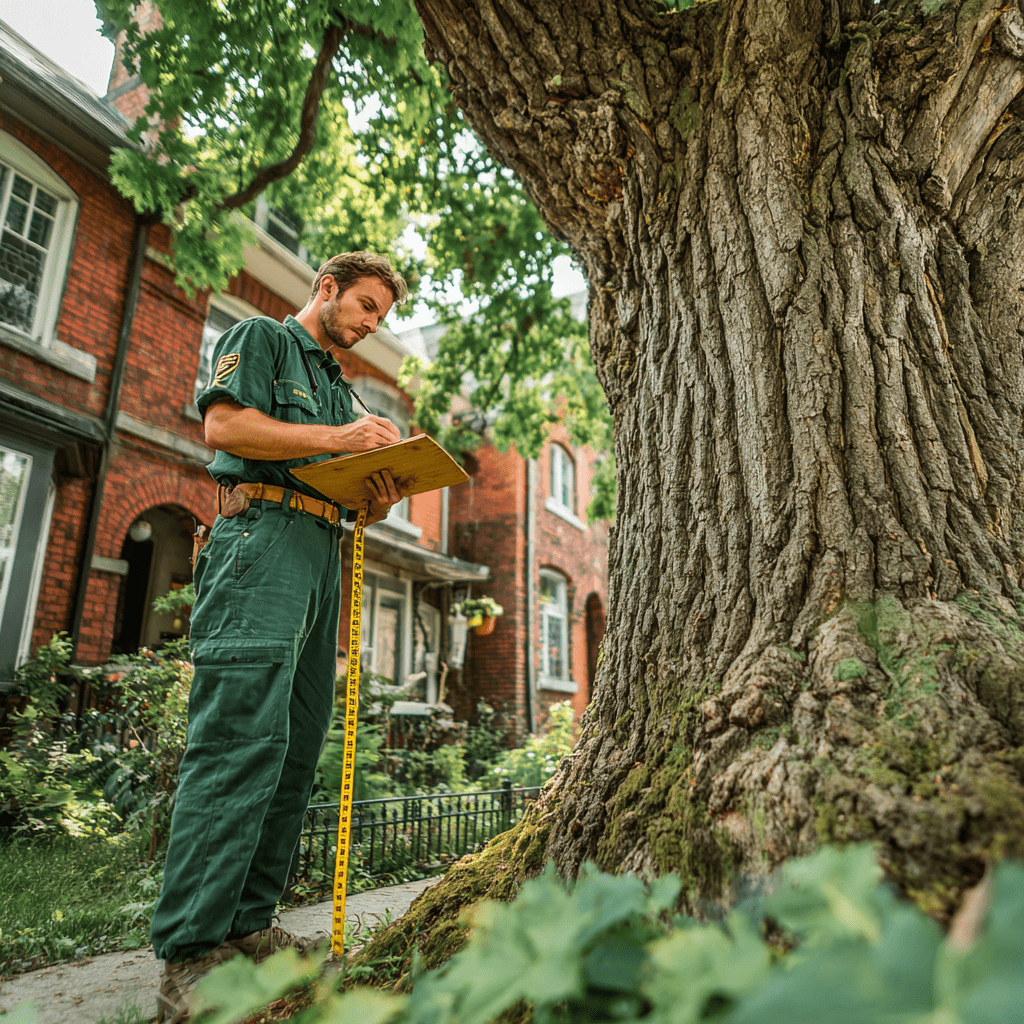
The first thing to figure out is whether Chapter 813 applies to your tree at all. The bylaw protects trees on private property that measure 30cm or more in diameter at breast height (DBH). DBH means the trunk diameter measured at exactly 1.4m above the ground, on the uphill side of the tree if the ground slopes.
If your tree's trunk is under 30cm at that point, you don't need a permit to remove it on private property. Many people are surprised at how wide a tree needs to be to hit that mark. A trunk that's roughly the diameter of a dinner plate is close. Most mature maples, oaks, elms, silver birches and larger spruces in established Toronto neighbourhoods like Leaside, Rosedale, the Annex, Forest Hill and Lawrence Park will be over 30cm.
Multi-stem trees are measured differently. If the tree splits into multiple trunks below 1.4m, each stem is measured individually. If any single stem measures 30cm or more, or if the combined diameter of all stems at the base is 30cm or more, the tree is regulated.
Chapter 813 covers trees on private property. If the tree is growing on City property, including the boulevard, a park or a City-owned lot, it falls under a completely different process. You can't remove a City tree yourself under any circumstances. If you're concerned about a street tree near your property, call 311 and Toronto Urban Forestry will assess it. The City decides what happens to City trees, not the homeowner.
If your property backs onto a ravine, valley corridor or land owned by the Toronto and Region Conservation Authority, your tree work may require TRCA approval in addition to a City permit. This applies to many properties along the Don Valley, Humber River corridor and other ravine networks running through North York, Etobicoke and Scarborough. When in doubt, your arborist can confirm whether TRCA jurisdiction applies to your specific lot before you apply.
Before you touch the application, get an ISA certified arborist to assess the tree. This is not optional. The City requires a letter of opinion or arborist report from a qualified professional as part of your permit application, and without it your application is incomplete before it even starts.
The arborist's report needs to include the tree's species, its DBH measurement, its condition rating (health and structural integrity), the reason you're requesting removal, and a recommendation. If the tree is damaging your foundation, lifting your driveway or creating a documented hazard, the arborist captures all of that in the report. A well-written arborist letter makes the difference between a smooth application and one that comes back with follow-up questions.
You can find ISA certified arborists through the International Society of Arboriculture. Certification confirms the arborist has passed a standardized exam and meets ongoing continuing education requirements. Toronto Urban Forestry reviewers are familiar with ISA standards and expect reports to reflect them.
Related Services
A complete application has several components. Missing any of them restarts the 30-business-day clock, so it's worth getting everything together before you submit.
You'll need the arborist's letter or report, a site plan or sketch showing where the tree sits on your property relative to the house, driveway and lot lines, the tree's species and DBH, and a clear written reason for the removal request. If the tree is dead, diseased, structurally compromised or causing property damage, your arborist documents all of that. If you're planning construction or a renovation that conflicts with the tree's critical root zone, you'll also need a Tree Preservation Plan, which is a separate document your arborist prepares.
You don't need professional survey drawings for most residential applications. A hand-drawn sketch that clearly shows the tree's location on your lot is generally acceptable. Your arborist can advise on the level of detail needed for your specific situation.
Toronto accepts private tree permit applications online through toronto.ca. Search "private tree permit application" to find the portal. You'll create an account if you don't have one, fill in the property address and owner details, upload your documents, and pay the application fee. The current fee is published on the toronto.ca fee schedule and is assessed per tree, so check that page for the most current amount before you submit.
Once your application is submitted, the City reviews it for completeness. If anything is missing, they'll contact you to supply it. The 30-business-day review period begins only once the City confirms your application is complete, not from the date you submitted it. Keep a copy of everything you submitted and note the date your application was confirmed complete.
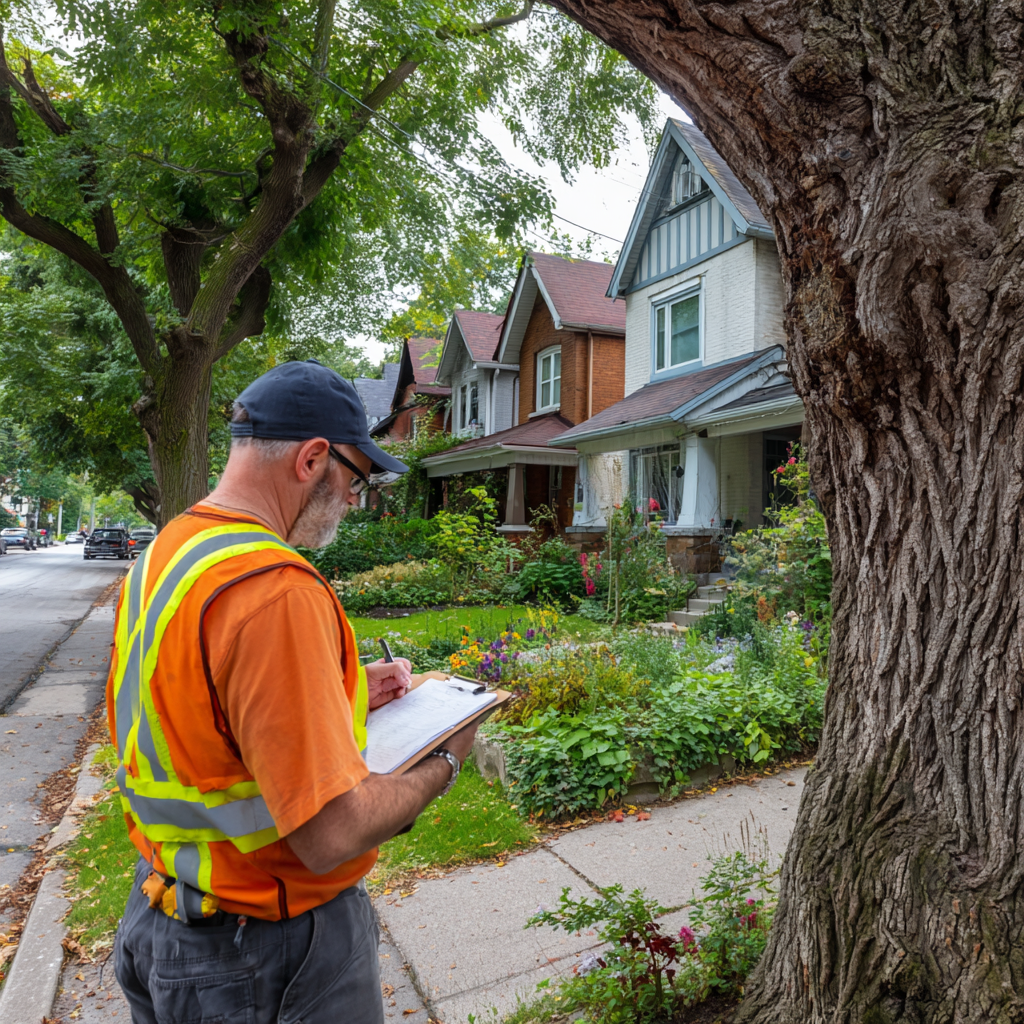
Toronto Urban Forestry reviewers weigh several factors. They're looking at the tree's condition and whether removal is genuinely necessary, the reason you've given for removal, and whether the tree can be retained with alternative measures like pruning or structural support. They also consider the tree's size and species value to the overall canopy.
Toronto has a target to achieve 40% tree canopy cover across the city. That goal shapes how reviewers think about removal applications. A healthy, large-canopy tree in a neighbourhood with low canopy cover will face more scrutiny than a declining silver maple in an area with abundant tree cover. Strong arborist documentation is your best tool for demonstrating that removal is the right call.
If the City denies your application, you have the right to appeal to the Conservation Review Board. Most homeowners never need that step. A thorough application with solid arborist documentation gets approved in the vast majority of cases where there's a genuine justification.
Our ISA certified arborist handles the full process: site assessment, arborist report, application preparation and coordination with Toronto Urban Forestry. We serve all Toronto neighbourhoods including the Annex, Leaside, Forest Hill, Rosedale, Etobicoke, Scarborough, North York, East York, High Park and the Beaches.
When the City approves a private tree removal permit, it typically comes with a condition requiring you to plant one or more replacement trees. The standard requirement is one replacement tree for every tree removed, though the City may require more depending on the size and species value of the removed tree.
Replacement trees must meet minimum size standards set by the City, currently a 60mm caliper or larger for deciduous trees. They need to be planted on your property, or on City property with Urban Forestry's approval. The City maintains a list of approved species. Trees like the Norway maple are not on that list because they're invasive. Native species like red oak, sugar maple, silver maple and eastern white cedar are generally preferred.
If you genuinely don't have space on your property for a replacement tree, the City may accept a cash payment into the tree canopy fund in lieu of planting. Your arborist can advise on whether that route is likely to be acceptable in your specific situation.
One of the most common misconceptions is that dead trees don't require a permit. They do. Chapter 813 doesn't make an exception for dead trees. If the dead tree's trunk measures 30cm DBH or more, you need a permit before removing it.
The good news is that a dead or hazardous tree application is often processed more efficiently than a routine removal request, provided the arborist's documentation is thorough. Your arborist describes the hazard conditions clearly, including evidence of decay, structural failure, root damage or pest damage, and the City uses that to assess urgency.
Emergency situations: If a tree has already fallen, is actively blocking access or poses immediate danger to life, call 311 for City trees or contact an emergency tree service for trees on private property. You can remove the immediate hazard to make the situation safe, but you should still document everything and follow up with the permit process for any remaining tree structure. Contact Toronto Urban Forestry as soon as possible afterward to advise them of what occurred.
The most frequent issue is an incomplete application. Missing the arborist report, leaving the site sketch out, or failing to describe the removal reason clearly all cause the City to issue an incompleteness notice, which pauses the review clock and adds weeks to the timeline.
Trying to file without a professional arborist report is the single biggest mistake. Some homeowners try to describe the situation themselves without any professional assessment. The City needs an ISA certified arborist's professional opinion. A self-written description of why you want the tree gone is not a substitute for that.
Another common issue is applying for a street tree through the private tree permit system. If the tree is on the boulevard, it's a City tree and needs to go through a completely different process via 311. Submitting through the wrong channel costs you time.
Finally, don't assume approval and schedule your tree contractor before the permit arrives. Removing the tree before the permit is issued, even if you're confident it'll be approved, is a bylaw violation. The $100,000 fine applies regardless of whether you thought you'd get the permit. Wait for the paper.
Here's the realistic timeline from start to removal day:
Arborist assessment and report preparation typically takes three to seven business days once you've booked the site visit. Gathering the remaining documents and submitting your application takes another day or two. The City then confirms completeness, which can take a few business days. From confirmed completeness, the review is up to 30 business days, which is roughly six to seven calendar weeks. Add scheduling time for the tree contractor afterward, and you're often looking at two to three months from first contact with your arborist to removal day.
Start early. If you're planning construction or a landscape project, build the permit timeline into your project schedule well in advance. Contractors who offer to skip the permit and "take care of it" are putting you at serious legal and financial risk. The fine alone can exceed the value of most residential tree projects many times over.
More Guides
Do I need a permit to remove a tree on my own property in Toronto?
Yes, if the tree's trunk measures 30cm or more in diameter at 1.4m above the ground. Under Chapter 813 of the Toronto Municipal Code, any tree meeting that threshold on private property is a regulated tree and requires a City permit before removal. Trees below 30cm DBH on private property do not require a permit.
How long does a tree removal permit take in Toronto?
The City of Toronto has up to 30 business days to review a complete permit application. That works out to roughly six to seven calendar weeks. The clock starts only once the City confirms your application is complete, so missing documents add time. Hazardous tree applications with thorough documentation are sometimes processed faster.
Do I need a permit to remove a dead tree in Toronto?
Yes. Chapter 813 does not exempt dead trees from permit requirements. If a dead tree measures 30cm DBH or more, you still need a permit before removing it. Your arborist documents the tree's condition as part of the application, which can support a faster review, but the permit is still required.
What happens if I remove a tree without a permit in Toronto?
Removing a regulated tree without a permit in Toronto can result in a fine of up to $100,000 per tree. The City may also require you to plant replacement trees at your own expense. Toronto Urban Forestry investigates complaints and can issue orders even after the fact.
Can I get a permit for a tree that is damaging my foundation or house?
Yes. Root damage to structures and foundations is a recognized basis for a removal permit application in Toronto. Your arborist documents the damage, the tree's species and condition, and explains why removal is necessary. The City weighs this against the tree's value to the canopy. Strong documentation significantly improves approval odds.
We handle the arborist report, site documentation and application preparation for Toronto homeowners across the city. Whether you're in the Beaches, Leslieville, Swansea, Don Mills, Willowdale or anywhere else in Toronto, our ISA certified arborist comes to you.