Pinned trunk or limb
Wood trapped under its own weight can store tension and compression. Cutting the wrong point can cause sudden rolling, splitting or spring-back.
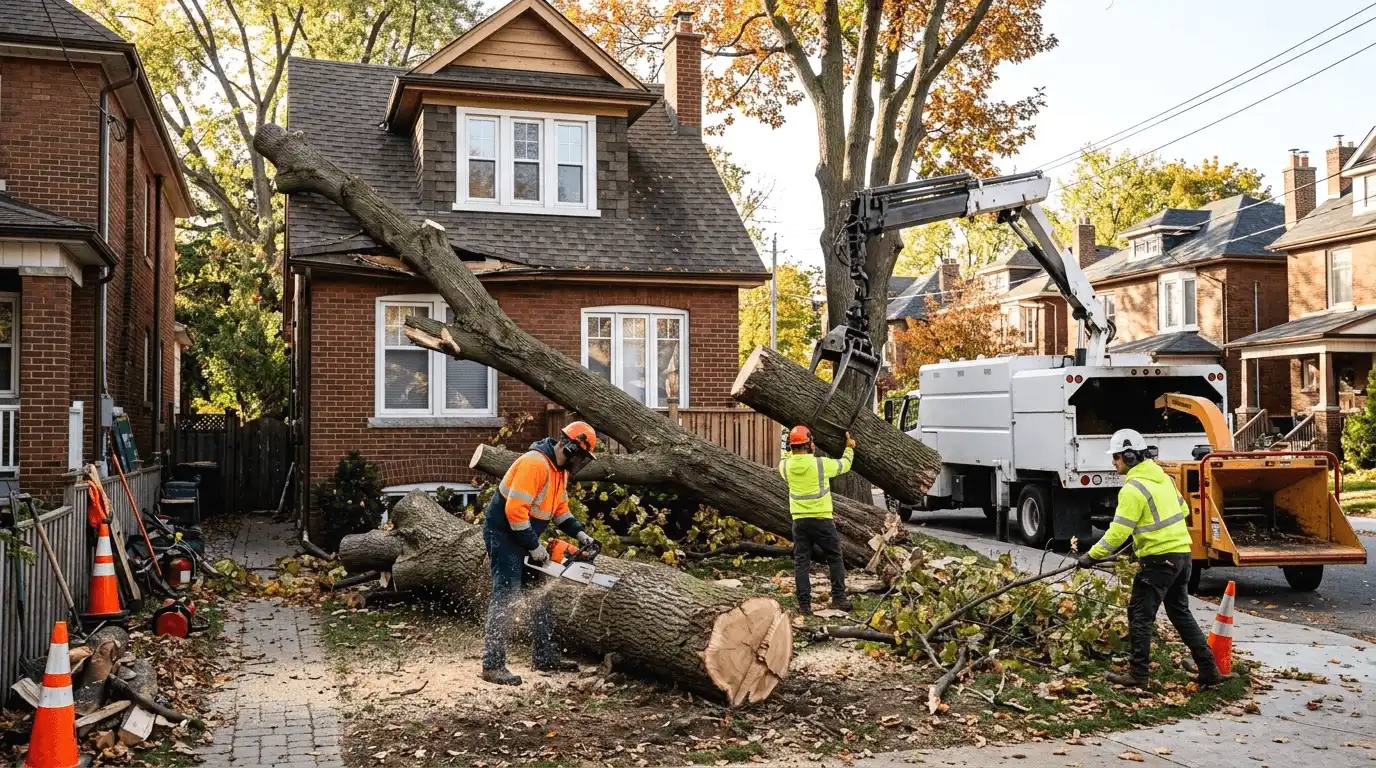
Fallen tree removal in Toronto is a controlled cleanup problem after the failure has already happened.
Wood trapped under its own weight can store tension and compression. Cutting the wrong point can cause sudden rolling, splitting or spring-back.
A broken limb caught in another canopy is not safely “down.” Its support can reshape as surrounding branches move or are cut.
An uprooted tree can leave a heavy root plate partly connected to the trunk. As weight is removed, the plate may shift or settle.
Fallen-tree work is about releasing loads, protecting the site and deciding what remains after debris leaves.
Ground, roof, fence, vehicle, another tree and utility hardware each create a different removal sequence.
A driveway, walkway or road may need a safe limited opening before full debris processing can begin.
Stable ground, street access and room for chippers or lifting equipment affect how quickly large material can be handled.
Logs, firewood-size sections, mulch and root material should be discussed before cleanup starts so everyone understands what will be removed or left on site.
The stump, root plate or damaged companion tree may need a second decision after the immediate obstruction is removed.
Removing what has fallen does not automatically answer whether the remaining tree, adjacent trees or damaged structure is safe.

A partly failed tree may have new imbalance, torn attachments or exposed decay that deserves inspection.
Roofs, fences and vehicles should be documented before debris is moved when insurance or repair questions may follow.
Once the obstruction is gone, stump handling and landscape restoration can be scoped separately instead of being mixed into emergency cleanup.
If fallen wood is on, near or potentially energizing utility equipment, keep clear and contact the utility or emergency service as appropriate. Tree cleanup does not begin until the electrical hazard is controlled.

Photograph the whole failure, the base, the point where the tree or branch is supported, and any damaged property. These images can help both work planning and your own record of the event.
Once a tree is on the ground, it can look deceptively simple. In reality, trunks may bridge between supports, limbs can be trapped under load, roots may still be attached, and sections can roll or spring when a cut releases tension. Toronto cleanup scopes should describe what the wood is resting on and what must stay protected before anyone assumes the job is ordinary debris removal.

Photographs from a safe distance should show where the trunk touches the ground, building, fence, vehicle or another tree. Those supports help explain which sections may still be carrying load.
A crown failure can leave broken branches hung in adjacent trees or damaged limbs attached overhead. The cleanup area needs to be assessed vertically, not only at the pile of wood on the ground.
A fallen tree across a driveway or lane can create pressure to start cutting immediately. The safer scope identifies the controlled active work area and the access path for people, equipment and debris first.
An exposed root plate can shift as trunk weight is removed, and the root mass may settle back or move unpredictably. The plan should consider the root plate as part of the loaded system.
A single scaffold limb can be heavier than it appears and may be pinned against a roof, deck or lower branches. Sectioning and lowering need to account for the supported object as well as the limb itself.
Multiple broken crowns can overlap and hide unstable branches. The tree care professional needs to see the whole affected area instead of receiving details about only the most obvious branch.
No. Sections can remain suspended, twisted, pinned or attached to an uprooted root plate. Stored force can release when the wood is cut or moved.
Yes, but specify what needs to be chipped, removed, cut to firewood length or left. Large wood volume can materially change the cleanup scope.
Document the situation and clarify ownership, access and permission before the service visit crosses property lines. Insurance or legal questions are separate from the physical tree assessment.
It can be, but stump grinding is usually a separate restoration decision. Immediate hazard cleanup may be completed first.
Describe what failed, what the wood is resting on, what access is blocked and whether structures, vehicles or fences are involved. Send photos only from a safe position.