Tree Services in North York
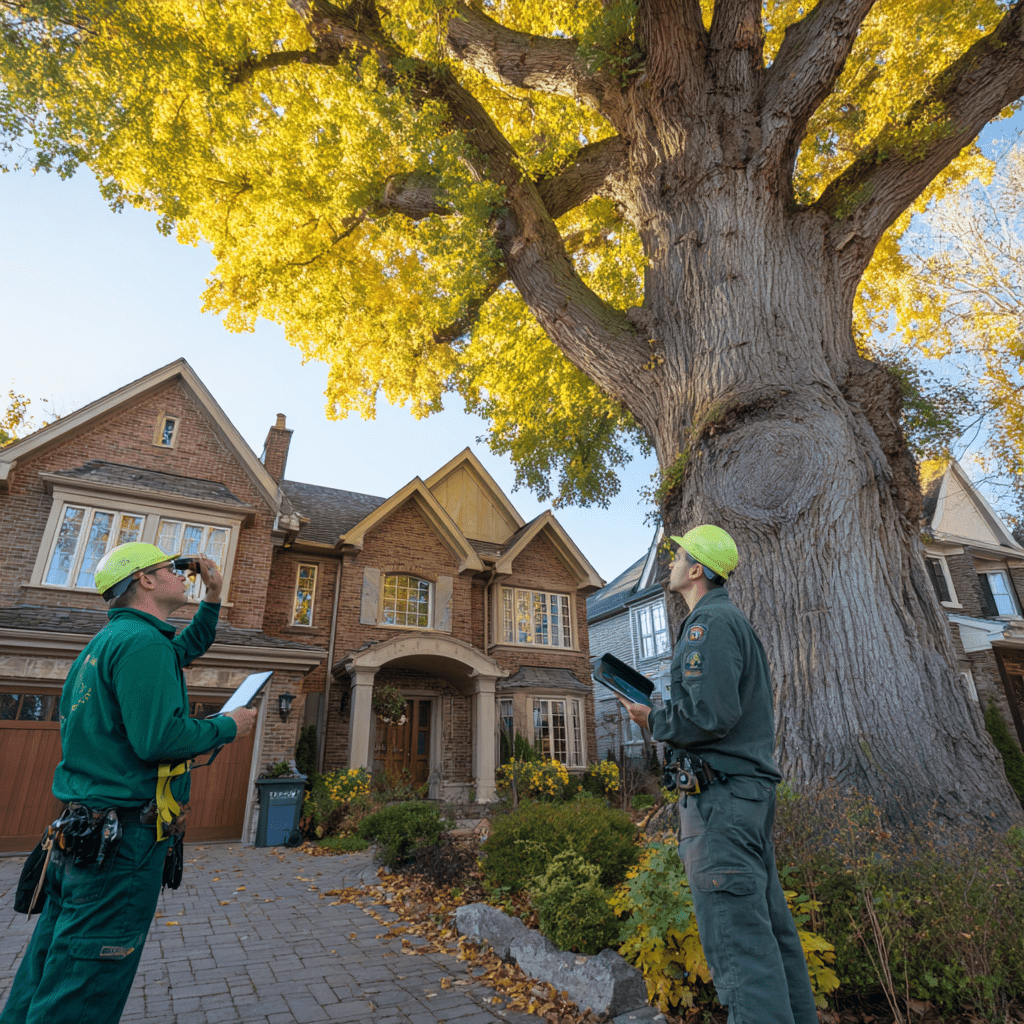
North York is one of the most heavily treed districts in the Toronto region. The lots are larger than much of the old city, the trees are older and bigger, and the ravine system running through the district is one of the most extensive in all of Toronto. The West Don River, the East Don River, German Mills Creek, Black Creek, Pomona Mills Creek and Hogg's Hollow together form a network of protected natural corridors that cuts directly through or borders dozens of North York residential properties from Lawrence Avenue in the south to Steeles Avenue at the northern boundary. Working with trees in North York means working within a regulatory framework that is more complex than most homeowners realize, and doing it well requires an experienced certified arborist who understands how Toronto's Chapter 813 bylaw and the TRCA's jurisdiction interact on a property-by-property basis.
Our team provides full tree services across North York. We handle tree removal, structural pruning, stump grinding, certified arborist reports, emergency response, tree preservation plans for construction projects, and cedar hedge trimming. All work is performed by ISA certified arborists and fully insured crews. We serve the full width of the district from Bathurst Street in the west to Victoria Park Avenue in the east, including Willowdale, Bayview Village, York Mills, Bridle Path, Don Mills, Lawrence Park North, Newtonbrook, St. Andrew-Windfields, Hogg's Hollow, Don Valley Village, Henry Farm and Parkwoods-Donalda.
North York's Tree Canopy and Ravine System
North York contains some of the most significant private tree specimens in Toronto. The Bridle Path and St. Andrew-Windfields neighbourhoods in particular carry estate lots where individual trees can exceed a metre in trunk diameter, with canopies spreading over areas that would contain two or three standard city lots. York Mills and Hogg's Hollow properties along the West Don River valley are among the most ecologically complex residential properties in the city, with ravine-edge topography, slope instability considerations, and TRCA regulated buffers all layering on top of the standard Chapter 813 permit requirements.
Don Mills, built in 1953 as Canada's first master-planned suburb, has a unique character of planned green space corridors and mid-century institutional tree plantings that are now reaching maturity. Many of the original trees planted as part of Don Mills' master plan are approaching 70 years of age and require active management. The area around Edwards Gardens at Lawrence Avenue and Leslie Street sits at the confluence of the East Don tributary and the main Don valley, and properties nearby carry significant ecological sensitivity on top of their standard residential tree bylaw requirements.
Toronto Private Tree Bylaw: Chapter 813 in North York
All private property tree work in North York is governed by Toronto Municipal Code Chapter 813. Applications for tree removal or injury permits in North York are processed by the North York TPPR District Office, located at 18 Dyas Road. The key facts every North York property owner needs to understand are listed below.
Chapter 813 Key Facts for North York Property Owners
- Any tree with a trunk 30 cm or greater in diameter at breast height (1.4 m above ground) is protected
- A permit is required before a protected tree can be removed or significantly injured
- Applications must include a certified arborist report and a replanting plan
- Permit fee: $137.50 per tree for non-construction applications (2024)
- Construction-related permit fee: $370 per tree (2024)
- Cash-in-lieu of replanting where planting space is insufficient: $585 per replacement tree
- Replacement trees planted under permit are themselves protected from the day of planting
- Dead, terminally diseased or imminently hazardous trees may be exempt with Toronto Forestry confirmation
- Applications submitted to the North York TPPR District Office at 18 Dyas Road
- A minimum 14-day public notice period applies when an arborist determines the tree is healthy and not hazardous
- Fines for unauthorized removal: $500 minimum to $100,000 per tree
The TRCA (Toronto and Region Conservation Authority) governs work in and near the West Don, East Don, German Mills Creek, Black Creek and Humber River corridors. Properties with regulated buffer setbacks or backing onto these ravine systems require separate TRCA review and in some cases a full TRCA permit in addition to the City Chapter 813 process. Our arborists confirm which approvals apply to a specific North York property before quoting any work.
Tree Services We Provide in North York
Tree Removal
We remove trees of all sizes from North York properties, including large estate specimen trees requiring crane-assisted dismantling, ravine-edge trees requiring specialized rigging, and standard residential trees on Willowdale and Don Mills lots. We manage the Chapter 813 permit process from start to finish where required, and handle TRCA application components for regulated land properties.
Tree Pruning
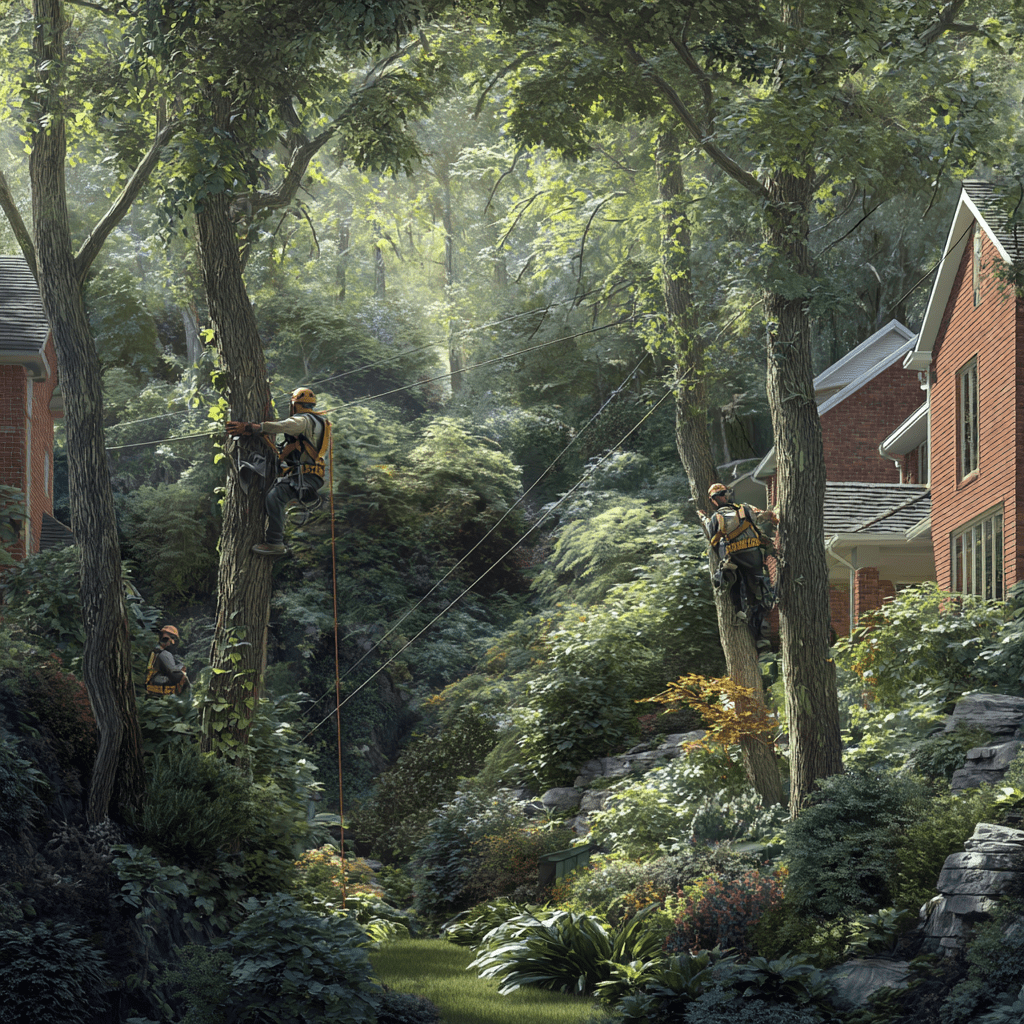
North York's large mature trees benefit from regular structured pruning. We perform crown thinning, deadwood removal, structural pruning to address codominant stems and included bark, clearance pruning from structures and overhead lines, and crown restoration for trees that have been previously topped or heavily headed. All pruning follows ANSI A300 standards and ISA Best Management Practices. We also install supplemental support cables for valuable trees with structural defects that can be safely retained with additional support.
Stump Grinding
We carry both compact access machines for tight residential lots and large commercial grinders for the open estate lots common in York Mills, Bridle Path and St. Andrew-Windfields. We grind below grade on every job, fill with chip material, and clean up before leaving. Utility locates are completed before every grinding job.
Arborist Reports
Our ISA certified arborist prepares written reports for Chapter 813 permit applications, TRCA regulated land submissions, tree risk assessments, tree preservation plans, heritage tree assessments, and pre-purchase property evaluations. All reports meet the standard required by the North York TPPR District Office.
Emergency Tree Service
We respond to storm damage, tree failures and hanging limb situations across all North York neighbourhoods. North York properties with large specimen trees carry higher risk of significant storm damage than standard city lots, and our emergency response capability is sized accordingly. We can deploy cranes where needed for major structural failures on estate properties.
Tree Preservation Plans
Development activity in North York, including new estate home construction in Bridle Path and St. Andrew-Windfields, infill housing in Willowdale, and renovation projects in Don Mills and Bayview Village, routinely requires formal tree preservation plans. We prepare these plans to the City of Toronto standard and manage the permit application process, including TRCA components for ravine-adjacent sites.
Hedge Trimming and Removal
Cedar hedges in North York range from the standard 8 to 10 foot residential hedges found in Willowdale and Don Valley Village to the 20 to 25 foot formal estate hedges that define property boundaries in York Mills and Bridle Path. We have the equipment and experience to work on hedges of all heights, and we remove and replace overgrown hedges that have outgrown their purpose.
Neighbourhoods We Serve in North York
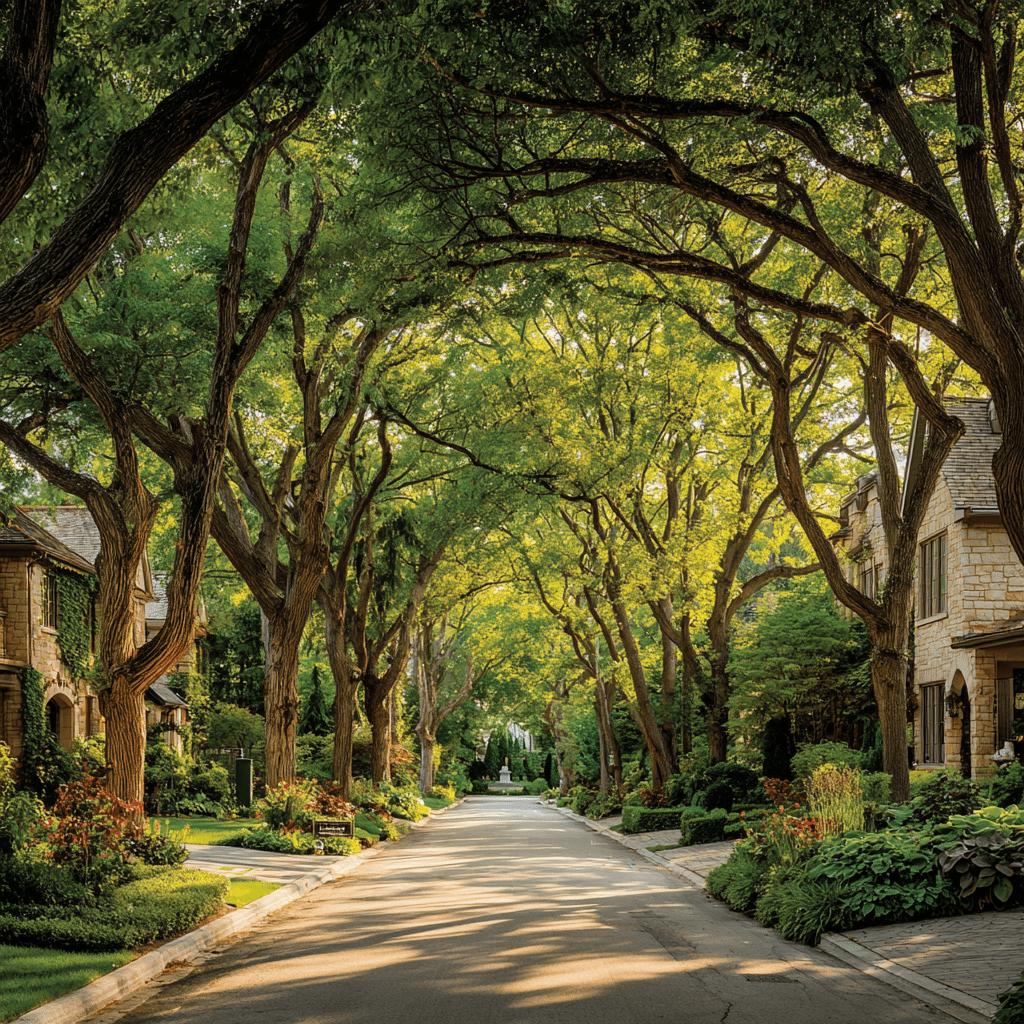
We work across all North York neighbourhoods, including Willowdale, Bayview Village, York Mills, Bridle Path, Don Mills, Newtonbrook, St. Andrew-Windfields, Hogg's Hollow, Bathurst Manor, Lawrence Park North, Bedford Park, Clanton Park, Henry Farm, Don Valley Village, Parkwoods-Donalda, Flemingdon Park, Hillcrest Village, Lansing and Westminster-Branson. We also serve properties backing onto Edwards Gardens, Sunnybrook Park, the Betty Sutherland Trail, and all West Don and East Don corridor lands.
Frequently Asked Questions About Tree Services in North York
Which district office handles tree permit applications for North York properties?
Tree permit applications for North York private properties are handled by the North York TPPR (Tree Protection and Plan Review) District Office, located at 18 Dyas Road, Toronto. This office processes Chapter 813 permit applications and coordinates with Urban Forestry staff for site reviews. Applications can also be submitted through the City's online portal.
Are the permit fees the same for North York as for other parts of Toronto?
Yes, Chapter 813 permit fees are city-wide. Non-construction tree removal permits are $137.50 per tree. Construction-related tree removal permits are $370 per tree. Cash-in-lieu of replanting is $585 per replacement tree where planting space is unavailable. These fees are set by City Council and apply uniformly across all Toronto districts including North York.
My North York property backs onto the Don Valley. Do I need a TRCA permit as well as a City permit?
Properties backing onto or within the West Don, East Don or German Mills Creek corridors in North York may fall within the TRCA regulated area, which requires TRCA approval for any vegetation removal or grading in addition to the City Chapter 813 permit. The boundary of TRCA regulation varies by property and is determined by the top of bank and floodplain mapping. Our arborists confirm which approvals apply to your specific lot before any work is quoted or begun.
What is the 14-day public notice period for North York tree permits?
Under Chapter 813, when an arborist determines that a tree proposed for removal is in good health and not a hazard to adjacent structures, the City posts a public notice of the permit application for a minimum of 14 days. During this period neighbours and the ward councillor are notified and may provide comments. This notice period is built into the permit processing timeline. It does not apply to dead, terminally diseased or imminently hazardous trees, which can be processed more quickly through the exemption pathway.
I have a tree in my Bridle Path yard that is over a metre in diameter. Do I still need a standard permit?
Yes. There is no size exemption above the 30 cm DBH threshold under Chapter 813. In fact, larger more significant trees typically receive more careful scrutiny during the permit review process, as the replacement value and ecological loss of a large tree is greater. Our arborists have experience preparing permit reports for exceptional specimens and can advise on the documentation needed to support your application.
Can you do tree work near Sunnybrook Park or Edwards Gardens?
Yes, but work near these areas requires careful regulatory review. Properties adjacent to Sunnybrook Park, Edwards Gardens or the East Don corridor may fall within designated ravine or natural feature protection areas under Chapter 658, which carries separate permit requirements from Chapter 813. TRCA regulated areas may also be present. We identify the full regulatory picture for your property before quoting.
Do you handle tree removal for new estate home construction in North York?
Yes. Large lot development projects in Bridle Path, St. Andrew-Windfields and York Mills are among the most complex tree removal situations we handle. These projects involve multiple protected trees, potential heritage specimens, TRCA regulated boundaries and formal tree preservation plan requirements. We manage the full arborist report and permit process from site survey through permit issuance, coordinating with City Urban Forestry and TRCA as needed.
What fines apply for unauthorized tree removal in North York?
Toronto Municipal Code Chapter 813 sets fines at a minimum of $500 and up to $100,000 per tree for unauthorized removal or injury of a protected private tree. The fine amount depends on the size and condition of the tree. These fines apply equally to homeowners, contractors and developers across all Toronto districts including North York.
Can I plant trees in my North York yard to offset the cash-in-lieu requirement?
Yes. Replanting on your property is always preferred over cash-in-lieu payment. The Chapter 813 permit condition requires at minimum one replacement tree for each tree removed. Where your property can accommodate the replacement trees, planting them directly avoids the $585 per tree cash payment and contributes to the restoration of North York's tree canopy. Our arborists can advise on appropriate species and planting locations as part of the permit application.
More North York Tree Services
Get a Free Estimate for Tree Work in North York
We serve all of North York including Willowdale, Bayview Village, York Mills, Bridle Path, Don Mills, Newtonbrook, St. Andrew-Windfields, Hogg's Hollow, Bathurst Manor, Lawrence Park North, Clanton Park, Henry Farm, Don Valley Village and Parkwoods-Donalda. Our certified arborist visits your property, assesses the Chapter 813 and TRCA requirements that apply, and provides a firm quote before any work begins.