Tree Preservation Plans in North York
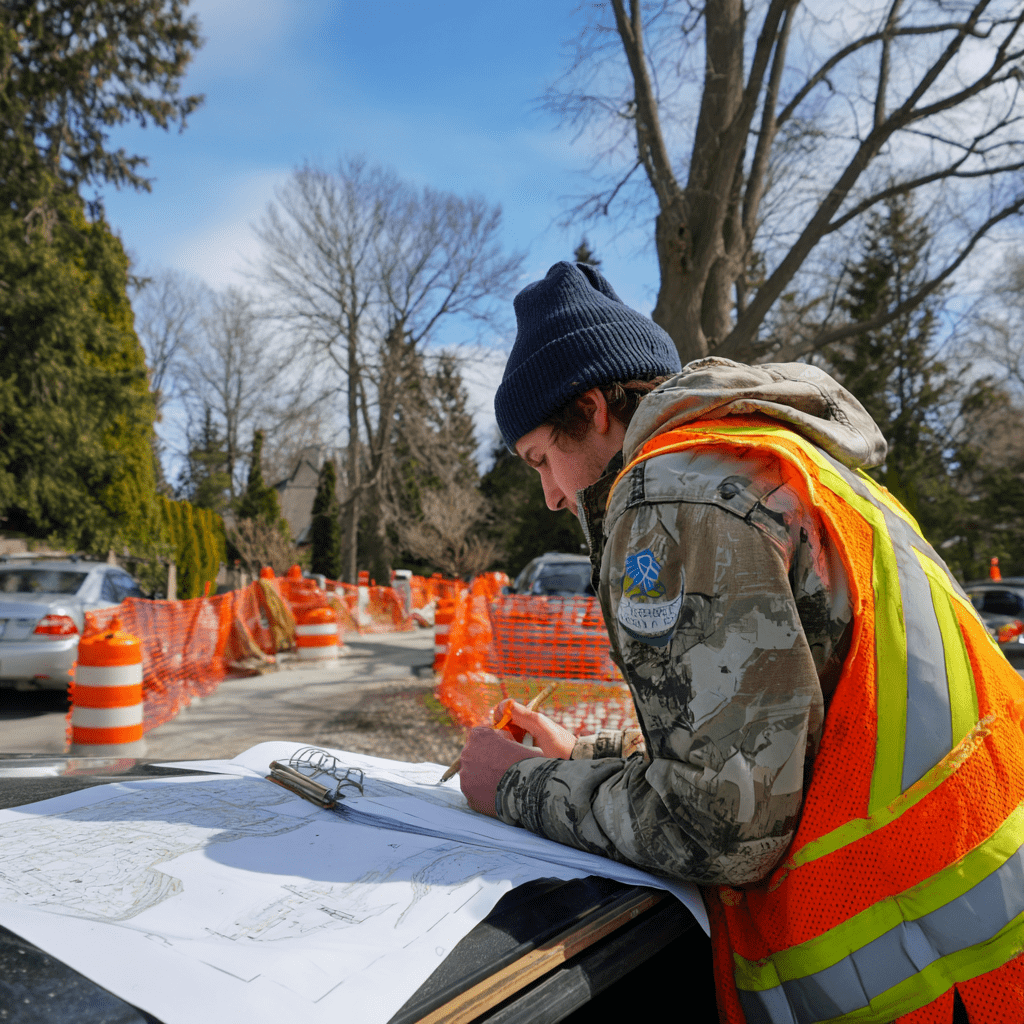
Tree preservation planning in North York is driven by the scale and intensity of development activity in the district. Willowdale and the North York Centre corridor along Yonge Street are among the highest-density development zones in Toronto outside the downtown core, with mid-rise and high-rise residential projects under construction or in planning stages continuously. Don Mills is undergoing a planned transformation of the original 1953 master plan areas into mixed-use higher-density nodes. And across the estate neighbourhoods of Bridle Path, St. Andrew-Windfields and York Mills, individual residential lots are being redeveloped at a pace that reflects the pressure on large lot residential properties throughout Toronto's inner ring.
Every one of these projects has tree implications. Protected trees on the development lot, on adjacent properties whose root zones extend across the property line, and on the City boulevard all require management under Chapter 813. TRCA regulated properties add another layer of review. And the scale of construction activity in North York means that Toronto Urban Forestry's North York district office is experienced and careful about ensuring that tree preservation conditions are meaningful, not just administrative formalities.
What a North York Tree Preservation Plan Must Address
A tree preservation plan for a North York building permit application is a site-specific construction document, not a generic template. It must identify every protected tree on and adjacent to the site, assess each tree's condition and structural status, calculate the required Tree Protection Zone based on each tree's DBH, specify exactly where TPZ fencing must be installed and what type of fencing is required, identify any prohibited activities within TPZ boundaries, and set out monitoring and reporting requirements for the construction period. For properties in or adjacent to TRCA regulated areas, the plan must also address the regulated buffer boundary and any special conditions that apply to work near the ravine or watercourse.
Typical North York Tree Preservation Plan Components
- Site tree survey: species, DBH, condition and health rating for all protected trees on and adjacent to site
- Tree Protection Zone calculations: radius based on DBH for each protected tree
- TPZ fencing specifications: type, placement and installation detail
- Site plan overlay showing all TPZ boundaries relative to proposed construction footprint
- Identification of trees to be retained, protected or removed with justification for each
- Prohibited activities schedule for each TPZ
- Root pruning specifications where utility or foundation work must enter a TPZ
- Post-construction tree care requirements and monitoring schedule
- TRCA regulated area boundary if applicable, with specific conditions for work near the boundary
- Arborist monitoring reporting conditions and frequency
Estate Property Development in Bridle Path and York Mills
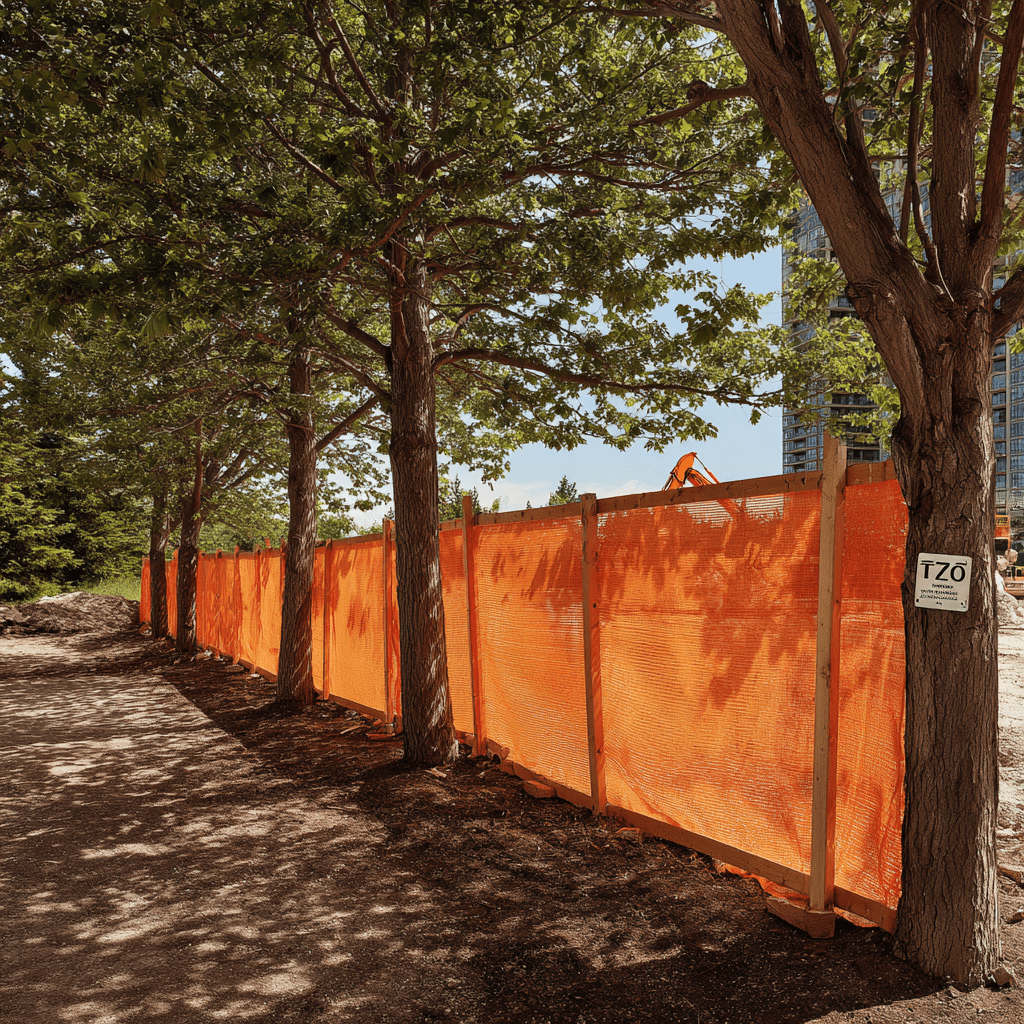
New estate home construction and major renovation projects in Bridle Path, York Mills and St. Andrew-Windfields present the most complex tree preservation situations we handle. These properties often have multiple specimen-scale protected trees, mature trees on adjacent properties with root zones that extend well onto the development lot, and in some cases TRCA regulated buffers along ravine corridors. The tree preservation plan for these projects must be comprehensive enough to satisfy City Urban Forestry review, TRCA approval where applicable, and the scrutiny of neighbouring property owners who may have standing to challenge the application if their trees are not properly considered.
We have prepared tree preservation plans for estate development projects in North York that have gone through multiple rounds of City review and have been tested in Committee of Adjustment hearings. We understand how to document these complex situations to a standard that holds up to detailed scrutiny, and we advise clients honestly when the tree situation on a proposed development site is likely to create complications in the permit process.
TRCA Regulated Properties in North York
The West Don River, East Don River, German Mills Creek, Black Creek and Humber River corridors in North York are all subject to TRCA jurisdiction. Properties with ravine buffers or backing onto these corridors require TRCA approval for construction and vegetation work within the regulated area. The arborist component of a TRCA permit application for a North York property documents vegetation conditions in and near the regulated area, assesses impact of the proposed work on the regulated vegetation, and proposes mitigation and compensation measures. We prepare these components and can advise on the full TRCA application process from intake to permit issuance.
Tree Protection Fencing Installation
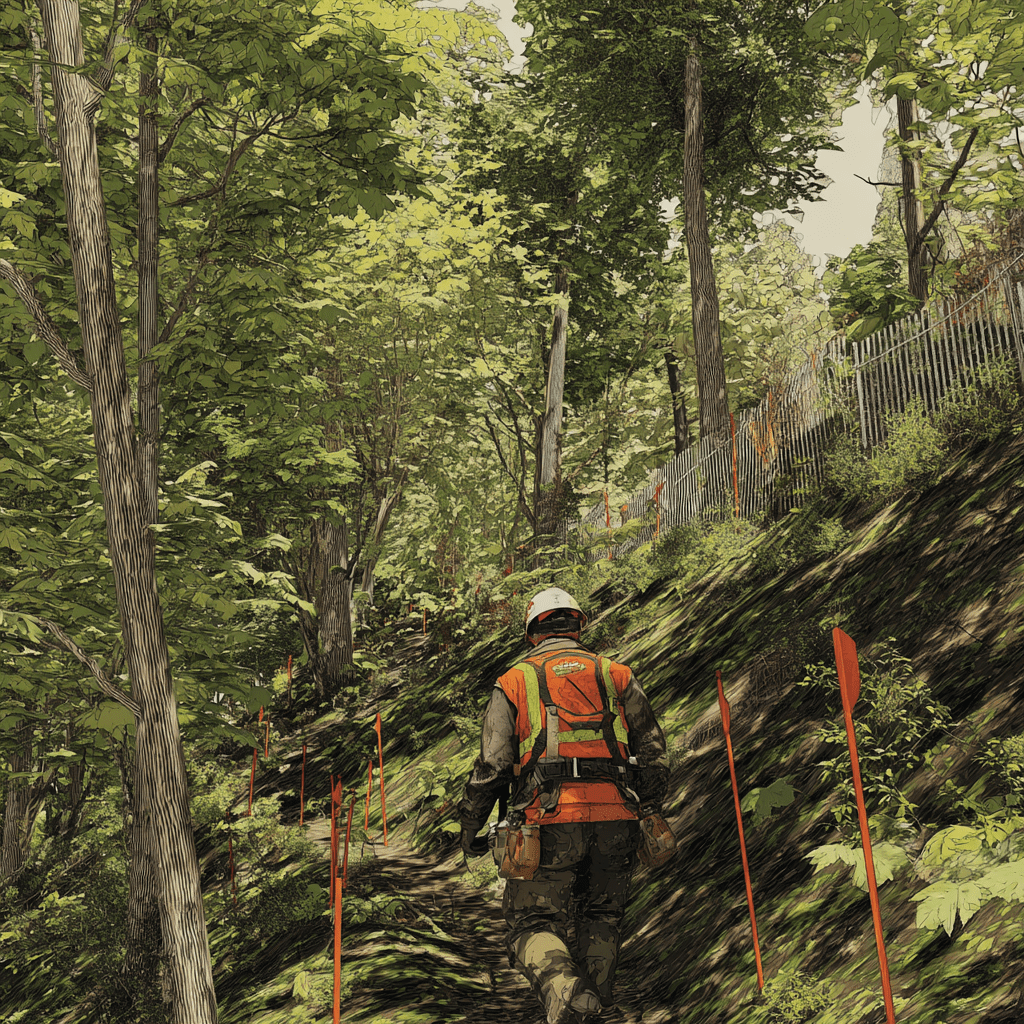
We don't just prepare the plan document: we install the tree protection fencing on site. Once the preservation plan is approved and the permit is in place, we supply and install the orange construction snow fence TPZ barriers at the exact locations specified in the plan, attach the required signage to each panel, and walk the contractor through which areas are off limits for equipment access, material storage and soil stockpiling. Fencing installation is available as part of our complete plan-plus-installation package, or as a standalone service where a plan has already been prepared by another arborist and you simply need the physical barriers erected to a specific layout before construction starts.
Frequently Asked Questions About Tree Preservation Plans in North York
When does a North York building permit require a tree preservation plan?
A tree preservation plan is required whenever a building permit application involves work that could affect a protected tree with a DBH of 30 cm or greater on or adjacent to the property. This includes excavation, grading, trenching or heavy equipment access within the calculated TPZ of any protected tree. In North York, given the prevalence of large trees close to structures, tree preservation plans are required for the majority of significant residential construction projects.
Do trees on my neighbour's property need to be included in my North York tree preservation plan?
Yes, if those trees have root zones that extend onto your property and could be affected by the proposed construction. Toronto Urban Forestry routinely reviews applications for their potential impact on adjacent property trees, and omitting a neighbouring tree that is clearly within influence of the proposed work can result in permit conditions or delays. We survey all adjacent trees within the relevant zone as a standard part of our North York tree preservation plan preparation.
What happens if construction damages a protected tree despite a tree preservation plan being in place?
If a protected tree is damaged during construction despite a tree preservation plan being a condition of the building permit, the property owner and potentially the contractor may face Chapter 813 fines, mandatory additional compensatory replanting, and in serious cases a stop-work order. Reporting inadvertent damage to Toronto Urban Forestry promptly and documenting the circumstances is the recommended course of action. We can assist with this process for projects where we prepared or are monitoring the original preservation plan.
Does my North York tree preservation plan need to be monitored during construction?
Yes. Most tree preservation plans approved by the City of Toronto include arborist monitoring conditions that require a certified arborist to visit the site at specified milestones, such as before excavation begins, during foundation work, and at topping out. The monitoring arborist confirms that TPZ fencing is in place and intact, that prohibited activities within the TPZ have not occurred, and that trees in the protection zone are showing no stress symptoms requiring intervention. We provide monitoring services for preservation plans we have prepared and for plans prepared by others where the original arborist is not available.
My North York contractor says we can just work carefully around the trees without a formal plan. Is that acceptable?
No. A formal tree preservation plan is a document requirement tied to the building permit, not an optional best practice. Work that proceeds near protected trees without the required plan in place is a bylaw violation regardless of how carefully the contractor intends to work. City building inspectors in North York check for tree preservation plan compliance as part of routine site inspections. We recommend getting the plan in place before construction begins, not after a compliance issue arises.
More North York Tree Services
Get a Free Estimate for Tree Work in North York
We serve all of North York including Willowdale, Bayview Village, York Mills, Bridle Path, Don Mills, Newtonbrook, St. Andrew-Windfields, Hogg's Hollow, Bathurst Manor, Lawrence Park North, Clanton Park, Henry Farm, Don Valley Village and Parkwoods-Donalda. Our certified arborist visits your property, assesses the Chapter 813 and TRCA requirements that apply, and provides a firm quote before any work begins.