
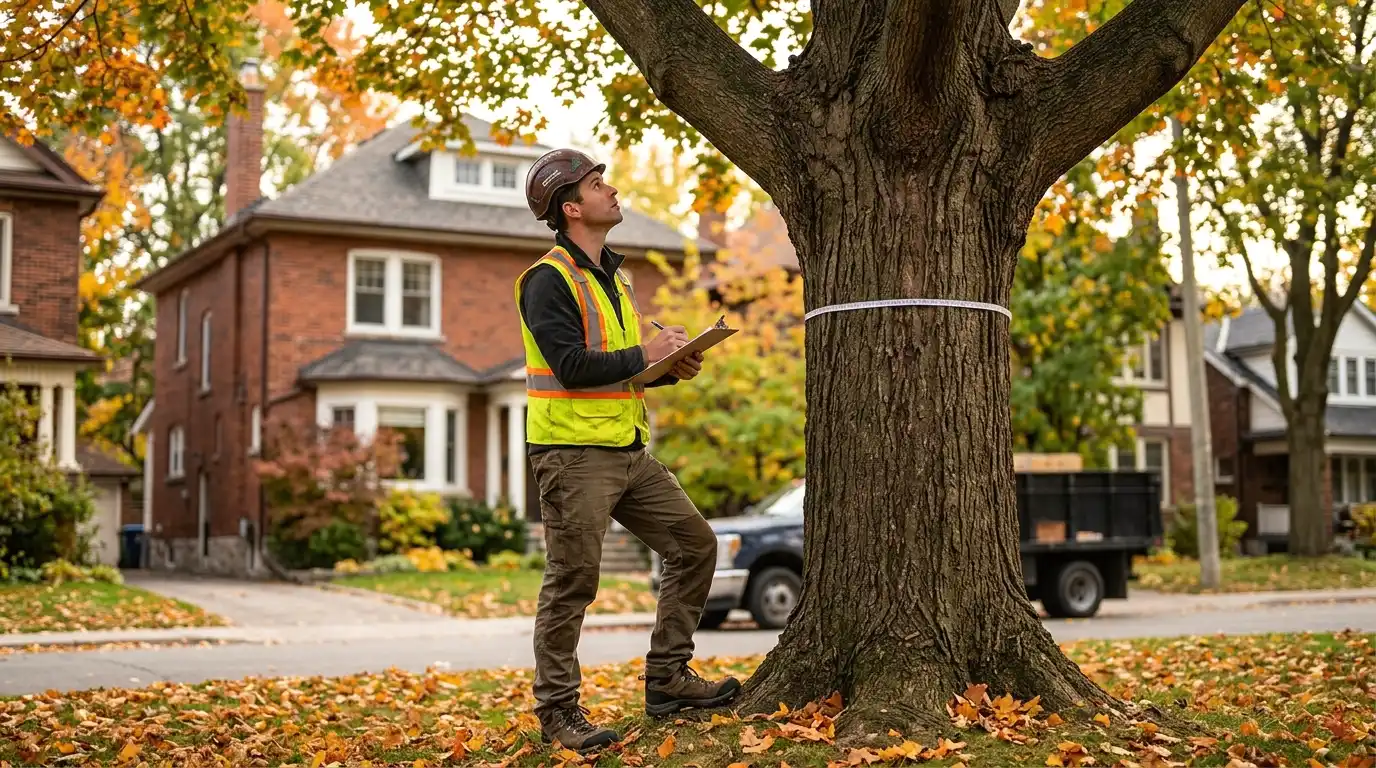
Homeowners often ask, “What is an arborist report in Ontario?” The practical answer depends on the property, tree condition and the rules that apply. An arborist report is a formal written assessment of one or more trees prepared by a qualified arborist. In Ontario, these reports are often requested for municipal tree permit applications, construction-related reviews, insurance files, neighbour disputes, hazardous tree concerns, and property due diligence. The exact requirements depend on the municipality, tree location, tree size, ownership, and the reason the report is being requested.
For development and construction planning, the tree preservation plan in Ontario guide explains how arborist reporting can fit into a broader protection strategy.
What an Arborist Report Can Contain
A formal arborist report prepared for a municipal or property-related purpose may include the following elements, depending on the municipality and the scope:
- Tree identification: common species name, botanical name where needed, location on the property, and tree number if multiple trees are assessed
- Size measurements: diameter at breast height, approximate height, crown spread, and measuring notes for multi-stem trees
- Health assessment: foliage condition, vigour, pest activity, disease signs, wounds, dieback, canopy density, and decay indicators
- Structural assessment: root area condition, trunk defects, branch architecture, weak unions, cracks, cavities, lean, and visible risk indicators
- Site context: proximity to structures, utilities, neighbouring properties, driveways, sidewalks, construction areas, and lot lines
- Reason for proposed work: why removal, pruning, monitoring, further testing, or another recommendation is being considered
- Replacement or mitigation information: planting, monitoring, or other conditions where a municipality or permit process requires them
- Arborist credentials: name, company where applicable, credential number where applicable, signature, date of assessment, and report date
The report should be written in a format the intended reviewer can use. A report for a City of Toronto permit application may not look the same as a report for insurance, a real estate purchase, a construction concern, or a neighbour dispute. The property owner should confirm the required report scope directly with the municipality, insurer, lawyer, or qualified arborist before ordering the work.
When You May Need an Arborist Report in Ontario
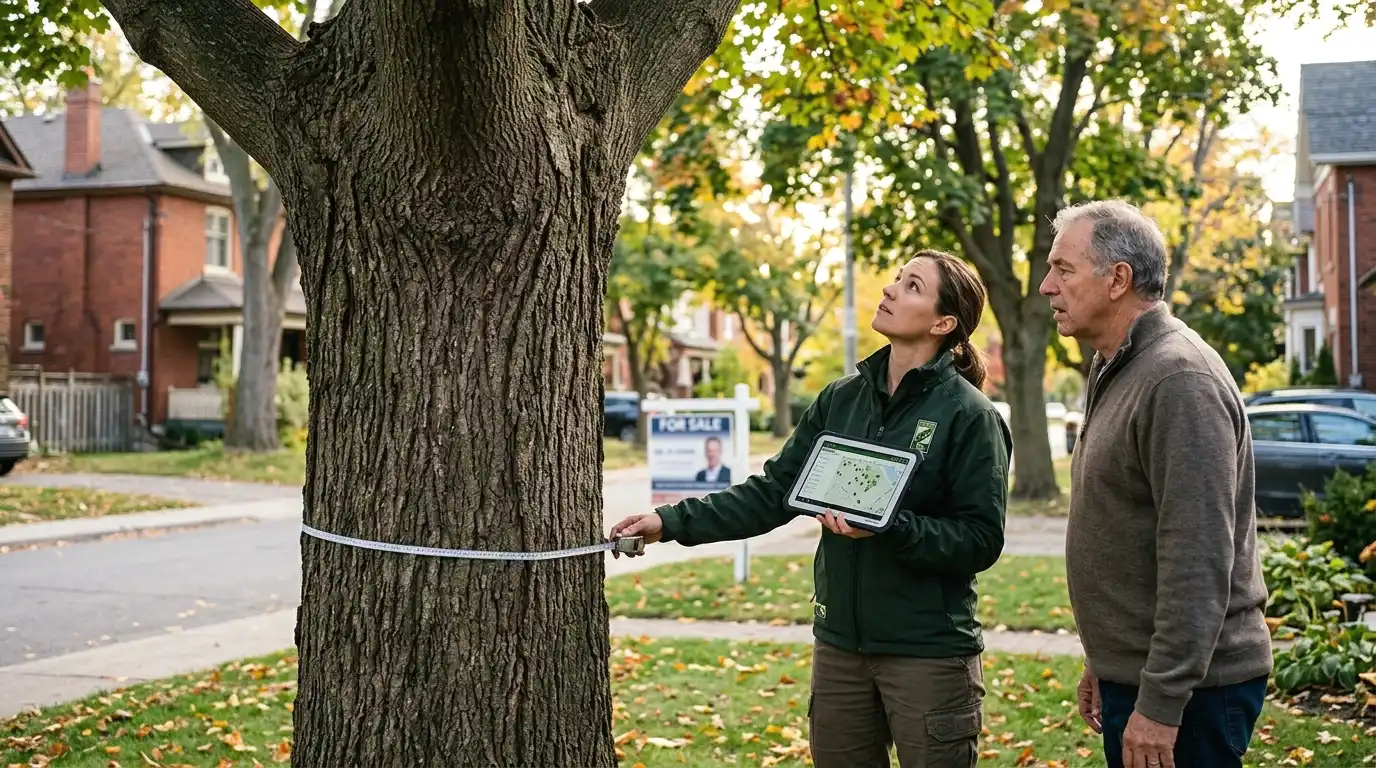
Tree Permit Applications
This is one of the most common reasons for an arborist report in Ontario. Many municipalities require tree documentation when a property owner applies to injure or remove a protected tree. Requirements vary by municipality, so property owners should check the official local rules before assuming a report is required or not required.
- Toronto: The City publishes arborist report guidelines and identifies private trees with a diameter of 30 cm or more, measured at 1.4 m above ground, as protected. Review the City’s official Guidelines for Completing an Arborist Report and tree and ravine permit guidance.
- Mississauga: The City states that a permit is needed to remove one or more private-property trees 15 cm or greater in diameter, including dead or dying trees. See the official Mississauga tree permit page.
- Markham: The City has a tree permit application process and may request supporting documents such as tree images, arborist reports, and adjacent-neighbour signature pages where applicable. See the official Markham tree permit application page.
- Richmond Hill: The City states that applicants must retain an arborist and submit an arborist report with an application for a permit to injure or destroy trees. See the official Richmond Hill tree permit information page.
- Vaughan: The City has tree-related permit rules and application requirements. Property owners should review the official Vaughan tree services and permit information before removing or injuring a regulated tree.
Construction and Development-Related Tree Documentation
Construction near trees can trigger municipal review if the work may affect private protected trees, City-owned trees, neighbouring trees, ravine areas, or regulated natural features. Depending on the municipality and project, a qualified arborist may be asked to document tree species, size, condition, location, construction proximity, root area concerns, and recommendations.
Examples include additions, underpinning, new garages, garden suites, driveway widening, pools, demolition, drainage work, retaining walls, major landscaping, grading, and utility trenching.
Hazard Assessments
A hazard-focused arborist report may be requested when a tree shows signs of possible failure, such as a new lean, cracks, cavities, extensive decay, root plate movement, fungal growth at the base, storm damage, or large dead branches over targets. These reports may be used by property managers, insurers, lawyers, municipalities, or property owners who need written documentation before deciding what to do next.
Insurance and Legal Purposes
When a tree causes property damage or personal injury, an arborist report may document the visible condition of the tree, site conditions, failure indicators, storm impact, decay, root condition, and other relevant facts. Property owners should confirm documentation requirements directly with their insurer, lawyer, or adjuster.
Property Sale or Purchase
Buyers and sellers may request an arborist report when a property has large trees near the house, driveway, retaining wall, pool, utility lines, or property boundary. A report may help identify tree condition, visible defects, likely maintenance issues, permit concerns, or possible future costs. It is not a guarantee of future tree behaviour, municipal approval, or insurance coverage.
Need Help With an Arborist Report?
What Is an Arborist Report in Ontario?
The required qualifications depend on the municipality and the purpose of the report. Many municipal tree permit processes refer to qualified or certified arborists, and some specifically expect ISA credentials or equivalent professional documentation. The safest approach is to check the local application instructions before hiring anyone to prepare a report.
Property owners should ask the qualified arborist for their credential details, report experience, scope of work, pricing, turnaround time, insurance information, and whether the report format is appropriate for the municipality or purpose.
Some arborists may hold additional credentials such as Board Certified Master Arborist, Tree Risk Assessment Qualification, Registered Consulting Arborist, or other consulting credentials. These may be useful for complex sites, disputes, hazard reviews, insurance matters, or development-related documentation, but the required credential should be confirmed directly with the relevant municipality or organization.
Arborist Report vs Informal Assessment: The Key Difference
An informal assessment may be a conversation, site note, or brief written summary that helps a property owner understand a tree concern. It may be useful for deciding whether to request a formal report, whether a tree should be monitored, or whether a quote for work is needed.
A formal arborist report is a structured written document prepared for a defined purpose. It may be used for a municipal permit application, hazard review, insurance file, legal matter, construction-related review, or property transaction. It should be scoped correctly from the start so the property owner does not pay for a document that fails to meet the intended requirement.
When contacting a qualified arborist, be clear about the municipality, property address, number of trees, reason for the report, whether photos or drawings are available, and whether the report is needed for a permit, insurance file, legal issue, construction review, or general condition assessment.
Related Guides
- Arborist Report Cost in Toronto
- How to Get a Toronto Tree Permit
- Renovation Near Trees in Toronto
- How Long Does a Permit Take?
- Arborist Report Requests
Official Municipal and Arborist Resources
- City of Toronto: Guidelines for Completing an Arborist Report
- City of Toronto: When to Apply for a Tree or Ravine Permit
- City of Mississauga: Tree Permit Information
- City of Markham: Tree Permit Application
- City of Richmond Hill: Tree Permit Information
- City of Vaughan: Tree Information
- ISA: Find an Arborist
Frequently Asked Questions
What is an arborist report in Ontario?
An arborist report is a formal written assessment of one or more trees prepared by a qualified arborist. It may document species, location, size, health, structure, site conditions, risk factors, and recommendations. Municipalities may require an arborist report for tree permit applications, development-related submissions, or other tree-related reviews.
When do you need an arborist report in Ontario?
An arborist report may be needed when applying to injure or remove a bylaw-protected tree, when construction may affect trees, when a municipality requests tree documentation, or when a property owner needs written tree condition information for insurance, neighbour, legal, or real estate purposes. Requirements vary by municipality.
Who can write an arborist report in Ontario?
Many municipalities require reports from a qualified or certified arborist, and some specifically reference ISA certification. Property owners should confirm the municipality’s requirements and verify the qualified arborist’s credentials before ordering a report.
What is the difference between an arborist report and an informal tree assessment?
An informal assessment may be a verbal opinion or brief written note. A formal arborist report is a structured document prepared for a specific purpose, such as a municipal permit application, hazard review, insurance file, or development-related submission. The required content depends on the municipality and the reason for the report.
How much does an arborist report cost in Ontario?
Cost varies by location, number of trees, site complexity, urgency, travel, whether drawings or photos are needed, and whether the report is for a simple residential tree concern or a more complex municipal or construction-related submission.
How long is an arborist report valid in Ontario?
Validity depends on the municipality, the purpose of the report, and whether the tree’s condition has changed. Storm damage, construction activity, disease, decline, or a long delay after assessment may require an updated report. Property owners should confirm current requirements directly with the municipality or qualified arborist.
Can an arborist report recommend against removing a tree?
Yes. A proper arborist report may recommend monitoring, pruning, further investigation, or no removal if the tree is healthy or if the concern can be managed. The municipality decides permit outcomes where a permit is required.
Does a neighbour’s tree require an arborist report?
Neighbouring trees, shared boundary trees, and trees with roots or branches extending across property lines can raise legal and municipal issues. Property owners should confirm ownership, location, and municipal rules before requesting work. A qualified arborist may document tree location and condition.