
Tree Root Rot in Toronto: How to Tell If a Tree May Have Root Rot
Tree root rot in Toronto can affect tree health, structure or long-term survival, so early identification matters. Root rot can be difficult to detect early because the most important damage is often underground or hidden inside the lower trunk and root flare. By the time visible symptoms appear above ground, decay or root decline may already be advanced. For Toronto homeowners, the key is knowing which warning signs deserve monitoring and which signs should trigger review by a qualified arborist or qualified tree care professional.
What Root Rot Actually Means
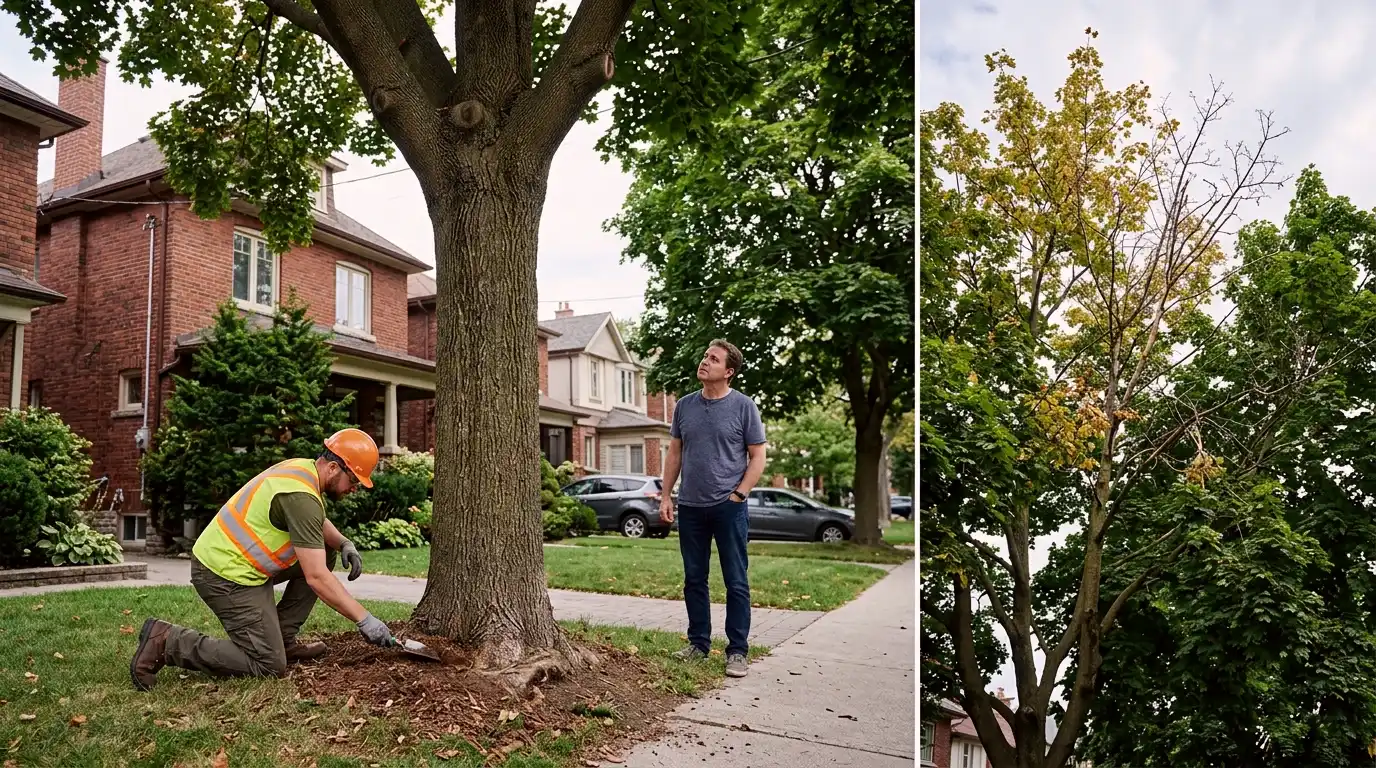
Root rot is a broad term for decay, disease, or decline affecting a tree’s root system. In many cases, fungi are involved. Some organisms affect fine feeder roots and reduce vigour. Others can decay larger structural roots or the lower trunk, which may affect the tree’s physical stability.
Root problems can begin after root wounds, poor drainage, prolonged soil saturation, buried root flares, construction activity, utility trenching, soil compaction, grade changes, or repeated mechanical damage from mowers and trimmers. In dense Toronto and GTA residential settings, construction and hardscaping near established trees are common stress factors because heavy equipment, excavation, and soil compaction can damage roots long before decline is obvious in the canopy.
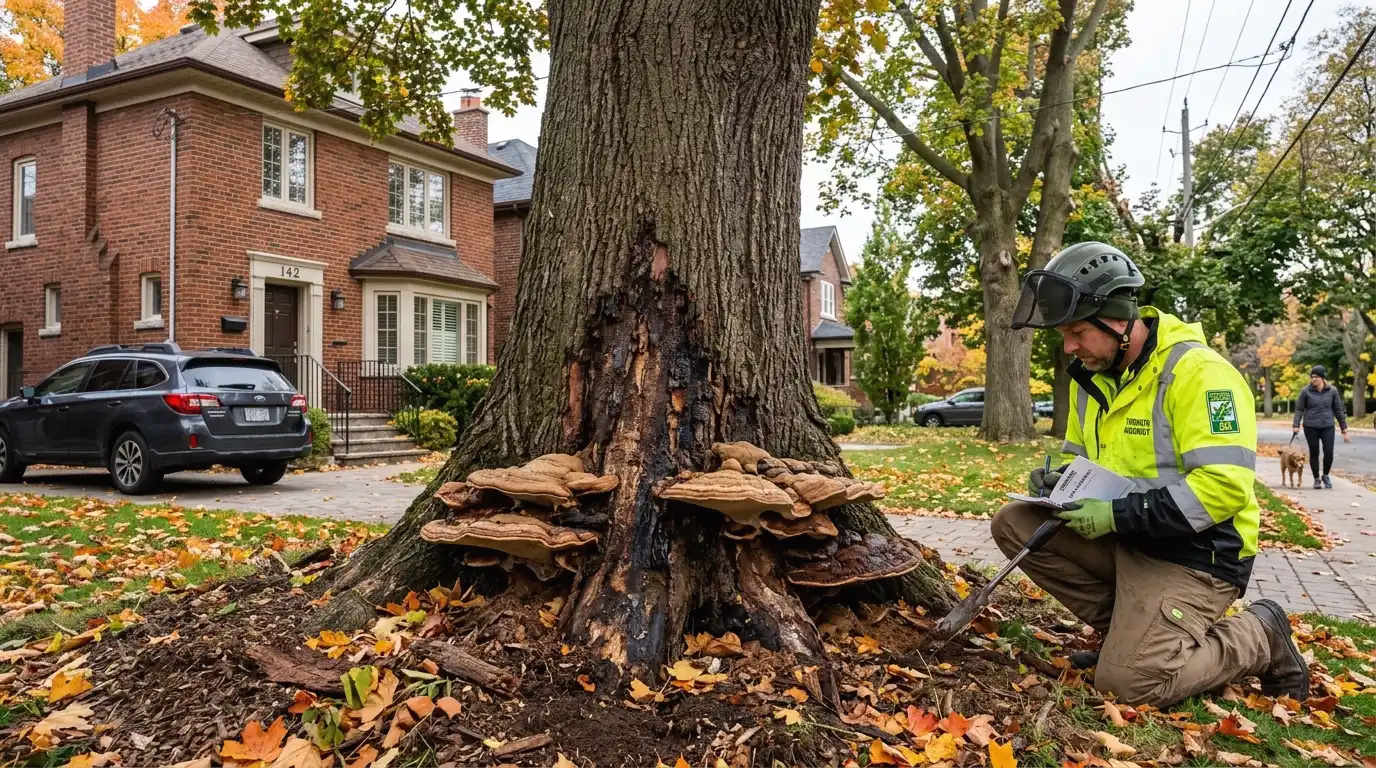
Fungal conks, mushrooms near the trunk base, soft wood, bark slipping near the root flare, new leaning, or gradual canopy thinning can all be warning signs. None of these signs should be treated as an automatic diagnosis from photos alone. They are indicators that the tree may need closer assessment.
Signs to Look For
Fungal growth at the trunk base or root flare
Fungal conks, bracket fungi, shelf fungi, or clusters of mushrooms near the lower trunk or root flare can indicate active decay in wood or roots. The visible fungus is often only the fruiting body. The more important issue is what may be happening inside the wood or below ground.
Not every mushroom near a tree means the tree is about to fail. Some fungi grow on buried organic matter or old roots. Still, large conks growing directly from the trunk base, root flare, or major roots deserve serious attention, especially when the tree is large, leaning, near a structure, or located over a high-use area.
Soft, punky, or discoloured wood near the base
Wood at the lower trunk and root flare should generally feel firm. Soft, punky, wet, hollow-sounding, crumbly, or discoloured wood may indicate decay. Do not cut into the tree or remove healthy bark to investigate. If decay is visible from outside, or if bark is already loose and the wood beneath looks compromised, a qualified arborist may assess the issue with appropriate tools.
Bark slipping at the root flare
Bark that separates easily near the lower trunk or root flare can be a concern, especially when paired with fungal growth, soft wood, oozing, cavities, or crown decline. Healthy bark is normally well attached. Slipping bark at the base can suggest dead or declining tissue beneath the bark.
Gradual lean or root plate movement
A tree that has developed a new lean, or a lean that appears to be increasing over time, should not be ignored. Root decay can reduce anchoring strength, and a tree may begin shifting as the structural root system loses support. Soil cracking, mounding, lifted roots, or movement around the base can also be warning signs.
If a leaning tree with possible root decay is near a house, garage, driveway, sidewalk, road, deck, play area, fence, neighbour’s property, or utility area, keep people away from the target zone and seek qualified assessment promptly.
Crown decline without an obvious cause
Root problems often show up in the canopy as reduced leaf size, thinning foliage, tip dieback, dead upper branches, early leaf colour change, or reduced annual growth. These symptoms can also be caused by drought, insects, disease, compaction, construction damage, girdling roots, or other stress. The canopy can suggest that something is wrong, but the base and root zone usually need to be reviewed before conclusions are drawn.
Root rot risk factors in Toronto residential settings:
- Construction activity within or near the drip line of established trees
- Grade changes that bury the root flare under added soil or mulch
- Chronic poor drainage or standing water near the tree base
- Repeated lawnmower or string-trimmer damage near the root flare
- Utility trenching, excavation, or driveway work within the root zone
- Soil compaction from vehicle parking, equipment movement, or material storage under the canopy
- Large fungal conks or mushrooms growing directly from the lower trunk or visible roots
What a Qualified Arborist Assessment May Involve
A root-rot assessment usually starts with a visual inspection of the trunk base, root flare, visible roots, surrounding soil, canopy condition, and nearby targets. The qualified arborist may look for fungal growth, cavities, bark condition, root flare burial, soil heaving, cracks, decay pockets, construction damage, drainage patterns, and signs of past injury.
Where appropriate, an arborist may use non-invasive or minimally invasive tools such as a probe, mallet, sounding techniques, resistance drilling, sonic tomography, or other assessment methods. The exact method depends on the tree, suspected defect, available access, and the professional’s judgement.
The assessment should consider both likelihood of failure and consequences if failure occurs. A tree with suspected root decay in an unused back corner is different from a tree with the same defect leaning toward a house, driveway, sidewalk, neighbour’s property, or public area.
What Happens If Root Rot Is Confirmed?
If root rot or structural decay is confirmed, the next step depends on the tree’s species, size, remaining sound wood, site conditions, defect location, target area, and the property owner’s goals. Some trees may be monitored if the defect appears limited and the target risk is low. Others may need risk-reduction pruning, follow-up inspections, restricted use of the target area, or removal discussion.
Root rot cannot be treated like a simple surface wound. Once structural roots or lower-trunk wood are significantly decayed, the concern is not just tree health. It is physical stability. A living canopy does not always mean the tree is structurally safe.
If removal is discussed, permit status must be checked before work begins. Toronto generally protects private trees with a diameter at breast height of 30 cm or more, City trees of any size, and trees or natural features in ravine-protected areas. For an imminently hazardous private tree, Toronto’s storm guidance allows immediate hazard removal without a standard permit and asks owners or arborists to document the condition and advise 311; the general permit page also provides a permit-exception confirmation process and requires confirmation before work unless immediate action is necessary to eliminate a dangerous situation.
For more permit context, see the Toronto tree removal permit guide. For hazard-focused next steps, see the dangerous tree assessment guide.
Concerned About Possible Root Rot?
When Root Rot Becomes Urgent
Some possible root-rot situations can be monitored after assessment. Others should be treated as urgent. Warning signs that deserve faster review include root plate movement, a sudden or worsening lean, major fungal conks at the base, hollow or soft lower-trunk wood, soil cracking around the base, large dead scaffold branches, or a tree positioned over a house, driveway, sidewalk, road, play area, parking area, or neighbour’s property.
If there is immediate danger to life, call 911. If a privately owned tree presents an immediate danger, Toronto says concerns can be reported by contacting 311 to submit a service request. If branches or a tree are touching or near power lines, stay away and contact the appropriate electrical utility before anyone approaches.
Do not attempt to dig around structural roots, cut large roots, cable the tree yourself, remove large limbs, or test stability by pushing or pulling the tree. These actions can make the situation worse and create safety risks.
What Causes Root Rot or Root Decline?
Root rot and lower-trunk decay can have several contributing factors. Fungal organisms are often involved, but site stress is usually part of the story. Poor drainage, compacted soil, buried root flares, construction damage, root cutting, utility trenching, changes in grade, repeated wounding, and reduced soil oxygen can all weaken a tree and make decay or decline more likely.
Many Toronto properties have older trees growing beside driveways, laneways, retaining walls, additions, patios, pools, fences, and compacted turf. When excavation or heavy equipment moves through the root zone, a tree may look fine at first but decline over several seasons as damaged roots fail to recover.
A qualified arborist may discuss visible site stress, drainage, soil compaction, root damage, construction history, and possible monitoring or mitigation options.
Related professional service: See the stump grinding service information for stump and root-related requests.
Frequently Asked Questions
What are common signs of root rot in Toronto trees?
Common visible warning signs can include fungal conks or mushrooms near the trunk base, soft or punky wood at the root flare, bark slipping near the base, gradual crown thinning, unexplained branch dieback, root plate movement, or a developing lean. These signs justify review by a qualified arborist.
Can a tree with root rot be treated or saved?
It depends on species, site conditions, the type and extent of decay, the amount of sound structural root remaining, and what is within the target area if the tree fails. Some trees may be monitored or managed for a period of time, while others may be too structurally compromised to retain safely.
Does root rot require a permit to remove the tree in Toronto?
If the tree is protected, permit rules may apply. Toronto generally protects private trees with DBH of 30 cm or more, City trees, and trees or natural features in ravine-protected areas. An imminently hazardous private tree follows the City’s emergency/permit-exception pathway rather than an ordinary permit application; document the condition and use current City guidance.
What causes root rot in residential trees?
Root rot and root decline can be associated with fungal organisms, poor drainage, saturated soil, root wounds, buried root flares, soil compaction, construction damage, excavation, trenching, grade changes, and repeated mechanical injury near the trunk base.
How quickly does root rot progress once it starts?
Progression varies by species, decay organism, tree age, root damage, soil moisture, site stress, and the amount of sound wood remaining. Some decay issues progress over years, while structural risk can increase faster once major roots or the lower trunk are compromised.
Related Guides
- Dangerous Tree Assessment Toronto
- Signs Your Tree Is Dead or Dying
- Tree Removal Permit Toronto
- Leaning Tree Dangerous Toronto
- Arborist Report Requests