
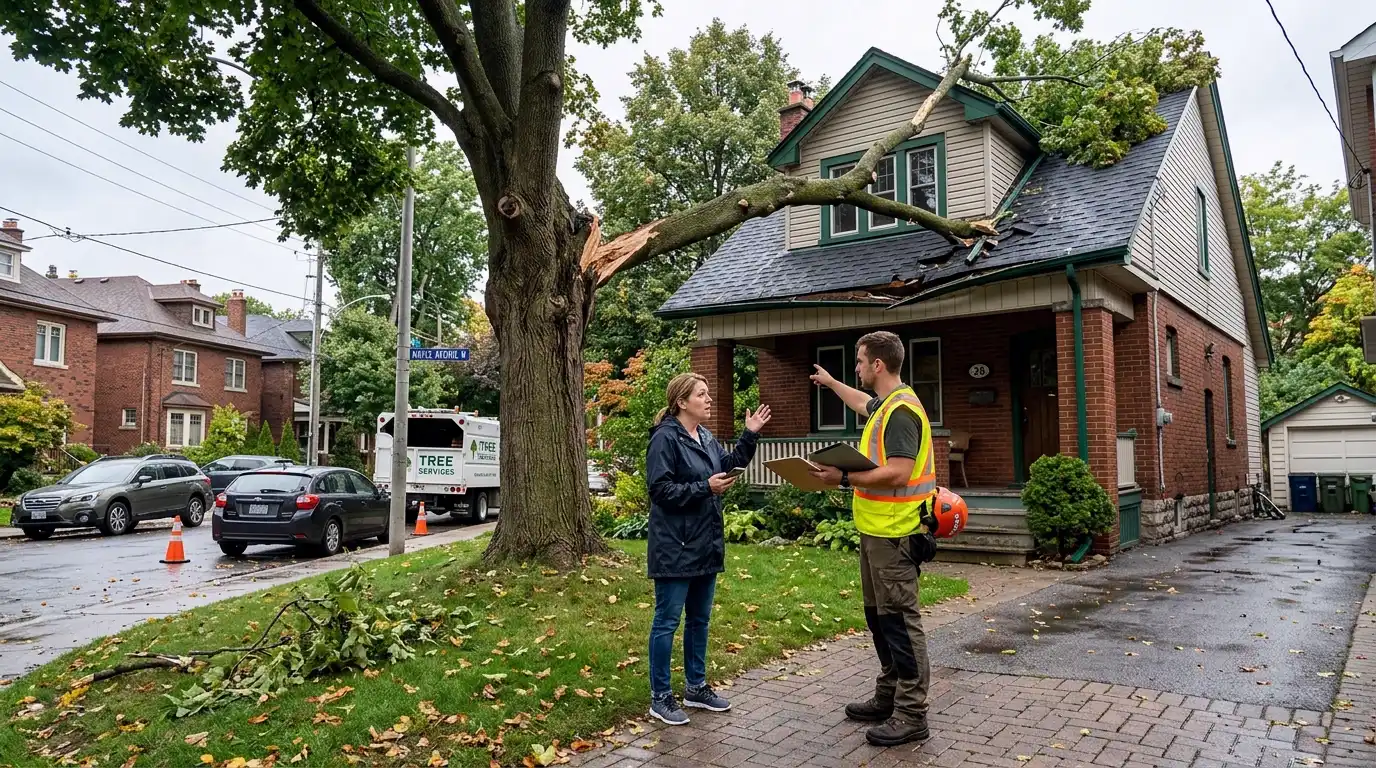
Homeowners often ask, “Does home insurance cover tree removal in Toronto?” The practical answer depends on the property, tree condition and the rules that apply. Home insurance coverage for tree removal in Toronto depends on the policy, the cause of the tree failure, what the tree damaged, exclusions, deductibles, and the insurer’s claim review. Fallen-tree damage to an insured structure may be covered where the event is an insured peril. A tree that falls into a yard without damaging an insured structure may have limited or no removal coverage unless the policy includes a specific endorsement or debris-removal provision.
Insurance Bureau of Canada’s June 2026 consumer guidance says home insurance generally covers physical damage caused by fallen trees where wind or lightning is the insured event, including damage to structures such as a home, garage, shed, fence or deck. Exact coverage, debris removal, limits, deductibles and exclusions still depend on the individual policy and insurer.
Examples that may involve insurance review include a tree striking the house, garage, fence, shed, porch, roof, deck, or another insured structure. Coverage still depends on the exact policy wording, cause of loss, exclusions, deductibles, limits, and the insurer’s decision. The property owner should contact their insurer before approving non-life-safety cleanup where possible.
If a tree damages a vehicle, the relevant coverage is often auto insurance rather than home insurance. Vehicle claims commonly depend on whether the owner carries comprehensive coverage. Property owners should confirm vehicle-related claims directly with their auto insurer.
What Home Insurance May Not Cover
Many policies provide limited or no coverage for removing a tree that falls in a yard without damaging an insured structure. A tree that lands on a lawn, garden, open driveway, or unused area may be treated differently from a tree that lands on a roof or garage. Some policies or endorsements may include limited debris-removal coverage, but the homeowner must confirm this directly with the insurer or broker.
Insurance may also exclude or limit gradual, preventable, maintenance-related, or known-condition issues. Root damage that developed slowly over years, proactive tree removal before a failure, stump grinding after removal, routine pruning, hazard prevention, and landscaping restoration may not be covered unless the policy clearly says otherwise.
The safest step is to read the policy and ask direct questions before a storm happens. Ask your broker or insurer whether your policy covers tree removal when no structure is damaged, whether debris removal has a dollar limit, whether detached structures are covered differently, and whether any optional endorsement is available.
Document before cleanup begins where it is safe:
- Take photos and video from multiple angles showing the fallen tree, impact point, damaged structure, roof, fence, vehicle, wires, and surrounding conditions.
- Record the date, approximate time, and weather conditions connected to the event.
- Save weather alerts, storm reports, outage notices, or City/utility service request numbers where relevant.
- Contact your insurer before approving non-life-safety cleanup where possible.
- Ask whether the insurer wants an adjuster review before the tree is moved.
- Keep all written estimates, invoices, receipts, photos, texts, emails, and contractor communications.
- If a neighbour’s tree is involved, document communications with the neighbour in writing.
When a Neighbour’s Tree Falls on Your Property
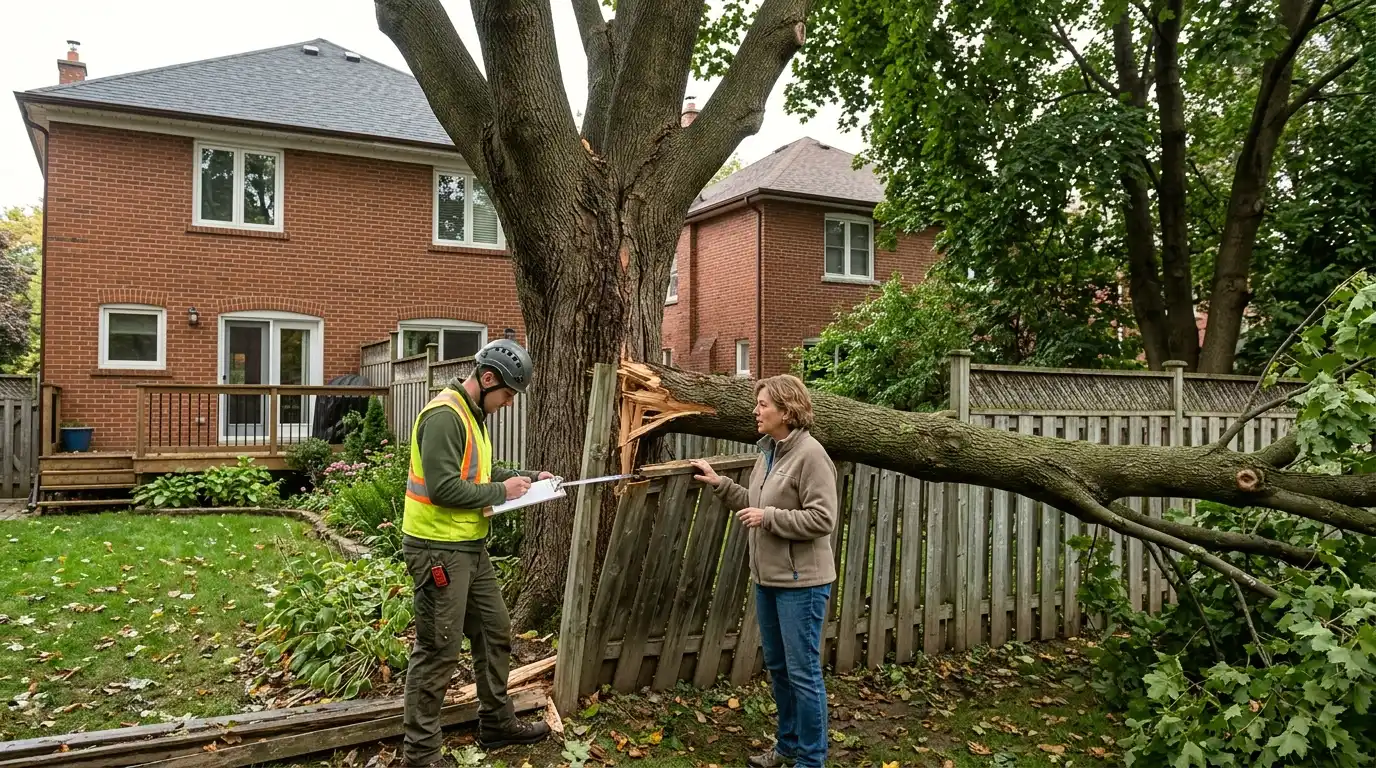
Neighbour-tree situations are fact-specific. In many storm-related cases, the affected property owner starts with their own insurer because the damage is to their own property. The insurer then reviews coverage, deductible, cause of loss, and whether any liability recovery may be possible.
If there was prior written notice that a neighbour’s tree appeared hazardous, or if the tree was visibly dead, neglected, or unsafe for a long time, liability questions may become more complicated. The insurer, adjuster, or lawyer may need to review whether the owner knew or should have known about the hazard and failed to act.
When Insurers Review Tree Condition
Insurers may ask whether the tree was healthy before it failed, whether it was already dead, whether the homeowner knew it was hazardous, and whether the loss was sudden or gradual. Evidence matters. Clear dated photos, prior inspection notes, past arborist documentation, written neighbour communications, and maintenance records can help explain the tree’s prior condition.
A tree that appeared sound before a major storm is different from a tree with obvious long-term defects, such as no foliage for multiple seasons, large cavities, fungal decay at the base, repeated limb failure, visible root movement, or written warnings that were ignored. The insurer makes the coverage decision based on the policy and evidence.
If a qualified arborist or tree care professional provides a written opinion, that document may be useful for records, insurer communication, or permit-related context. It is not a guarantee of insurance coverage, claim approval, reimbursement, contractor performance, or future tree behaviour.
Need to Send an Urgent Fallen Tree Request?
Contact your insurer before approving non-life-safety cleanup where possible.
Proactive Removal and Insurance
Insurance generally should not be treated as a funding source for routine tree maintenance or proactive removal. If a tree is identified as hazardous before it falls, the property owner should ask the insurer whether any preventive expense is covered, but many policies do not reimburse proactive tree work simply because a future risk exists.
Even when proactive removal is not covered, dealing with a hazardous tree before failure may reduce risk to the house, garage, vehicles, neighbours, pedestrians, and utility lines. The decision should consider tree condition, permit rules, contractor pricing, property risk, and the cost of potential damage.
If a protected Toronto private tree may be removed or injured, permit rules may apply. For permit context, see the guide to Toronto tree removal permits. For general cost context, see the tree removal cost in Toronto guide.
Reading Your Policy Before You Need It
The most useful time to read your insurance policy is before the storm. Look for terms related to debris removal, trees, shrubs, outdoor property, detached structures, vehicles, exclusions, deductibles, and claim reporting. If the wording is unclear, ask your broker or insurer direct questions and keep their written answers with your policy documents.
Useful questions include: Does my policy cover removal of a fallen tree if no structure is damaged? Does debris removal have a limit? Are fences, sheds, detached garages, and other structures treated differently? What documentation is required before cleanup? Should I call the insurer before emergency work begins? Is there an endorsement for expanded tree or debris coverage?
Every insurer and policy can be different. A neighbour’s experience or online answer is not a substitute for your own policy wording.
Specific Coverage Scenarios Toronto Homeowners Ask About
Tree falls on your car in the driveway
Vehicle damage is commonly handled under auto insurance, not the home policy, and usually depends on whether comprehensive coverage applies. The cost to remove the tree from the vehicle, tow the vehicle, or clear the driveway may be treated differently depending on the insurer and policy. Contact both insurers if there is uncertainty.
Tree falls on a fence
Fence coverage depends on policy wording, ownership, whether the fence is an insured detached structure, whether the cause of loss is covered, and whether any sublimits apply. If the fence is shared with a neighbour, cost-sharing and liability questions may become fact-specific. Document the damage and contact the insurer before repairs where possible.
Storm breaks a large branch but it does not hit anything
A broken hanging limb that has not damaged an insured structure may be treated as a hazard or maintenance issue rather than an insured property-damage claim. If the branch threatens people, structures, vehicles, or wires, take safety seriously and contact the appropriate qualified professional, utility, City, or emergency channel as needed.
Your tree falls on City property, a City tree, or utility infrastructure
If a private tree falls onto City property, a road, sidewalk, boulevard tree, utility pole, wire, or other infrastructure, document the scene, stay away from dangerous areas, contact the appropriate City or utility channel, and notify your insurer. Do not touch wires or unstable wood. Responsibility, recovery, fines, or claims are fact-specific and should be reviewed with the insurer, City, utility, or legal advisor where needed.
City-Owned Trees and Claims Against the City
If the damage may involve a City-owned tree or branch, such as a boulevard tree or park tree, document the damage and review the City of Toronto’s claim process. The City has a formal process for fallen-tree and branch-damage claims, and it may investigate whether the City is legally responsible.
A claim against the City is not guaranteed reimbursement. The City, its adjuster, or insurer reviews the facts. Keep photos, dates, 311 service request numbers, written responses, repair estimates, and invoices.
The Role of a Pre-Storm Tree Review
For properties with large mature trees near homes, garages, driveways, neighbouring lots, sidewalks, or utility lines, periodic review by a qualified tree professional may help identify visible defects before storm season. This can include deadwood, weak unions, decay indicators, fungal growth, root movement, cavities, lean, or other visible concerns.
A pre-storm review is usually a private maintenance expense, not an insurance claim. Its value is practical: it may help the property owner understand risk, plan maintenance, keep records, and decide whether pruning, monitoring, further assessment, or removal should be discussed.
If a qualified arborist provides a written assessment, ask about scope, limitations, credentials, timing, fee, intended use, and whether the document is suitable for insurance, permit, property-record, or maintenance purposes.
Official and Helpful Resources
- Insurance Bureau of Canada: Severe Weather Insurance FAQs
- Insurance Bureau of Canada: How to File a Home Insurance Claim
- Insurance Bureau of Canada: Types of Home Insurance Coverage
- FSRA: How to Resolve a Property Insurance Complaint
- City of Toronto: Fallen Trees and Branch Damage Claims
- 311 Toronto: Hazardous or Dangerous Trees
- ISA: Find an Arborist
Frequently Asked Questions
Does home insurance cover tree removal in Toronto?
Coverage depends on the policy, the cause of the tree failure, what the tree struck, exclusions, deductibles, and insurer requirements. Fallen-tree damage to an insured structure may be covered where the event is an insured peril. Removal of a tree that falls in a yard without damaging an insured structure may be limited or excluded unless the policy includes specific coverage.
A neighbour’s tree fell on my house. Does their insurance pay?
Neighbour-tree responsibility is fact-specific. In many situations, the affected homeowner starts with their own insurer, especially after storm damage. If there was prior written notice, visible neglect, or a known hazard that was not addressed, liability questions may need review by the insurer, adjuster, or a lawyer.
Can an insurer deny a fallen-tree claim if the tree was already dead or hazardous?
An insurer may review whether the tree condition was known, visible, gradual, neglected, or excluded under the policy. The decision depends on the policy wording, evidence, tree condition, maintenance history, weather event, and adjuster review. Homeowners should gather photos, prior inspection records, written communications, and contractor or arborist documentation.
How do I document a fallen tree for an insurance claim?
If it is safe, take photos and video before cleanup begins, including the tree, impact point, damaged structures, vehicles, fences, roof areas, wires, and surrounding conditions. Note the date, time, weather event, and any emergency actions taken. Contact the insurer before authorizing non-life-safety cleanup where possible and ask what documentation they require.
Who handles City-owned tree damage claims in Toronto?
If damage may involve a City-owned tree or branch, property owners should document the issue, contact 311 where appropriate, and review the City of Toronto claim process.
Related Guides
- Signs Your Tree Is Dead or Dying
- Leaning Tree Dangerous Toronto
- Tree Removal Permit Toronto
- Emergency Tree Service Requests
- Arborist Report Requests
Send Your Fallen Tree or Hazard Concern
For insurance coverage, claim approval, deductibles, and reimbursement, speak directly with your insurer.