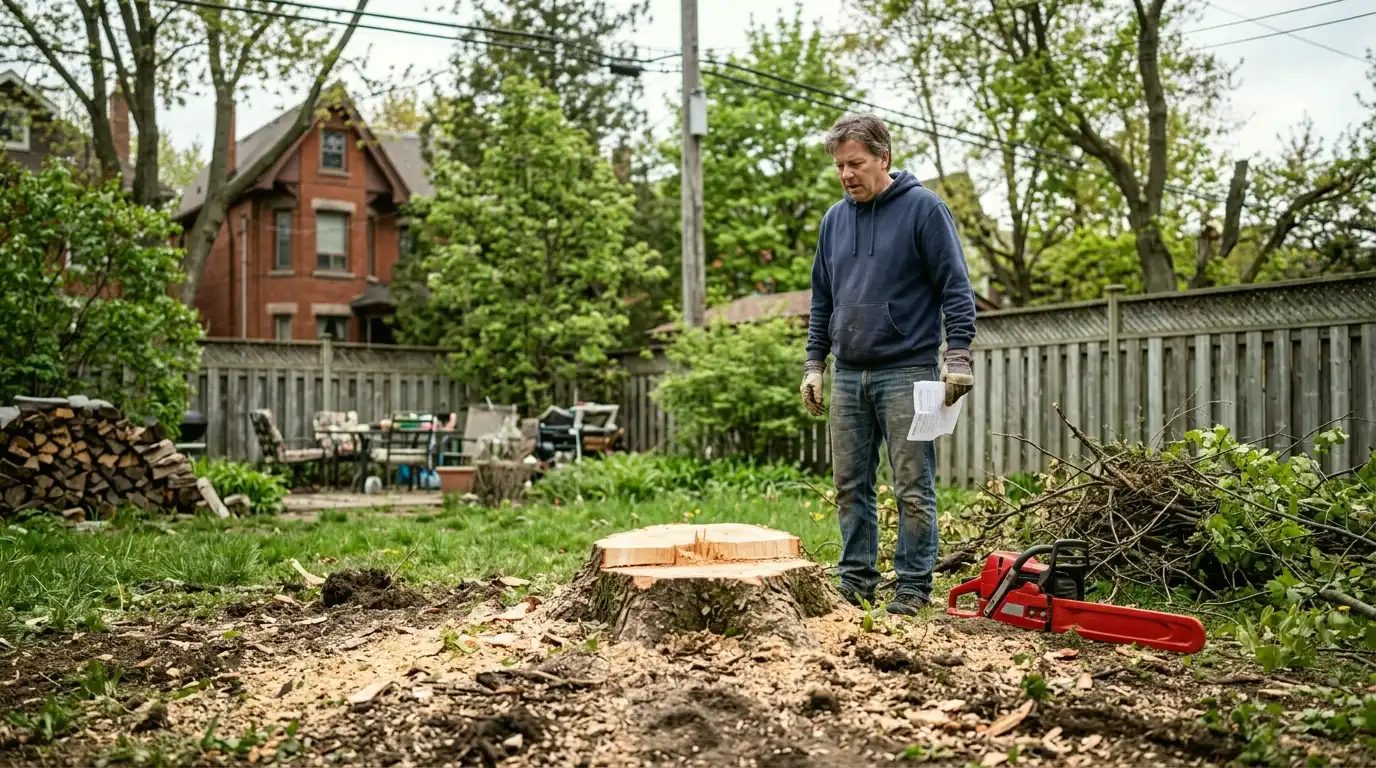
If you are wondering whether you can remove a tree without a permit in Toronto, start by checking the applicable rules, exemptions and approval requirements. If a regulated tree is removed in Toronto without the required permit, the property owner can face serious bylaw consequences. Depending on the facts, that may include substantial fines, replacement planting requirements, enforcement orders, and additional communication with the City of Toronto. This guide explains the risk in plain language, how unpermitted removals are usually discovered, and what a property owner should consider if a tree has already been removed.
Chapter 813 Violation: What the City May Do
- Review whether the removed tree was regulated under Toronto’s tree bylaw
- Investigate visible evidence such as a stump, wood debris, site disturbance, or neighbour complaints
- Issue enforcement orders where the City determines a violation occurred
- Require replacement planting at the property owner’s expense where applicable
- Seek penalties that can be significant, depending on the circumstances
What “Regulated Tree” Actually Means
Not every tree on private property in Toronto is regulated, but many mature residential trees are. The City of Toronto states that a permit is required to remove or injure a private tree that is 30 centimetres or more in diameter. That measurement is taken at 1.4 metres above ground level and is commonly called DBH, or diameter at breast height.
In older Toronto neighbourhoods such as Riverdale, Bloor West Village, Lawrence Park, Willowdale, Rosedale, Leaside, the Beach, High Park, and parts of Etobicoke and Scarborough, many mature shade trees are already above that threshold. A trunk that looks modest from a distance can still measure 30 centimetres or more when checked properly. Before any removal decision is made, the safest approach is to have the tree measured and reviewed by a qualified arborist.
Trees on City property are a separate issue. Boulevard trees, park trees, laneway trees, and other municipally owned trees are not controlled by the private property owner, regardless of whether they appear to be beside a home, driveway, or front yard. If there is uncertainty about ownership, the City advises applicants to determine property boundaries and tree ownership before submitting a tree or ravine permit application.
For official requirements, property owners should review the City of Toronto’s tree and ravine permit application guidance and the Toronto Municipal Code Chapter 813.
The Fine Risk Can Be Serious
Toronto’s tree bylaw is not a small technicality. Removing or injuring a regulated tree without the required permission can create major financial exposure for the property owner. The maximum penalty can reach up to $100,000 per tree, depending on the offence and the enforcement process.
The actual outcome depends on the facts. The City may look at the tree size, species, location, ownership, whether the removal appeared intentional, whether the owner made any attempt to check the permit requirement, whether there was an emergency safety issue, and how quickly the owner cooperated after the issue was identified. The point is simple: skipping the permit process can be far more expensive than handling it properly in the first place.
A permit application, a qualified arborist report where required, and a site sketch may feel inconvenient, especially when a tree is diseased, interfering with a project, or causing concern. Still, those steps are much safer than removing a protected tree first and trying to explain it later.
How the City Finds Out
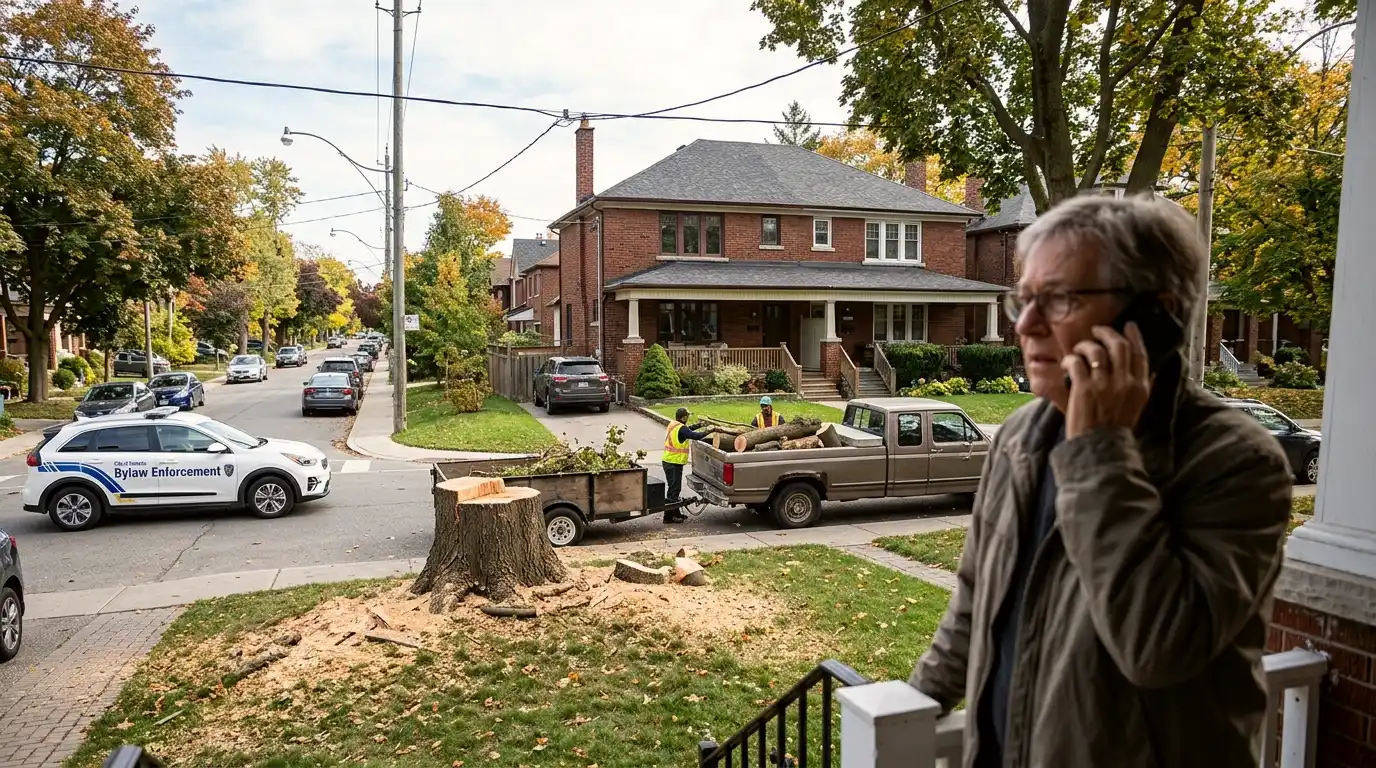
The most common trigger is a complaint from a neighbour or nearby resident. Large trees are visible from adjacent yards, sidewalks, laneways, and nearby homes. When a mature canopy tree disappears, the difference is usually obvious. A fresh stump, wood chips, sawdust, changed sunlight, and an open sight line can all draw attention.
Complaints may be reported through 311. Toronto Urban Forestry and bylaw-related staff may also become aware of a removal during other site visits or through visible evidence at the property. In some cases, aerial imagery, past records, or permit history may also help clarify whether a regulated tree existed before the removal.
Assuming an unpermitted removal will go unnoticed is risky. Tree removals can be reported by neighbours or observed during City inspections, construction reviews or other property-related activity.
What Happens After a Complaint Is Filed
When a possible unpermitted removal is reported, the City may investigate the property and review the available evidence. That evidence can include the remaining stump, trunk diameter, species clues, recent debris, site photographs, neighbour information, permit records, and other property details.
If the City determines that a regulated tree was removed without the required permit, the property owner may receive formal communication, an order, or a fine. Replacement planting may also be required. The City may specify the number, size, and type of replacement trees, along with a deadline for compliance.
Ignoring the issue usually makes it worse. If an order is issued, the property owner should read it carefully, contact the City for clarification where needed, and consider speaking with a qualified arborist or legal advisor.
How to Remove a Tree Without a Permit in Toronto: Already Dealing With a Tree Permit Issue
You’re Still at Risk Even If a Contractor Did the Work
This is the part that catches many homeowners by surprise. If a contractor removes a regulated tree from your property without the required permit, the property owner may still face enforcement consequences. A contractor’s mistake does not automatically remove the owner’s exposure under the bylaw.
If unpermitted work has already occurred, preserve photographs, invoices, messages, reports and other records that show what happened. Questions about payment, insurance, workmanship or legal responsibility are separate from the City’s bylaw process and may require independent legal or insurance advice.
Before any tree removal work begins, ask whether the tree may be regulated under Chapter 813. If the answer is uncertain, the tree should be measured and reviewed before work proceeds. A responsible qualified tree care professional should not encourage a property owner to ignore the City permit process.
What to ask before signing anything
Ask whether the tree has been measured at 1.4 metres above ground level. Ask whether the work may require a City of Toronto permit. Ask who is responsible for any arborist report, site sketch, permit-related documents, submission support, fees, replacement planting, and communication with the City. Ask for written confirmation of the qualified tree contractor’s qualifications, insurance, WSIB status where applicable, and scope of work before any removal starts.
What to Do If the Tree Has Already Been Removed
If a regulated tree may have already been removed without a permit, do not assume the problem will disappear. The first step is to understand whether the tree was actually regulated. That usually means reviewing the stump, approximate diameter, location, ownership, and any available photographs or records.
Trying to hide the removal can create additional problems. Immediately grinding the stump, covering the area with soil, or rushing to landscape over the site may look like an attempt to conceal evidence. A better approach is to contact the City of Toronto for direction and keep clear records of what happened.
A qualified arborist may be able to document the site, review the likely species and size, and discuss what information may be useful.
Do not treat this as an after-the-fact approval issue: Tree permits are intended to be handled before regulated tree removal occurs. If the tree has already been removed, the property owner should contact the City of Toronto to understand the proper next steps. A qualified arborist or legal advisor may be appropriate depending on the situation.
Common Situations Where People Get Caught Out
The tree was dead or dying
A dead, declining, or hazardous-looking tree may still require proper review before removal if it meets the protected size threshold or involves City property. The fact that a tree appears unhealthy does not automatically mean the permit requirement disappears. Where safety is a concern, property owners should contact the City and speak with a qualified arborist before taking action, unless there is an immediate emergency that requires urgent safety decisions.
The tree was causing damage to the house or driveway
Driveway lifting, root conflicts, foundation concerns, drainage issues, and structural worries may be relevant to a permit request, but they should be documented before removal. A qualified arborist may discuss the condition of the tree and whether supporting documents are available. Any engineering, insurance, construction, or legal issue should be discussed with the appropriate qualified professional directly.
Construction or renovation work
Construction is a common source of tree bylaw problems. A contractor starts excavation, a driveway replacement, an addition, a pool project, or a landscape rebuild, and a regulated tree is removed because it appears to be in the way. If nobody checked the bylaw first, the property owner can be left with the consequences.
If you are planning construction or landscaping near existing trees, confirm the rules before work starts. Review the City’s permit requirements, confirm tree ownership, and speak with a qualified arborist where needed. Any construction-related arborist report, site plan, permit-related document, submission support, pricing, and communication are the responsibility of the qualified arborist, contractor, or consultant directly engaged by the property owner.
Related Guides and Services
- How to Get a Tree Removal Permit in Toronto
- Toronto Tree Bylaws Overview
- Arborist Report Requests
- Tree Removal Requests
The Safer Way to Handle a Tree You Want Removed
The safer process starts before the tree is cut. First, determine whether the tree is on private property, City property, or near a ravine or regulated natural feature area. Next, measure the trunk diameter correctly. If the tree may be 30 centimetres or more in diameter, review the City of Toronto’s tree permit requirements before scheduling removal.
Where an arborist report, site sketch, or application material is required, those items must be prepared by the qualified arborist or qualified professional directly engaged for that work.
For a detailed overview of the permit process, see the guide: How to Get a Tree Removal Permit in Toronto. For official rules and application instructions, review the City of Toronto’s tree and ravine permit application page. If the property is outside Toronto, requirements can differ. Nearby municipal pages such as Richmond Hill and Markham may be useful starting points for local service-area information.
Frequently Asked Questions
What is the fine for removing a tree without a permit in Toronto?
Toronto’s tree bylaw can expose a property owner to significant penalties when a regulated tree is removed without the required permit. The maximum fine can be up to $100,000 per tree, depending on the facts of the case. Property owners should review the City of Toronto requirements and speak with a qualified arborist or qualified legal advisor for situation-specific guidance.
Can Toronto fine me for a tree my contractor removed?
Yes. Property owners can still face enforcement action if a regulated tree is removed from their property without the required permit, even if a contractor performed the work.
How does Toronto find out about unpermitted tree removals?
Unpermitted tree removals may be reported through neighbour complaints, 311 reports, visible evidence on the property, or bylaw-related inspections. A fresh stump, wood debris, changed sight lines, and recent site disturbance can make a removal noticeable from nearby properties or the street.
What if I didn’t know my tree needed a permit?
Not knowing the bylaw does not automatically remove the risk of enforcement. If a regulated tree may have been removed without the required permit, the property owner should contact the City of Toronto for direction and may choose to speak with a qualified arborist or legal advisor.
Can I apply for a retroactive permit after a tree has already been removed?
Tree removal permits are intended to be obtained before regulated tree removal occurs. If a tree has already been removed, the property owner should contact the City of Toronto to understand the next steps. A qualified arborist may be able to provide documentation, but
Need Help Understanding a Toronto Tree Permit Issue?
Also Relevant:
Toronto Permit Guide |
Richmond Hill Tree Services |
Markham Tree Services