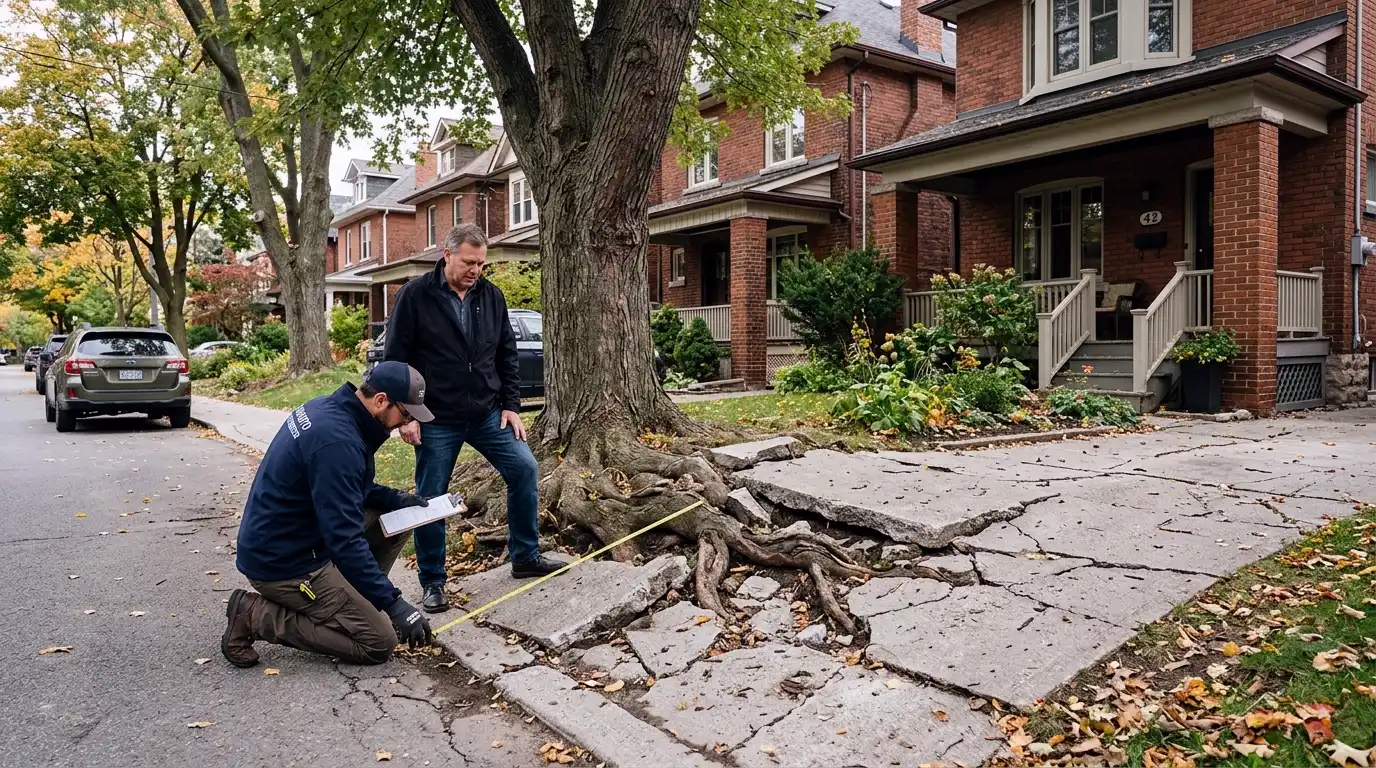
The practical issues around tree roots cracking a driveway in Toronto include tree condition, property context and any rules that affect the work. When driveway cracking or heaving appears near a tree in Toronto, do not assume the roots are automatically the cause. The right next step depends on the tree, pavement base, drainage, freeze-thaw movement, ownership, underground utilities and City tree rules. Options can include root-sensitive driveway repair, carefully assessed root work, drainage correction, monitoring or tree removal where evidence shows the conflict cannot be managed safely.
Tree Roots Cracking a Driveway in Toronto: Why Tree Roots and Driveway Damage Can Occur Together
Tree roots grow where oxygen, moisture, space and suitable soil are available. Toronto’s current guidance says roots do not cause lifts or cracks in properly constructed and well-maintained infrastructure. Poor drainage and freeze-thaw movement can heave or crack pavement first, creating spaces that roots later grow into. On an older driveway, the pavement base, drainage, soil movement and root growth should therefore be assessed together.
Species and growth pattern can influence where surface roots are likely to occur, but species alone does not prove causation. Tree size, planting distance, soil depth, drainage, pavement construction, past excavation and site history all matter. A mature tree can be close to damaged hardscape without being the original cause of the failure.
The tree’s condition also matters. A healthy mature tree may be worth managing if the driveway damage is moderate and the tree is not structurally compromised. A declining tree with major defects, poor placement, repeated hardscape damage, or confirmed root-related infrastructure issues may require a different conversation with a qualified arborist or qualified professional.
Option 1: Root Pruning and Root Barrier Discussion
Root pruning means cutting selected roots that are contributing to pavement conflict. It can be risky if done too aggressively, too close to the trunk, or without understanding which roots help support the tree. Large roots are not only water and nutrient pathways. Some also contribute to stability. Cutting the wrong roots can increase decline or failure risk.
A qualified arborist or qualified tree care professional may assess whether root pruning is even appropriate. That review may consider species, trunk diameter, tree health, distance between the trunk and driveway, visible root size, slope, soil conditions, nearby targets, canopy condition, and whether the tree has enough remaining root support.
A root barrier may be discussed where future root movement needs to be redirected away from a new driveway edge. Root barriers are not magic and they are not permanent. They may extend the useful life of a repair in some situations, but tree roots continue to grow and may eventually move around barriers. The qualified professional and driveway contractor should explain the expected benefit, limitations, digging requirements, locate requirements, and cost with the property owner.
Root work should be reviewed carefully before cutting:
- Large structural roots should not be cut casually.
- Cutting too close to the trunk can increase tree instability and decline risk.
- Air excavation or careful hand excavation may reduce unnecessary root damage.
- Root barrier installation may require digging and utility locates.
- Driveway repair should usually be planned after the root situation is reviewed.
- All root-pruning risk, warranty limits, and cleanup terms should be confirmed directly with the qualified professional.
Option 2: Driveway Repair With More Root-Tolerant Materials
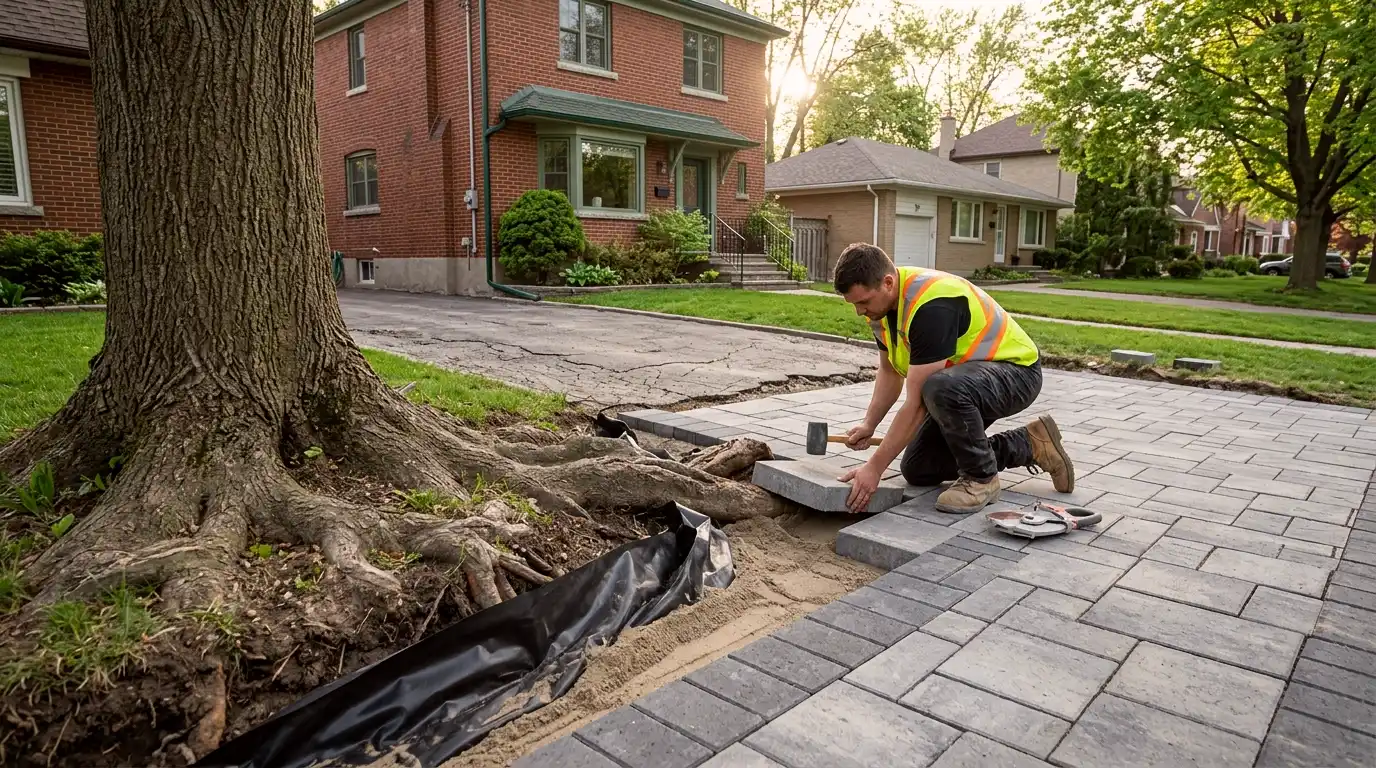
Repairing the driveway without addressing the root conflict may only reset the clock. If active roots remain under the new surface, the same lifting or cracking pattern can return. That is why the tree, root zone, driveway base, and repair method should be considered together.
Rigid concrete can crack when roots or soil movement create uneven pressure below the slab. Asphalt may deform before it cracks, which can make movement more visible earlier. Interlocking pavers may tolerate limited movement better because individual units can shift, reset, or be repaired without replacing a full concrete panel. Permeable systems may also allow more water movement into the root zone, depending on the base design and site conditions.
The driveway contractor is responsible for explaining driveway material options, base preparation, drainage, grading, warranty, repair limits, and expected service life. A qualified arborist or qualified tree care professional may discuss tree and root implications.
Option 3: Tree Removal
Tree removal may be part of the discussion when the tree is poorly located, structurally compromised, repeatedly damaging hardscape, contributing to confirmed drainage or foundation issues, or likely to keep creating costly repairs despite reasonable management. Removal should not be the automatic first answer, especially for a mature healthy tree that provides shade, stormwater benefits, privacy, and canopy value.
The better question is whether the tree can be managed safely and economically over time. If repeated root pruning, driveway reconstruction, barriers, drainage changes, and monitoring would cost more than removal and proper replacement planting, a qualified professional may discuss removal as one option. The property owner should also consider permit requirements, replacement planting, stump grinding, driveway reconstruction, and long-term species selection.
If the tree is City-owned, shared with a neighbour, in a ravine-related area, or protected by City tree rules, do not authorize removal until ownership and permissions are clear.
Permits and Toronto Private Tree Rules
If the tree is a private tree in Toronto and measures 30 cm or more in diameter at 1.4 m above ground level, a City of Toronto permit may be required before removal or injury. Root pruning, root cutting, excavation, driveway reconstruction, and work near a protected tree can also raise tree-injury questions depending on the scope.
Driveway damage can be relevant background for a permit-related review, but it does not automatically create a permit exemption or guarantee approval. The City decides whether a permit is required and whether an application is approved. If a qualified arborist prepares documentation, that professional is responsible for the report scope, findings, fee, limitations, and any submission support agreed with the property owner.
For permit context, see the complete guide to Toronto tree removal permits.
Not Sure Which Option Is Right for Your Driveway?
City Tree or Private Tree: Confirm Ownership First
Driveway and sidewalk root conflicts often happen near the front of a property, where ownership can be confusing. A tree near a sidewalk, curb, boulevard, or road allowance may be City-owned even if its roots affect a private driveway. A tree fully on private property is usually the property owner’s responsibility. A tree near a boundary can involve neighbour consent questions.
If the tree appears to be City-owned, contact 311 before authorizing private work. Toronto has separate processes for City-owned trees and for claims involving City tree damage. Document the issue with photos, keep dates, and save any service request numbers or written responses. Property damage claims involving City trees are handled through the City claim process.
If the tree is private but roots affect a neighbour, or a neighbour’s tree roots affect your driveway, the issue may become a civil property matter. Legal, insurance, boundary, and repair-responsibility questions should be reviewed with the appropriate lawyer, insurer, surveyor, engineer, or qualified professional.
Utility Locates Before Digging or Root Work
Ontario One Call says homeowners must request public utility locates at least five business days before a project that requires digging at a single civic address, and all notified infrastructure owners must respond before digging begins. Private utilities such as irrigation or landscape wiring may require separate investigation.
Do not assume the qualified tree contractor, arborist, landscaper, driveway contractor, or stump grinder has already arranged locates. Confirm in writing who is responsible for submitting the locate request, what work is covered by the locate, when the locate expires, and whether private utilities on the property require separate investigation.
What to Expect From a Professional Review
When a qualified arborist or tree care professional reviews the situation, the initial review may include photos, tree location, driveway damage, visible root patterns, trunk diameter, species, tree condition, nearby targets, utility concerns, and whether the tree may be protected by City rules.
A site visit may look at root exposure, driveway heave, trunk distance, canopy condition, soil and drainage conditions, nearby structures, driveway repair plans, and whether removal, monitoring, pruning or further investigation should be discussed. If a written opinion or report is requested, confirm its intended use, scope, limitations, fee and whether it is suitable for a City, insurance, construction or dispute file.
Property owners should ask for written clarity before approving work. Important questions include whether roots will be exposed before cutting, what roots may be cut, who requests locates, what cleanup is included, whether a root barrier is included, whether driveway repair is included, who handles permit-related documents where needed, and what warranties or exclusions apply.
Timing: When to Deal With Root Damage
Root and driveway conflicts are easier to plan before the driveway repair is scheduled. Repaving or pouring new concrete over active roots without reviewing the tree may lead to repeat damage. If the driveway is being rebuilt, the tree and root question should be addressed before the new surface is installed.
Season, soil moisture, tree health, construction schedule, permit timing, and locate timing can all affect the best work window. Some root work may be more stressful to a tree during drought or heat. Some driveway work may be delayed by weather. Permit-related review can add time if removal or injury of a protected tree is being considered.
Official and Helpful Resources
- City of Toronto: When to Apply for a Tree or Ravine Permit
- City of Toronto: How to Apply for a Tree or Ravine Permit
- City of Toronto: City-Owned Tree Maintenance
- City of Toronto: Fallen Trees and Branch Damage Claims
- Ontario One Call: Homeowners
- ISA: Find an Arborist
Related professional service: See the stump grinding service information for stump and root-related requests.
Frequently Asked Questions
Will root pruning kill my tree?
Root pruning can seriously affect a tree if large roots are cut too close to the trunk, too many roots are removed, or structural roots are damaged. The risk depends on tree species, size, condition, root layout, soil, distance from the trunk, and how much root mass is affected. A qualified arborist or qualified tree care professional may assess the situation and explain possible risks directly to the property owner.
Who is responsible when driveway damage appears near a City boulevard tree?
If the tree is City-owned, such as a boulevard or road allowance tree, property owners should contact 311 and document the issue with photos. Property damage claims involving City trees are handled through the City of Toronto’s claim process.
How much does root pruning cost in Toronto?
Root pruning cost depends on access, root size, excavation method, whether air excavation is used, whether a root barrier is installed, whether driveway repair is involved, whether utility locates are needed, and qualified tree contractor pricing.
Does removing a tree that cracked my driveway need a permit in Toronto?
A private tree with a diameter of 30 cm or more, measured at 1.4 m above ground, may require a City of Toronto permit before removal or injury. Driveway damage may be relevant background, but the City decides permit requirements and outcomes.
Do I need utility locates before root pruning or driveway work?
Utility locates may be required before digging, excavation, root pruning, root barrier installation, driveway reconstruction, or stump grinding. Ontario One Call says homeowners must contact Ontario One Call before any project that requires digging. Property owners should confirm locate responsibility directly with the qualified tree contractor before work begins.
Related Guides
- Tree Removal Permit Toronto
- Tree Growing Into House or Foundation
- Stump Grinding Cost Toronto
- Large Tree Removal Cost Toronto
- Tree Removal Requests