Hedge Trimming in East York
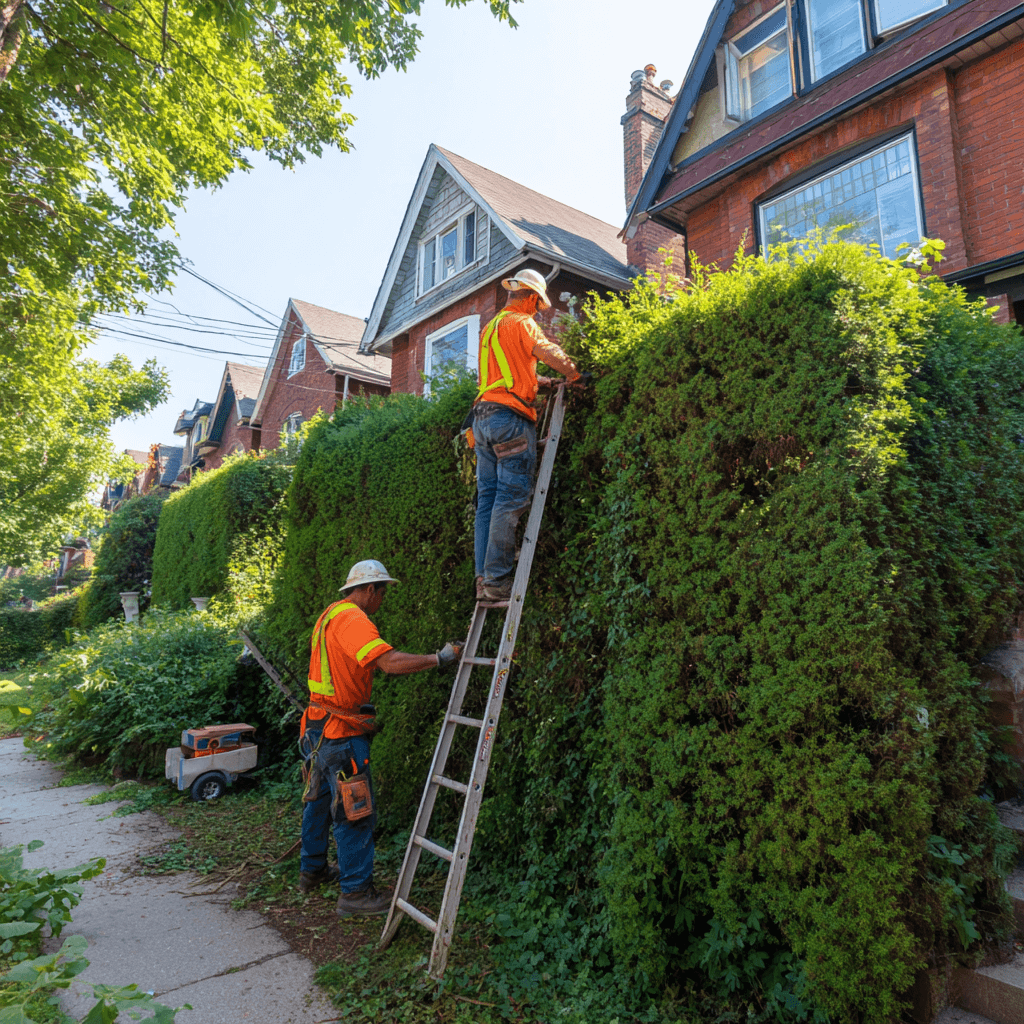
Cedar hedges are one of the defining features of East York's residential landscape. Drive through almost any street in Leaside, Pape Village, Woodbine Heights or Danforth Village and you will see them: tight rows of eastern white cedar (Thuja occidentalis) planted along property lines in the 1950s and 1960s, now standing 10 to 20 feet tall and serving as the primary privacy boundary between neighbouring properties. These hedges are a practical and beautiful feature of the neighbourhood, but they require regular maintenance to stay healthy, dense and the right shape. Left unmanaged they become wide, open at the base, and eventually develop brown interior sections that indicate dead material accumulation.
We trim cedar hedges across East York using proper technique that encourages dense regrowth, maintains a slight taper so the base receives adequate light, and removes dead interior material without cutting into bare wood that cannot regenerate. We also handle situations where hedges have grown too large to maintain, have died in sections, or are being removed entirely to make way for fencing or other boundary treatments.
Cedar Hedge Trimming: Technique Matters
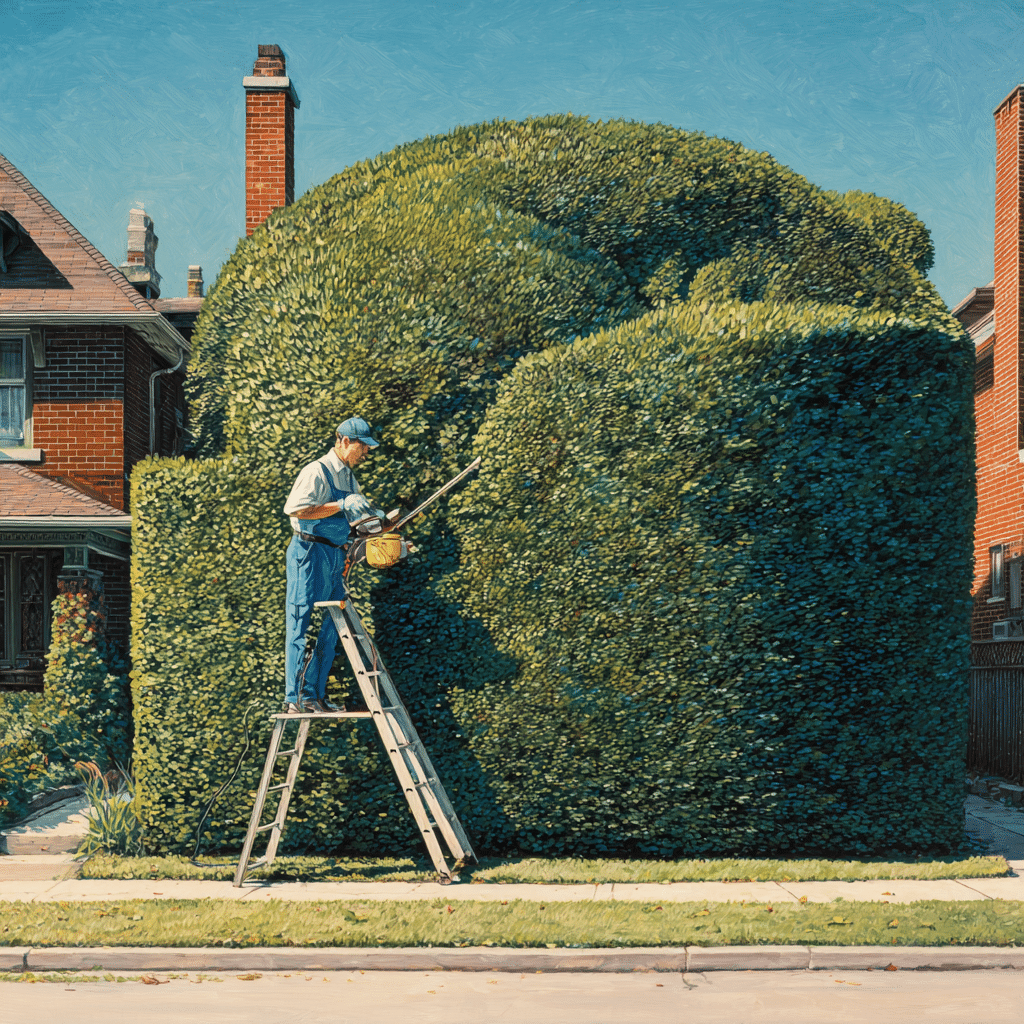
Many cedar hedges in East York have been trimmed at some point by someone with a hedge trimmer and no understanding of how cedars grow. The common mistake is cutting all sides to a perfectly vertical flat plane. The problem with this approach is that it shades out the bottom of the hedge over time. Cedar foliage at the base of a vertical hedge receives less and less light as the top grows and begins to thin out and die. The correct approach is to maintain a very slight taper so the hedge is marginally wider at the base than at the top, allowing light to reach the lower foliage and keeping the hedge dense from ground to crown.
We also avoid cutting into bare brown wood. Cedar, like most conifers, cannot regenerate new growth from old bare wood once the foliage has died back from that section. If a hedge has sections where the interior is bare and brown, those sections need to be managed carefully. In some cases selective pruning can open up light to stimulate regrowth from nearby live sections. In others, where the dead zones are large enough, partial or full hedge removal and replanting is the more realistic long-term solution.
Timing for Cedar Hedge Trimming in East York
The best time to trim cedar hedges in East York is late summer, typically from mid-August to September. At this point the spring growth flush has fully hardened, the trimming stimulates minimal secondary growth before dormancy, and the hedge looks tidy through fall and winter. A secondary light trimming in late spring after the new flush has extended but before it fully hardens is also appropriate for hedges that grow quickly and need two trims per year to stay tidy.
Avoid trimming cedars in late fall once temperatures drop consistently below five degrees, and avoid trimming in early spring before the new growth has hardened enough to protect the cut ends. Heavy trimming in extreme heat during summer drought is also hard on cedars and should be avoided if the hedge is already showing signs of stress.
Cedar Hedge Removal in East York
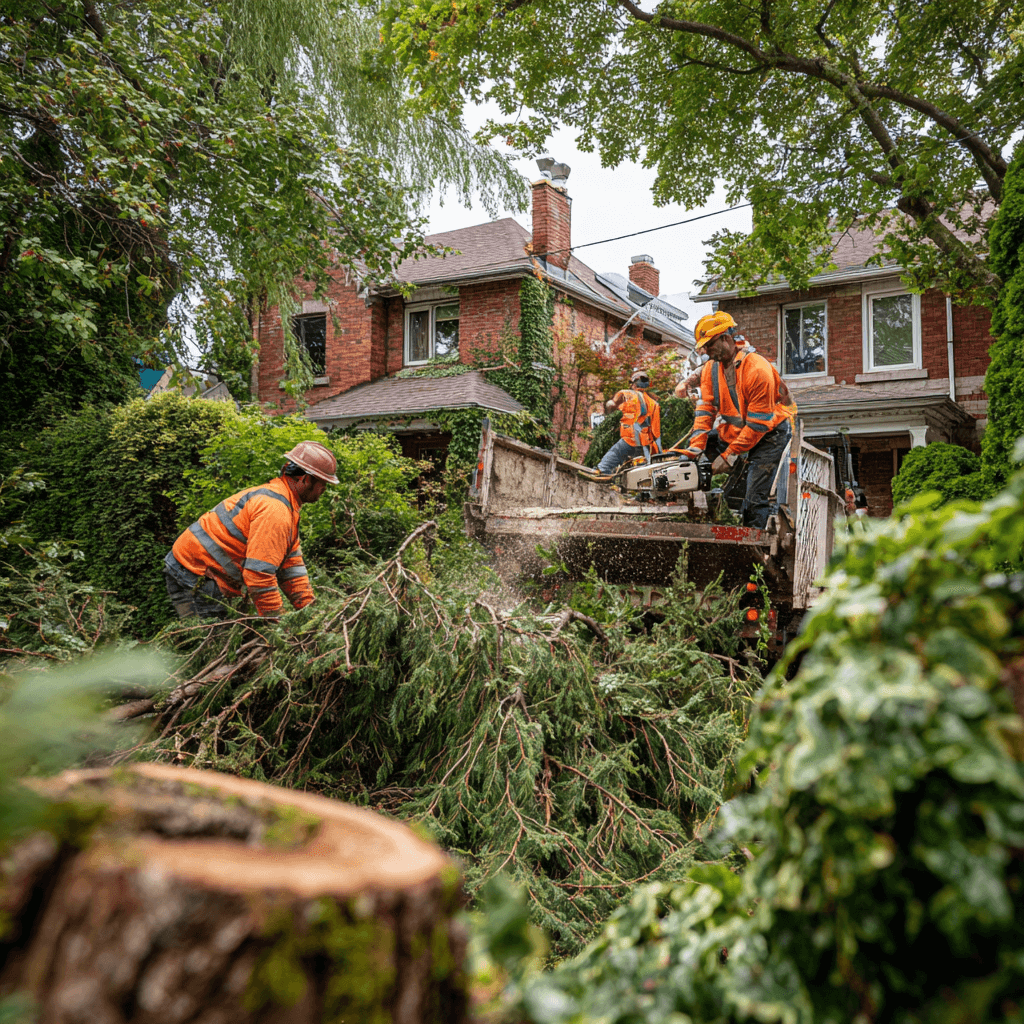
When a cedar hedge has reached the end of its useful life, whether through age, section dieback, root failure or a change in the property's use, we remove it completely. This involves cutting the individual cedars down to near ground level, and then either grinding the stumps or hand digging the root mass out of the ground depending on access and the client's plans for the area afterward. Complete removal and stump grinding is the preferred approach if you intend to install new fencing directly in the footprint of the old hedge, as fence posts cannot be set properly into an area with a mass of cedar root material still in the ground.
Frequently Asked Questions About Hedge Trimming in East York
How often should I trim my cedar hedge in East York?
Most cedar hedges in East York need trimming once per year in late summer to maintain shape and density. Faster-growing hedges in well-lit and well-watered locations may benefit from two trims per year, once in late spring after the new flush hardens and once in late summer. Under-trimmed hedges that have grown wide and open at the top require more aggressive management over multiple seasons to restore density.
My cedar hedge has brown sections on the inside. Can it be saved?
It depends on how much of the hedge is affected and where the dead material is. Small sections of interior browning that have live green foliage on all outer surfaces can often be managed by selective opening cuts that let light in and stimulate recovery. Large dead zones or sections where the entire thickness of the hedge has browned out cannot regenerate and need to be removed and replanted. We assess the specific situation and give you an honest recommendation.
Do I need a permit to remove my cedar hedge in East York?
Cedar hedges are generally classified as ornamental hedges under Toronto's bylaws and are not typically subject to the same permit requirements as shade trees. Individual cedar trees within a hedge that have reached 30 cm DBH could theoretically trigger Chapter 813 protection, but this is uncommon in standard hedge plantings. We confirm the status of your specific hedge before removal work begins.
My neighbour and I share a cedar hedge on the property line. Who is responsible for trimming it?
Boundary trees and hedges are a matter of civil property law in Ontario. Generally both property owners share responsibility for maintenance of vegetation on or straddling a property line. We can trim the hedge from one side in a single visit and invoice the party who booked the work, or we can coordinate with both property owners if there is a shared agreement in place.
Can you trim a cedar hedge that is more than 15 feet tall?
Yes. We work on cedar hedges of all heights using ladders and elevated work platforms where needed. Very tall hedges require more time and more careful planning to access the top evenly, but height alone is not a limitation. We assess access and advise on the right equipment approach during our estimate visit.
Is it possible to reduce the height of an overgrown cedar hedge?
Cedar tops can be lowered if there is live green foliage at the height you want to cut to. If the top of the hedge has a dense layer of green foliage down to the new target height, it can be cut back and will fill in reasonably well. If the top is the only green section and cutting down would expose bare interior wood, the cedar will not regenerate from that bare wood and the cut line will remain brown and open. We assess the structure of your specific hedge and give you a realistic picture of what is achievable before we trim.
Do you clean up after hedge trimming in East York?
Yes. We gather all clippings and load them for removal from the property. For large hedges the volume of clippings can be significant, and we bring appropriate equipment to collect and haul the material away. We leave the trimming area clean before we go.
More East York Tree Services
Get a Free Estimate for Tree Work in East York
We serve all of East York including Leaside, Bennington Heights, Thorncliffe Park, Woodbine Heights, O'Connor-Parkview, Danforth Village, Crescent Town, Pape Village, Broadview North and Coxwell-Danforth. Our certified arborist visits your property, assesses the Chapter 813 requirements that apply, and provides a firm quote before any work begins.