Tree Preservation Plans in East York, Toronto
Renovation activity in East York is consistently high. Post-war bungalows in Leaside and Woodbine Heights are being converted with rear additions, second storey additions and coach houses. Semi-detached homes in Pape Village and Broadview North are undergoing significant alterations that bring construction equipment within the root zones of mature protected trees. Every project involving work within range of a private tree 30cm DBH or larger on the property triggers the tree preservation requirements under City of Toronto Municipal Code Chapter 813.
A tree preservation plan is the document the City's Urban Forestry division requires to confirm that a protected tree is properly identified and that the construction methodology will protect it through the entire build. Without it, the building permit cannot be released where protected trees are on or adjacent to the site. Getting the plan prepared correctly, accepted by Urban Forestry, and reflected in the construction protocols before the first shovel goes in is the practical goal. We prepare these plans for East York property owners and coordinate with architects, contractors and City reviewers involved.
What a Tree Preservation Plan Includes for East York Properties
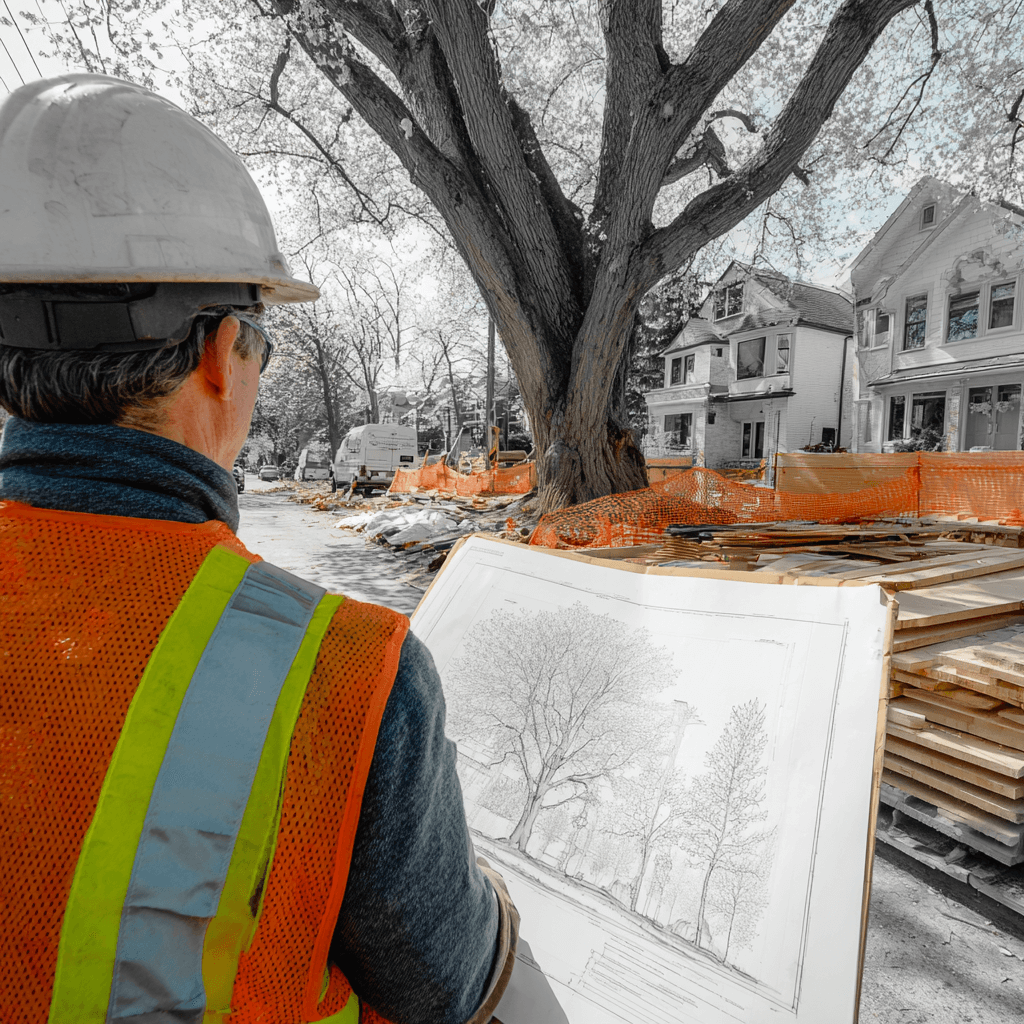
The City of Toronto sets out specific requirements for tree preservation plans submitted as part of a building permit application. The plan must be prepared by an ISA certified arborist and must address the condition, location and protection of all protected trees on the property and on adjacent properties where the construction zone approaches within range of the critical root zone.
Required content of a tree preservation plan accepted by Toronto Urban Forestry:
- A tree inventory identifying all trees on the property and adjacent properties within range of the work, including species, trunk diameter at breast height, and health condition
- A site plan overlay showing each inventoried tree's location relative to the proposed building envelope, excavation zone and staging areas
- Critical root zone calculations for each protected tree (the CRZ radius in feet equals the trunk diameter in inches at minimum)
- A description of any proposed encroachment into the critical root zone and the rationale for why it cannot be avoided
- Tree protection fencing specifications including fencing type, installation location, and confirmation that fencing is to be installed before any construction activity begins
- Any tree protection or root bridging measures required within the construction zone
- A site supervision schedule specifying when the arborist will attend the site to confirm protection measures are in place
- A post-construction assessment commitment confirming the arborist will evaluate preserved trees after substantial completion
Ravine edge properties: Homes in East York adjacent to the Don Valley or Taylor Creek ravines with proposed construction near the ravine boundary need the preservation plan to address Chapter 658 as well. This typically requires a separate ravine permit application submitted to Urban Forestry in addition to the Chapter 813 plan.
Common Tree Preservation Situations in East York
The most common tree preservation situation we encounter in East York is a rear addition that brings the excavation zone close to a large silver maple at the rear of the lot. On the typical East York bungalow lot, the rear yard is 30 to 40 feet deep and the silver maple was planted at or near the rear lot line, meaning its critical root zone extends well into the proposed addition footprint. These situations require the preservation plan to document the overlap, specify any root bridging over the excavation zone, and identify protection measures that prevent root zone compaction by heavy equipment.
Garage conversions and coach house additions access the rear yard through a widened side yard or driveway, which often cuts through the root zone of front yard trees. A silver maple or Norway maple on a Leaside front yard may have roots extending well into the driveway area being widened. The preservation plan needs to address this approach route and specify how tree roots in the drive zone will be managed during construction.
We review proposed building plans before preparing the preservation plan, consult with the contractor on staging locations and equipment routes, and advise on design modifications that would reduce root zone impact. The goal is a plan that protects the tree effectively and gets accepted by Urban Forestry on the first submission.
Tree Protection Fencing Installation
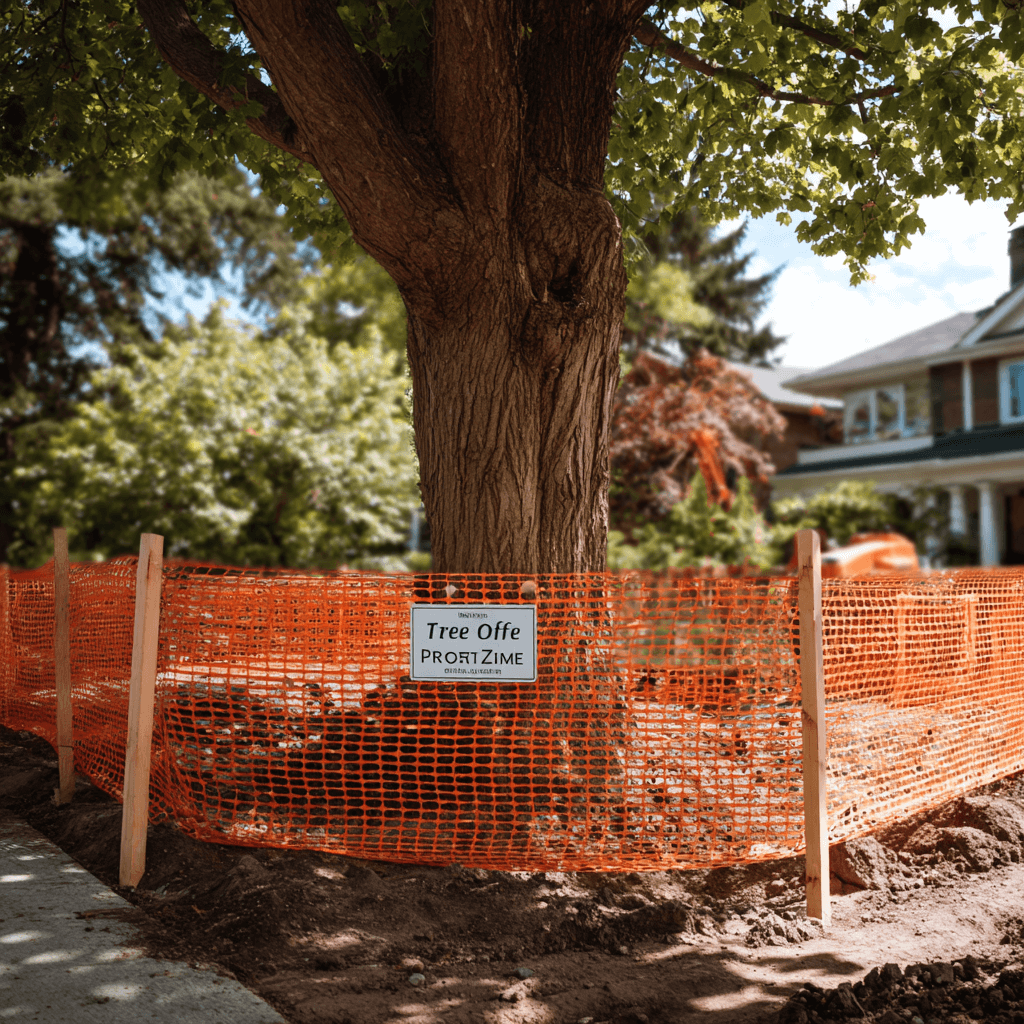
We don't just prepare the plan document: we install the tree protection fencing on site. Once the preservation plan is approved and the permit is in place, we supply and install the orange construction snow fence TPZ barriers at the exact locations specified in the plan, attach the required signage to each panel, and walk the contractor through which areas are off limits for equipment access, material storage and soil stockpiling. Fencing installation is available as part of our complete plan-plus-installation package, or as a standalone service where a plan has already been prepared by another arborist and you simply need the physical barriers erected to a specific layout before construction starts.
Frequently Asked Questions About Tree Preservation Plans in East York
Does every renovation in East York require a tree preservation plan?
No, only those where a protected tree's critical root zone is within the construction zone. If your renovation involves no excavation or heavy equipment activity near any tree 30cm DBH or larger, no plan is required. The City's building permit process includes a tree declaration form that all applicants must complete, confirming whether protected trees are present and whether the construction will affect them.
My architect says there are no trees near my addition. Is a declaration form still required?
Yes. All building permit applications in Toronto require a completed tree declaration form. If the declaration states no protected trees are present and that turns out to be incorrect, the applicant bears responsibility for the non-compliance. We can do a quick site walk to confirm tree sizes and locations before you sign the declaration, which protects you if there is any ambiguity about borderline trees.
Can a removal permit and tree preservation plan be handled together?
Yes. Where a project requires removal of some trees and preservation of others, the removal permit application and the preservation plan can be submitted together as part of the same Urban Forestry review. We prepare both documents and coordinate the submission. Getting Urban Forestry approval for both before construction starts is the cleanest approach.
What happens if a protected tree is damaged during construction without a plan?
Damaging a protected tree during construction without following the required preservation process is a bylaw offence under Chapter 813. The fines are the same as for unauthorized removal: a minimum of $500 per tree and a maximum of $100,000 per tree. The City does conduct inspections of active construction sites in East York, and enforcement actions following neighbour complaints are not uncommon.
How early in the project should I engage an arborist?
As early as possible, ideally when the architect is preparing the initial design. The location and size of protected trees can influence where the building envelope can go and how construction staging and equipment routing is planned. Involving the arborist at the design stage is far less expensive than trying to redesign around a tree protection requirement discovered at the permit application stage.
Do you do site supervision during construction?
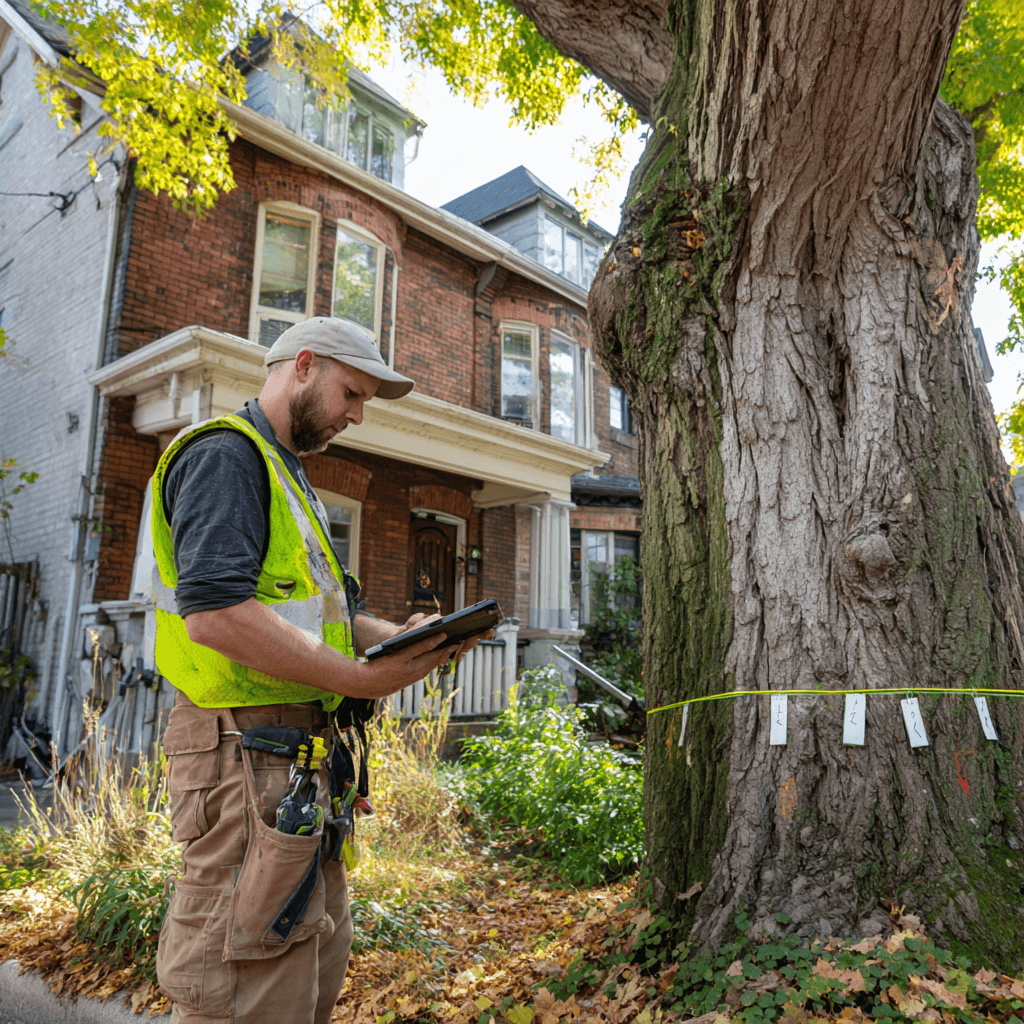
Yes. Site supervision is part of the preservation plan deliverable and is often required by Urban Forestry as a condition of plan acceptance. We attend the site at key construction milestones, confirm that protection fencing is in place before excavation begins, and assess the condition of preserved trees during and after construction. The site supervision schedule is documented in the plan and in our project file.
More East York Tree Services
Get a Free Estimate for Tree Work in East York
We serve all of East York including Leaside, Thorncliffe Park, Woodbine Heights, Playter Estates, Pape Village, Broadview North, O'Connor-Parkview, Danforth Village, Crescent Town and Coxwell-Danforth. Our certified arborist visits your property, assesses the Chapter 813 requirements that apply, and provides a firm quote before any work begins.