Tree Pruning and Trimming in East York, Toronto
East York's mature urban canopy presents both an asset and a management challenge for property owners. The silver maples, oaks, lindens and elms that define the streetscapes of Leaside, Playter Estates and Danforth Village have reached a stage where their crowns extend over houses, fences and neighbouring properties. Unpruned deadwood accumulates in the upper canopy and becomes a serious liability in summer and winter storms. Crown weight shifts as trees age and structure deteriorates, increasing the chance of large limb failure onto adjacent structures.
Proper pruning by an ISA certified arborist extends the life of these trees and manages the risk they present. The distinction between correct pruning and harmful topping matters enormously in East York, where large silver maples on compact lots are sometimes topped by inexperienced crews attempting to reduce tree size quickly. Topping destroys crown structure, creates massive wound surfaces that decay and fail, and triggers a flush of weak fast-growing regrowth that creates more hazard than the original crown. We do not top trees. Every crown reduction follows ANSI A300 pruning standards and removes no more than is necessary to achieve the structural objective.
Pruning Standards and What They Mean for Your East York Trees
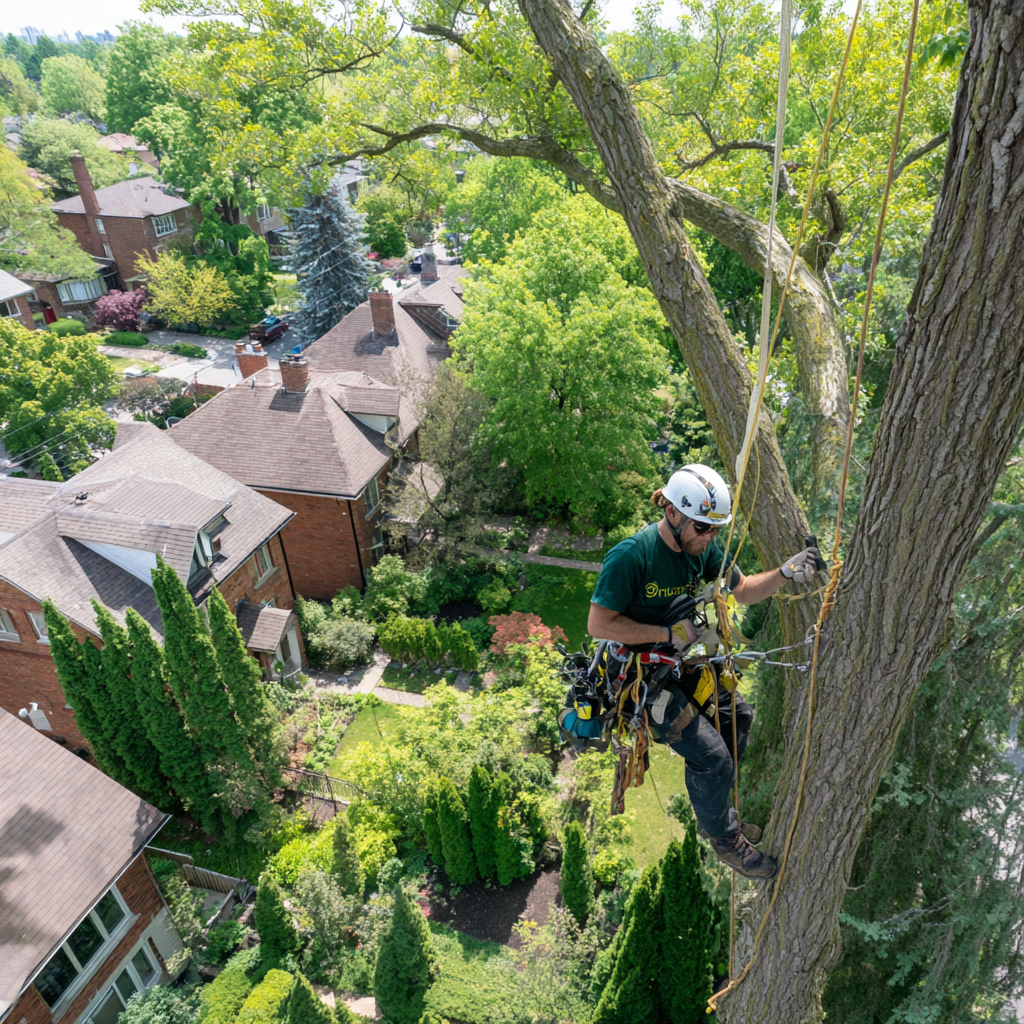
ANSI A300 is the North American standard for tree pruning and the benchmark used by ISA certified arborists. It specifies how large a pruning cut should be relative to the branch diameter, where cuts should be made, how much total crown volume should be removed in a single session, and what growth types should be prioritized.
Types of pruning we carry out in East York:
- Deadwood removal: Removing dead, dying and broken branches from the crown. The most common pruning work on East York's mature silver maples and done primarily for safety. Dead branches fall without wind or warning.
- Crown thinning: Removing selected live branches to increase light penetration and airflow through the crown. Reduces wind resistance and is appropriate for trees with dense interior growth.
- Crown reduction: Reducing the overall spread or height of the crown using reduction cuts back to lateral branches. Differs from topping in that cuts are made at proper branch unions, not arbitrarily across the stem.
- Crown lifting: Removing lower branches to provide clearance over rooflines, driveways, or pedestrian areas below.
- Structural pruning: Pruning young or semi-mature trees to develop sound branch architecture and prevent structural defects from forming at maturity.
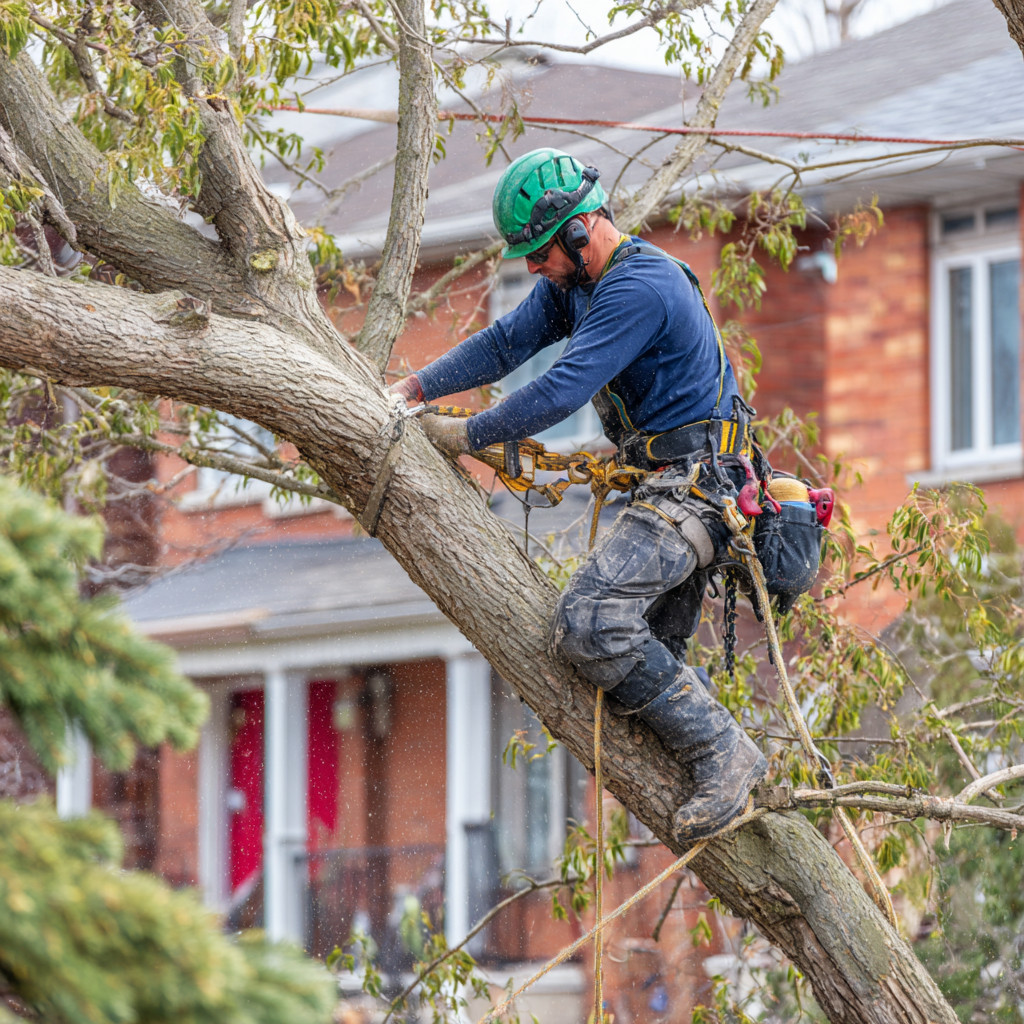
- Clearance pruning: Removing branches growing into the house wall, roof, eavestroughs or utility lines.
Does tree pruning require a permit in East York? Standard deadwood removal, crown thinning and clearance pruning that removes no more than one-third of the living crown does not require a permit under Chapter 813. Major crown reduction or pruning that substantially alters the structure of a protected tree may require disclosure and in some cases a permit. We advise on bylaw implications before carrying out any significant pruning work on trees 30cm DBH or larger.
Silver Maple Management in East York
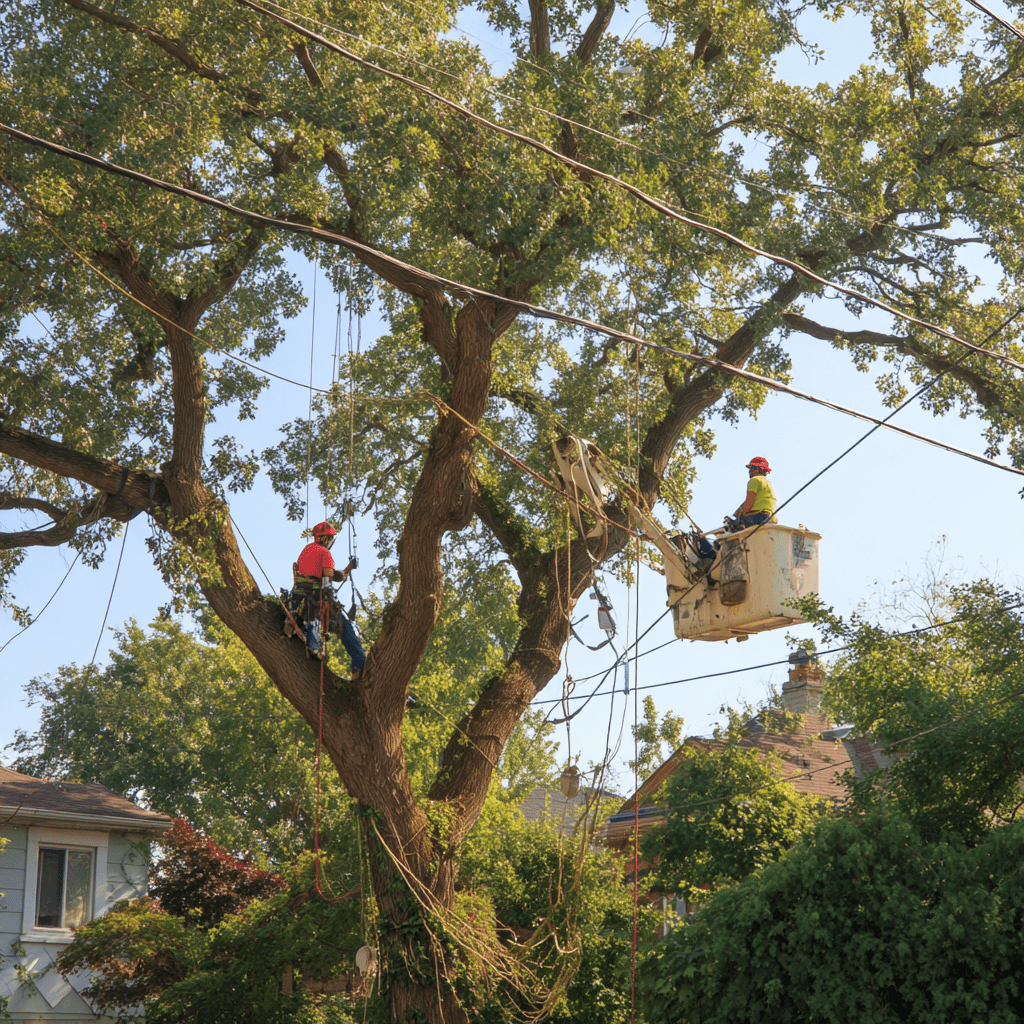
Silver maple is the most common large tree on East York residential properties and the one that generates the most pruning calls. It grows fast, spreads wide, and produces a dense canopy that shades everything beneath it. It also produces brittle wood prone to splitting at branch unions, and its shallow root system lifts pavement and competes aggressively with lawn and garden planting. On a Leaside lot where a silver maple was planted in 1955, you may now be dealing with a 70-centimetre trunk, a crown that spreads 15 metres and a root system extending into multiple neighbouring properties.
Ongoing deadwood removal and crown monitoring every three to five years keeps these trees safe and extends their useful life significantly. Without it, the crown accumulates dead and structurally weak growth that eventually fails. We assess each silver maple individually and recommend the pruning scope that addresses the actual condition of the tree.
Tree Pruning vs. Tree Trimming
The two terms are often used interchangeably, but they describe work with different primary goals. Pruning is health and structure focused: removing dead or diseased wood, correcting poor branch attachments, addressing codominant stems, and making decisions about the tree's long-term structural integrity. Trimming is clearance and appearance focused: reducing a branch that is contacting a roof, lifting a canopy above a fence line, or tidying the outline of a tree that has grown unevenly. Most jobs we do involve elements of both. A branch overhanging a driveway may need to come off for clearance reasons, but how it is cut and where the cut is made is a pruning decision governed by tree biology. We don't treat these as separate service categories because in practice they're almost always the same job.
Frequently Asked Questions About Tree Pruning in East York
Do I need a permit to prune a large tree in East York?
Standard deadwood removal, crown thinning and clearance pruning removing no more than one-third of the living crown does not require a permit under Chapter 813. Significant crown reduction removing a substantial portion of the canopy from a protected tree may fall under the bylaw's definition of injury. We assess each pruning scope before starting and advise if any permit implications exist.
How often should mature trees in East York be pruned?
Most large mature trees benefit from a deadwood inspection and removal every three to five years. Fast-growing species like silver maple may need more frequent attention. Clearance pruning near structures and eavestroughs is often done annually or every two years. We note recommended follow-up timing when completing each job.
What is topping and why do you refuse to do it?
Topping is the indiscriminate cutting of large branches or the main stem at an arbitrary height to reduce tree size quickly. It removes the natural crown architecture, creates massive open wounds that decay rapidly, and stimulates a flush of weak fast-growing regrowth that is structurally unsound and creates more hazard than the original crown. A proper crown reduction is made back to lateral branches of adequate size and maintains the tree's structural integrity.
Can you prune trees close to hydro wires?
Pruning within active overhead electrical distribution lines is regulated and must be carried out by Toronto Hydro's authorized contractors, not private tree services. We can prune trees near but not in contact with distribution lines. Where a tree has grown into a hydro wire, we advise on engaging Toronto Hydro and coordinate accordingly.
My neighbour's tree overhangs my property. Who is responsible?
In Ontario, a property owner is entitled to prune branches overhanging their property up to the property line, but may not injure or kill the tree in doing so. If the overhanging branches are from a tree 30cm DBH or larger, cutting significant live branches back to the line without the owner's involvement may trigger Chapter 813 concerns. We can advise on neighbour tree situations and work collaboratively with both parties where needed.
When is the best time to prune trees in East York?
Most pruning can be done year-round. For oaks specifically, pruning during late spring and summer increases the risk of oak wilt infection through fresh wounds and is best avoided. Silver maples, elms, lindens and most other East York species can be safely pruned at any time. We note any species-specific timing considerations when assessing your trees.
Do you clean up after pruning work?
Yes. All brush, chips and cut material are removed from the property as part of the standard service. We do not leave debris on site unless the property owner specifically requests that chipped material be left in a garden bed or compost area.
More East York Tree Services
Get a Free Estimate for Tree Work in East York
We serve all of East York including Leaside, Thorncliffe Park, Woodbine Heights, Playter Estates, Pape Village, Broadview North, O'Connor-Parkview, Danforth Village, Crescent Town and Coxwell-Danforth. Our certified arborist visits your property, assesses the Chapter 813 requirements that apply, and provides a firm quote before any work begins.