Emergency Tree Service in Etobicoke
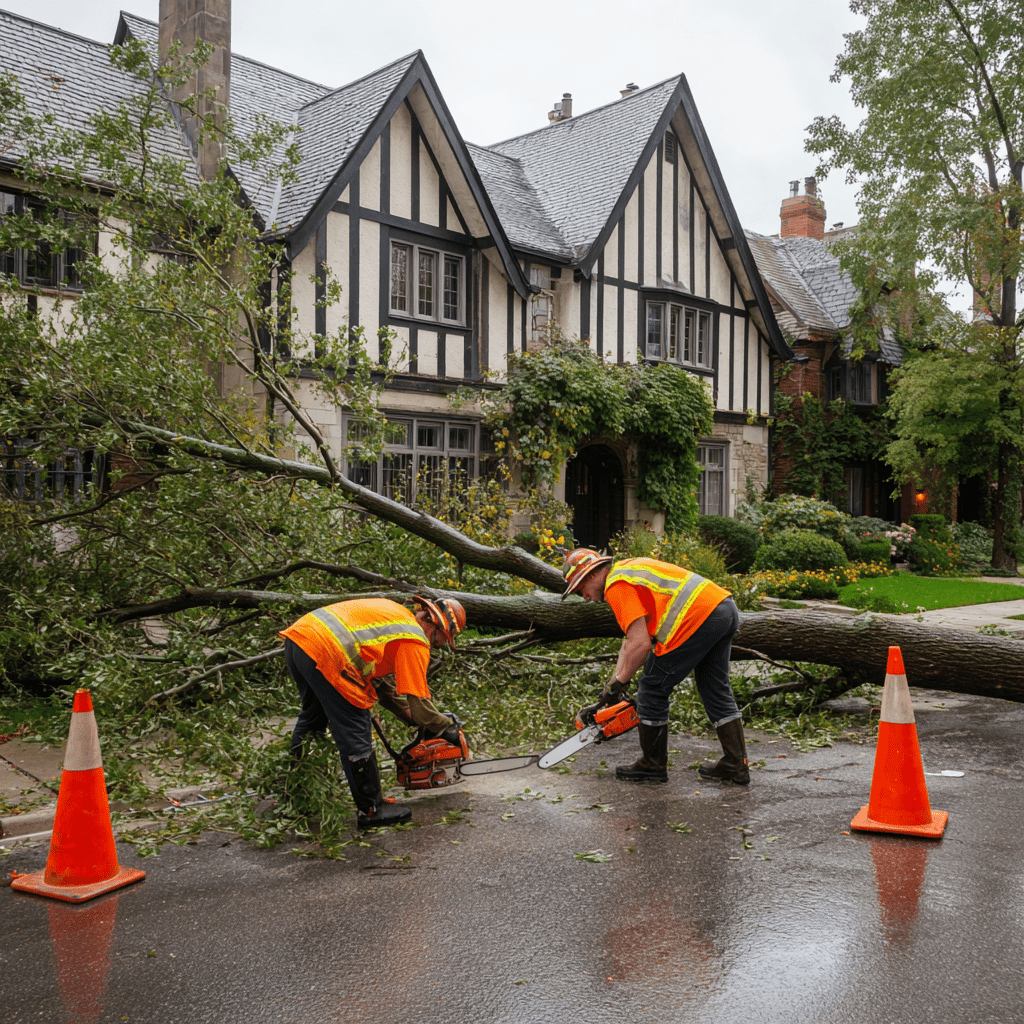
Etobicoke's emergency tree situations are shaped by its geography in ways that are distinct from any other part of Toronto. The district sits directly in the path of Lake Ontario storm systems that approach from the southwest, and the open water fetch across the lake means these systems arrive in Etobicoke with full force before they encounter the built environment. The Humber River valley acts as a wind channel that accelerates storm fronts moving through the district, concentrating storm energy along the valley corridor. The result is a district that experiences tree failures on a scale and frequency that reflects both the age of its tree canopy and the severity of its storm exposure.
The December 2013 ice storm that caused widespread canopy damage across Toronto hit the large estate trees of The Kingsway and Humber Valley Village particularly hard. The combination of dense old-growth canopy and an ice load of two to three centimetres across all branches put extreme stress on structural unions that had been developing for 80 and 90 years. Post-ice-storm emergency work in these neighbourhoods involved crane operations, extensive hanging limb removal and structural assessments of dozens of properties over several weeks. We are prepared for events of that scale and can deploy accordingly when conditions require it.
Emergency Response for Kingsway and Humber Valley Estate Properties
Emergency situations on estate properties in The Kingsway and Humber Valley Village require a level of response capacity that standard residential emergencies do not. The trees are larger, the potential consequences of a major limb failure or root ball uproot are greater, and the access complexity of some of these properties, with gated driveways, mature specimen trees throughout the grounds, and ravine-edge topography at the rear, means that emergency operations need to be planned carefully even under time pressure.
For emergency situations involving trees on or overhanging structures on these properties, we assess the situation before any cutting begins to understand what is holding the tree or limb in place, where the secondary hazards are, and whether crane support is needed to safely remove major wood without causing additional structural contact. We do not rush the initial assessment in favour of getting a chainsaw running, because the initial assessment determines whether the subsequent work is safe.
Waterfront Storm Response in Mimico and Long Branch
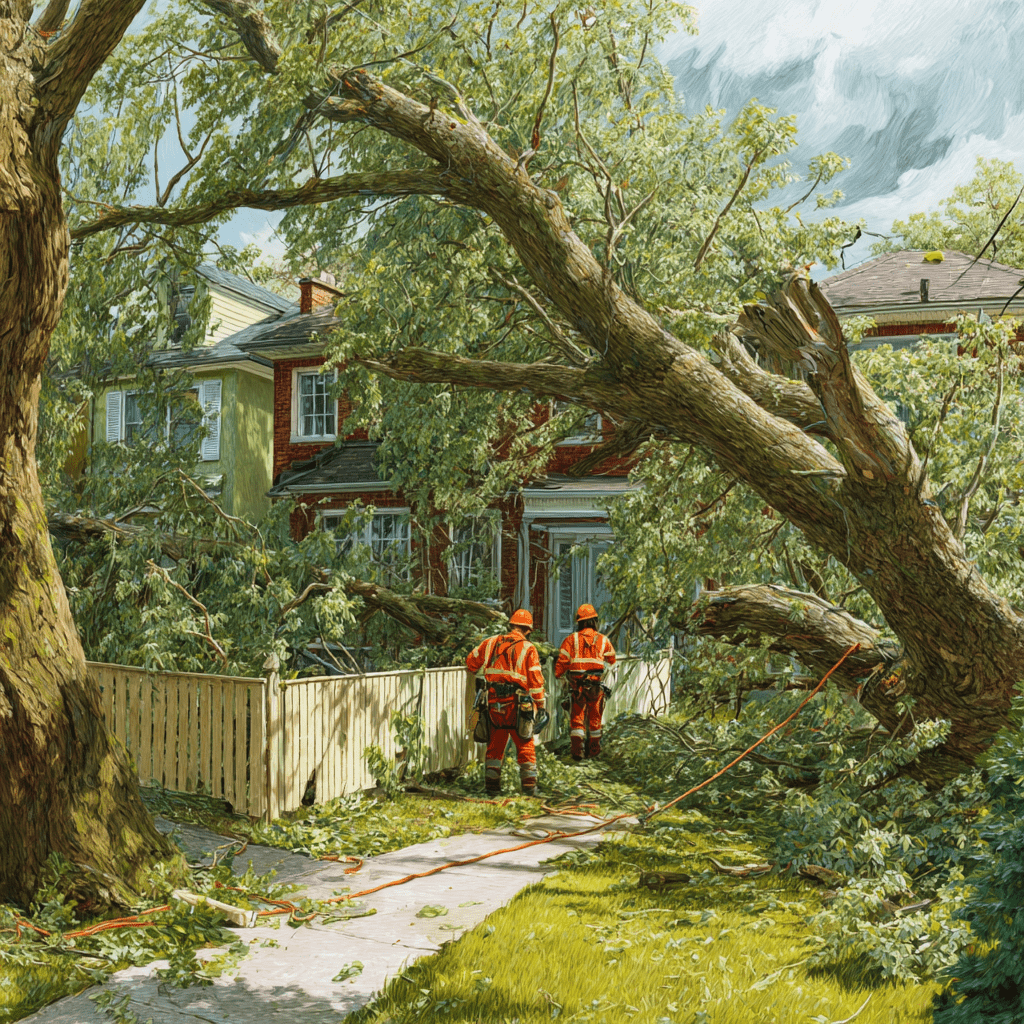
Lake Ontario storm events produce a different kind of tree emergency from standard summer thunderstorms. The sustained high winds off the lake during a major low-pressure system can run for many hours, applying progressive fatigue loading to trees that would survive a short-duration convective event. Waterfront properties in Mimico and Long Branch are directly exposed to this loading, and trees on these properties often show directional lean and structural adaptation to prevailing wind direction that makes them more vulnerable to storm events from atypical directions. Post-storm emergency response in these areas often involves assessing not just the trees that have already failed but identifying those that have been newly compromised and present a developing hazard.
The Martin Goodman Trail and Waterfront Trail run through this area, which means that tree failures near the lakeshore can affect public access routes as well as private properties. We coordinate with the City on situations where fallen trees affect public trail access alongside private property clearance.
Chapter 813 and Emergency Work in Etobicoke
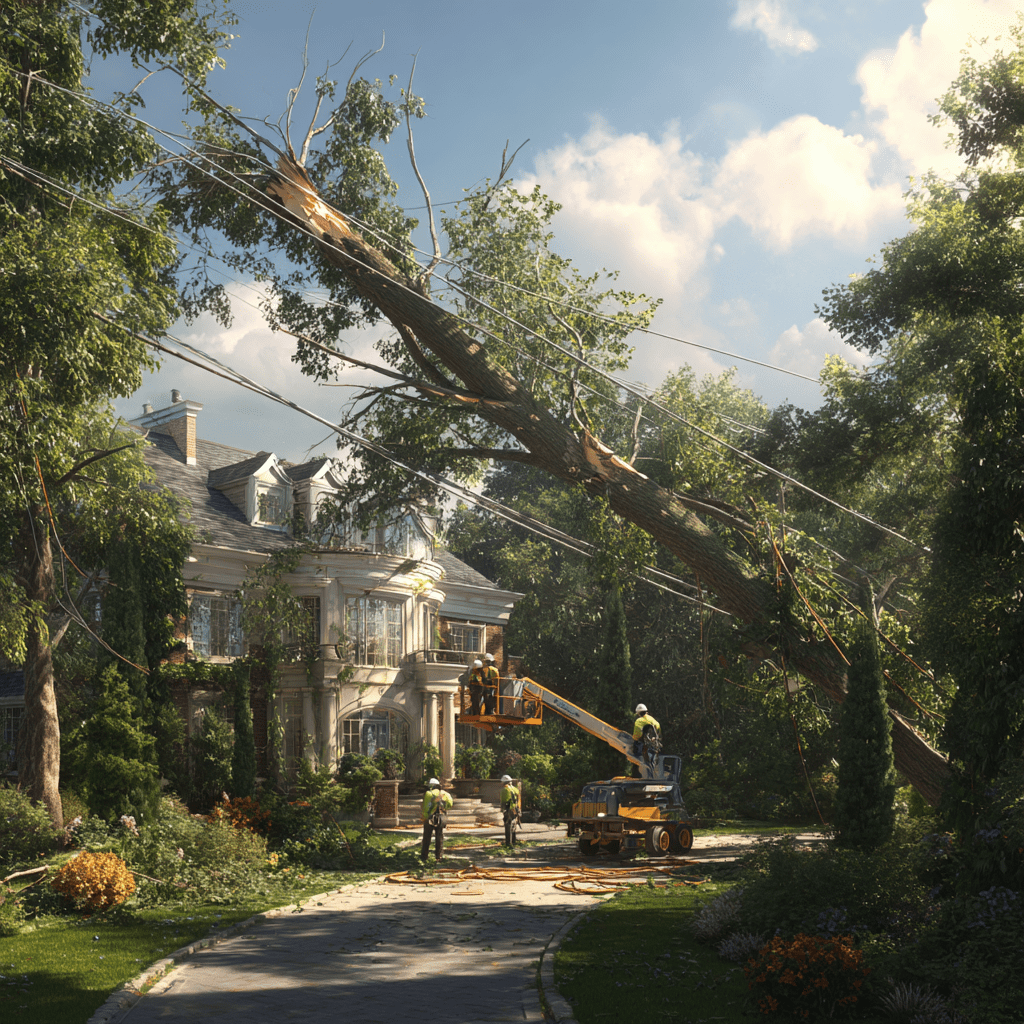
Chapter 813's emergency work provision allows removal of a protected tree without the standard permit process where there is a clear and immediate threat to safety. In Etobicoke, this provision most commonly applies to fallen trees on structures, large hanging limbs directly over occupied areas, and trees that have partially uprooted and are visibly unstable. We document every emergency situation with photographs and written description of the hazard, and advise on any follow-up reporting requirements with the Etobicoke-York TPPR District Office after the work is complete.
For properties in the TRCA regulated Humber River corridor, emergency work within the regulated area should also be reported to TRCA after the fact. TRCA has a notification process for emergency work that occurs within regulated areas, and documenting that the work was genuinely an emergency response protects the property owner from potential regulatory issues arising from vegetation removal within the regulated zone.
Frequently Asked Questions About Emergency Tree Service in Etobicoke
How quickly can you respond to a tree emergency in Etobicoke?
Response time depends on current call volume, road conditions and the severity of the situation. During major storm events across Etobicoke, call volume increases significantly and we triage based on severity of hazard. We provide honest response time estimates when you call and update you as we work through the call queue. Situations with active structural contact or life-safety implications are always prioritized.
A large tree on my Kingsway property fell during the storm but hasn't hit anything yet. Is it urgent?
A fallen tree is a lower-risk situation than a hanging or partially failed tree, provided the fallen tree is not under tension, not leaning against a structure, and not blocking vehicle or emergency access. We still recommend addressing it promptly to prevent ground contact decay from setting in and to clear the area for normal property use. Contact us to assess and advise on timing based on the specific situation.
Do I need to notify TRCA after emergency tree work near the Humber River?
For emergency work within the TRCA regulated area, best practice is to notify TRCA after the work is done and document the emergency circumstances. TRCA has a notification process for emergency situations occurring within regulated areas. We assist clients with this follow-up notification as part of our post-emergency service on Humber corridor properties.
The storm knocked a tree against my Etobicoke house but it is still partially standing. What should I do?
Do not attempt to remove or cut the tree yourself. A tree leaning against a structure is under significant loading, and the failure mode when that loading is suddenly released can be unpredictable. Stay clear of the tree and the structure beneath it, call us to assess the situation, and document the contact point with photographs from a safe distance. We assess the best approach for removing the contact without causing additional structural damage and work from the safest angle inward.
Does my home insurance cover emergency tree removal in Etobicoke?
Home insurance coverage for tree removal varies by policy. Some policies cover removal of a tree that has directly damaged an insured structure. Others cover only the structure repair and not the tree removal cost. We provide detailed documentation of the emergency situation for insurance claims. Contact your insurer directly as soon as the immediate hazard is controlled to begin the claims process.
More Etobicoke Tree Services
Get a Free Estimate for Tree Work in Etobicoke
We serve all of Etobicoke including The Kingsway, Humber Valley Village, Sunnylea, Islington Village, Baby Point, Thorncrest Village, Princess Anne Manor, Mimico, Long Branch, New Toronto, Humber Bay Shores, Markland Woods, Rexdale, Thistletown, Richview and Stonegate-Queensway. Our certified arborist visits your property, assesses the Chapter 813, TRCA and Heritage Conservation District requirements that apply, and provides a firm quote before any work begins.