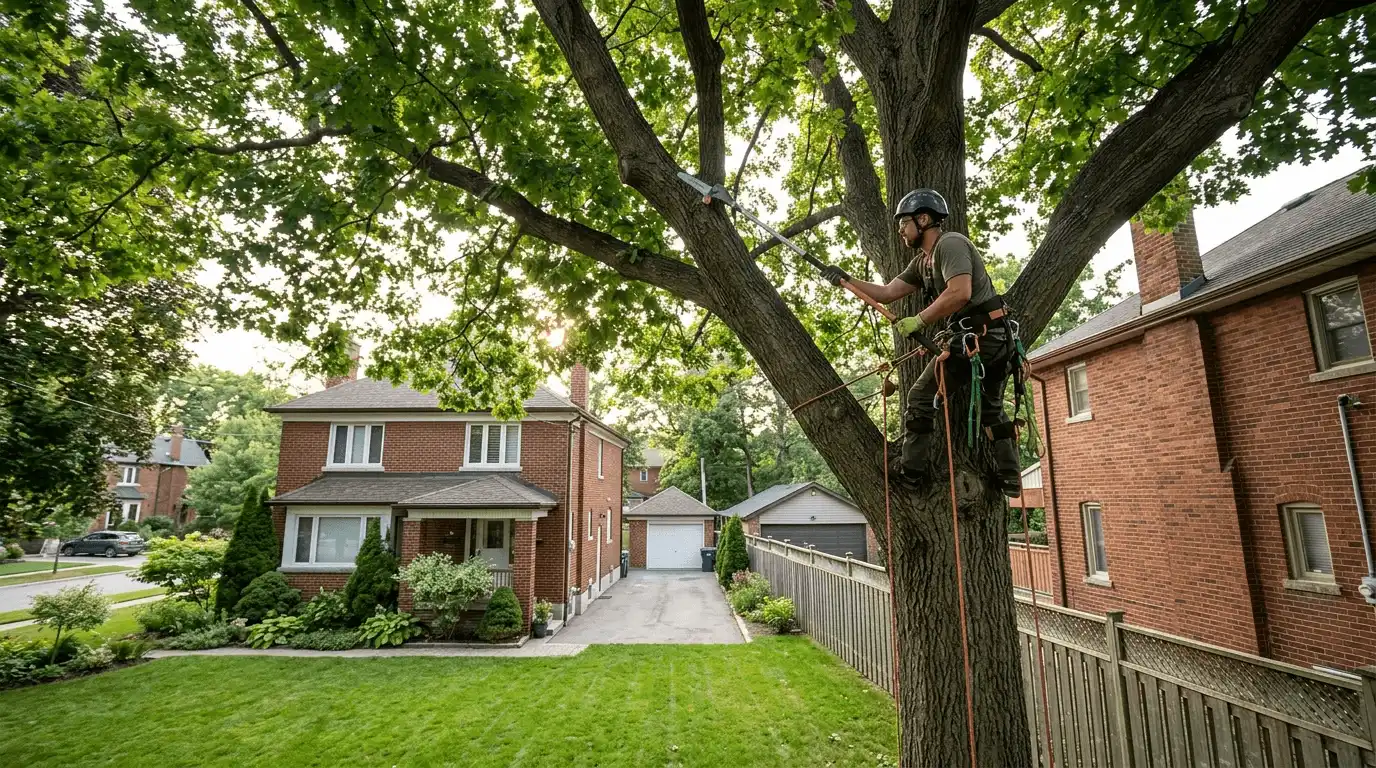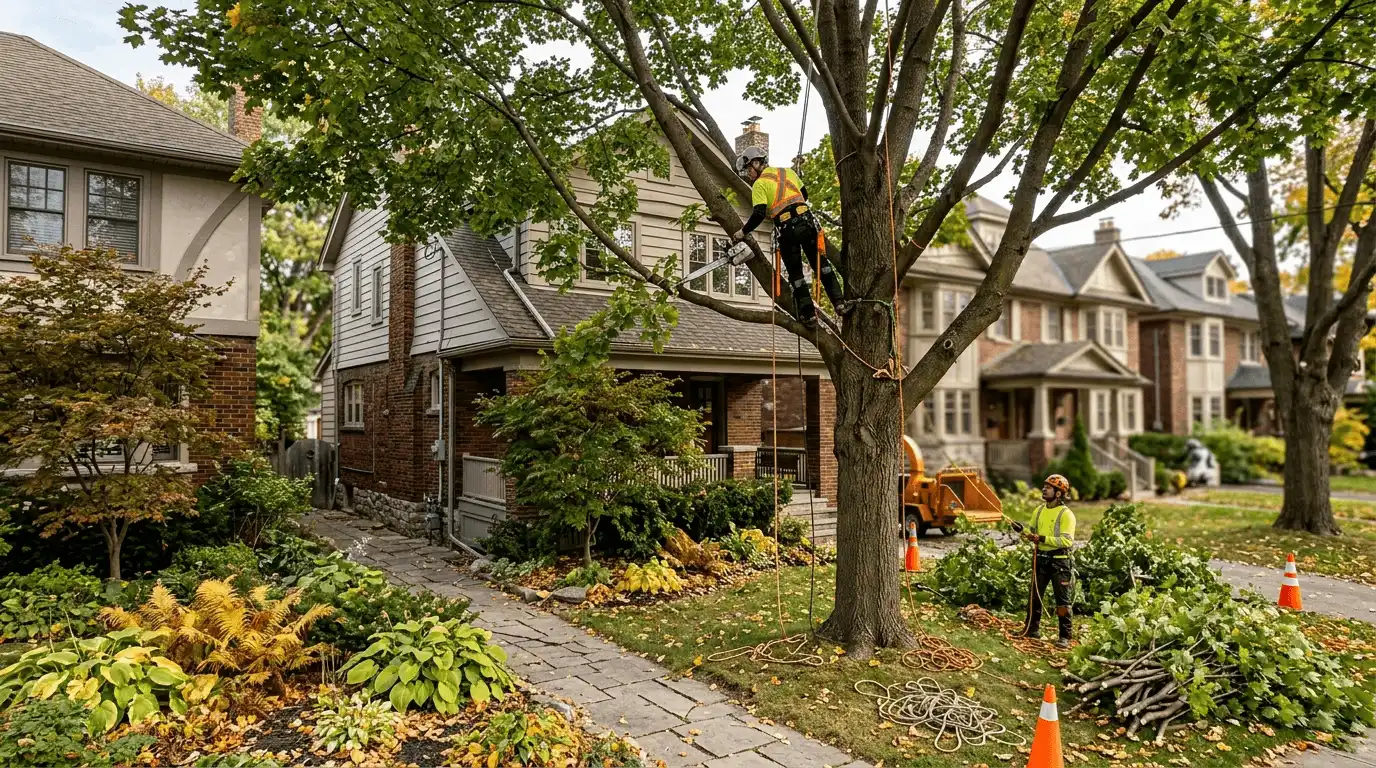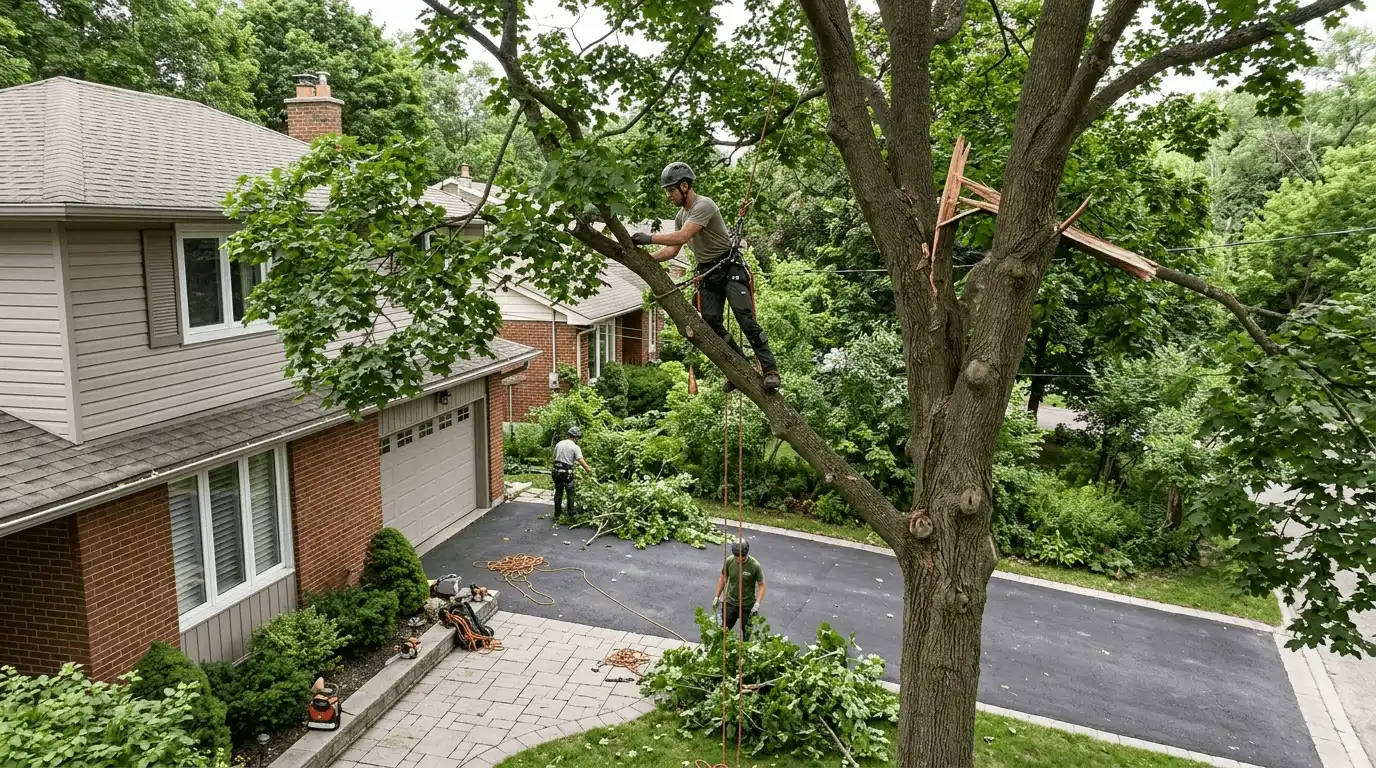
Tree Pruning and Trimming Requests in Etobicoke, Ontario
Tree pruning and tree trimming requests from The Kingsway, Humber Valley Village, Edenbridge-Humber Valley, Sunnylea, Islington Village, Thorncrest Village, Princess Anne Manor, Princess Gardens, Baby Point, Markland Woods, Mimico, Long Branch, New Toronto, Alderwood, Humber Bay Shores, Stonegate-Queensway, Norseman Heights, Richview, The Westway, Rexdale, Thistletown, West Humber-Claireville, Etobicoke North and nearby Etobicoke communities | Independent contractor referral where available | (437) 367-8733
Quick answer: Etobicoke tree pruning and trimming requests may involve mature oak pruning, maple pruning, deadwood removal, clearance pruning, crown reduction questions, crown thinning, structural pruning, storm-damaged limbs, branches near roofs, branches near overhead wires, oak wilt timing concerns, City-owned tree questions, ravine-edge trees, Humber River valley trees, Mimico Creek properties, Etobicoke Creek properties, lakefront trees, and TRCA-regulated-area review.
Toronto Tree Services may forward Etobicoke tree pruning and tree trimming requests to an independent arborist or tree care professional where available. Toronto Tree Services is a referral and lead generation service only. The independent contractor is responsible for assessment, estimates, scheduling, pruning methods, cleanup terms, reports, permit-related documents, pricing, payment, communication, warranties, and service-related issues directly with the customer.
Tree pruning in Etobicoke is not one-size-fits-all. The pruning concern on a Humber Valley Village oak is different from a lake-exposed tree in Long Branch, a fast-growing maple in Mimico, a large boundary tree in Islington Village, a deadwood concern in Markland Woods, or a ravine-edge tree near the Humber River. Etobicoke combines estate lots, compact south-end yards, creek corridors, lakefront properties, older residential canopy, townhouse complexes, commercial frontage, apartment grounds, and mature trees close to homes, fences, utility lines, driveways, and retaining walls.
Customers searching for Etobicoke tree pruning, Etobicoke tree trimming, Etobicoke tree cutting service, Etobicoke deadwood removal, Etobicoke crown reduction, Etobicoke crown thinning, Etobicoke branch removal, Etobicoke oak pruning, Etobicoke maple pruning, Etobicoke tree pruning near powerlines, or Etobicoke arborist report help should first identify the purpose of the work. Deadwood removal, storm-damage cleanup, roof clearance, driveway clearance, sidewalk clearance, structural correction, oak wilt timing, and crown reduction all involve different limits, risks, and cleanup expectations.
Etobicoke Tree Pruning, Trimming and Local Rule Checks
An Etobicoke tree pruning or trimming request should begin with tree ownership, branch location, pruning purpose, tree species, tree condition, and surrounding land context. Customers should confirm whether the tree is private, City-owned, a street tree, a replacement tree, a ravine-area tree, a tree near a natural feature, a tree near powerlines, a tree near the Lake Ontario shoreline, or a tree in a TRCA-regulated area. Toronto Tree Services does not inspect trees or decide whether pruning is compliant. Those questions should be confirmed directly with the City of Toronto, TRCA where applicable, Toronto Hydro or another utility where relevant, or an independent arborist.
Before arranging Etobicoke tree pruning or trimming, check:
- Whether the tree is private, City-owned, shared boundary, replacement-planted, ravine-area, shoreline-influenced, or near a regulated natural feature.
- Whether pruning could injure or destabilize a bylaw-protected tree instead of simply maintaining it.
- Whether the property is near the Humber River, Mimico Creek, Etobicoke Creek, Lake Ontario shoreline areas, James Gardens, Lambton Woods, King’s Mill Park, Home Smith Park, South Humber Park, Humber Bay Park, Colonel Samuel Smith Park, Marie Curtis Park, Centennial Park, West Deane Park, ravines, valleys, floodplains, drainage features, wetlands, or slopes.
- Whether City of Toronto tree and ravine review, a ravine exception, arborist report, municipal inspection, or TRCA review may be relevant.
- Whether the tree is close to powerlines, service wires, hydro equipment, telecom lines, buildings, fences, garages, decks, sheds, retaining walls, parking pads, pools, long driveways, shared driveways, or shared property lines.
- Whether the request involves deadwood removal, clearance pruning, crown raising, crown reduction, crown thinning, structural pruning, storm-damaged limb removal, roof clearance, driveway clearance, sidewalk clearance, or branch removal over neighbouring areas.
- Whether access is practical for an independent contractor because Etobicoke properties can include long driveways, narrow side yards, fences, steps, ravine slopes, waterfront exposure, retaining walls, mature gardens, soft lawns, townhouse routes, apartment grounds, or limited equipment access.
Etobicoke Tree Pruning Responsibility Notes
The City of Toronto states that a permit is required to injure or remove a bylaw-protected tree, ravine, or natural feature. Toronto 311 information says private trees with a diameter of 30 centimetres or more on private property are protected from injury and removal under the Private Tree Protection By-law. Customers should confirm current rules before authorizing heavy pruning, major limb removal, crown reduction, or cutting that may seriously injure a protected tree.
City-owned trees are separate from private trees. If a tree may be on a boulevard, road allowance, street edge, park, public open space, trail, or other City-owned land, customers should contact the City of Toronto before hiring a private contractor. Toronto Tree Services does not inspect City trees, authorize work on City trees, or make decisions about public trees.
City of Toronto ravine and natural feature rules may apply to ravine protection areas and can regulate tree injury or removal, dumping of fill, and disturbance to grade. This can matter for pruning and access planning around Etobicoke properties near the Humber River valley, Mimico Creek, Etobicoke Creek, Baby Point, The Kingsway, Humber Valley Village, Lambton Woods, South Humber Park, James Gardens, Home Smith Park, West Deane Park, and other valley or natural corridor areas.
TRCA review may be relevant for Etobicoke properties in or near regulated areas. TRCA states that a property may be regulated if it includes or is adjacent to a watercourse, river or stream valley, wetland, shoreline, or hazardous land such as a steep slope or floodplain. Customers should confirm property-specific requirements directly with TRCA where applicable.
Trees near overhead wires require extra caution. Toronto Hydro advises people to stay at least three metres away from overhead powerlines and to call a licensed arborist for trees that need trimming close to powerlines. Customers should contact Toronto Hydro, emergency services, or the appropriate utility provider if there is a suspected electrical hazard, downed wire, or tree contact with power infrastructure.
Oak pruning needs special care. City of Toronto oak wilt guidance advises not pruning oak trees during the growing season from April 1 to October 31 unless necessary. Customers with oak trees in Etobicoke should discuss timing, risk, and any urgent broken-limb situation directly with an independent arborist.
Any Etobicoke pruning assessment, arborist report, estimate, timeline, payment term, City communication, TRCA communication, permit-related document, supplemental support recommendation, or professional opinion is handled directly by the independent arborist or contractor. Toronto Tree Services does not inspect trees, submit City of Toronto applications, submit TRCA applications, perform tree pruning, collect contractor payments, or guarantee approvals or outcomes.
Useful Etobicoke Tree Pruning and Safety Resources
- City of Toronto Tree and Ravine Protection
- City of Toronto When to Apply for a Tree or Ravine Permit
- Toronto 311 Private Property Tree Pruning and Overhanging Branches
- Toronto 311 Tree and Ravine Permit Applications
- City of Toronto Oak Wilt Guidance
- City of Toronto City-Owned Tree Maintenance
- City of Toronto Ravine and Natural Feature Protection Area Data
- TRCA Planning and Permits
- TRCA Apply for a Permit
- TRCA Property Inquiries
- TRCA Landscaping in Regulated Areas
- TRCA Humber River Watershed
- TRCA Mimico Creek Watershed
- TRCA Etobicoke Creek Watershed Plan
- City of Toronto Baby Point Heritage Conservation District Plan
- Toronto Hydro Powerline Safety
- Toronto Hydro Vegetation Management
Etobicoke Tree Pruning Conditions by Area
The Kingsway, Humber Valley Village and Edenbridge
Pruning requests in The Kingsway, Humber Valley Village, Edenbridge-Humber Valley, Baby Point, and Thorncrest Village may involve mature oaks, maples, beeches, large estate trees, long driveways, older gardens, ravine influence, retaining walls, and branches over homes, vehicles, fences, and shared access routes.
Mimico, Long Branch and New Toronto
Mimico, Long Branch, New Toronto, Humber Bay Shores, Alderwood, and nearby lakefront areas may involve wind-exposed trees, compact lots, lake-effect storm damage, older boundary trees, driveway access, condo grounds, apartment grounds, and trees near Lake Ontario, Mimico Creek, or Etobicoke Creek.
Markland Woods, Richview and Rexdale
Markland Woods, Richview, The Westway, Princess Gardens, Rexdale, Thistletown, West Humber-Claireville, and Etobicoke North may involve larger residential trees, park-edge pruning, commercial properties, apartment grounds, creek corridors, slope conditions, and deadwood or clearance requests with broader equipment-access questions.
Common Etobicoke Tree Pruning and Trimming Requests
Deadwood Removal
Deadwood removal requests may involve dead, cracked, hanging, or weak branches over lawns, walkways, roofs, driveways, sheds, parking areas, commercial entrances, apartment paths, and neighbouring yards. The independent contractor is responsible for assessing branch condition and safe removal options.
Clearance Pruning
Clearance pruning requests may involve branches touching roofs, eavestroughs, siding, garages, signs, fences, patios, sidewalks, parking pads, driveways, apartment walkways, commercial frontage, or long access routes. Proper cuts and realistic clearance expectations should be discussed directly with the independent contractor.
Structural Pruning
Structural pruning requests may involve codominant stems, narrow unions, crossing branches, included bark, unbalanced canopies, storm history, long lateral limbs, and branch attachments that may become larger concerns if ignored. The independent contractor or arborist is responsible for assessing the tree and explaining options.
Crown Reduction and Canopy Management
Crown reduction or canopy management requests may involve large trees that have outgrown tight spaces, branches extending over buildings, wind-loaded limbs, or canopy conflicts with nearby trees. Heavy reduction should be reviewed carefully to avoid long-term tree injury.
Mature Oak, Maple and Beech Pruning in Etobicoke
The Kingsway, Humber Valley Village, Edenbridge-Humber Valley, Thorncrest Village, Princess Anne Manor, Princess Gardens, Markland Woods, and nearby established neighbourhoods include large mature trees that require careful pruning decisions. Mature oaks, maples, beeches, lindens, elms, honey locusts, spruce, and pines can have long limbs, old pruning wounds, cavities, included bark, heavy end-weight, deadwood, and branches over roofs, driveways, garages, pools, retaining walls, and neighbouring properties.
For large mature trees, the main question is not simply how much can be cut. The independent arborist or contractor should review species, age, defects, live crown, previous pruning, targets below the canopy, powerline proximity, access, and the customer's actual goal. Toronto Tree Services does not decide pruning limits or guarantee tree response after pruning. Those details must be handled directly with the independent contractor or arborist.
Oak Pruning, Oak Wilt Timing and Mature Canopy Care
Oak pruning in Etobicoke should be approached carefully because of oak wilt risk. City of Toronto oak wilt guidance says not to prune oak trees during the growing season from April 1 to October 31 unless necessary. If a branch is already broken or an urgent pruning situation cannot wait, customers should discuss risk reduction directly with an independent arborist before work proceeds.
Mature oak pruning requests may involve deadwood, long lateral limbs, branches over roofs, storm damage, clearance pruning, canopy imbalance, or structural concerns. The independent contractor or arborist is responsible for assessing the oak, discussing timing, explaining possible work options, and confirming pricing, cleanup terms, and service outcomes directly with the customer.
Tree Pruning Near Humber River, Mimico Creek and Etobicoke Creek Corridors
Pruning near the Humber River, Mimico Creek, Etobicoke Creek, ravines, valley slopes, floodplain areas, wetlands, drainage features, and watercourses can involve property-specific review. A branch may overhang private property while the trunk, root zone, access route, or surrounding grade is affected by ravine, slope, or regulated-area context. This matters for pruning, equipment access, debris movement, and any cutting that could injure a protected tree or disturb a natural feature.
Customers should confirm directly with the City of Toronto, TRCA where applicable, or the independent arborist what requirements apply before pruning work, access work, fill placement, grading, or vegetation disturbance proceeds near regulated land. Any report-related, permit-related, TRCA-related, pricing, timing, cleanup, payment, and service-outcome discussions must be handled directly by the independent contractor or arborist.
Lakefront and Wind-Exposed Tree Pruning in South Etobicoke
Mimico, Humber Bay Shores, New Toronto, Long Branch, Alderwood, and nearby Lake Ontario communities can experience wind exposure, lake-effect storms, wet snow loads, ice, salt influence, saturated soils, and older tree structure in compact yards. Pruning requests in these areas may involve deadwood, broken limbs, canopy imbalance, wind-loaded branches, branches near rooflines, branches over walkways, and trees close to public spaces or shared access routes.
Storm-exposed trees should be reviewed for more than the obvious broken limb. Cracked unions, old decay pockets, partially attached branches, and canopy imbalance may not be easy to judge from the ground. The independent arborist or contractor is responsible for assessment, pruning recommendations, cleanup terms, pricing, timing, payment, and service outcomes directly with the customer.
Tree Pruning vs. Tree Trimming
The terms tree pruning and tree trimming are often used together, but the goal can be different. Pruning is usually focused on tree health, structure, deadwood, weak branch unions, branch spacing, and proper cuts. Trimming is often used for clearance, shape, height, width, and overgrowth control. An Etobicoke customer may ask for trimming because a branch is over a driveway, but the way that branch is cut still matters for the tree's future condition.
Etobicoke tree trimming requests may involve branches over roofs, sidewalks, long driveways, shared driveways, fences, apartment walkways, commercial storefronts, garages, utility areas, dense canopies, storm-damaged limbs, or clearance concerns. The independent contractor is responsible for assessing the tree, explaining possible trimming options, confirming qualifications if requested, and handling pricing, scheduling, cleanup terms, payment, and service outcomes directly with the customer.
Crown Reduction, Topping and Realistic Tree Size Control
Customers sometimes ask for a tree to be made much smaller because the crown has grown over a roof, driveway, neighbour's yard, ravine edge, garage, pool, or commercial frontage. In many cases, the correct discussion is not simply how short the tree can be cut. The independent arborist or contractor should explain whether selective reduction, deadwood removal, clearance pruning, structural pruning, or another approach is more appropriate for the tree's species, age, condition, and site constraints.
Indiscriminate topping can create major wounds, decay, weak regrowth, and future structural concerns. A proper pruning discussion should focus on realistic cuts, branch unions, remaining canopy, tree health, safety concerns, and the customer's actual goal. Toronto Tree Services does not decide the pruning method or guarantee tree response after pruning. Those details must be handled directly with the independent contractor or arborist.
Clearance Pruning Around Etobicoke Homes, Driveways and Wires
Etobicoke properties can include trees growing close to hydro lines, rooflines, chimneys, garages, decks, sheds, pools, long driveways, fences, apartment paths, and commercial frontage. The Kingsway, Humber Valley Village, Sunnylea, Islington Village, Mimico, Long Branch, Markland Woods, Richview, Rexdale, and Stonegate-Queensway all include properties where mature trees can create clearance concerns without necessarily being removal candidates.
Where branches are near overhead wires, customers should not attempt the work themselves. Toronto Hydro advises keeping people, tools, and ladders at least three metres from overhead powerlines and using a licensed arborist for trees near powerlines. If there is a downed wire, tree contact with electrical infrastructure, sparking, arcing, or immediate electrical danger, contact Toronto Hydro or emergency services before submitting a tree request.
What to Send With an Etobicoke Tree Pruning Request
Helpful details for faster review:
- Property address and nearest major road, such as Royal York Road, Islington Avenue, Kipling Avenue, The Queensway, Bloor Street West, Dundas Street West, Eglinton Avenue West, Burnhamthorpe Road, Rathburn Road, Albion Road, Rexdale Boulevard, Lake Shore Boulevard West, Brown's Line, Martin Grove Road, or Highway 427.
- Clear photos of the full tree, branches of concern, trunk base, canopy, nearby structures, overhead wires, access route, and the area below the branches.
- Whether the tree is in the front yard, backyard, boulevard, side yard, ravine edge, slope edge, valley edge, lakefront area, townhouse lane, apartment property, commercial frontage, or near a public road allowance.
- Approximate trunk size and whether the tree may be private, City-owned, shared boundary, replacement-planted, ravine-area, heritage-area, or near a regulated natural feature.
- The main goal: deadwood removal, roof clearance, driveway clearance, sidewalk clearance, storm-damaged limb removal, crown reduction, crown thinning, structural pruning, branch removal over a neighbour's property, or powerline-related concern.
- Visible concerns such as dead branches, cracked limbs, rubbing branches, weak unions, fungal growth, cavities, trunk cracks, included bark, storm damage, heavy lean, or hanging branches.
- Access notes such as gate width, long driveway distance, fences, slope, steps, retaining walls, parking pads, sheds, decks, pools, backyard garages, overhead wires, soft ground, narrow side yards, shared driveways, or limited debris-removal paths.
- Any cleanup expectations, including branch removal, wood placement, chip handling, or whether material needs to be discussed directly with the independent contractor.
Tree Pruning and Trimming Requests in Etobicoke, Ontario
Etobicoke Tree Pruning Requests
Etobicoke tree pruning requests may involve mature backyard trees, branches over roofs, deadwood, rubbing branches, weak branch unions, storm damage, canopy imbalance, trees near garages, fences, driveways, retaining walls, pools, utility areas, ravine edges, compact residential lots, long estate lots, apartment properties, townhouse rows, or commercial frontage. Toronto Tree Services may forward your inquiry to an independent arborist or tree care professional where available. The contractor is responsible for reviewing the site, explaining possible pruning options, confirming qualifications if requested, and handling pricing, scheduling, cleanup terms, payment, work methods, and service outcomes directly with the customer.
Etobicoke Tree Trimming Requests
Etobicoke tree trimming requests may involve branches near roofs, sidewalks, driveways, fences, apartment walkways, commercial storefronts, garages, utility areas, dense canopies, storm-damaged limbs, or clearance concerns. The independent contractor is responsible for assessing the tree, explaining possible trimming options, confirming qualifications if requested, and handling pricing, scheduling, cleanup terms, payment, and service outcomes directly with the customer.
Etobicoke Deadwood Removal Requests
Deadwood removal requests may involve dead branches over lawns, parked cars, patios, sidewalks, playground areas, driveways, commercial entrances, garages, sheds, apartment walkways, ravine edges, or neighbouring yards. Dead branches can fail without much warning, especially after wind, ice, heavy rain, or freeze-thaw cycles. Toronto Tree Services may forward deadwood concerns to an independent contractor where available. Any risk assessment, pricing, cleanup terms, scheduling, and service outcomes must be handled directly with the independent contractor.
Etobicoke Crown Reduction and Crown Thinning Requests
Crown reduction and crown thinning requests may involve dense shade, branches extending over roofs, wind-loaded limbs, trees planted too close to buildings, or canopies that have become too large for the surrounding space. Customers should be cautious with heavy crown reduction because excessive live-branch removal can harm tree health and create weak regrowth. Proper pruning methods, scope, limits, cleanup terms, and expectations should be discussed directly with an independent arborist or contractor.
Etobicoke Storm-Damage Pruning Requests
Storm-damage pruning may involve broken branches, hanging limbs, cracked unions, torn bark, partially attached limbs, or branches caught in the canopy after wind, ice, heavy rain, saturated soil, lake-effect storms, or freeze-thaw cycles. If the tree is touching powerlines, blocking public access, or creating immediate danger, customers should contact emergency services, Toronto Hydro, the City of Toronto, or the appropriate public authority first.
Frequently Asked Questions About Tree Pruning in Etobicoke
Does every Etobicoke tree pruning request need a permit?
No. Not every pruning request automatically needs a permit, but City of Toronto rules may apply if pruning injures or destroys a protected tree, affects a City-owned tree, involves a ravine or natural feature area, or creates other compliance concerns. Customers should confirm requirements directly with the City of Toronto or an independent arborist before authorizing heavy pruning.
Can a protected private tree in Etobicoke be pruned?
Protected private trees may need careful handling. Routine maintenance pruning is different from injuring or destroying a protected tree. Customers should confirm current City of Toronto rules and proper pruning limits before approving major live-branch removal, large limb cuts, crown reduction, or work that could seriously harm the tree.
How often should large Etobicoke trees be pruned?
There is no single schedule that fits every tree. Timing depends on species, age, condition, defects, previous pruning, site exposure, storm history, targets below the canopy, and the owner's goals. Large trees in The Kingsway, Humber Valley Village, Markland Woods, Mimico, Long Branch, and Richview should be reviewed directly by an independent arborist before a pruning cycle is chosen.
What is topping and why is it risky?
Topping usually means cutting large limbs or stems back to arbitrary points rather than proper branch unions. It can create major wounds, decay, weak regrowth, and future structural concerns. Customers should discuss crown reduction, clearance pruning, or other alternatives directly with an independent arborist or contractor.
Can pruning help an Etobicoke tree affected by ice or wind damage?
It may. Storm, wind, or ice damage can leave hanging limbs, cracked unions, torn branches, and unbalanced canopies. An independent arborist or contractor should assess whether corrective pruning is appropriate or whether the remaining structure creates a larger risk concern.
Can branches overhanging my neighbour's property be trimmed?
Overhanging branch concerns may be submitted, but customers should confirm tree ownership, property boundaries, access, proper pruning limits, and neighbour communication before work begins. The independent contractor is responsible for explaining possible pruning options and cleanup terms directly with the customer.
When should oak trees be pruned in Etobicoke?
Oak pruning should be planned carefully because of oak wilt risk. City of Toronto oak wilt guidance advises not pruning oak trees during the growing season from April 1 to October 31 unless necessary. If a branch is broken or pruning cannot wait, customers should speak directly with an independent arborist about timing and risk reduction.
Do Etobicoke ravine-area pruning requests need extra review?
They may. Properties near the Humber River, Mimico Creek, Etobicoke Creek, valleys, wetlands, floodplains, slopes, watercourses, shoreline areas, or ravine areas may involve City of Toronto ravine rules, TRCA review, or other site-specific requirements. Customers should confirm directly with the City, TRCA where applicable, or an independent arborist.
Can tree trimming be done near powerlines?
Tree work near powerlines requires extra caution. Customers should not attempt this work themselves. Toronto Hydro advises keeping people, tools, and ladders at least three metres from overhead powerlines and using a licensed arborist for trees near powerlines. Electrical hazards, downed wires, or dangerous tree contact with power infrastructure should be reported to the proper utility or emergency service.
Does Toronto Tree Services submit City of Toronto or TRCA applications for pruning?
No. Toronto Tree Services does not submit City of Toronto applications, TRCA applications, arborist reports, permit documents, or professional opinions. Any municipal communication, permit support, arborist report, or professional opinion must be handled directly by the independent arborist or contractor where available.
How much does tree pruning cost in Etobicoke?
Tree pruning pricing is provided directly by the independent contractor. Cost may depend on tree size, branch location, access, height, risk level, equipment needs, cleanup expectations, powerline proximity, ravine context, lakefront exposure, long driveway access, and the final work scope. Customers should confirm pricing and payment terms directly with the contractor before hiring.
More Etobicoke Tree Services
Related Toronto Tree Services Pages
Send Your Tree Pruning Request in Etobicoke, Ontario
Tree pruning and trimming requests may be submitted from Etobicoke areas including The Kingsway, Humber Valley Village, Edenbridge-Humber Valley, Sunnylea, Islington Village, Thorncrest Village, Princess Anne Manor, Princess Gardens, Baby Point, Markland Woods, Mimico, Long Branch, New Toronto, Alderwood, Humber Bay Shores, Stonegate-Queensway, Norseman Heights, Richview, The Westway, Rexdale, Thistletown, West Humber-Claireville, Etobicoke North, and nearby communities. Toronto Tree Services may forward your inquiry to an independent arborist or tree care professional where available.
The independent contractor is responsible for assessment, estimates, scheduling, pricing, payment terms, cleanup terms, work performed, qualifications, communication, warranties, and service outcomes directly with the customer.