Hedge Trimming in Etobicoke
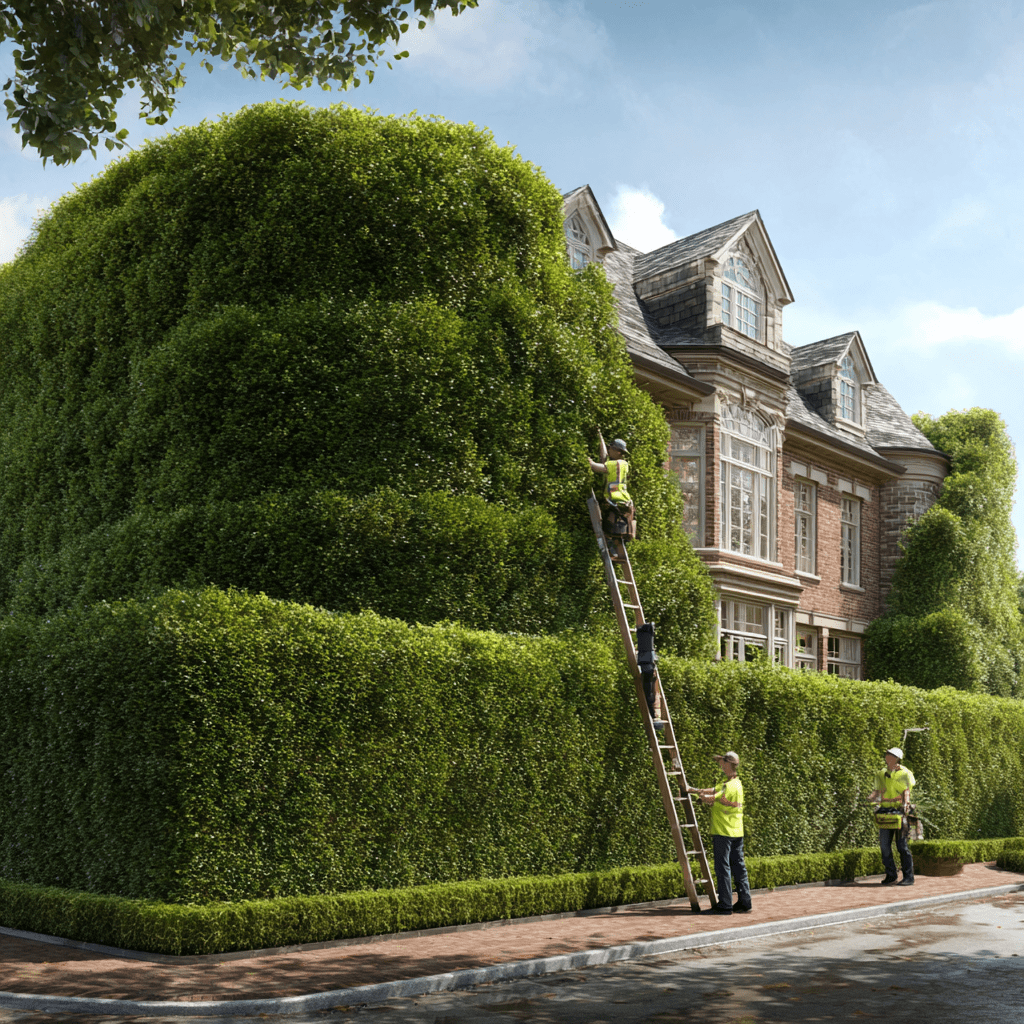
Cedar hedges in Etobicoke reflect the district's social geography with unusual clarity. Drive along a Kingsway street in late summer after the hedges have been trimmed and you will see exactly where the estate properties end and the more modest post-war houses begin: the estate hedges are 15 to 18 feet tall, clipped to a precise flat face on both sides, used as green walls to define and enclose garden rooms rather than simply as property line markers. A few blocks east in Sunnylea, the hedges are 8 to 10 feet, still well-maintained but trimmed for practical privacy rather than formal architectural effect. Down in Mimico and Long Branch, the hedges are often the compact, rounded variety that responds well to a single annual trim and asks nothing more complex than that.
We serve all of these cedar hedge types across Etobicoke. We trim and maintain hedges at any height, remove and clear overgrown or failing hedges, advise on species selection and timing, and manage the cleanup afterward. Our approach adapts to the specific hedge, the specific property, and what the client wants to achieve.
Formal Estate Hedges in The Kingsway and Humber Valley Village
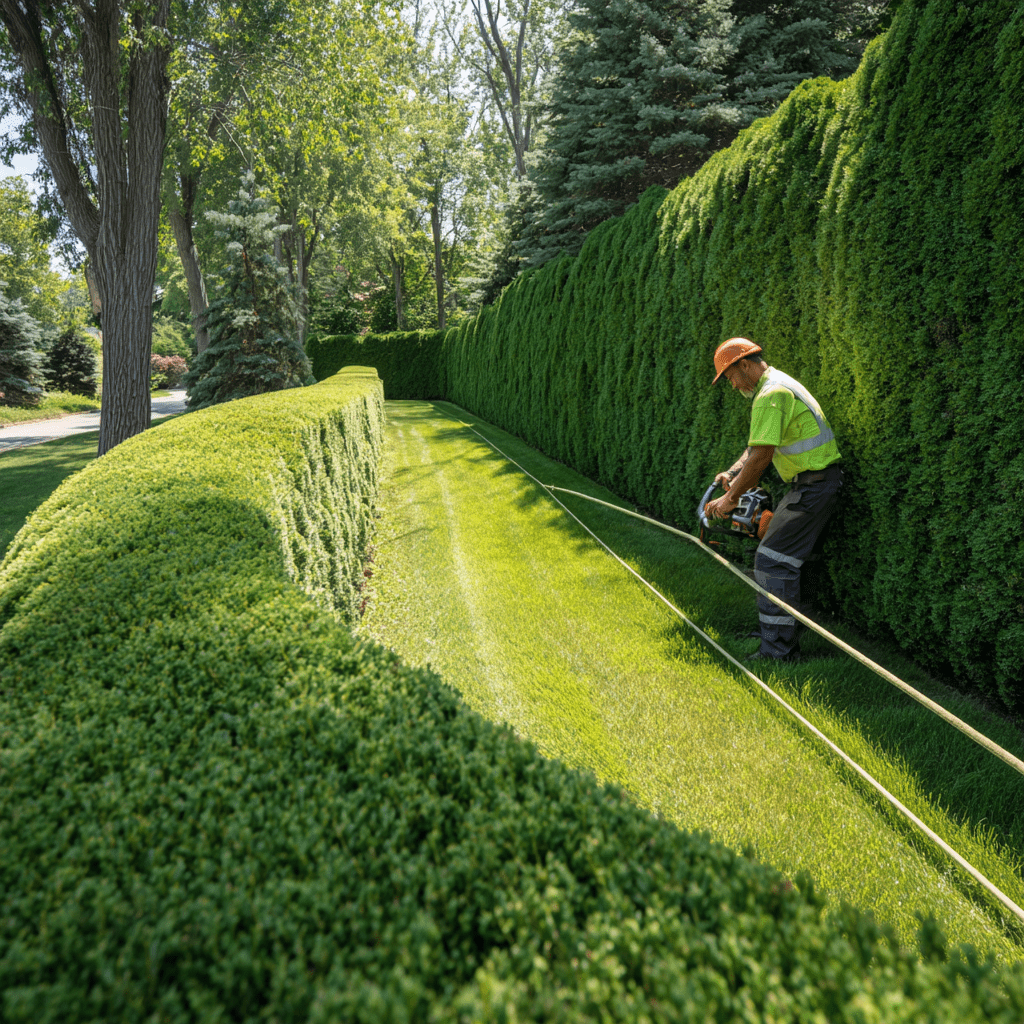
The tall formal cedar hedges on Kingsway and Humber Valley Village estate properties are among the most demanding hedge trimming work in Etobicoke. These hedges were often planted as part of the original Robert Home Smith landscape vision, designed to create enclosed garden spaces in the English tradition, and maintaining them to the standard the neighbourhood expects requires scaffolding for the upper sections, a string line or laser level guide for consistent top lines across long runs, and a team with enough experience working at height to produce even results on both faces simultaneously.
Many of these hedges are now between 60 and 100 years old. At that age, cedar hedges in Etobicoke typically show some degree of thinning at the base due to decades of imprecise trimming that has gradually allowed the top to shade out the lower foliage. Restoration of an estate hedge that has lost base density is a multi-year process involving careful selective opening cuts, application of appropriate cultural care including irrigation and nutrition where needed, and annual trimming that deliberately tapers the top slightly to maximize light reaching the lower sections. We advise honestly on what restoration is achievable and over what timeframe for each hedge we assess.
Cedar Hedge Health in Etobicoke's Waterway Corridors
Cedar hedges on properties near Mimico Creek and Etobicoke Creek in Etobicoke sometimes show health issues related to soil moisture variability. These corridors experience seasonal flooding and soil saturation that can stress cedar root systems, particularly after extended wet periods followed by summer drought. Bagworm infestations are also common in Etobicoke, and the pattern of brown patches they produce can be mistaken for drought stress or winter burn. We assess the specific cause of any discolouration or dieback during our estimate visit and advise on whether trimming alone is sufficient or whether a separate pest management program is needed.
Hedge Removal and Replacement in Etobicoke
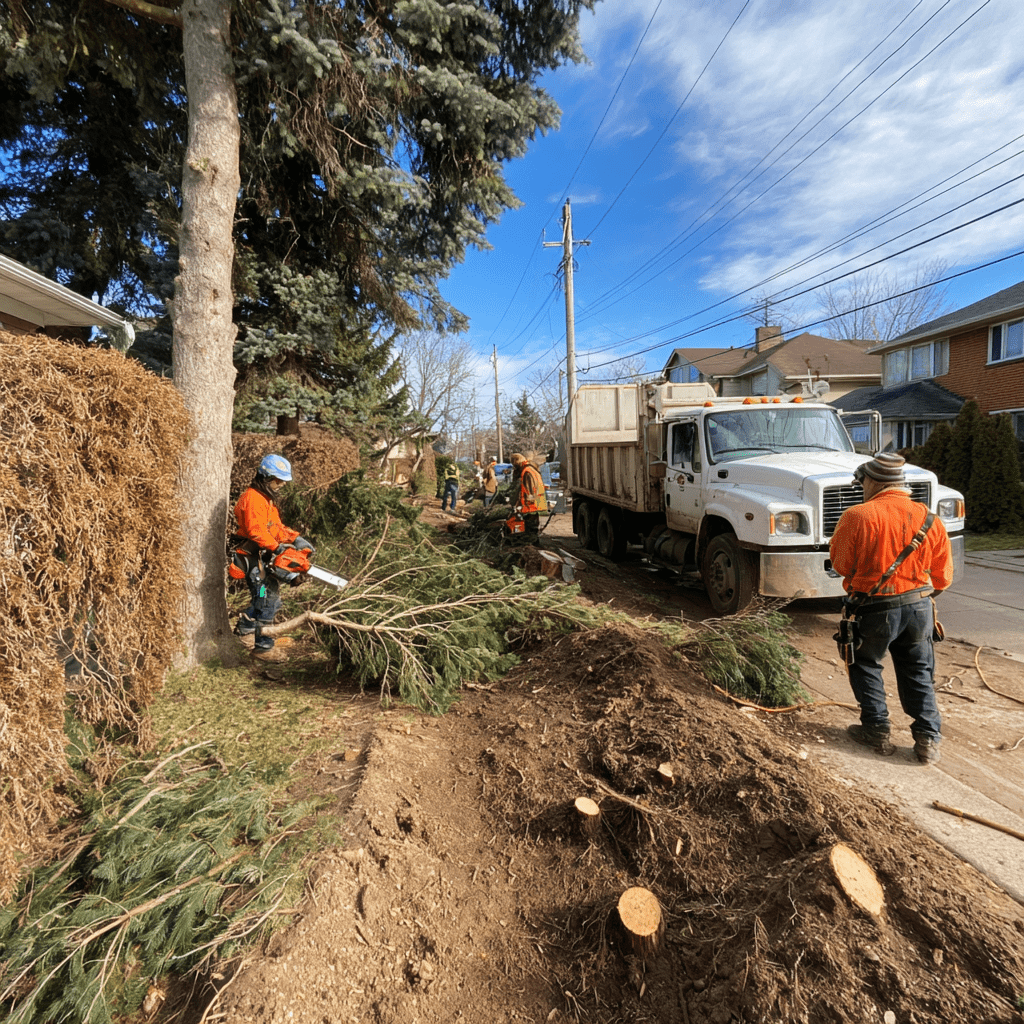
When an Etobicoke cedar hedge has reached the end of its useful life, we remove it completely: cutting the individual cedars to near ground level, grinding or extracting the stumps, and preparing the strip of ground for whatever comes next. For clients who want to replant a new hedge in the same location, we advise on species selection based on the sun exposure, soil conditions and ultimate height desired. Eastern white cedar is the standard choice for most Etobicoke residential applications, but where height and speed are priorities, western red cedar is worth considering. Where full sun and drought tolerance are important, other species including columnar pyramidal cedars or emerald green arborvitae may be more appropriate.
Frequently Asked Questions About Hedge Trimming in Etobicoke
How do you trim a Kingsway estate hedge that is 18 feet tall?
We use scaffolding or an elevated work platform for hedges above the safe reach of a ladder, which for hedge trimming is approximately 12 to 14 feet. For estate hedges at 18 to 20 feet or taller, we set up scaffolding with a working deck at a height that allows safe reach to the top. We stretch a string line across the top at the target height to guide a consistent trim line across the full run. The result is the flat, even top that formal estate hedges require. We include scaffolding setup and time in our estimate for these jobs.
My Etobicoke cedar hedge has brown patches. Is it bagworm or something else?
Brown patches in cedar hedges in Etobicoke have several possible causes: bagworm larvae consuming individual foliage sections, spider mite damage causing stippling and general yellowing, winter burn from wind desiccation on south and west-facing surfaces, base shading from an overly vertical trim over many years, or root stress from soil moisture variability near creek corridors. We assess the specific cause during the estimate visit before recommending a course of action, because the treatment for bagworm is different from the treatment for winter burn, which is different again from the management approach for a shading problem.
Do I need a permit to remove my Etobicoke cedar hedge?
Individual cedar trees within a hedge row with trunks below 30 cm DBH are generally not subject to Chapter 813 protection. Standard hedge removal is not typically a permit-requiring activity in Etobicoke. However, individual cedars that have grown unusually large over a long-established hedge could in principle be protected. We confirm the status of your specific hedge before any removal work begins to ensure there are no regulatory surprises.
When is the best time to trim cedar hedges in Etobicoke?
Late summer, from mid-August through September, is the optimal trimming window for cedar hedges across Etobicoke. The spring growth flush has fully hardened and the trim stimulates minimal secondary growth before dormancy. A secondary light trim in late spring after the new growth hardens works well for fast-growing hedges that need two trims per year. Avoid trimming in extreme summer heat, in late fall after temperatures drop consistently below five degrees, and in early spring before the new flush has hardened.
Can I reduce the height of my overgrown Etobicoke cedar hedge?
Cedar tops can be reduced if there is live green foliage all the way down to the new target height. If cutting to the new height would expose bare interior wood, the cedar cannot regenerate from that bare wood and the cut line will remain permanently bare. We assess the foliage density at the proposed new height during the estimate visit and advise on whether the reduction is achievable before any cutting is done.
Do you clean up after hedge trimming in Etobicoke?
Yes. All clippings are collected and loaded for removal from the property. For large estate hedges with long runs, the volume of clippings can be considerable, and we bring appropriate equipment to manage the debris volume efficiently. We rake the hedge base and the surrounding lawn area before leaving and haul all clippings away in our truck. No material is left at the curb or piled on the property without the client's specific request.
What species should I plant to replace an old cedar hedge on an Etobicoke property?
For most Etobicoke residential properties in partial to full sun, eastern white cedar (Thuja occidentalis) remains the best general-purpose hedge species: tolerant of Toronto winters, responsive to regular trimming, and available in multiple cultivars suited to different height and density requirements. For shadier locations along the Humber Valley or Mimico Creek corridors, or for very exposed lakefront positions in Mimico and Long Branch, we can recommend species better suited to those specific conditions. We advise on species selection as part of the estimate visit for any hedge removal and replanting project.
More Etobicoke Tree Services
Get a Free Estimate for Tree Work in Etobicoke
We serve all of Etobicoke including The Kingsway, Humber Valley Village, Sunnylea, Islington Village, Baby Point, Thorncrest Village, Princess Anne Manor, Mimico, Long Branch, New Toronto, Humber Bay Shores, Markland Woods, Rexdale, Thistletown, Richview and Stonegate-Queensway. Our certified arborist visits your property, assesses the Chapter 813, TRCA and Heritage Conservation District requirements that apply, and provides a firm quote before any work begins.