Dangerous Tree Assessment in Toronto: When to Contact 311 or Request a Qualified Arborist Review
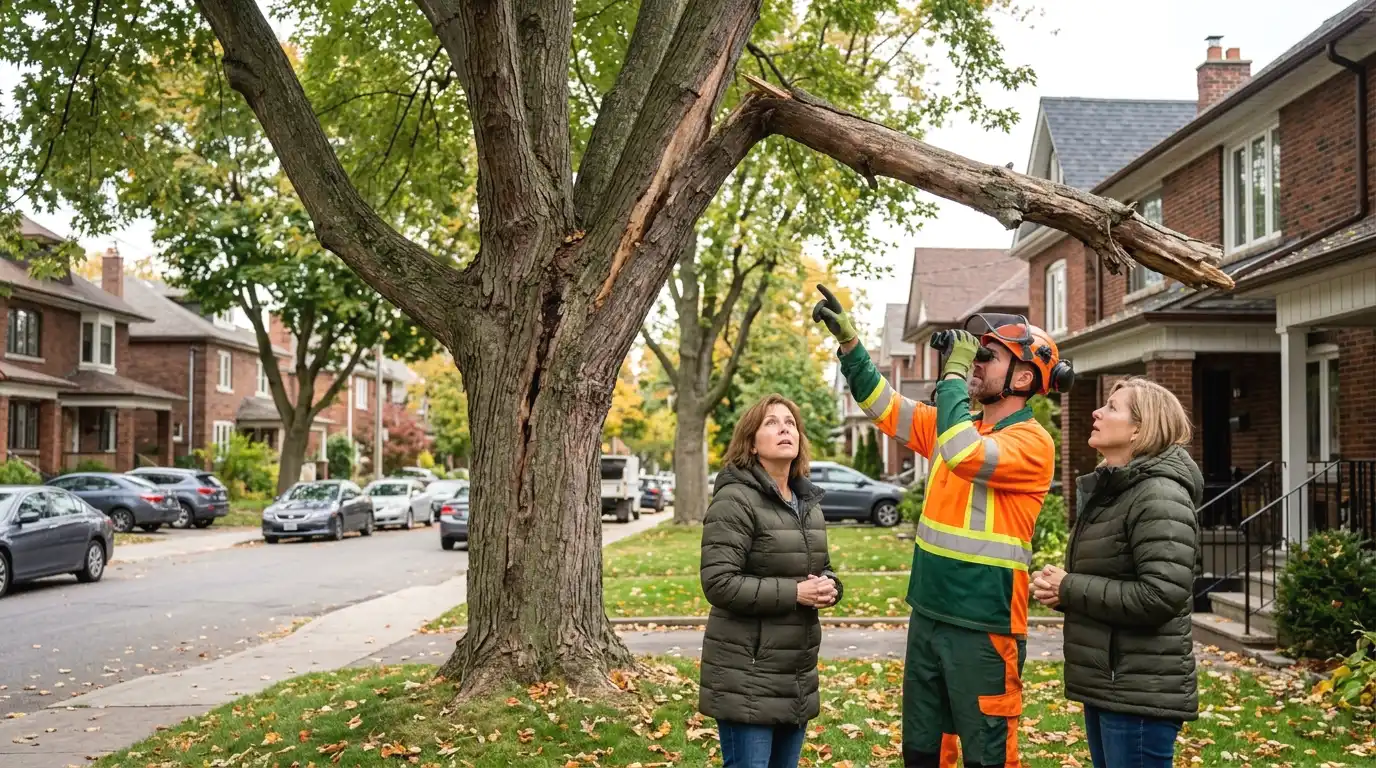
When a tree looks dangerous in Toronto, the right next step depends on where the tree is located, who owns it, whether there is immediate danger, and whether it may be protected by City tree rules. A City-owned tree, boulevard tree, park tree, or tree affecting public traffic may involve 311. A private tree on your own property is usually the property owner’s responsibility, and qualified arborist review may be useful before deciding what to do next.
Trees on City Property: When 311 Is Usually the Starting Point
Toronto Urban Forestry manages many City-owned trees, including street trees, park trees, and trees on City-owned land. If your concern involves a boulevard tree, a park tree, a tree obstructing pedestrian or vehicle traffic, or a fallen City-owned tree, 311 is usually the correct starting point.
City-owned tree concerns are not the same as private contractor work. The City decides how to inspect, prioritize, and respond to City tree issues. If a tree or large branch has fallen, is blocking traffic, is obstructing a sidewalk, or appears to create immediate danger in a public area, report the concern through 311 and provide clear location details, photos where possible, and a description of the hazard.
If wires, fire, injury, a road hazard, or immediate life-safety danger are involved, contact the proper emergency or utility service first. Do not approach downed wires, unstable trees, hanging limbs, or a tree resting on a structure.
Trees on Private Property: Owner Responsibility Comes First
For dangerous trees located on private property, responsibility generally lies with the property owner. Toronto says concerns about a privately owned tree that presents an immediate danger can be reported to 311, which creates a bylaw enforcement investigation by City staff. If Urban Forestry confirms immediate danger, the City may notify the owner and issue an Order to Comply.
That is different from the City managing routine private-tree care. The City does not become the private property owner’s tree contractor. If the tree is yours, you are generally responsible for arranging qualified professional review, confirming permit requirements where applicable, approving any work, and handling payment, cleanup, insurance, and contractor communication directly with the qualified professional.
If the tree is on a neighbour’s private property and appears dangerous, notify the neighbour in writing with specific details and photos where possible. If there is immediate danger, a 311 dangerous-private-tree report may be appropriate. For legal responsibility, damages, access, payment, or neighbour-dispute questions, speak with a lawyer or insurer.
Signs that may justify prompt professional review:
- Large cracks or splits in the trunk or major limbs
- Fungal conks, mushrooms, cavities, or soft wood at the trunk base
- A sudden lean that appeared after wind, rain, construction, trenching, or soil movement
- Large dead branches hanging over a house, driveway, sidewalk, patio, or play area
- Visible root plate lifting, soil cracking, or fresh movement around the base
- Heavy dieback in the upper canopy or major limb failure
- A tree or large limb resting on a structure, vehicle, fence, or utility line
How a Tree Risk Review May Work
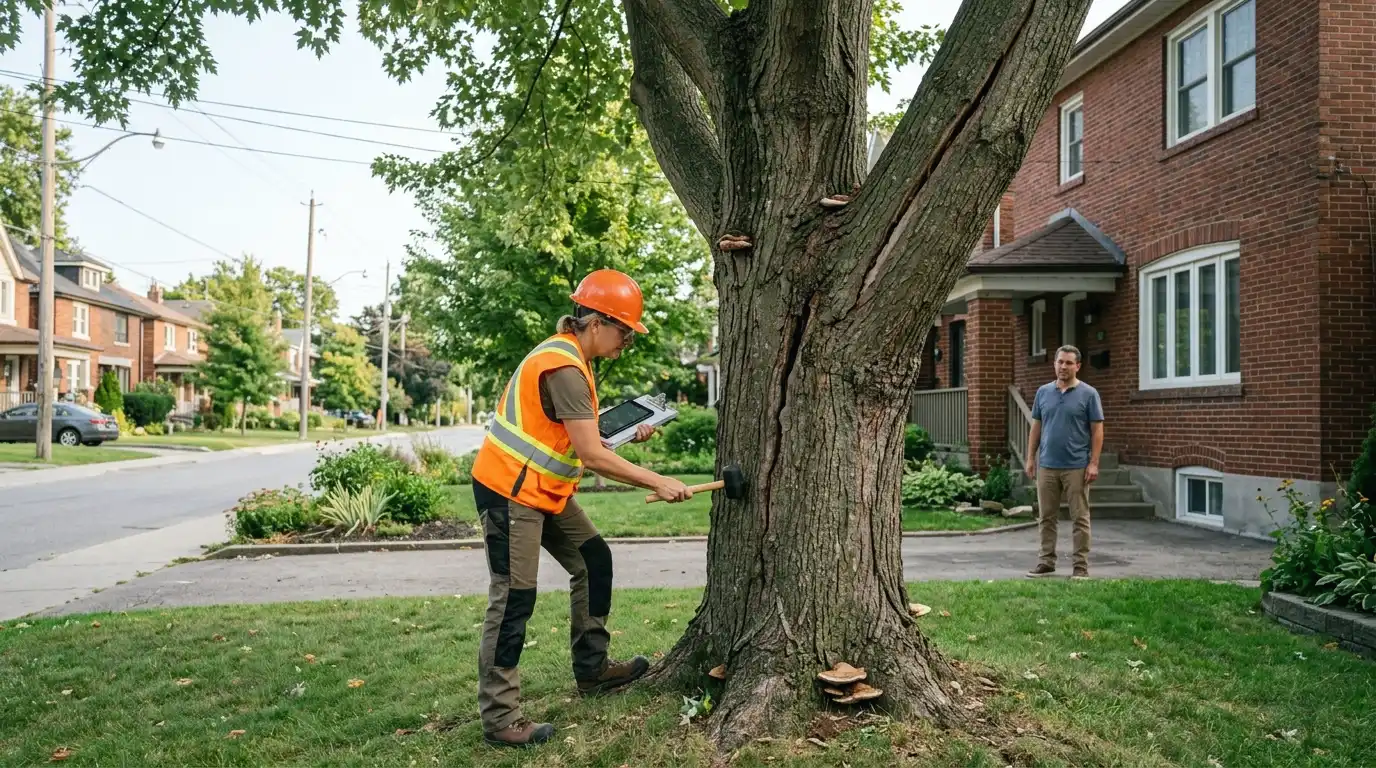
A qualified arborist or qualified tree care professional may review visible tree defects, site conditions, targets, tree species, structural concerns, root-zone signs, decay indicators, storm damage, construction impact, and the likely consequences if a branch or trunk section fails. The scope of review depends on the professional, the tree, the property, and whether a written report is requested.
A tree risk discussion is not only about whether the tree has defects. It is also about what sits below or beside the tree. A tree with decay in an unused back corner is different from a smaller but compromised tree over a driveway, sidewalk, deck, garage, school route, or neighbour’s yard.
If a written report is requested, confirm what it will include, its intended use, the assessor’s credentials, site limitations, photographs, risk terminology, recommendations, fee and whether follow-up inspection is included.
The Permit Connection
Toronto identifies private trees with a diameter of 30 cm or more, measured at 1.4 m above ground, as protected. City-owned trees, ravine-area trees, replacement trees, and natural-feature areas may involve additional rules. If a dangerous tree is protected and not an immediate hazard, permit review may be required before removal or injury.
Toronto’s current permit guidance treats an imminently hazardous private tree as a permit-exception situation. The owner must request and receive exception confirmation before removal or injury unless immediate tree work is required to eliminate a dangerous situation. Keep photos and tree details for the City record.
For more permit context, see the guide to Toronto tree removal permits. For dead-tree context, see the dead tree removal permit guide.
Need to Send a Dangerous Tree Request?
If there is immediate danger, contact the proper emergency, utility, City, or 311 channel first.
When a Neighbour’s Tree Is the Problem
If a neighbouring private tree appears dangerous, document the concern first. Take photos from your own property, note dates, describe what you see, and notify the property owner in writing. Mention specific issues such as a new lean, cracked trunk, root lifting, large dead limbs, fungal growth, or branches over a roof, driveway, sidewalk, or play area.
If the neighbour is unresponsive and the tree presents immediate danger, Toronto says dangerous private trees can be reported to 311. That creates a bylaw enforcement investigation, but the City process is not a private tree service appointment and timing can vary. If the situation is immediately life-threatening or involves wires, structural collapse, fire, injury, or public danger, contact the proper emergency or utility service first.
For civil issues such as overhanging branches, root damage, neighbour consent, boundary-tree ownership, repair costs, and liability, see the guide to neighbour tree rights in Toronto. Legal questions should be reviewed with a lawyer.
What Happens After the Review
After a professional review, the recommended next step may vary. Some trees may need monitoring. Some may need selective pruning or deadwood removal. Some may need further investigation. Some may require permit-related documentation before removal can be considered. Others may be urgent enough that emergency channels, utility involvement, or immediate risk-reduction work must be discussed.
A written assessment may be useful for insurance communication, neighbour communication, City permit context, or property records, but it is not a guarantee of City approval, insurance coverage, contractor performance, or future tree behaviour.
Official Toronto Resources
- 311 Toronto: Hazardous or Dangerous Trees
- 311 Toronto: Dangerous Private Trees
- City of Toronto: Storm Damage to Trees
- 311 Toronto: Tree and Ravine Permit Applications
- City of Toronto: When to Apply for a Tree or Ravine Permit
- ISA: Find an Arborist
Related professional service: For urgent private-tree concerns, review the emergency tree service request information.
Frequently Asked Questions
What is the difference between a professional tree assessment and calling 311 in Toronto?
Calling 311 is appropriate for City-owned tree hazards and for dangerous private-tree complaints that may require City investigation. A private arborist assessment is arranged directly by the property owner when they want a professional review of a private tree.
How long does a dangerous tree assessment take in Toronto?
Timing depends on the qualified arborist or tree care professional, property access, urgency, weather, documentation needs, and whether a written report is requested.
Can Toronto Urban Forestry force my neighbour to remove a hazardous tree?
Toronto says concerns about privately owned trees that present an immediate danger can be reported to 311, which creates a bylaw enforcement investigation. If City staff confirm immediate danger, they may notify the property owner and issue an Order to Comply. Neighbour disputes, damage claims, and legal responsibility should be reviewed with the appropriate legal or insurance professional.
What does an arborist risk rating mean?
A tree risk assessment may consider visible defects, likelihood of failure, the size of the part that could fail, and the consequences if it reaches a target such as a house, driveway, sidewalk, vehicle, or play area. Any risk rating, recommendation, report, and limitation should be explained directly by the qualified arborist who performs the assessment.
Can a hazard tree assessment help with a Toronto tree removal permit?
Documentation from a qualified arborist may be useful where a protected private tree is suspected to be hazardous or where a permit-related review is required. Toronto decides permit requirements and outcomes.
Related Guides
- Signs Your Tree Is Dead or Dying
- Leaning Tree Dangerous Toronto
- Dead Tree Removal Permit Toronto
- Neighbour Tree Overhanging Property
- Tree Removal Permit Toronto
- Arborist Report Requests
Send Your Dangerous Tree Concern
If the situation involves immediate danger, contact the proper emergency, utility, City, or 311 channel first.