Tree Removal Rules in Burlington: Private Trees, Public Trees and Permit Checks (2026)
This guide explains the tree removal permit in Burlington, including the approval rules, property conditions and practical steps that can affect the work. Tree removal in Burlington depends on more than the tree’s size. The first questions are whether the tree is private or public, whether the property is inside Burlington’s Urban Planning Area Boundary, whether the tree is 20 cm DBH or greater, whether the tree is a heritage or protected species, and whether Conservation Halton, shoreline, ravine, construction, pool, or development rules apply. A tree that looks like a simple backyard removal can become a permit issue if it is protected, shared, near a regulated feature, or located close to planned construction.
This guide explains Burlington tree removal rules for homeowners in 2026, including private tree permits, public tree restrictions, dead or high-risk tree situations, current fee considerations, replacement requirements, and Conservation Halton regulated-area checks.
What Burlington’s Private Tree Rules Protect
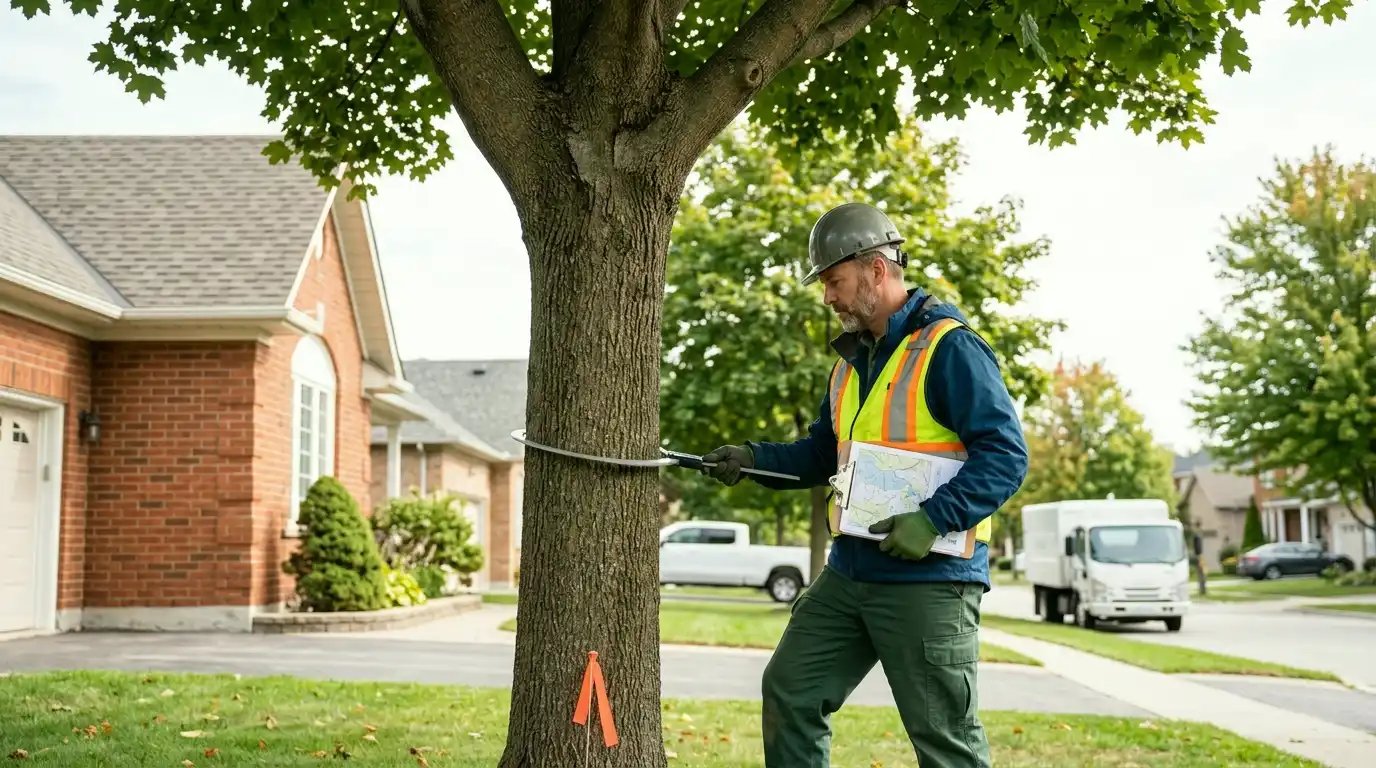
The City of Burlington states that the Private Tree By-law applies to trees on private property within the City’s Urban Planning Area Boundary. If the property is within that boundary, a permit is required to injure or remove a private tree that is 20 cm in diameter or greater, measured at 1.37 metres from the ground. Heritage trees and endangered, threatened, or at-risk tree species may have additional approvals in addition to a tree permit.
This matters because many Burlington homeowners still hear older or incorrect numbers. The current City guidance uses a 20 cm DBH threshold for private trees in the Urban Planning Area Boundary, not 15 cm. If a tree has multiple stems, Burlington explains that each stem is measured and the total DBH is calculated using the square root of the sum of each squared stem diameter. If the measurement is close to the threshold, do not guess. Confirm it before scheduling work.
The Urban Planning Area Boundary is also important. Burlington’s private tree rules do not apply the same way across every rural and urban location. The City provides mapping so property owners can search their address and confirm whether they are inside the relevant boundary. Rural properties, development sites, woodlands, regulated areas, and construction-related projects may still have other approval requirements even if the private-tree by-law question is different.
Burlington tree removal checks for 2026
- Confirm whether the tree is private, public, shared, or on a property boundary.
- Check whether the property is inside Burlington’s Urban Planning Area Boundary.
- Measure DBH at 1.37 metres above ground.
- Private trees 20 cm DBH or greater inside the Urban Planning Area Boundary generally require a permit before injury or removal.
- Heritage trees and endangered, threatened, or at-risk species may require additional approvals.
- Work within a tree protection zone may be considered injury and may require review.
- Public trees must be handled through the City. Residents cannot privately prune or remove City trees.
- Dead, terminal, or high-risk trees still require the correct City process, although fees and compensation may be waived when verified.
- Conservation Halton regulated areas may add a separate permission requirement near watercourses, valleylands, wetlands, shorelines, and hazardous lands.
Useful Burlington and Conservation Halton Authority Links
Official resources to check before planning tree work:
- City of Burlington: Forest Protection and Tree Permits
- City of Burlington: Tree Permit Application
- City of Burlington: City Trees and You
- Conservation Halton: Permitting
- Conservation Halton: Mapping and Studies
- Conservation Halton: Web Maps
These links are informational only. Property owners should confirm requirements directly with the City, Conservation Halton, the utility provider, their insurer, or another relevant authority before arranging work.
The Burlington Permit Application Process
Burlington’s online application process requires homeowners to prepare basic tree information before starting. The City lists minimum documents such as information about the tree’s size and species, a sketch showing where the tree is located on the property, and at least one photo of each tree included in the application. Depending on the situation, additional documents may be required, including owner authorization, boundary-tree consent, an arborist report, a tree protection plan, or supporting documentation for a high-risk or terminal-condition tree.
This is where Burlington applications can slow down. Missing photos, unclear sketches, uncertainty about ownership, incomplete tree measurements, construction activity inside the tree protection zone, or missing neighbour consent for a boundary tree can delay review. If the proposed work is related to a building permit or pool permit, Burlington’s website explains that tree review may be captured through the relevant building or pool process rather than a separate tree permit application.
Dead, Terminal and High-Risk Trees
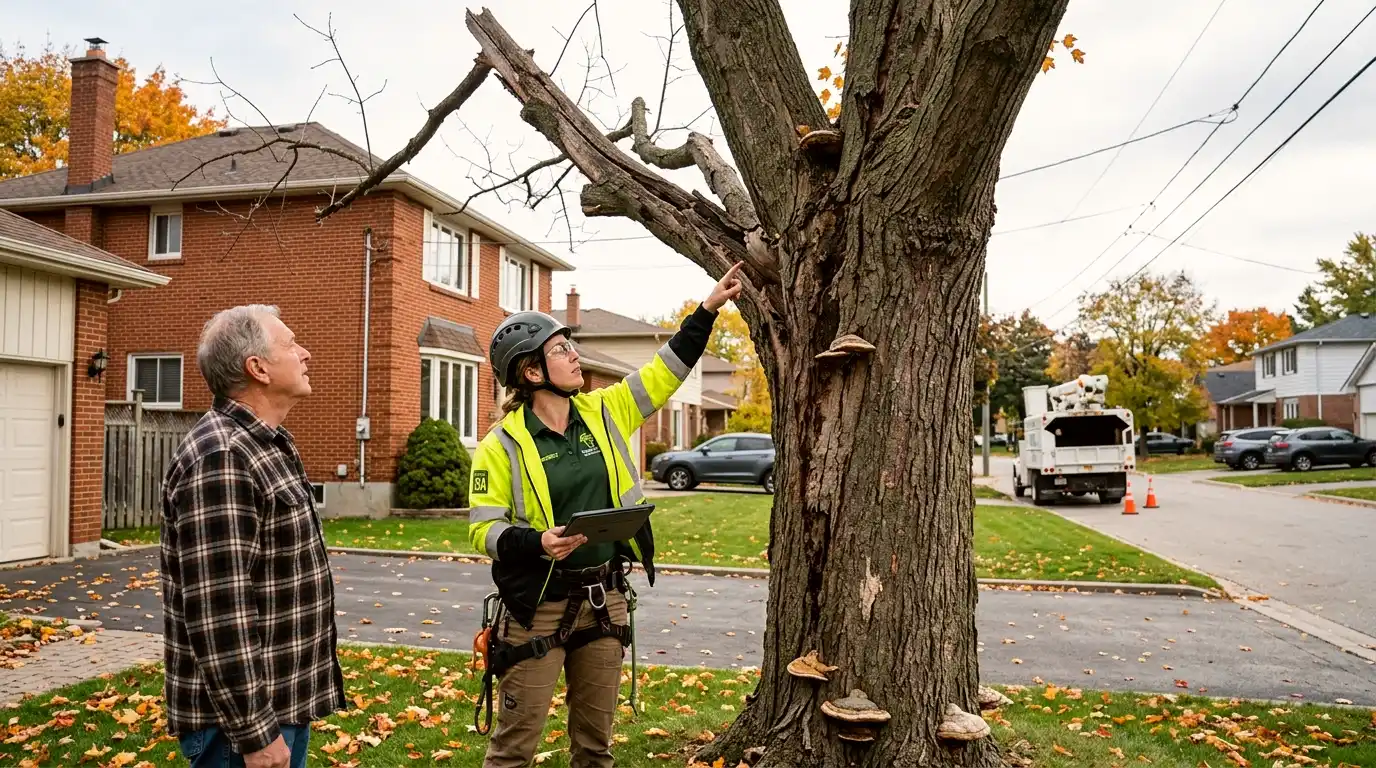
Burlington’s official guidance lists 100 percent dead trees, terminal-condition trees, and high-risk trees under situations where a permit is required, but fees and compensation are waived. That does not mean a homeowner should remove the tree first and deal with paperwork later. The correct City process and supporting documentation should be confirmed before work begins, unless the situation falls under an emergency provision and the required supporting documents are supplied to the City.
An ISA Certified Arborist, Qualified Tree Risk Assessor, Registered Consulting Arborist, Registered Professional Forester, or another qualified tree professional recognized by the City may be needed depending on the application type.
Public Trees and Street Trees in Burlington
Public trees are treated differently from private trees. Burlington states that only City staff or a private contractor hired by the City can prune or remove any part of a City tree. This includes trees on public property, and it may include street trees, boulevard trees, park trees, and other City-owned trees near residential properties. Residents should contact the City if they are not sure whether a tree is public or private.
Construction around a City tree can also require special permission. If a driveway, pool, hardscape, excavation, retaining wall, utility trench, or renovation may affect a public tree, contact the City before work begins. A private contractor should not be asked to prune roots, cut branches, or remove a City tree unless the City has handled the authorization and contractor arrangement.
Replanting Conditions and Cash-in-Lieu
Burlington’s permit framework can include replacement planting or cash-in-lieu requirements depending on the application and City review. Burlington’s current listed cash-in-lieu amount appears on the City’s Forest Protection and Tree Permits page, but fees and requirements can change. The property owner should check the current City fee schedule before applying.
Replacement requirements should not be treated as an afterthought. The City may require a tree replacement plan or supporting information depending on the proposed removal. Where the property cannot accommodate replacement planting, cash-in-lieu may be part of the permit conditions. Any planting recommendation, species suggestion, tree replacement plan, measurement, or permit support must be discussed directly with the qualified arborist or qualified professional.
Conservation Halton and Burlington Properties
Conservation Halton can apply where a Burlington property is within or near a regulated area. Conservation Halton identifies regulated features such as watercourses, valleylands, wetlands, Lake Ontario and Burlington Bay shorelines, hazardous lands, and lands adjacent to regulated areas. In practical Burlington terms, this can matter near Bronte Creek, Grindstone Creek, Sixteen Mile Creek, ravine corridors, shoreline properties, wetlands, flood hazards, slopes, and other natural features.
If a tree removal, excavation, grading, driveway project, pool project, shoreline project, or construction activity is within a Conservation Halton regulated area, permission from Conservation Halton may be required in addition to any City of Burlington tree permit. The two processes are separate. A City tree permit does not automatically replace Conservation Halton permission, and Conservation Halton permission does not automatically replace City requirements.
Tree Removal Permit in Burlington
Tree removal cost in Burlington depends on the qualified tree contractor’s assessment of the tree and site. Key factors can include height, trunk diameter, species, condition, lean, canopy spread, backyard access, obstacles, hydro proximity, rigging needs, stump work, debris disposal, cleanup terms, permit-related documents, and whether Conservation Halton or City review is involved.
Burlington Neighbourhoods and Property Types
Burlington has a wide range of tree-removal situations. Downtown Burlington and Roseland often involve mature residential trees, tight access, neighbouring-property considerations, and older lots. Aldershot and Tyandaga can include larger properties, ravine edges, escarpment-adjacent slopes, and natural features. Alton Village, Orchard, Headon Forest, Brant Hills, Palmer, Mountainside, Appleby, Elizabeth Gardens, Shoreacres, and Millcroft can involve subdivision trees, fencing, pools, driveways, and construction-related tree protection questions.
Waterfront and creek-adjacent properties need extra caution because Conservation Halton or shoreline-related review may apply. Rural or north Burlington properties can raise different questions than urban residential lots, including woodlands, conservation features, road allowances, and public-tree ownership. The safest starting point is to confirm the tree’s location, ownership, DBH, boundary status, and regulated-area status before arranging removal.
Power Lines, Utilities and Immediate Hazards
If a tree is touching overhead wires, leaning toward electrical infrastructure, blocking a public road, damaging a public sidewalk, or creating an immediate danger, contact the utility provider, the City, emergency services, or the relevant public authority first. Do not treat utility-adjacent tree work as ordinary private pruning or removal.
Planning the Next Step
Frequently Asked Questions
What is the DBH threshold for private trees in Burlington?
Burlington’s current official guidance says a permit is required to injure or remove a private tree 20 cm in diameter or greater, measured at 1.37 metres from the ground, within the Urban Planning Area Boundary. Heritage trees and endangered, threatened, or at-risk species may have additional requirements.
What are Burlington tree permit fees?
Burlington lists current private-tree permit fees on its Forest Protection and Tree Permits page, including fees for 1 to 3 removals, additional trees, injury permits, and cash-in-lieu. Fees can change, so check the City’s current page before applying.
What happens with dead or high-risk trees under Burlington’s rules?
Burlington’s guidance says a permit is still required for a tree that is 100 percent dead, has a terminal condition, or is high-risk, but fees and compensation are waived when verified. Supporting documents from a qualified tree professional may be required before work begins.
Do Conservation Halton regulated areas apply in Burlington?
Yes. Properties near watercourses, valleylands, wetlands, Lake Ontario, Burlington Bay, shorelines, hazardous lands, slopes, ravines, and adjacent regulated areas may require Conservation Halton permission before development, site alteration, or related work. Check Conservation Halton mapping and confirm directly with Conservation Halton.
Does Burlington’s private tree by-law apply to street trees?
No. Public trees are handled separately. Burlington states that only City staff or a private contractor hired by the City can prune or remove any part of a City tree. Contact the City if ownership is unclear.
Who can prepare Burlington permit documentation or an arborist report?
Related Guides and Services
- Tree Removal Cost in Burlington
- Tree Removal Rules in Milton
- Tree Services in Georgetown and Halton Hills
- Arborist Report Requests
- Tree Removal Requests
Send Your Tree Request
Have a Burlington tree removal question in Downtown Burlington, Aldershot, Roseland, Alton Village, Appleby, Brant Hills, Tyandaga, Millcroft, Shoreacres, Headon Forest, the waterfront, or a creek-adjacent property?