
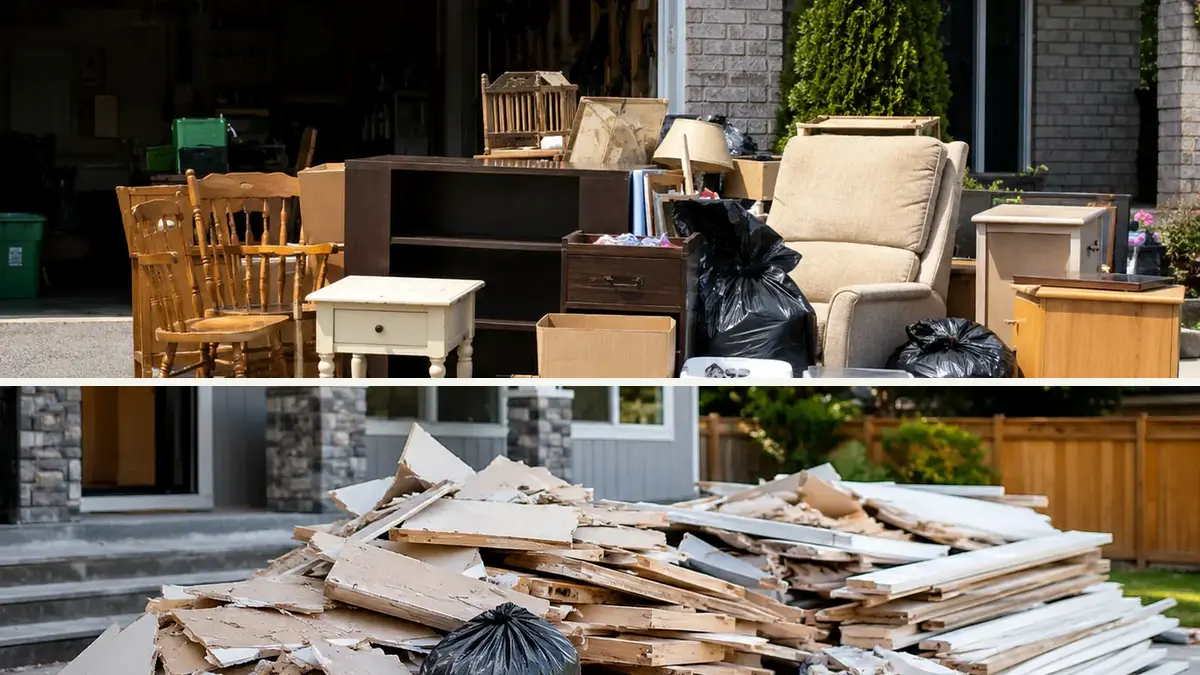
Renovation and project debris
Wood, cabinetry, flooring and other suitable project material should be identified by type. Dense, sharp or regulated material can require different handling from ordinary household junk.
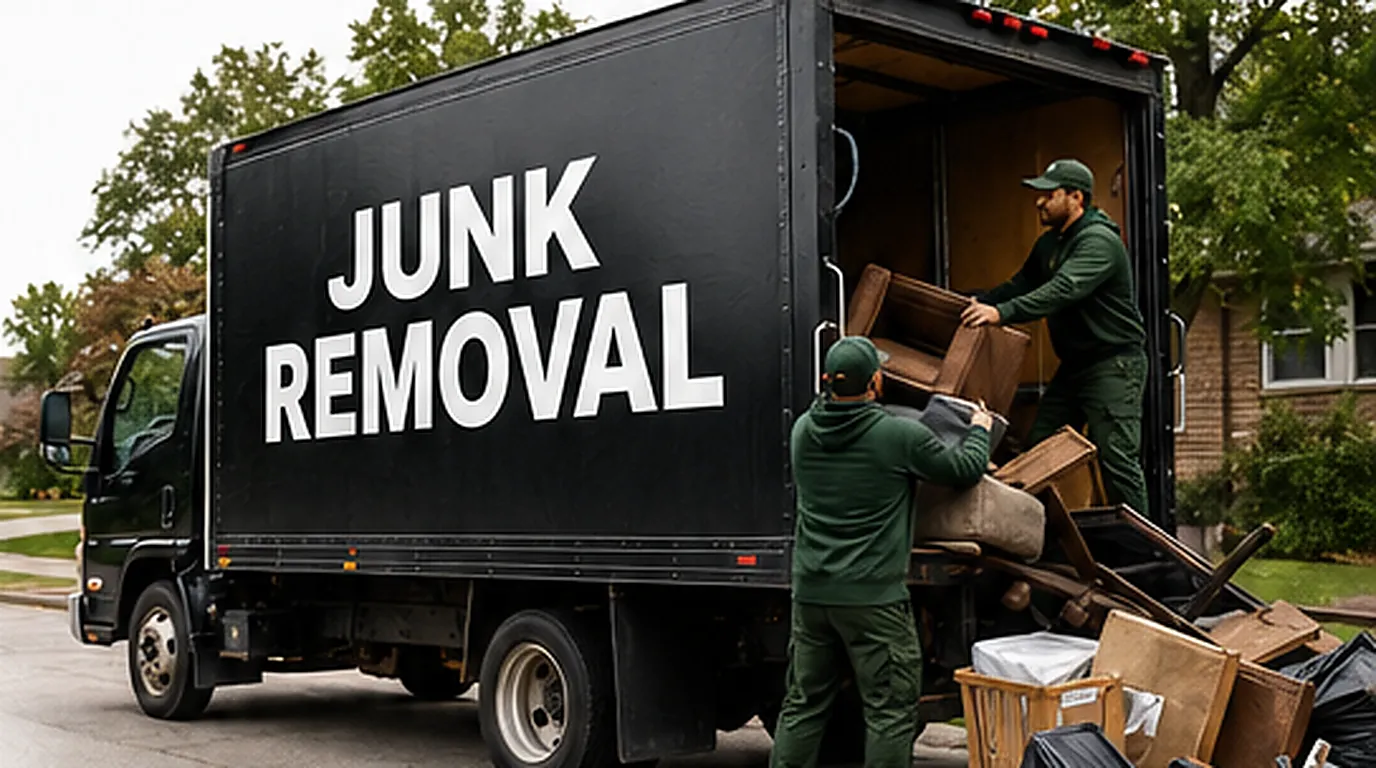
Junk removal in Oshawa often combines basement or garage contents with furniture and suitable project debris.
For an Oshawa pickup, show the material, approximate volume and the route to the loading area. A wide view of stairs, garages and renovation-heavy properties usually explains more than a close-up of one item.
Wood, cabinetry, flooring and other suitable project material should be identified by type. Dense, sharp or regulated material can require different handling from ordinary household junk.
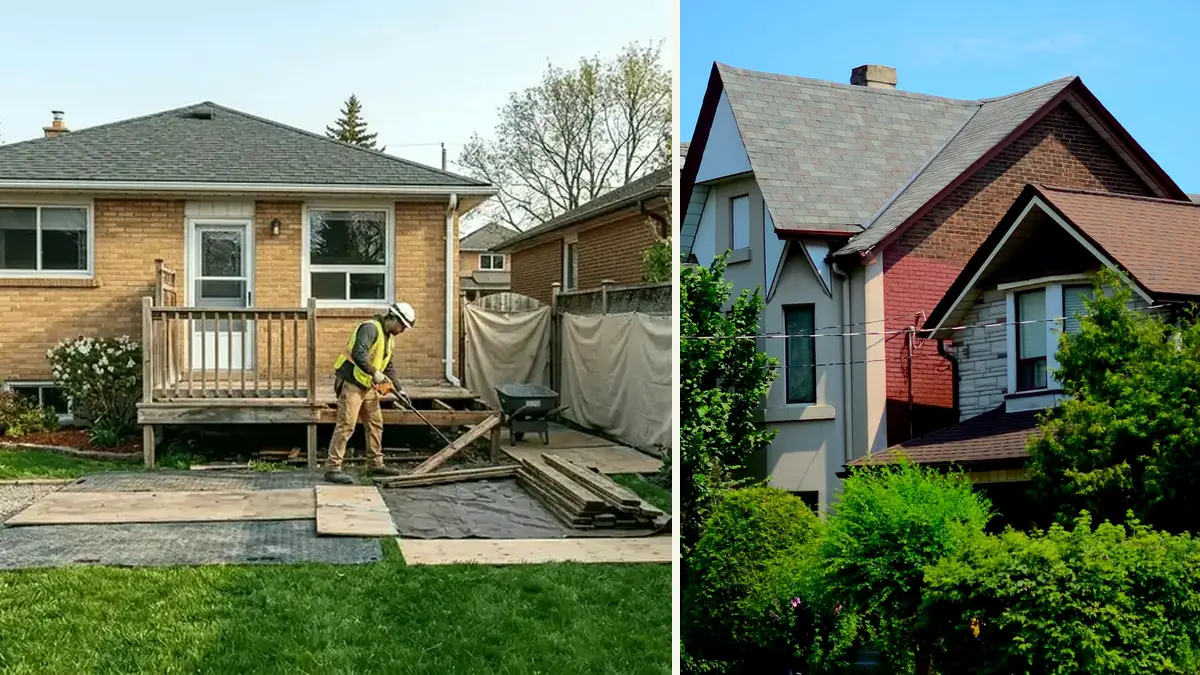
A wider Oshawa property view can reveal gates, narrow walkways, mature trees and finished landscaping that affect how bulky items reach the loading area.
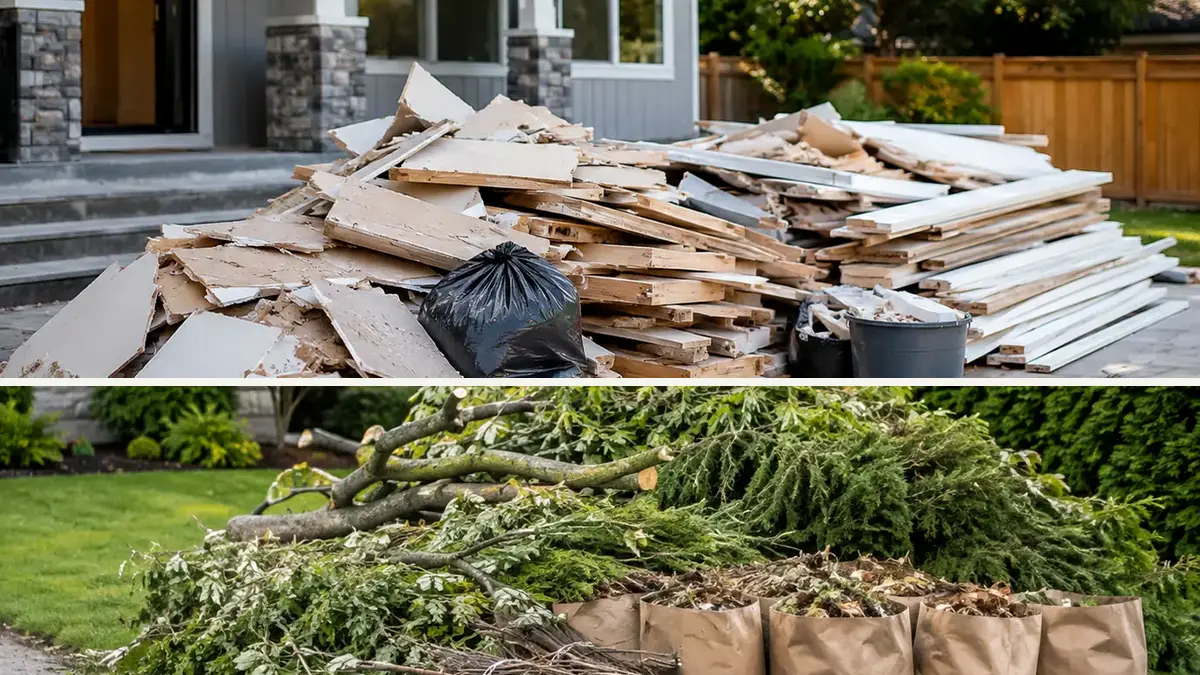
Show oversized exterior material in relation to fences, driveways and nearby structures. Standing trees or attached limbs should be submitted as tree-service work, not generic debris.
The practical scope of an Oshawa junk-removal request usually comes down to volume, material type and the carrying route, particularly around stairs, garages and renovation-heavy properties.
Basement cleanouts need a clear view of stairs, turns and exit doors when bulky furniture is involved.
On tighter streets or driveways, show where the material can be staged and where the loading vehicle can reasonably approach.
Wood, drywall, concrete, fixtures and mixed debris should be named because they are not handled as one identical waste stream.
Pickup conditions across Oshawa can vary with stairs, garages and renovation-heavy properties. Use the Oshawa notes below only when they match the property; they are examples of useful pickup details rather than claims about every home.
For O’Neill, show front steps, side passages or basement access when the items are not already in a garage. Older lot layouts can make the carrying route part of the scope.
A McLaughlin cleanout should include the full group of items and a driveway or gate photo so loading space is visible before the Oshawa request is reviewed.
For Vanier, separate renovation debris from ordinary household clutter and identify dense, sharp or unusually heavy materials rather than combining everything as junk.
Open the neighbourhood for additional property and access context.
Lakeview exterior cleanups should show whether material is bagged, loose, bulky or mixed with branches and yard debris so the request can be routed appropriately.
An Oshawa junk-removal request should not mix household hazardous waste with regular furniture or debris. Identify chemicals, paint, fuel, batteries, cylinders and similar items independently and consult Durham Region for current approved disposal information.
If the Oshawa job includes work beyond haul-away, use the dedicated tree care, landscaping, yard cleanup or demolition page so each service keeps a clear scope.
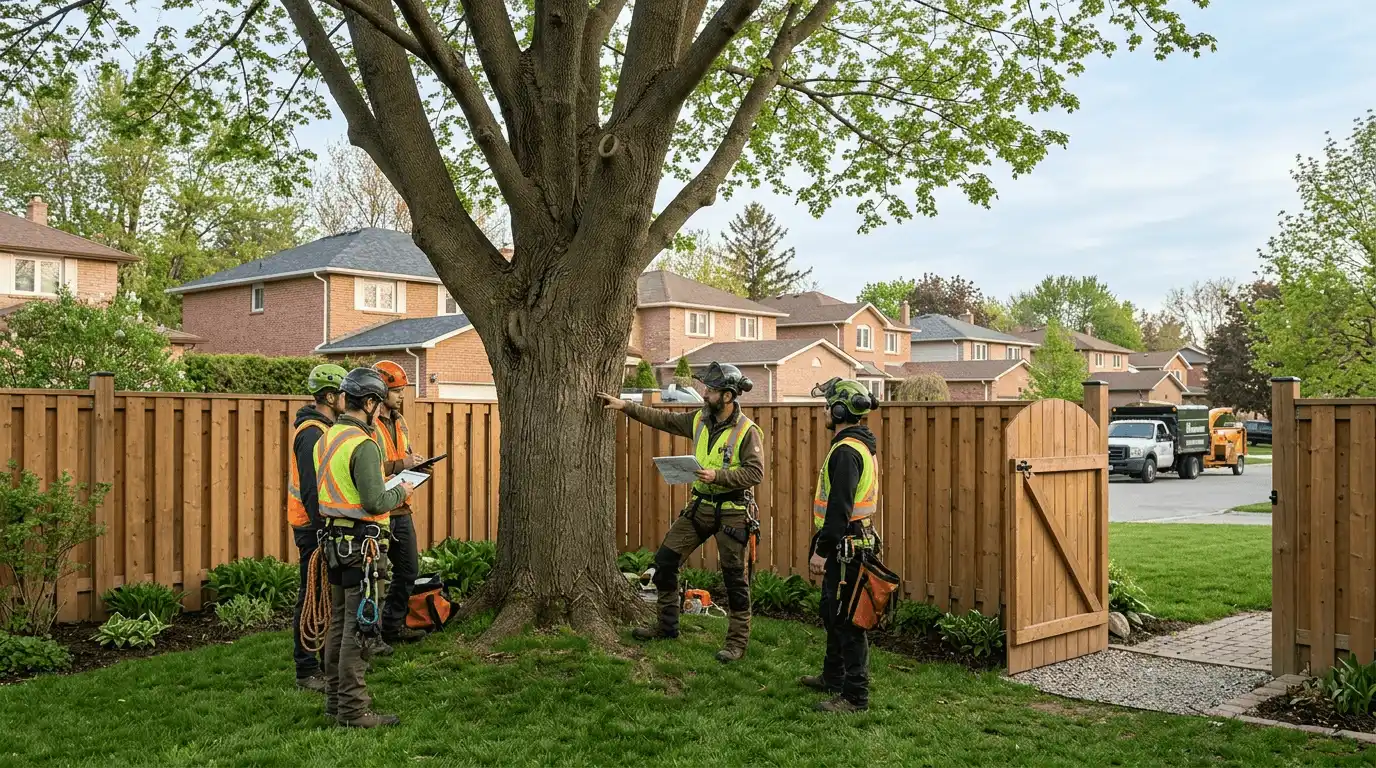
Use the Oshawa tree-services hub when standing trees, attached limbs, pruning, removal, stump work or arborist documentation is still required.
Explore service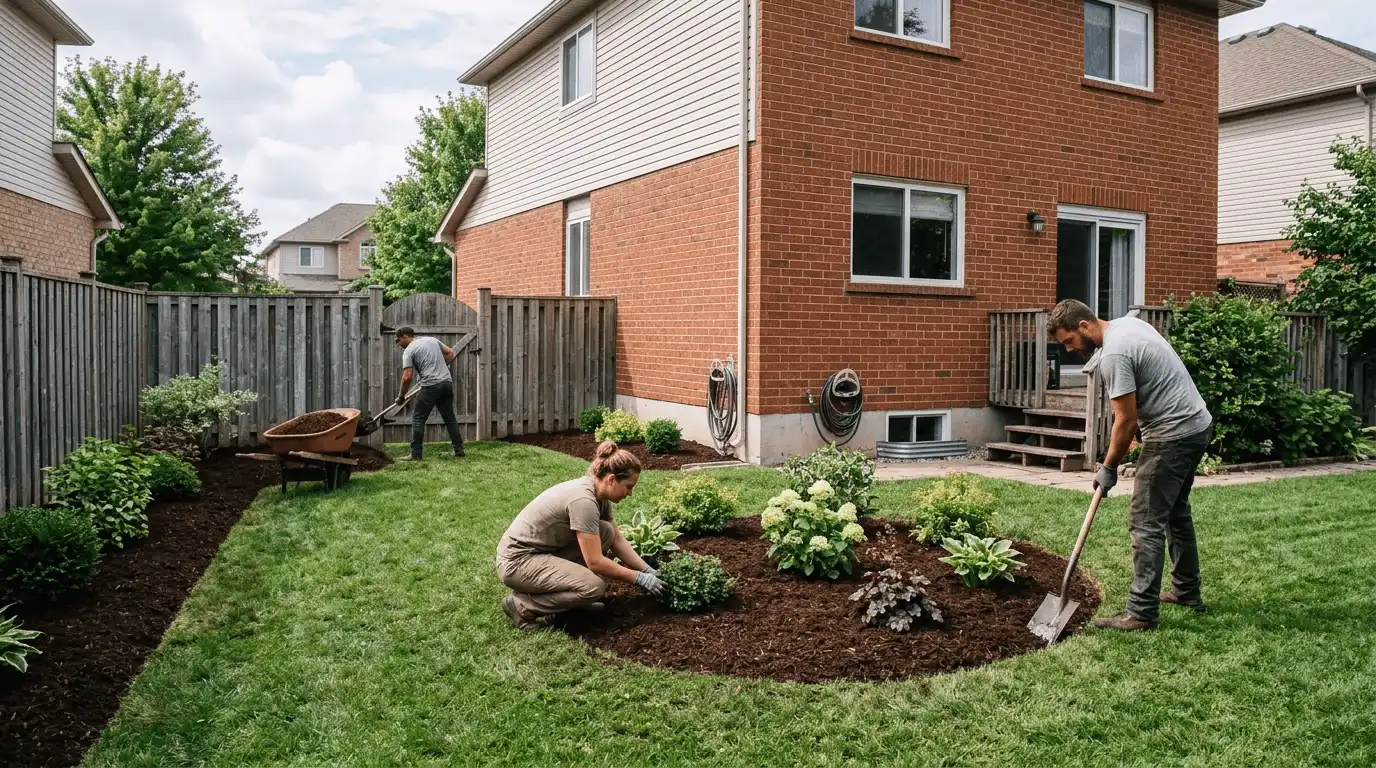
For Oshawa lawn care, garden maintenance or landscape improvements, use the local landscaping page rather than combining ongoing property work with a debris pickup.
Explore service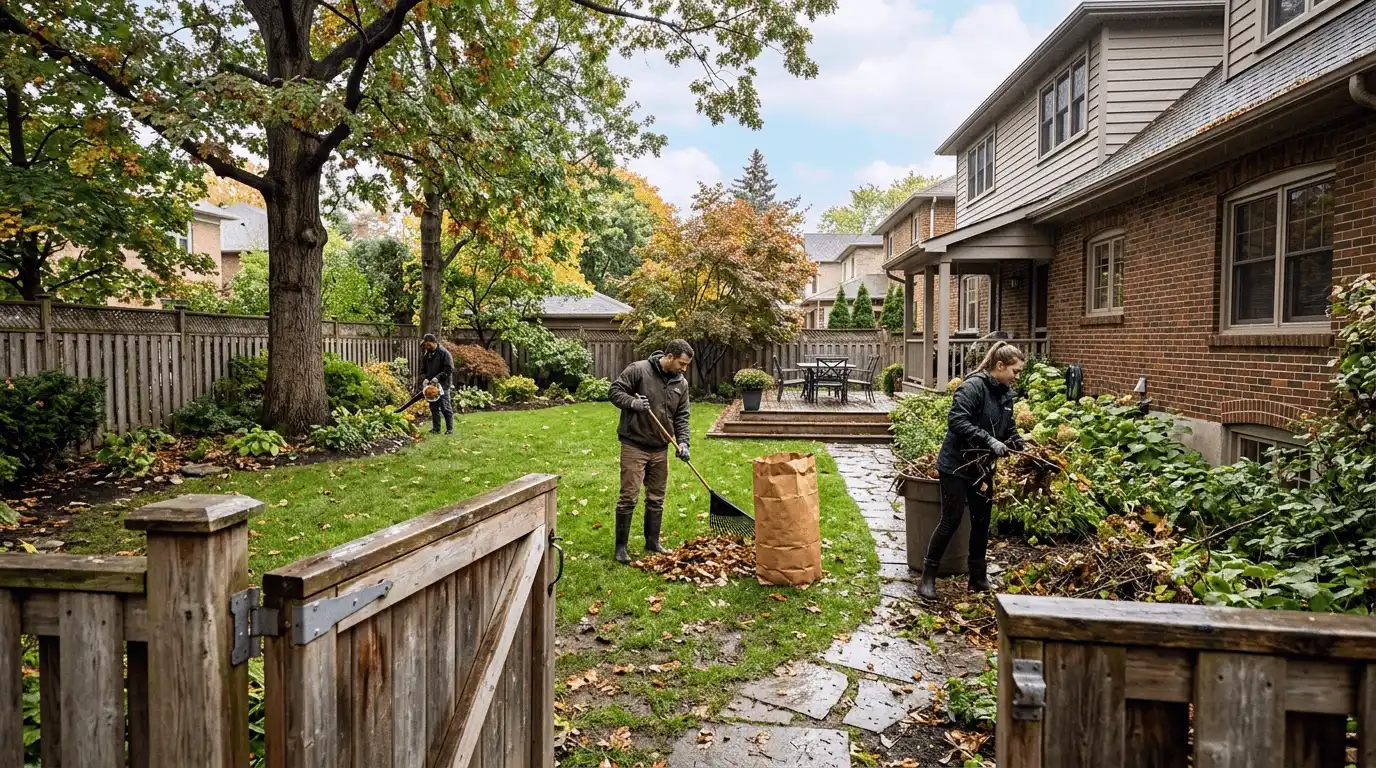
For Oshawa leaves, small branches and ordinary seasonal yard debris, use Yard & Seasonal Cleanup so green-waste cleanup is not mixed into household junk or bulky-item hauling.
Explore service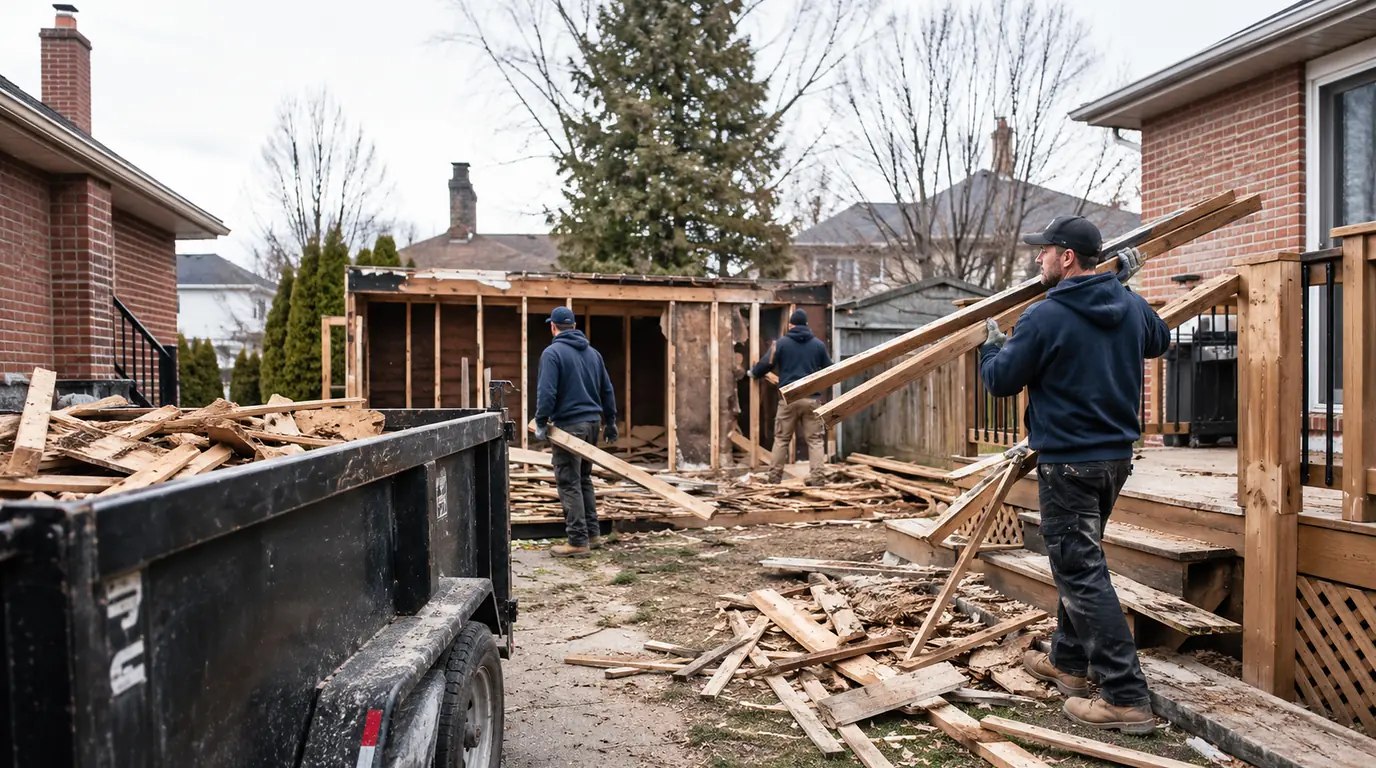
When an Oshawa request involves a suitable shed, deck or other exterior structure, use Demolition & Removal so dismantling, access and debris handling are reviewed as their own project.
Explore serviceHousehold, garage and basement cleanouts can be described along with furniture and suitable project debris. List the largest or heaviest pieces and any unusual materials.
Yes. A stairway, landing or tight turn can affect how bulky items leave the home. Include access photos when the load is not at ground level.
No. Hazardous or regulated materials require approved disposal. Durham Region publishes current household hazardous-waste and waste-facility information for those items.
Suitable project debris can be reviewed when the materials are identified. Do not assume every construction material is accepted as ordinary junk.
Provide the Oshawa location, material types, approximate volume, largest items and access route. Photos of the complete load and loading path are usually more useful than close-ups alone.
Send the Oshawa location, describe the household or project material and attach optional photos that show the full load, stairs, driveway or other access conditions.