Why commercial property maintenance needs a whole-site view
Commercial properties are used differently from residential homes. A retail plaza has deliveries, public entrances and customer parking. A warehouse has loading routes, long roof spans and rooftop mechanical equipment. A condominium corporation may oversee shared outdoor spaces, access roads and multiple buildings. Those differences shape maintenance priorities, but the core principle remains the same: issues at ground level can affect the building envelope above.
A mature tree may provide welcome shade at a staff entrance while also dropping leaves near a roof drain. Branches extending toward an elevation can complicate access for facade repairs. A tree close to a service route may interfere with vehicles, signs or lighting. Meanwhile, a roof with a history of drainage problems needs attention from a qualified roofing professional, regardless of whether tree debris appears to be involved.
Good commercial property maintenance in Ontario starts with documented observations, the right independent specialists and a clear distinction between routine care and technical building work. This guide helps property owners, facilities teams and commercial property managers understand those boundaries and recognize when to seek further information.
Toronto Tree Services is a referral and lead-generation service. Commercial tree cutting, pruning, trimming and related requests may be forwarded to independent tree care professionals where available. Toronto Tree Services does not perform, inspect, schedule or manage the work. Independent professionals discuss assessments, estimates, qualifications, insurance, WSIB, timing, work and service issues directly with the customer.
Commercial tree care: cutting, pruning and trimming
Commercial tree care is not limited to removing a visibly damaged tree. For a managed property, the right conversation may involve branch clearance, crown condition, pedestrian routes, sightlines, access for building maintenance or vegetation that has grown into a roofline. Tree-related decisions should reflect the site, the species, the season, local rules and the judgment of an independent qualified professional.
Commercial tree pruning and canopy clearance
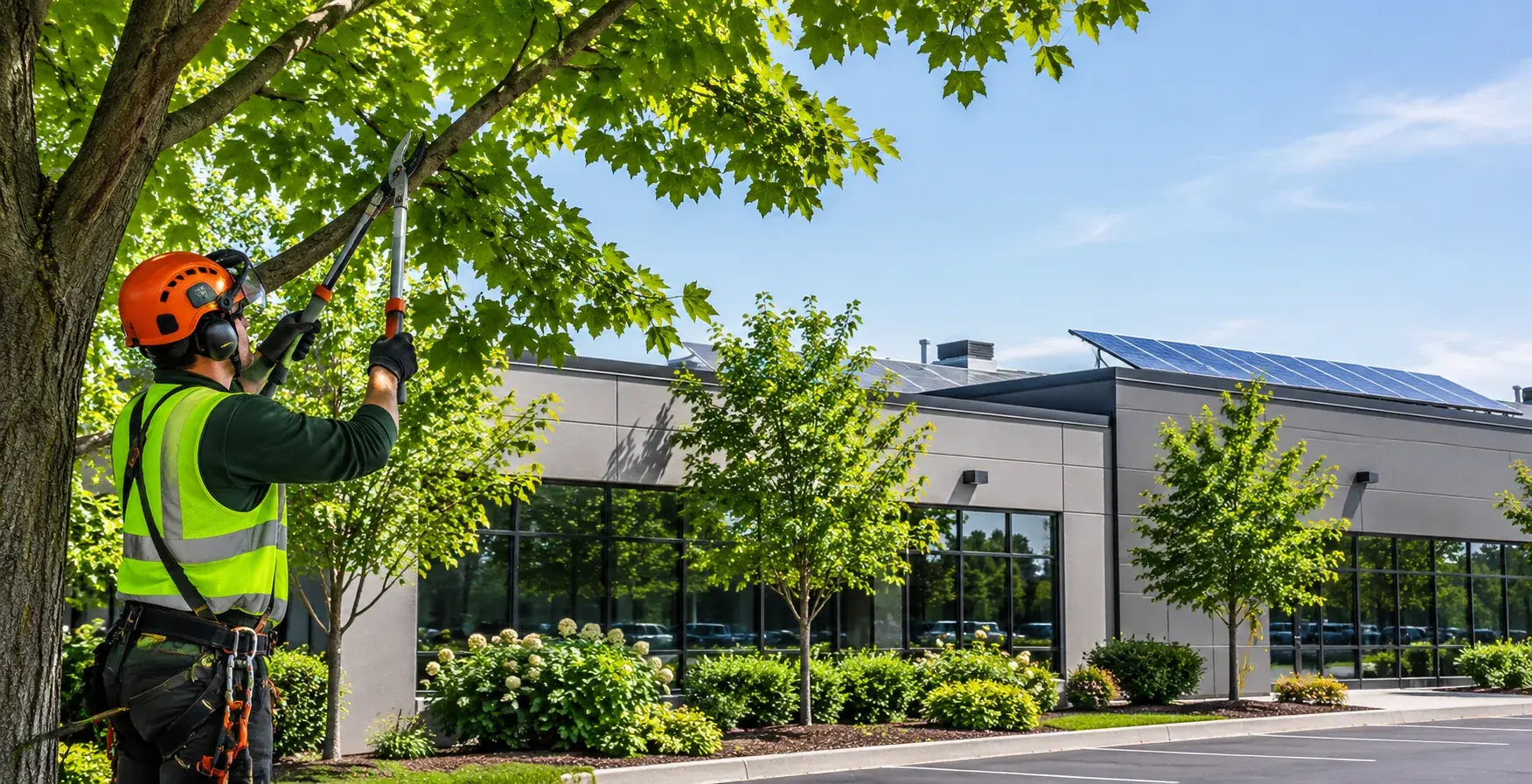
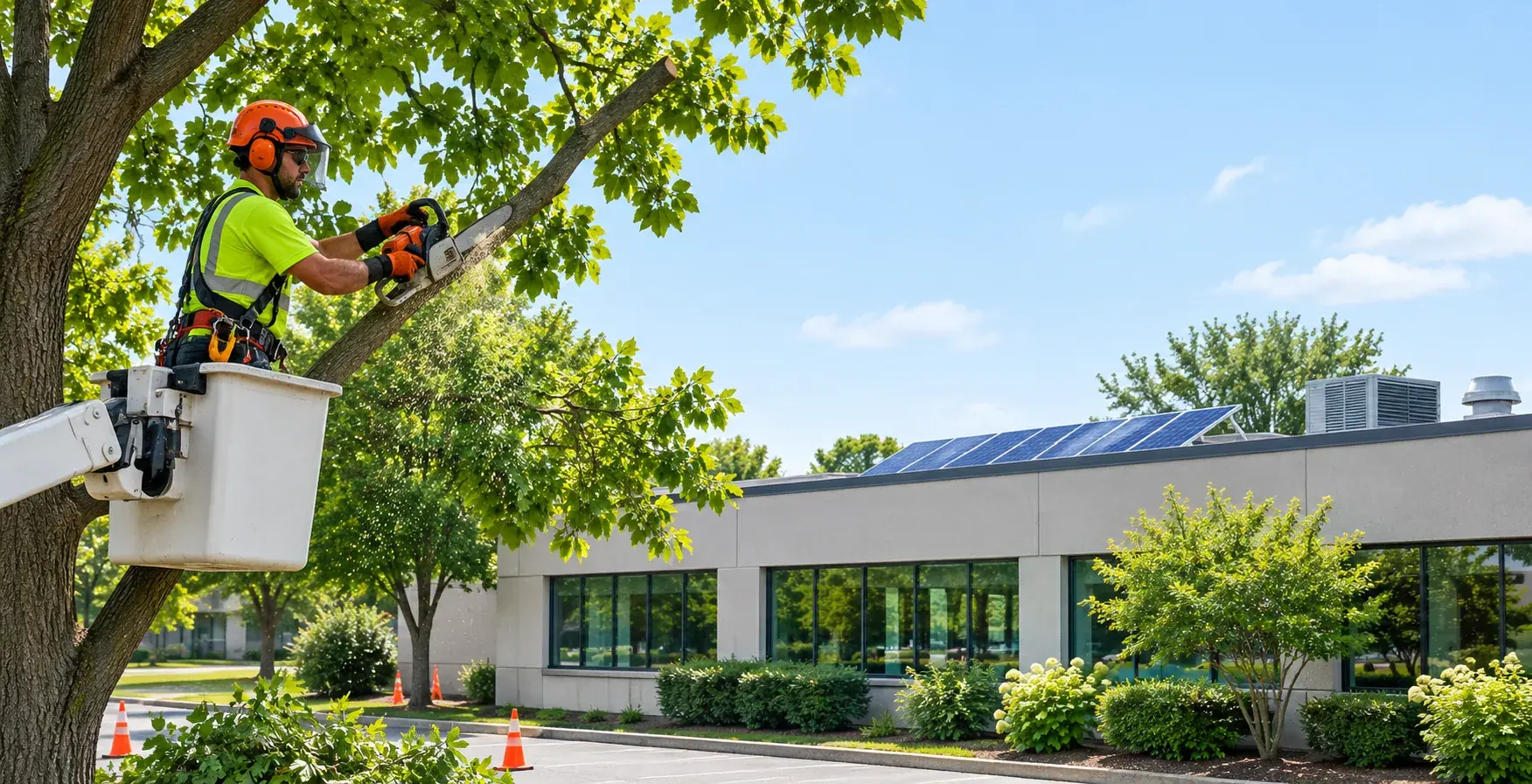
Pruning may be considered when dead or damaged limbs overhang walkways, parking spaces, loading zones or building entrances. It can also form part of an ongoing tree-care discussion where branches are near roofs, exterior walls, signs or lighting. The amount and type of pruning matter. Overcutting can weaken trees, and clearance decisions near utilities require specialist safety arrangements.
For commercial tree pruning and trimming requests, provide photographs of the whole tree and the area affected, together with the location and any access restrictions. An independent contractor or arborist can discuss a proposed scope, timing and site safety directly with the property representative.
Commercial tree cutting or removal
A tree may need closer professional attention following a major limb failure, structural damage, unusual leaning, significant dieback or interference with an approved construction scope. None of those observations alone proves that removal is necessary. An independent arborist can discuss assessment options and relevant permits where offered. The municipality or conservation authority determines its own requirements and decisions.
Where removal is being considered, tree removal requests may be forwarded to an independent contractor, subject to availability. Any assessment, written estimate, approval-related document, application or submission support, when offered, remains the independent professional's responsibility.
Hedges, shrubs and perimeter vegetation
Hedge trimming and routine vegetation management can influence how commercial entrances, sidewalks and driveways function. Overgrown shrubs may narrow paths or obscure signs; unchecked growth near walls may make it harder to notice moisture or facade concerns. Managing those conditions should not mean indiscriminate clearing. Consider sightlines, accessibility, plant health, ownership boundaries and wildlife before requesting work.
Use the existing hedge trimming and removal information to frame a request. Independent providers discuss any applicable scope and service terms with the customer.
Where trees, storm damage and commercial flat roofs meet
A tree does not have to touch a roof to affect roof maintenance. Leaves and twigs can travel across a broad low-slope surface, gather around strainers and collect in corners. Branches overhanging a roof may make access more difficult and create recurring seasonal debris. During storms, falling branches can damage edge metal, rooftop equipment, skylights or membrane surfaces. Wind-blown debris can be a concern even where adjacent trees appear healthy.
It is important to distinguish tree-related roof concerns from a confirmed roofing defect. An interior ceiling stain might result from a roof seam, flashing, drain, plumbing line or another source. A blocked drain can contribute to ponding, but the cause and remedy require the right specialist. Tree trimming cannot repair a damaged membrane, and a roofing repair cannot substitute for an appropriate tree assessment.
Blocked roof drainage from leaves and debris
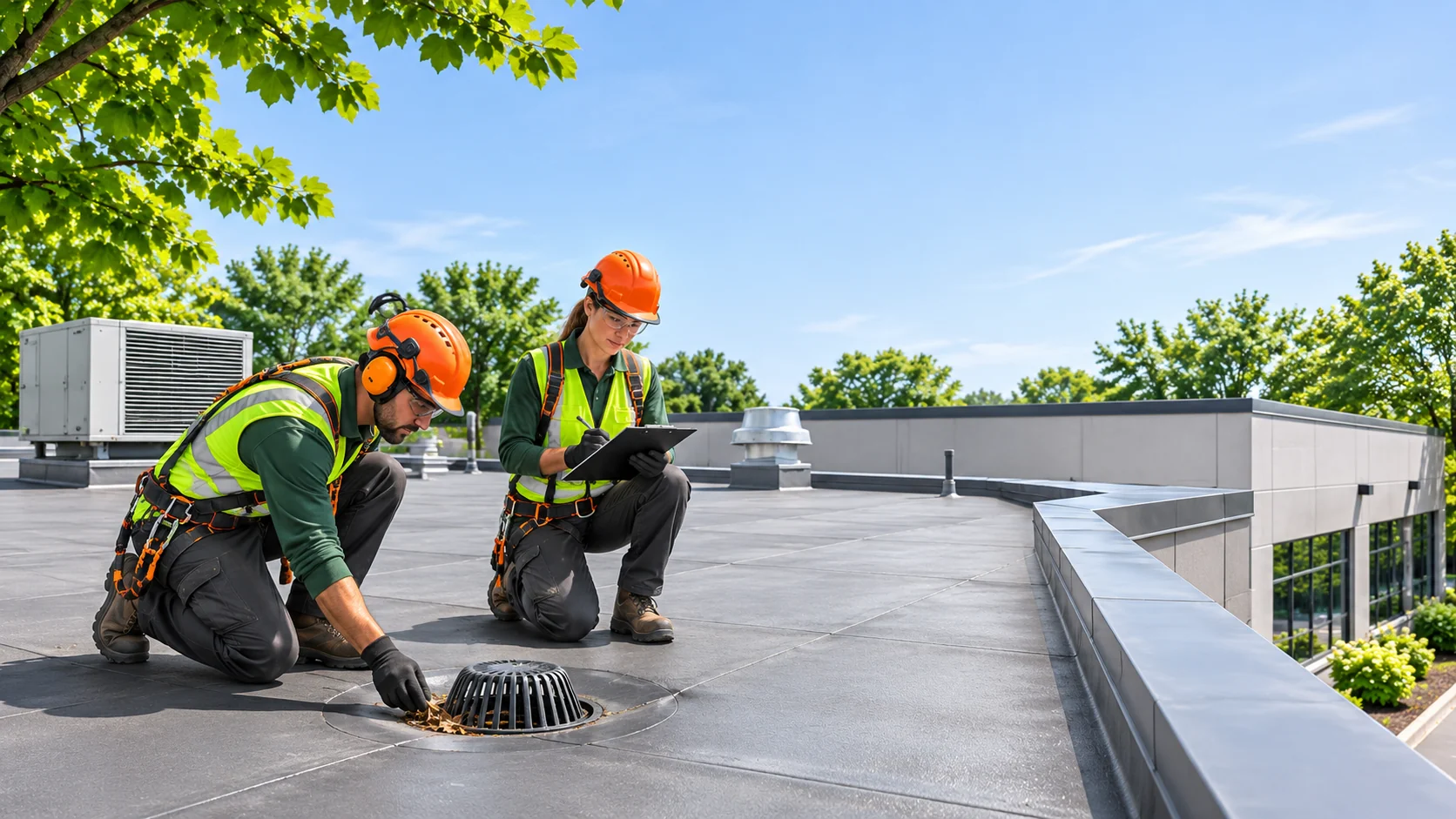
Low-slope roofs often depend on internal drains, scuppers and designed overflow routes. When debris blocks an outlet, water may collect in areas that were intended to drain. Ponding can make existing weaknesses harder to manage and can add load in ways a roofing specialist should evaluate. Property staff can record what they see from an authorized safe location, but should not climb onto roofs, open drains or attempt repairs without appropriate training and access arrangements.
Useful records include the date of the observation, recent weather, the approximate location of standing water, any nearby trees and photographs taken safely. The roofing contractor should determine whether the issue involves debris, roof slope, drain condition, membrane details or another defect.
Storm damage prevention and early observations
Before a forecast storm season, property managers can review reports from prior events and note branches over high-use routes, visible tree defects, blocked ground-level drainage and known roof leak locations. A specialist should determine whether tree work or roof work is appropriate. After severe weather, keep people away from fallen limbs, damaged structures, sagging branches and any suspected electrical hazards until the responsible authorities or qualified specialists say the area is safe.
For a tree affecting a power line, contact the utility provider first. For a tree or debris affecting a public road, contact the municipality or relevant authority. If there is an immediate threat to life, contact emergency services. Urgent tree requests may be forwarded to independent tree care professionals where available, without any promise of response time.
Commercial flat roofing, roof repairs and inspections
Commercial flat roofing involves a different set of materials, maintenance records and safety procedures from tree care. Many Ontario warehouses, institutional buildings, plazas and multi-unit properties use low-slope roof assemblies with membranes, roof drains, penetrations, mechanical units and perimeter details. Each element may influence whether a suspected problem calls for observation, maintenance, an inspection or repair.
Common questions include whether water is leaving the roof as designed, whether flashing around equipment is intact, whether previous repairs are documented, and whether the roof is ready for new equipment. Building owners should look for patterns, not rely on a single symptom. Repeat leaks, new stains, signs of water at a ceiling, or visible storm damage warrant discussion with a qualified roofing professional.
For readers who need specialized information on commercial roof repair in Ontario, CommercialFlatRoofs.ca explains roof leaks, membrane damage, perimeter details and drainage-related concerns. It is a related website under common ownership, not a tree service supplied by Toronto Tree Services.
What a commercial roof inspection can clarify
A qualified roofing specialist may assess membrane condition, flashing, roof edges, penetrations, outlets, evidence of past repairs and the history of water entry. The appropriate scope depends on the building and access conditions. A tree contractor should not be expected to diagnose the roof, and a roofing contractor should not be expected to make arboricultural decisions outside their qualifications.
Keep roof inspection findings with the building's maintenance records. When pruning or vegetation work is discussed near roof edges, share relevant access restrictions, approved roof access procedures and information about vulnerable rooftop equipment with the independent tree professional. The individual contractors remain responsible for their respective work, safety procedures, scheduling and communications.
Preventative roof maintenance is not the same as emergency repair
Preventative maintenance often focuses on documenting the condition of vulnerable details before a problem escalates. A professional may recommend looking at outlet performance, damaged flashing, loose perimeter materials or evidence of repeated ponding. Active water entry or a damaged roof section may require a different response, determined directly by a roofing contractor.
For a broader overview of roofing systems, maintenance considerations and the type of property information a specialist may request, see Commercial Flat Roofs' Ontario roofing and building-planning resources. This is an optional information resource for readers whose needs extend beyond tree care.
Commercial rooftop solar panels and tree shading
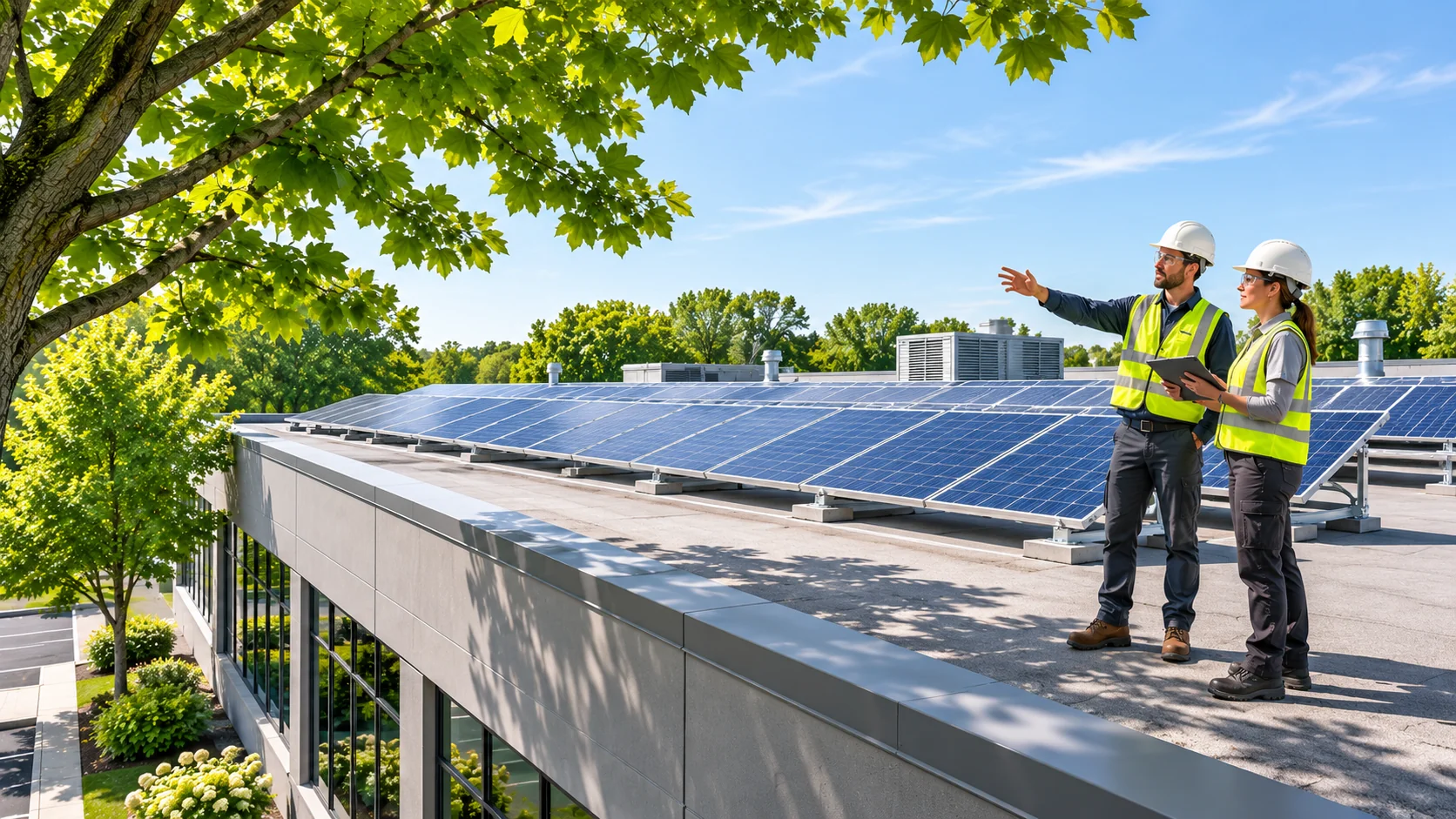
Commercial rooftop solar planning brings another relationship into focus: the building needs a suitable roof, and the proposed panels need an appropriate solar exposure analysis. Trees, neighbouring buildings, rooftop equipment and future growth may all affect the amount and timing of sunlight reaching a planned array. However, shade is not by itself a reason to remove a tree.
A proper feasibility discussion considers roof age and condition, structural capacity, safe access, roof drainage, fire and electrical requirements, equipment location and utility connection steps. Solar specialists and the applicable designers or engineers should establish those details. A property owner can gather reliable roof records and site photographs before contacting them.
Before pruning trees for solar exposure
Ask the solar designer to identify which sections of the roof have a meaningful shading concern, during what seasons, and how the array layout might be adjusted. Some shaded areas can be avoided through system design without altering a healthy tree. If vegetation changes remain under consideration, consult an independent arborist to discuss tree health, practical pruning limits, ownership and local requirements before approving work.
Toronto's public solar installation considerations explain why nearby trees and buildings matter in rooftop planning. They provide a useful starting point, but a project-specific solar assessment is still required.
Commercial solar installation and the existing roof
Solar panel installation on a commercial roof should not be treated as a standalone equipment purchase. Roof durability, waterproofing details, rooftop travel paths, electrical routes and future access for maintenance all need to be considered together. Roofing and solar trades may have overlapping needs, but they have distinct scopes and qualifications.
The related site's commercial solar installation coordination guide explores the planning interfaces between roofing, electrical, engineering and on-site activities. Toronto Tree Services does not offer solar installation, rooftop design or solar project coordination.
A practical preventative maintenance calendar for Ontario properties
Seasonal check-ins can help owners notice changes earlier, but they do not replace qualified inspections or building-specific requirements. Keep the frequency and scope appropriate to the location, building use, prior incidents and professional recommendations.
Review winter impacts
Note visible winter limb damage, thaw-related drainage concerns, new roof staining and changes along walking routes. Confirm any specialist follow-up separately.
Watch growth and access
Review mature canopy growth near signs, loading areas, facade access and rooflines. Note developing shade around existing or proposed solar equipment.
Prepare for debris and wind
Record leaf accumulation concerns around buildings, known overflow routes, hanging branches and past leak locations. Ask the relevant specialists about appropriate actions.
Document weather effects
Keep safe records of ice, snow, storm-related branch damage and interior signs of water entry. Never access an unsafe roof or approach electrical hazards.
Keep clear records across your property portfolio
For each building, maintain a simple location-based record of trees near structures, observations after storms, roof age and repair history where known, documented specialist findings and planned projects such as rooftop solar. Distinguish an observation from a diagnosis. Record who performed any professional work and retain documents supplied directly by that provider. This is particularly helpful for owners overseeing several GTA or Southern Ontario sites.
Ontario permits, safety and independent professional responsibilities
Municipal tree rules are not identical across the province. Toronto, Mississauga, Vaughan, Markham and other municipalities may apply different rules based on size, ownership, location and type of work. City-owned trees and regulated natural areas can require separate permissions. Property owners should verify the rules for their specific address with the applicable authority. An independent ISA certified arborist may discuss reports and permit-related requirements where offered, but official decisions remain with the appropriate authority.
The City of Toronto publishes guidance on when a tree or ravine permit may be required. For commercial properties elsewhere in Ontario, consult the relevant municipality or conservation authority. For vegetation near overhead power lines, follow the utility's instructions and qualified line-clearance requirements.
Before engaging any provider, ask that provider directly about their qualifications, appropriate insurance, WSIB status where applicable, site access, written scope, approval requirements, timing, cleanup terms, payment arrangements and warranties. Toronto Tree Services does not verify or guarantee those matters and does not collect contractor payments. Roofing or solar inquiries should go directly to the relevant roofing or solar business.
Questions commercial property managers often ask
Can I request commercial tree cutting, trimming or pruning?
Yes. Toronto Tree Services accepts tree-related requests and may forward them to independent tree care professionals where available. The independent professional decides whether to take on the request and discusses any assessment, estimate, scheduling and work directly with you.
Can trimming overhanging branches solve a commercial roof leak?
Not necessarily. Pruning may reduce a source of debris or improve clearance, but it cannot determine or repair the cause of a roof leak. A qualified roofing professional should evaluate roof-related symptoms separately.
Should a commercial property remove trees before installing solar panels?
Not automatically. Start with solar feasibility, roof readiness and shade analysis. Any tree changes should then be considered with an independent qualified arborist and the applicable local rules, rather than assumed to be necessary.
Who deals with a report, permit, insurance question or an estimate?
Those matters are addressed directly between the customer and the independent professional providing the relevant service, where offered. For insurance documentation, ask your insurer what it requires and discuss possible supporting records with the contractor. Toronto Tree Services only receives and may forward tree-related requests.
Start with the right conversation for your property
Commercial property maintenance works best when tree and vegetation concerns are recorded early, roofing issues are evaluated by roofing specialists, and solar decisions are built on roof and shade data. Owners do not need to solve every technical question before asking for professional input. They do need a clear description of the concern and an understanding of which specialist is responsible.
For commercial tree care in Toronto and the GTA, you can send Toronto Tree Services a request about cutting, pruning, trimming or a related tree concern. The request may be forwarded to an independent professional where available. For commercial flat roofing, roof repair or rooftop solar projects across Ontario, use the relevant specialist resources linked above and contact that business directly.
Send Your Tree RequestReferral-only service. No work, timing, qualifications, approvals or outcomes are guaranteed by Toronto Tree Services.