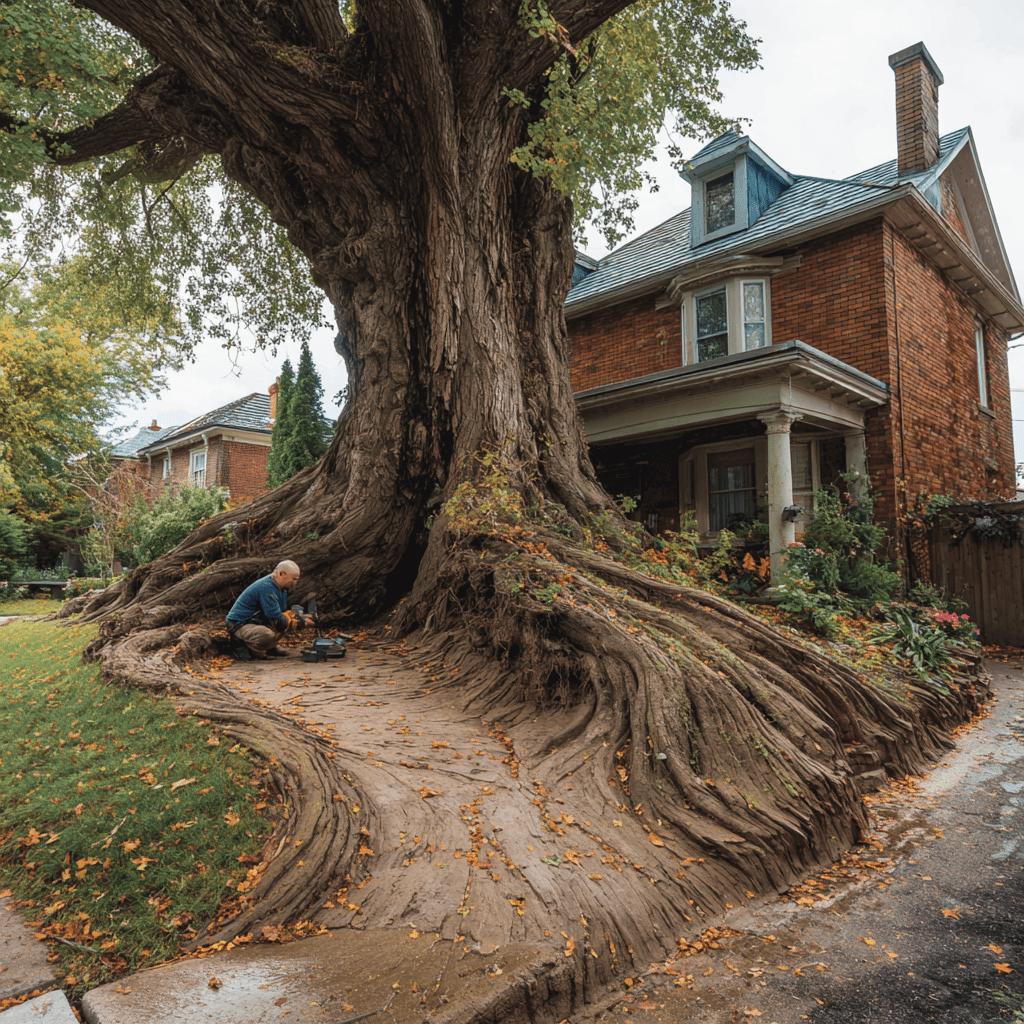
Tree work in Oshawa starts with one practical question: whose tree is it? A tree may be entirely private, partly shared with a neighbour, located on City property, near a public sidewalk, inside a woodland, close to a creek or wetland, or near overhead power lines. Those details matter more than a general assumption about tree size. Oshawa’s official tree information says the City tree by-law protects trees on City property, while Durham Region’s Regional Woodland By-law applies to woodlands larger than 1 hectare. For private-tree concerns, Oshawa tells property owners to check their home survey and contact a tree service company.
This guide explains what Oshawa homeowners should check before arranging tree removal, pruning, stump grinding, hedge work, or urgent tree service requests. Toronto Tree Services is a referral and lead generation service only. It does not remove trees, prune trees, grind stumps, trim hedges, inspect trees, assess trees, prepare arborist reports, prepare permit applications, submit municipal or conservation authority paperwork, manage contractors, dispatch crews, control pricing, guarantee insurance, guarantee WSIB, guarantee timelines, guarantee cleanup, or guarantee outcomes. Where available, a request may be forwarded to an independent arborist or independent tree care professional, and that independent professional is responsible for assessment, estimates, reports where offered, permit-related documents where offered, scheduling, work performed, cleanup terms, pricing, payment, communication, warranties, qualifications, insurance, WSIB, and service-related issues directly with the customer.
Oshawa’s official tree page says City trees are usually within 2 metres of the curb or 1.5 metres of the sidewalk. That does not prove ownership in every case, but it is a strong reason to pause and check before arranging private work. The City also says property owners should refer to their home survey to check if a tree is on their property.
If the tree is City-owned, it should be handled through the City, not by a private contractor hired by the homeowner. This can include boulevard trees, street trees, trees near sidewalks, and trees on other municipal lands. If the tree appears dead, damaged, hazardous, storm-affected, or interfering with public space, contact the City of Oshawa first so the proper public-tree process can be followed.
For a tree that is clearly private, the next questions are different. Is it shared with a neighbour? Is it part of a woodland larger than 1 hectare? Is it near a creek, wetland, shoreline, valley, or CLOCA regulated feature? Is it close to overhead power lines? Is it connected to construction, grading, fill, drainage, or site alteration? Those conditions can create requirements even when the tree is not City-owned.
Oshawa tree work checks for 2026
Official resources to check before planning tree work:
These links are informational only. Property owners should confirm requirements directly with the City, Durham Region, CLOCA, Oshawa Power, their insurer, or another relevant authority before arranging work.
For ordinary private trees on standard residential lots, Oshawa’s official tree page points property owners toward their home survey and private tree service companies. That means the old claim that Oshawa has a broad private tree removal permit threshold for individual residential trees should not be repeated unless the City later publishes a new private-tree by-law or permit rule. The safer wording is that private-tree work should still be checked for ownership, boundary, woodland, conservation authority, utility, and site alteration issues.
In older Oshawa neighbourhoods such as O’Neill, McLaughlin, Vanier, Central Oshawa, Centennial, Donevan, and Eastdale, many trees are large and close to buildings, driveways, sidewalks, fences, laneways, utility lines, and neighbouring properties. Mature maples, elms, locusts, spruce, cedars, and other established trees can require careful access planning and professional judgment even where no individual private-tree permit is triggered.
Toronto Tree Services may forward an Oshawa request to an independent arborist or independent tree care professional where available. Any site review, recommendation, estimate, report where offered, permit-related discussion, schedule, work method, cleanup term, pricing, payment, insurance, WSIB, and service issue must be handled directly between the customer and the independent professional.
City-owned trees are different. Oshawa’s City Trees By-law protects trees on City property, and the City’s tree page notes that City trees are usually within 2 metres of the curb or 1.5 metres of the sidewalk. If a tree is in that area, ownership should be confirmed before any work is arranged.
Do not remove, prune, injure, attach items to, excavate around, or grind a stump associated with a City tree unless the City has handled the approval or work process. If a public tree appears hazardous, storm-damaged, diseased, dead, or interfering with access, contact the City of Oshawa or Service Oshawa rather than treating it as private work.
Durham Region’s Regional Woodland By-law applies to woodlands within Durham Region that are 1 hectare, or about 2.5 acres, in size and greater. The by-law regulates the destruction or injury of trees within woodlands and can require a permit before cutting, depending on the property and activity.
This matters more for larger properties, rural edges, estate lots, naturalized parcels, and treed areas than for a single ornamental tree in a small backyard. If an Oshawa property contains or connects to a larger woodland, the owner should contact Durham Region before tree cutting. Durham Region also identifies different permit paths, including Good Forestry Practices Permits and Clear Cutting Permits.
Toronto Tree Services does not prepare Durham Region woodland applications, submit documents, communicate with Regional staff, or guarantee permit outcomes. Any forestry opinion, permit-related document, estimate, timing, and communication must be handled directly between the customer and the independent professional or the relevant authority where applicable.
CLOCA may apply where an Oshawa property is close to or within a stream, wetland, regulated area, valley, shoreline, fill area, grade alteration area, or other regulated feature. CLOCA’s permit guidance says development projects that include new or enlarged structures, additional dwelling units or uses, fill placement, grade alteration, work close to or within a stream, or an activity that may interfere with a wetland may require a permit before the activity takes place.
In Oshawa, that can matter near natural features such as creek corridors, ravine edges, wetlands, Lake Ontario shoreline areas, McLaughlin Bay, Farewell Creek, Oshawa Creek, Harmony Creek, Black Creek, and other regulated features. The correct step is to check CLOCA’s regulated-area map or contact CLOCA staff before arranging tree work, excavation, grading, fill, driveway work, construction, or site alteration near natural features.
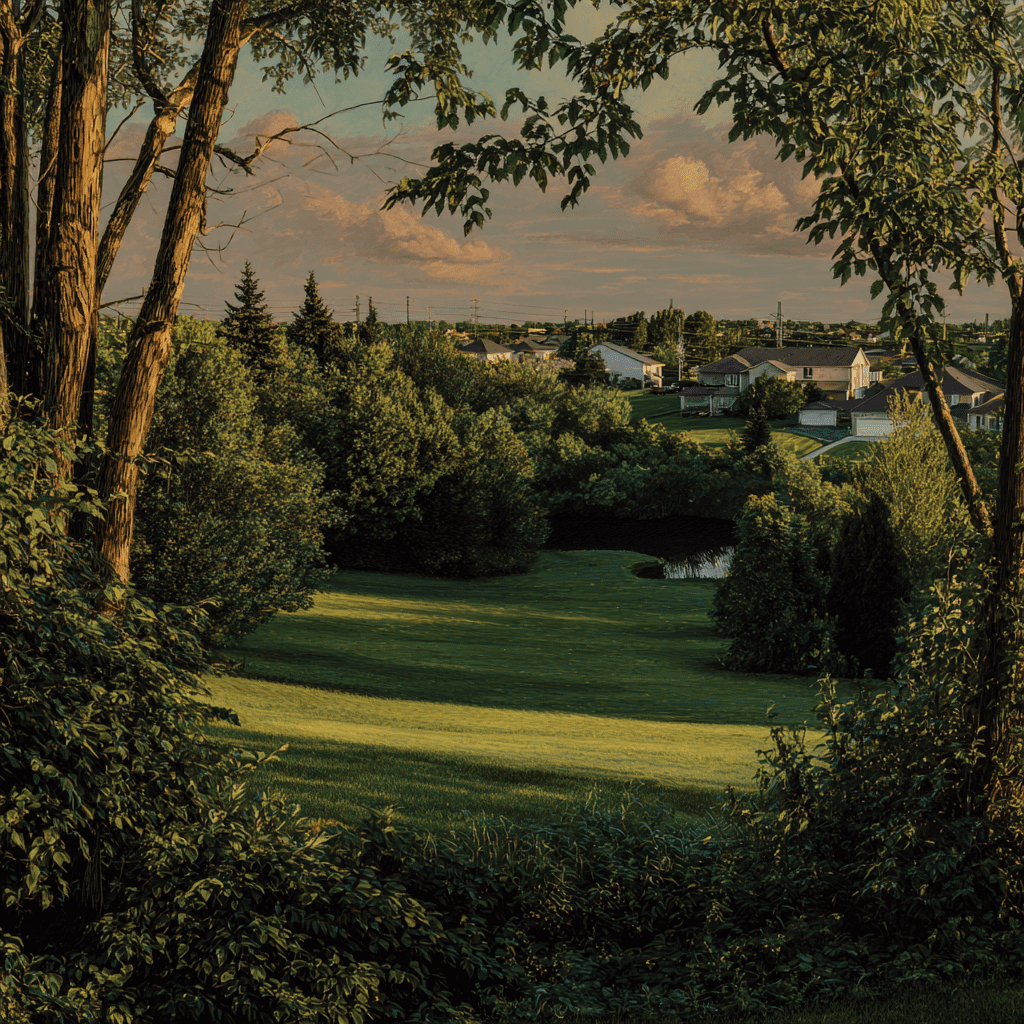
Tree removal requests in Oshawa can range from a small backyard tree in a newer subdivision to a large mature tree in an older neighbourhood with limited access. The independent contractor’s work plan may need to consider trunk size, height, species, condition, lean, decay, buildings, fences, pools, driveways, neighbouring properties, hydro lines, street access, debris handling, stump work, and cleanup terms.
For older neighbourhoods such as O’Neill, McLaughlin, Vanier, Central, Centennial, and Donevan, large trees often grow close to houses, garages, sidewalks, and property lines. For northern and newer areas such as Kedron, Pinecrest, Samac, Windfields, Taunton, and Northglen, common issues may include young subdivision trees, fence conflicts, storm damage, driveway clearance, and trees planted too close to structures. Waterfront and creek-adjacent areas may require CLOCA checks before work begins.
Toronto Tree Services does not perform removals, provide firm quotes, manage crews, control pricing, or guarantee cleanup. Where available, it may forward the request to an independent tree care professional. The independent professional is responsible for assessing the site, providing any estimate, setting the scope, confirming safety requirements, scheduling the work, completing the work where agreed, and handling all service-related issues directly with the customer.
Tree pruning on private property may be requested for deadwood, clearance, structure, storm damage, roof contact, sidewalk clearance, driveway access, hedge overgrowth, or branches extending toward neighbouring properties. The right pruning scope depends on the tree species, health, branch structure, utility proximity, ownership, and whether the work could damage a public tree, boundary tree, woodland, or regulated natural feature.
Toronto Tree Services does not prune trees or determine pruning scope. Where available, a request may be forwarded to an independent arborist or independent tree care professional. Any pruning recommendation, estimate, scheduling, work method, debris handling, insurance, WSIB, warranty, and cleanup term must be discussed directly with that independent professional.
Oshawa Power states that it trims and removes trees around lines on public property. It also states that private property owners are responsible for tree trimming and brush removal around overhead power lines located on private property that serve only their premises. Work near electrical infrastructure is dangerous and should not be treated as ordinary pruning.
If a tree or branch is touching wires, leaning into electrical infrastructure, blocking public access, or creating an immediate danger, contact the utility provider, emergency services, the City, or the relevant public authority first. Urgent tree requests may be forwarded to an independent tree care professional where available, but Toronto Tree Services does not guarantee emergency response, same-day arrival, 24/7 availability, dispatch, utility clearance, municipal approval, conservation authority approval, or service outcomes.
Tree requests may come from all parts of Oshawa, including O’Neill, McLaughlin, Vanier, Centennial, Central, Eastdale, Donevan, Lakeview, Northglen, Pinecrest, Kedron, Samac, Windfields, Taunton, Raglan, rural-edge properties, and areas near Hampton and Kirby. Each area has different practical issues: older lots, tight access, mature canopy, newer subdivision plantings, hydro lines, ravine edges, creek corridors, stormwater features, and larger rural or semi-rural properties.
The best first step is to identify whether the tree is private or public, whether the property is near a regulated feature, whether the tree is part of a woodland, whether power lines are involved, and whether any construction or grading work is part of the plan.
Tree work cost in Oshawa depends on the independent contractor’s assessment of the tree and site. Factors can include height, trunk diameter, species, condition, lean, canopy spread, access, obstacles, hydro proximity, rigging needs, stump work, disposal, cleanup terms, travel, insurance requirements, WSIB status, and whether supporting documents or authority review are needed.
Toronto Tree Services does not perform tree work, provide firm quotes, control pricing, collect contractor payments, guarantee cleanup, or guarantee scheduling. Any estimate, invoice, deposit, payment method, scope of work, cleanup term, stump grinding option, warranty, insurance document, WSIB document, and service issue must be discussed directly with the independent contractor or independent arborist where available.
Toronto Tree Services may forward Oshawa tree requests to an independent arborist, independent tree care professional, or independent contractor where available. Toronto Tree Services does not inspect trees, assess hazards, prepare arborist reports, prepare municipal applications, submit Durham Region documents, submit CLOCA documents, handle City paperwork, coordinate contractors, perform removals, grind stumps, prune trees, trim hedges, control prices, collect contractor payments, guarantee insurance, guarantee WSIB, guarantee cleanup, guarantee timing, or guarantee authority approvals.
The independent professional is responsible for assessment, estimates, reports where offered, permit-related documents where offered, scheduling, work performed, cleanup terms, pricing, payment, communication, warranties, qualifications, insurance, WSIB, and service-related issues directly with the customer. Customers should confirm official requirements directly with the City of Oshawa, Durham Region, CLOCA, Oshawa Power, their insurer, or another relevant authority as applicable.
Does Oshawa have a private tree removal by-law?
Oshawa’s official tree page says the City tree by-law protects trees on City property, while Durham Region’s Regional Woodland By-law applies to woodlands larger than 1 hectare. For private-tree concerns, Oshawa advises property owners to check their home survey and contact a tree service company. Property owners should still confirm boundary, woodland, CLOCA, utility, and site alteration issues before arranging work.
How do I know if a tree in Oshawa is City-owned or private?
Oshawa says City trees are usually within 2 metres of the curb or 1.5 metres of the sidewalk. To confirm whether a tree is on private property, refer to your home survey or contact the City if ownership is unclear.
Can Durham Region woodland rules apply in Oshawa?
Yes. Durham Region’s Regional Woodland By-law applies to woodlands that are 1 hectare, or 2.5 acres, in size and greater. If the tree work is inside a qualifying woodland, contact Durham Region before cutting or injuring trees.
Are there trees in Oshawa near Farewell Creek or McLaughlin Bay that need extra checks?
Yes. Properties near creek corridors, wetlands, valleylands, shorelines, McLaughlin Bay, Farewell Creek, Oshawa Creek, Harmony Creek, Black Creek, or other regulated features may require CLOCA review before tree work, fill, grading, excavation, construction, or site alteration. Confirm directly with CLOCA before arranging work.
Who handles tree work near power lines in Oshawa?
Oshawa Power says it trims and removes trees around lines located on public property. Private property owners are responsible for trimming and brush removal around overhead power lines on private property that serve only their premises. Work near electrical lines is dangerous and should be handled through the proper utility or qualified electrical professional.
Can Toronto Tree Services provide tree work or firm quotes in Oshawa?
No. Toronto Tree Services is a referral and lead generation service only. It may forward a request to an independent arborist or independent tree care professional where available, but assessment, estimates, reports where offered, permit-related documents where offered, scheduling, work, pricing, payment, insurance, WSIB, warranties, cleanup terms, and service issues are handled directly between the customer and the independent professional.
Related Guides and Services
Have a tree question in Oshawa, including O’Neill, McLaughlin, Vanier, Pinecrest, Kedron, Eastdale, Donevan, Lakeview, Northglen, Samac, Windfields, Taunton, or a property near a creek, woodland, utility line, or public tree? Toronto Tree Services may forward your request to an independent arborist or independent tree care professional where available.
The independent professional is responsible for assessment, estimates, reports where offered, permit-related documents where offered, scheduling, work performed, cleanup terms, pricing, payment, communication, warranties, qualifications, insurance, WSIB, and service-related issues directly with the customer.