Whitby tree requests need careful wording because the Town's private tree rules are often misunderstood. This page should not say that every private tree over a 78cm circumference is automatically protected under a simple residential bylaw threshold. Whitby's current public guidance says individual trees on most private properties are generally not regulated and property owners usually do not need to go through a Town permit process to remove a tree, except where specific property conditions, mapped designations, heritage areas, woodlands, larger residential lands, Durham Region rules, or CLOCA requirements apply.
Toronto Tree Services is a referral and lead generation service only. It does not remove trees, prune trees, grind stumps, inspect trees, assess trees, prepare arborist reports, submit Town of Whitby applications, submit Durham Region applications, submit CLOCA applications, manage contractors, dispatch crews, control pricing, collect contractor payments, or guarantee outcomes. Where available, a Whitby tree request may be forwarded to an independent arborist or independent tree care professional. Any assessment, estimate, report, permit-related document, scheduling, work, cleanup term, payment, insurance, WSIB, warranty, and service-related communication must be handled directly between the customer and the independent professional.
Whitby's tree permit rules are property-context based. A permit may be required when trees are located in certain areas such as woodlots between 0.2 and 1.0 hectares, Major Open Space or Hazard Lands, Environmental Protection or Conservation Lands, Greenbelt or Oak Ridges Moraine lands, mature woodlands, environmentally sensitive areas, designated heritage districts, or residential lands 2.02 hectares or larger. The Town also notes that Durham Region or CLOCA may have separate requirements depending on the property.
For many standard private residential lots where the total wooded area is less than 0.2 hectares, the property is not in a designated heritage district, there is no special planning restriction, and no other public agency requires review, a Town tree removal permit may not be required. That should still be confirmed before work begins, especially in older neighbourhoods, larger lots, rural-edge areas, waterfront areas, and properties near creeks, wetlands, slopes, conservation lands, or natural features.
Customers can review the official Town of Whitby tree policies and by-laws page before authorizing tree work. Toronto Tree Services does not interpret the bylaw for customers as a legal determination and does not submit permit applications. Where available, an independent arborist or qualified professional may discuss permit-related questions directly with the customer.
Whitby tree request checks before work begins
Whitby has a wide range of tree situations. Historic downtown Whitby, Lynde Shores, Pringle Creek, Blue Grass Meadows, Rolling Acres, Williamsburg, Taunton North, Port Whitby, and Brooklin all have different lot patterns, canopy ages, access constraints, and regulatory considerations. A mature backyard maple in an older subdivision is a different request from a tree near Lynde Creek, a rural-edge woodland, a Brooklin heritage-area property, or a waterfront lot near Whitby Harbour.
Tree removal pricing in Whitby depends on tree size, species, condition, access, risk, equipment needs, wood disposal, stump grinding, permit context, and whether any independent arborist report or permit-related document is required. Toronto Tree Services does not provide firm quotes, free estimates, guaranteed prices, scheduling guarantees, or contractor promises. The independent contractor or independent arborist is responsible for estimates, pricing, written scope, cleanup terms, payment, work performed, warranties, qualifications, insurance, WSIB, and service-related communication directly with the customer.
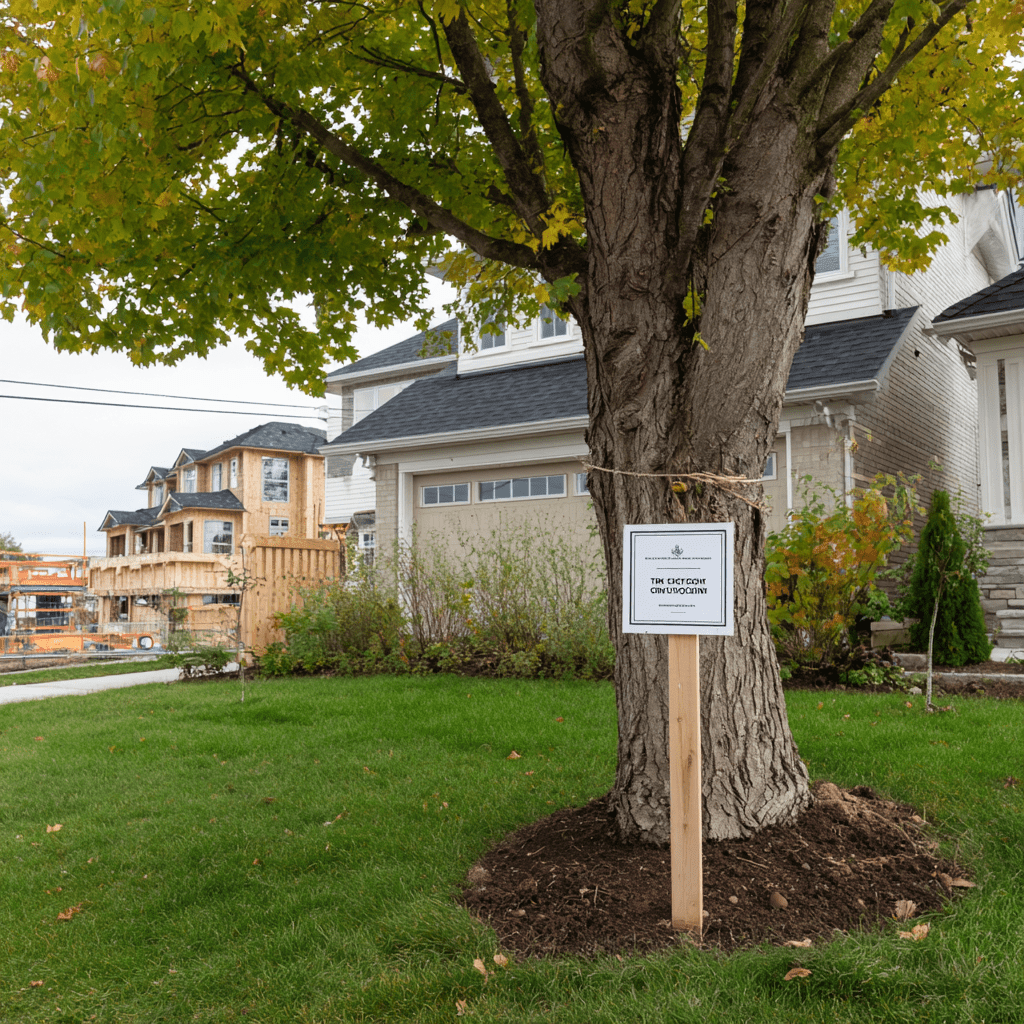
Brooklin and northern Whitby include a mix of established village properties, newer subdivisions, rural-edge lots, larger residential parcels, and areas close to agricultural lands or natural features. Some properties may involve heritage district context, planning conditions, rural woodland questions, Durham Region woodland rules, or conservation authority review. Customers should not assume a tree can be removed simply because it is on private property, and they should not assume a permit is required based only on trunk size.
Where available, an independent ISA certified arborist or qualified tree care professional may discuss the tree, property context, ownership, permit-related documents, and possible next steps directly with the customer. Toronto Tree Services may forward the request, but it does not prepare reports, verify title conditions, submit applications, contact public authorities for the customer, or guarantee that any approval will be issued.
Whitby properties near Lynde Creek, Lynde Shores, wetlands, floodplains, slopes, shorelines, watercourses, drainage features, or other natural areas may require conservation authority review before certain activities take place. CLOCA states that development projects involving new or enlarged structures, additional dwelling units or uses, placement of fill, grade alteration, proximity to or location within a stream, or activities that may interfere with a wetland may require a permit before the activity occurs.
This matters when tree work is connected to grading, construction, landscaping, drainage changes, shoreline work, access routes, or work near regulated natural features. Toronto Tree Services does not check regulated-area status as an official determination, submit CLOCA permits, prepare conservation authority documents, or guarantee approvals. Customers should review the CLOCA inquiries and permits page or speak directly with CLOCA before starting regulated work.
Durham Region's Regional Woodland By-law applies to woodlands within Durham Region that are one hectare or greater. Durham states that if you are planning to cut down or remove trees within a woodland or sensitive natural area, you may need a permit from the Region. This is different from a standard single tree in a small residential yard.
For larger rural Whitby properties, wooded parcels, estate properties, or tree work involving a woodland, customers should review Durham Region's official guidance before authorizing tree injury or removal. The official page is here: Durham Region Regional Woodland By-law. Toronto Tree Services does not prepare Durham Region applications, submit woodland permits, manage forestry prescriptions, or guarantee permit outcomes.
Toronto Tree Services may forward tree requests from Lynde Shores, historic downtown Whitby, Pringle Creek, Blue Grass Meadows, Rolling Acres, Williamsburg, Taunton North, Port Whitby, Rossland, Folkstone, Brooklin, Ashburn, rural Whitby, and waterfront areas near Whitby Harbour where available. Requests may involve tree removal, tree pruning, stump grinding, hedge trimming, urgent tree concerns, arborist report requests, or permit-related questions, but all assessment, pricing, scheduling, documents, work, cleanup, insurance, WSIB, and customer communication remain the responsibility of the independent professional.
If a tree is on public property, near utility lines, on a road allowance, blocking public access, affecting public infrastructure, or creating an immediate safety issue, contact emergency services, the utility provider, the Town, Durham Region, CLOCA, or the relevant public authority first. Urgent private-property tree requests may be forwarded to an independent tree care professional where available, but availability and response time are not guaranteed by Toronto Tree Services.
Does Whitby have a private tree removal permit process?
Yes, but Whitby should not be described as having a simple 78cm private-tree circumference threshold for standard residential lots. The Town says individual private trees are generally not regulated, except where specific property conditions apply, such as woodlots, heritage districts, open space or hazard lands, environmental or conservation lands, mature woodlands, environmentally sensitive areas, larger residential lands, or where another agency such as Durham Region or CLOCA requires review. Customers should confirm current requirements directly with the Town before authorizing tree injury or removal.
When might a Whitby tree removal permit be required?
A Town of Whitby tree removal permit may be required for trees in certain mapped or regulated areas, including woodlots between 0.2 and 1.0 hectares, major open space or hazard lands, environmental protection or conservation lands, Greenbelt or Oak Ridges Moraine lands, mature woodlands, environmentally sensitive areas, designated heritage districts, or residential lands 2.02 hectares or larger. Durham Region and CLOCA requirements may also apply depending on the property.
How much does tree removal cost in Whitby?
Tree removal pricing in Whitby depends on tree size, species, condition, access, equipment needs, disposal, stump grinding, permit context, conservation authority context, and whether an independent arborist report or permit-related documents are required. Toronto Tree Services does not control contractor pricing or guarantee prices. The independent contractor or independent arborist is responsible for estimates, pricing, payment terms, scheduling, work performed, cleanup terms, and service-related issues directly with the customer.
Can Toronto Tree Services handle Whitby permit or conservation authority paperwork?
No. Toronto Tree Services does not prepare arborist reports, submit Town of Whitby applications, submit Durham Region applications, submit CLOCA applications, manage permit paperwork, or guarantee approvals. Where available, a request may be forwarded to an independent arborist or qualified tree care professional who may discuss permit-related documents directly with the customer.
Related Guides and Services
Serving Whitby, including Lynde Shores, downtown Whitby, Pringle Creek, Blue Grass Meadows, Brooklin, Ashburn, Port Whitby, and surrounding neighbourhoods. Toronto Tree Services may forward your request to an independent arborist or tree care professional where available. The independent professional is responsible for assessment, estimates, reports where offered, permit-related documents where offered, scheduling, work performed, cleanup terms, pricing, payment, qualifications, insurance, WSIB, warranties, and service-related communication directly with the customer.