
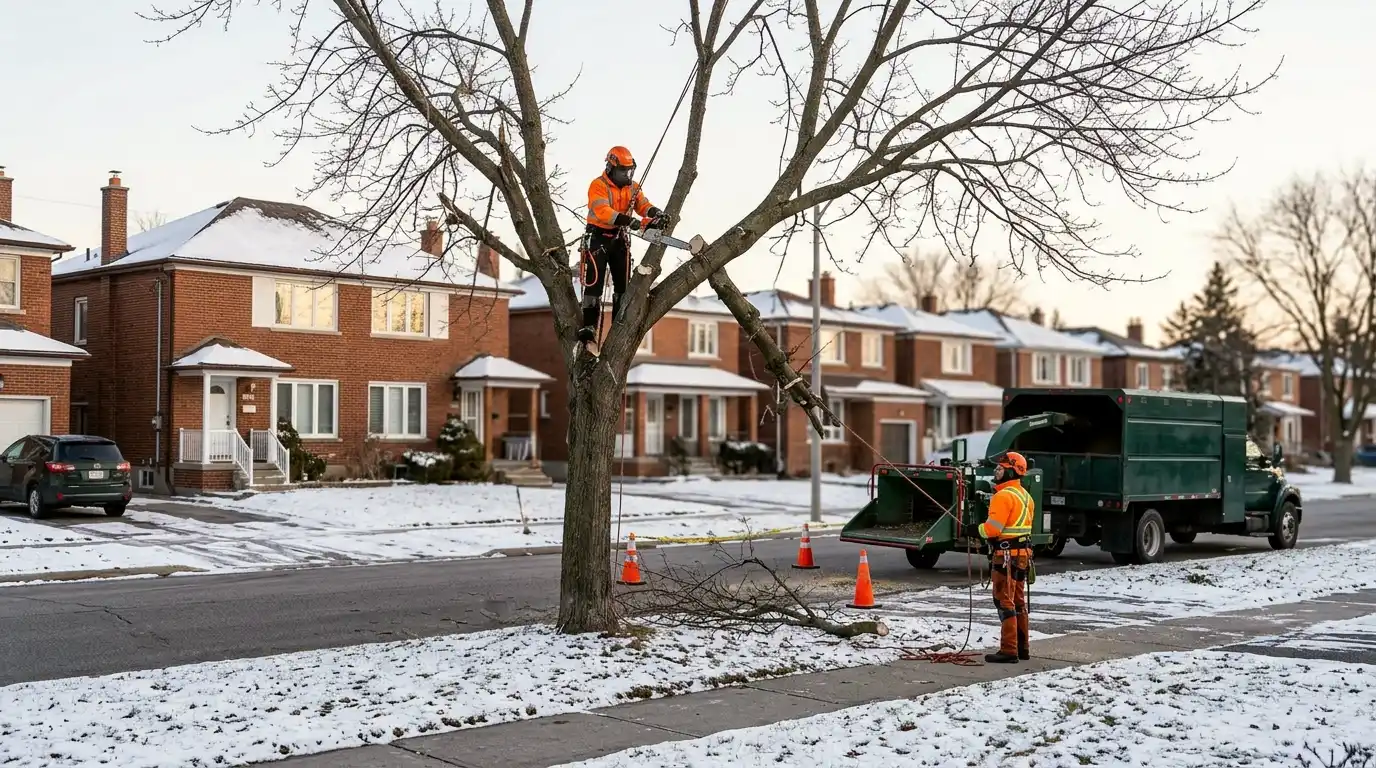
The best time to remove a tree in Ontario depends on tree condition, species, weather, urgency and any permit requirements. For many planned tree removals in Ontario, late fall through winter is often the most practical window. Deciduous trees are dormant, many canopies are easier to review without leaves, lawns may be firmer or frozen, and demand may be different from peak spring and summer periods. That said, timing is not only a calendar question. Species, safety, tree condition, permit rules, nesting activity, site access, weather, utility concerns, and qualified tree contractor availability all matter.
Why Dormant Season Is Often a Good Window
In much of Ontario, many deciduous trees are dormant through the colder months. During this period, leafless canopies can make it easier for a qualified arborist or tree care professional to see branch structure, deadwood, defects, previous failures, lean, and rigging options. Frozen or firmer ground may also reduce lawn disturbance compared with wet spring or soft summer conditions.
Winter is not automatically better for every property. Snow, ice, frozen gates, steep driveways, tight access, parked vehicles, high winds, extreme cold, overhead wires, and crane access can still make work harder. A tree over a house or beside a narrow laneway can remain complex in any season.
The practical value of dormant-season planning is that it gives the property owner time to confirm permits, compare written scopes, discuss access, check utility concerns, and schedule work before spring growth, nesting activity, or construction timelines create more pressure.
General seasonal timing notes by tree type:
- Oak: avoid pruning or injury during the growing season where possible because of oak wilt concerns. Toronto guidance says not to prune oaks from April 1 to October 31.
- Elm: dormant-season work may be preferred where Dutch elm disease risk or elm bark beetle concerns are relevant.
- Ash affected by Emerald Ash Borer: timing should consider brittleness, decay, nearby targets, and safety. A dead or unstable ash should not be delayed only for season preference.
- Maple: spring sap flow can create visible bleeding from cuts, which may be messy. Timing should still be based on tree condition, scope, and professional advice.
- Evergreens: removals can often be considered in multiple seasons, but access, nesting, weather, and permit rules still matter.
- Fruit trees: timing depends on species, condition, disease concerns, property goals, and local by-law context. Do not assume permit exemption without checking local rules.
Oak Wilt and Why Oak Timing Matters
Oak removals and major oak pruning deserve special care because of oak wilt. Fresh wounds can attract insects that may move the disease between trees. Toronto’s oak wilt guidance says not to prune oak trees during the growing season from April 1 to October 31. Where oak work is not urgent, dormant-season timing is usually the safer planning window.
If an oak is storm damaged, broken, hazardous, or creating immediate safety concerns, safety comes first. The qualified professional, municipality, or appropriate authority should explain whether immediate work is required, how wounds should be handled, whether permit rules apply, and what documentation is needed.
Do not move suspect oak firewood or infected wood casually. Oak wilt and other tree-health issues can spread through improper handling of wood material.
Nesting Season Considerations
Spring and summer tree work can also involve nesting birds. Federal migratory bird rules protect active nests of migratory birds when they contain a live bird or viable egg. Ontario also has rules protecting many birds, nests, and eggs. The practical result is that property owners and contractors should avoid disturbing active nests and should review the site before major pruning or removal during nesting periods.
Nesting activity varies by species, habitat, and location. A large conifer hedge, dense backyard maple, ravine-edge tree, or mature cedar screen may need more careful review than an open dead stem with no nesting signs. If active nesting is present, timing may need to change unless a safety emergency or lawful exception applies.
When Emergency Timing Overrides Season
A hazardous tree does not always wait for the ideal seasonal window. A split trunk over a driveway, a dead ash becoming brittle beside a house, a root-rotted maple leaning toward a structure, a storm-broken oak limb over a roof, or a tree on a utility line may require urgent action regardless of the month.
For Toronto, imminently hazardous private trees are handled differently from ordinary permit applications. The City’s storm guidance says an imminent hazard may be removed without a standard permit and asks owners or arborists to take photos and advise 311; its general permit page also provides a permit-exception confirmation process, with immediate work allowed when necessary to eliminate a dangerous situation.
If wires, fire, injury, structural collapse, road blockage, or immediate public danger are involved, contact the proper emergency, utility, City, or 311 channel first. Do not approach downed wires, hanging limbs, unstable trunks, or partially uprooted trees.
How Permit Timing Interacts With Season
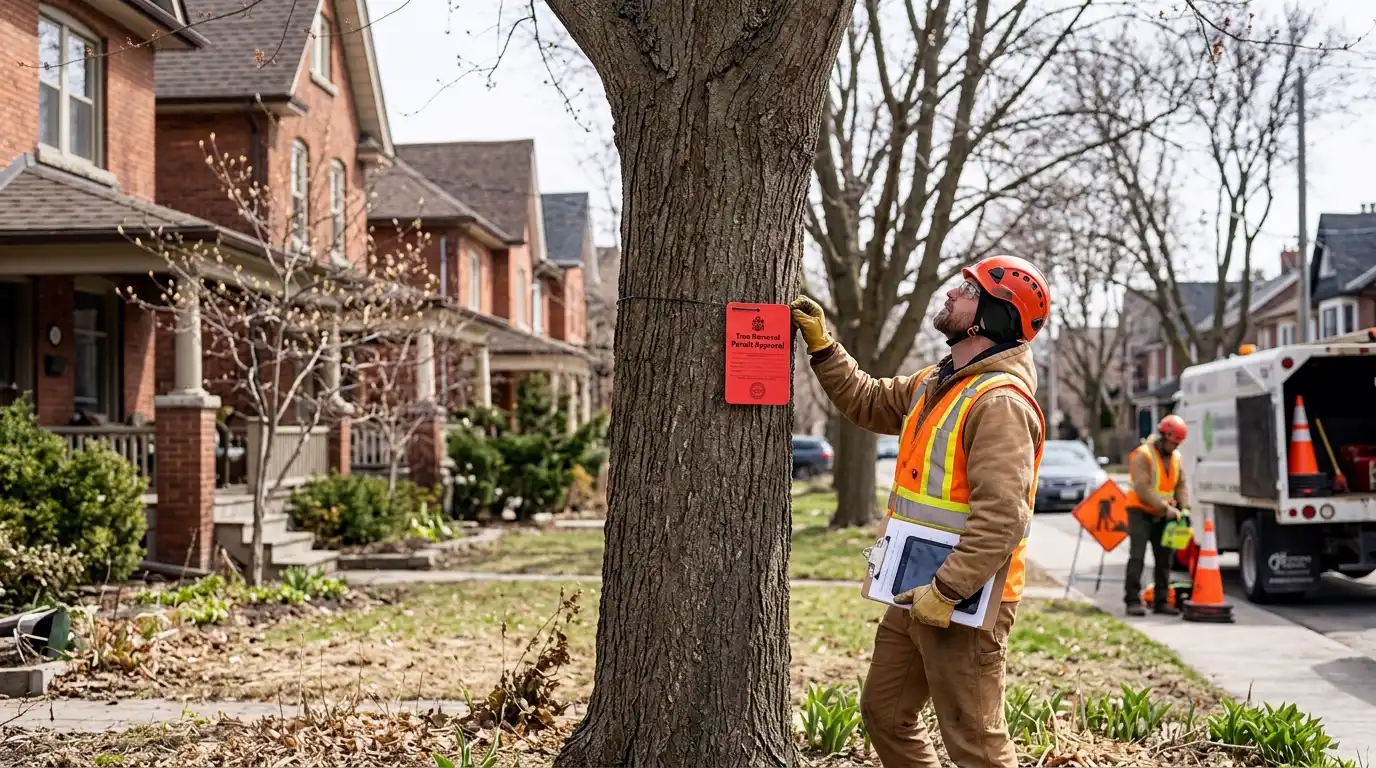
In Toronto, private trees with a diameter of 30 cm or more, measured at 1.4 m above ground, are generally protected from injury and removal. City-owned trees are protected at any size, and ravine or natural feature areas can involve additional rules. Other Ontario municipalities use different thresholds, forms, fees, timelines, and supporting-document requirements.
Season does not remove permit requirements. If a property owner wants a winter removal, permit-related review should be started before the preferred work window. Waiting until the first week of January to ask about a protected tree may push work later if an application, report, inspection, missing document, fee, neighbour consent, or municipal review is required.
A qualified arborist may discuss report scope, DBH measurement, permit-related documents, timing, fees, and submission support with the property owner.
Summer Removal: When It May Still Make Sense
Summer tree removal is not automatically wrong. For non-oak, non-elm situations, summer may be practical when a tree has failed, is declining quickly, blocks a project, affects access, threatens a structure, or needs to be addressed before fall storms. The right timing depends on the tree, site, species, permits, nesting activity, and risk.
The main practical drawback is often site disturbance. Wet lawns, soft soil, garden beds, narrow access, pools, fences, and heavy equipment can make summer work harder on the property. Where possible, the qualified tree contractor should explain mats, access protection, debris movement, equipment limits, and cleanup exclusions before work begins.
If spring or summer removal is being considered, ask the qualified professional whether oak wilt precautions, nesting checks, utility concerns, permit issues, or heat/drought stress should affect timing or method.
Winter Removal: Practical Advantages and Limits
Winter work may reduce lawn rutting where the ground is frozen and access is clear. Leafless deciduous trees can also make limb structure easier to see. In some cases, winter scheduling may be easier because demand patterns change after storm season and before spring landscaping work begins.
Winter also has limits. Snow cover can hide obstacles, ice can make climbing and rigging unsafe, extreme cold can affect equipment, and blocked access can slow the job. Crane work, parking, laneway access, and roadside work may require extra planning in winter conditions.
Property owners should ask the qualified tree contractor how weather delays are handled, whether access must be cleared, where trucks and equipment will park, what cleanup is realistic with snow on the ground, and whether a return visit may be needed for stump grinding or final cleanup.
Best Time to Remove a Tree in Ontario: Planning a Tree Removal in Ontario
Planning Ahead for Permit-Required Removals
In Toronto, Mississauga, Markham, Richmond Hill, Oakville, Vaughan, Brampton, and other GTA municipalities, protected-tree rules can vary significantly. A tree that does not require a permit in one municipality may require a permit in another. Some municipalities also treat dead trees, high-risk trees, construction-related removals, boundary trees, ravine areas, or replacement trees differently.
The best approach is to confirm the local rule early. Property owners should check the official municipal page, measure the tree correctly, confirm ownership, review any conservation authority or regional woodland context, and ask the qualified professional what documents may be needed.
Do not book a removal date first and check permits later. If the tree is protected, that can create delay, cancellation, cost, and by-law risk. A proper written scope should state who is responsible for permit-related documents, municipal communication, replacement planting where relevant, and final scheduling after approval.
Cost and Seasonal Pricing
Winter tree removal does not automatically cost less, and summer tree removal does not automatically cost more. Pricing is set by qualified tree contractors and depends on tree size, access, condition, nearby structures, equipment, risk, debris handling, stump grinding, urgency, permits, weather, and scheduling.
Some contractors may have more flexibility in slower periods. Others may charge more for difficult winter access, extreme cold, emergency work, crane logistics, snow clearing, or return visits. The only reliable answer is a written quote for the specific tree, site, and season.
Official and Helpful Resources
- City of Toronto: Oak Wilt
- City of Toronto: Storm Damage to Trees
- 311 Toronto: Tree and Ravine Permit Applications
- City of Toronto: When to Apply for a Tree or Ravine Permit
- Government of Canada: Nest Protection Under the Migratory Birds Regulations, 2022
- Government of Canada: General Nesting Periods
- Ontario: Remove Bird Nests or Eggs
- ISA: Find an Arborist
Frequently Asked Questions
When is the best time of year to remove a tree in Ontario?
For many planned deciduous tree removals in Ontario, late fall through winter can be a practical window because trees are dormant, lawns may be firmer or frozen, and leafless canopies can make structure and access easier to review. The best timing still depends on species, condition, permit requirements, nesting activity, site access, weather, and qualified tree contractor availability.
Can trees be removed in winter in Ontario?
Yes. Winter tree work can be practical when access, weather, equipment safety, and permit requirements allow. Frozen ground may reduce lawn disturbance, and leafless deciduous trees can be easier to assess. Extreme cold, snow, ice, blocked access, high winds, utility concerns, and contractor availability can still affect scheduling.
Is there a bad time to remove a tree in Ontario?
There is no single bad season for every tree, but timing can matter. Oak work should avoid the growing season where possible because of oak wilt concerns. Spring and summer work may also require attention to active bird nests, soft lawns, wet soil, and higher contractor demand. Emergency work may still need to proceed when safety requires it.
Does the time of year affect Toronto tree removal permits?
Season does not remove Toronto permit requirements. Toronto protects private trees with a diameter of 30 cm or more, measured at 1.4 m above ground, and City trees are protected at any size. Permit timing can vary by application completeness, tree condition, City review, inspections, missing documents, and workload.
Does tree removal cost more in winter in Ontario?
Seasonal pricing is not guaranteed. Some qualified tree contractors may have more scheduling flexibility in winter, while difficult access, extreme cold, snow, ice, crane needs, or emergency work can still affect cost. Property owners should compare written scopes directly with qualified tree contractors.
Related Guides
- Tree Removal Permit Toronto
- Tree Removal Permit Mississauga
- How Long Does Tree Removal Take
- Tree Removal Cost Toronto
- Tree Removal Requests