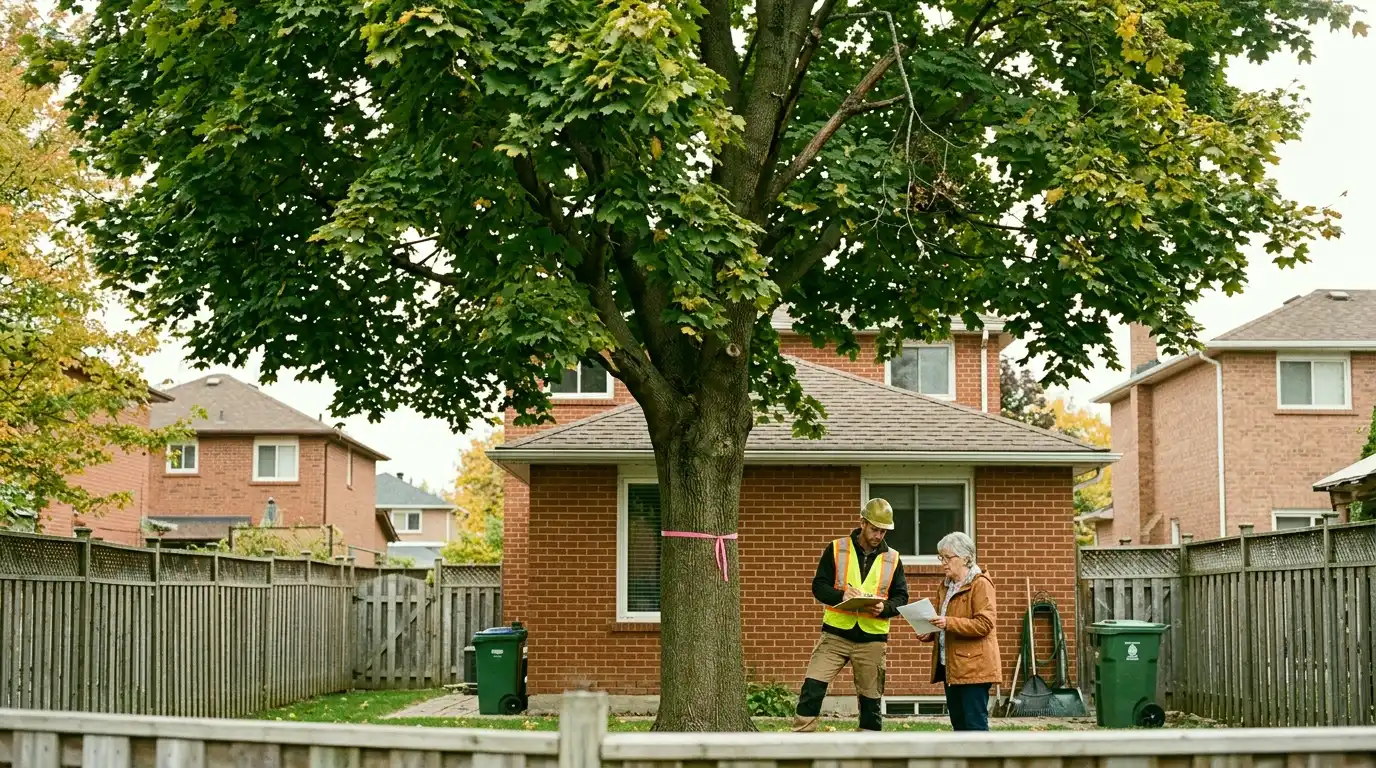
This guide explains the tree removal permit in Mississauga, including the approval rules, property conditions and practical steps that can affect the work. Mississauga requires a permit to remove one or more trees on private property that are 15 cm or greater in diameter, including dead or dying trees. That threshold is lower than Toronto’s 30 cm rule, which means more trees on Mississauga properties are regulated than many homeowners expect. Skipping the permit can lead to by-law enforcement, fines, and replacement planting requirements. This guide explains how the Mississauga tree permit process works, what property owners should prepare, and what to check before arranging removal.
Permit rules change across municipal boundaries. For a nearby comparison, see the tree removal permit in Oakville guide.
Mississauga Tree Permit – Key Facts
- By-law: Mississauga Private Tree Protection By-law
- Threshold: One or more trees 15 cm or greater in diameter on private property
- Applies to: Regulated private trees, including dead or dying trees
- Application: City of Mississauga tree permit application
- Review timeline: 30 business days for a complete application
- Supporting documents: Tree locations, drawings, arborist report where required, and replacement planting information where applicable
- Official resource: City of Mississauga tree permits
Does Your Tree Need a Permit in Mississauga?
The key starting point is the tree’s trunk diameter. If you are removing one or more trees on private property that are 15 cm or greater in diameter, the City of Mississauga states that a permit is required. This includes dead or dying trees.
To put 15 cm in perspective, it is roughly the diameter of a large grapefruit. Many established trees in Mississauga neighbourhoods such as Port Credit, Lorne Park, Streetsville, Erin Mills, Meadowvale, Clarkson, Cooksville, and Malton can exceed this threshold even when they do not look especially large at first glance.
The lower threshold compared with Toronto means that trees you might assume are too small to need a permit can still be regulated in Mississauga. When in doubt, check the City of Mississauga’s current permit page or speak with a qualified arborist before any removal is planned.
What Is the Mississauga Private Tree Protection By-law?
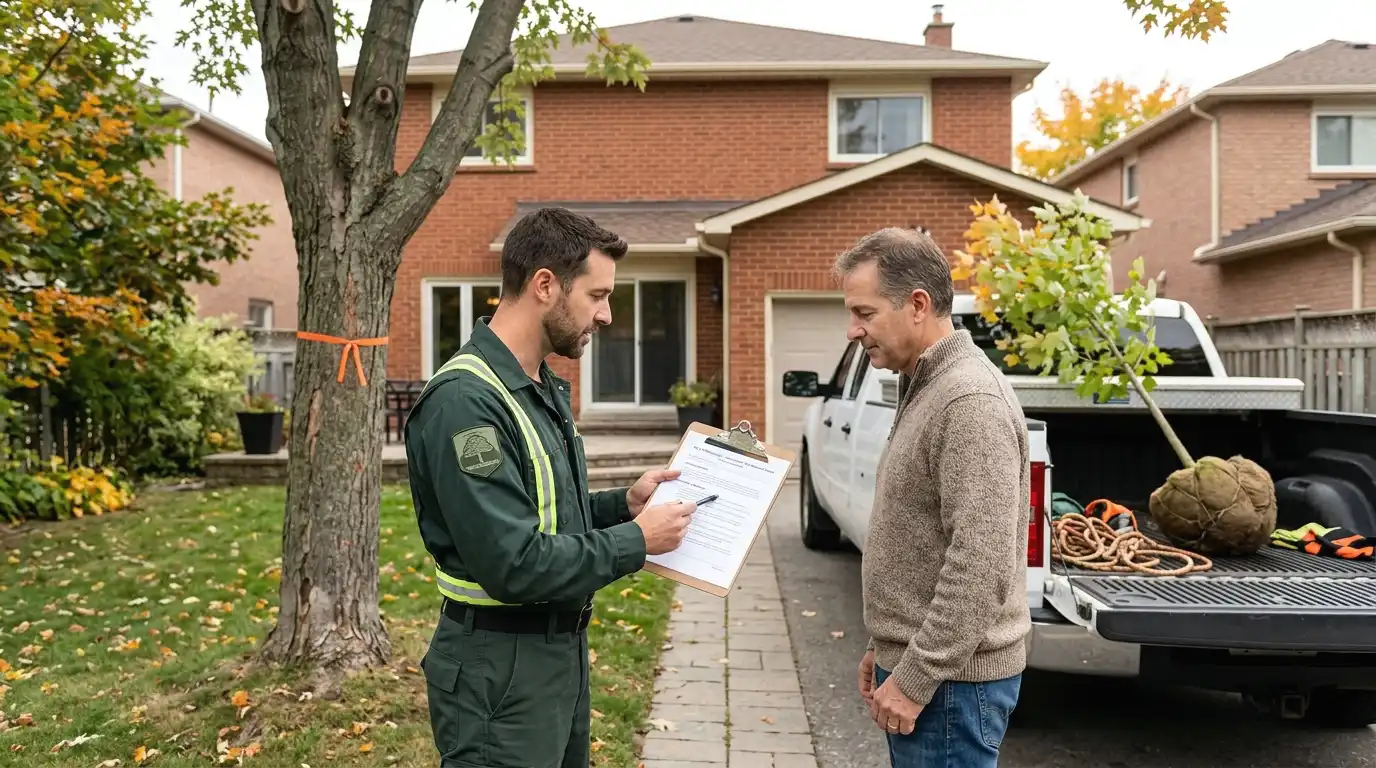
The Private Tree Protection By-law is Mississauga’s framework for regulating tree injury and tree removal on private property. It sets out when a permit is required, what the City considers during review, what documents may be needed, and how replacement planting may be handled.
The by-law can apply to removal and to activities that injure a regulated tree. This matters during construction, landscaping, grading, trenching, excavation, driveway work, pool installation, additions, and other property projects near trees. Even if the tree is not being cut down, work around the root zone or canopy can create permit concerns.
For the most current requirements, visit the City of Mississauga’s tree permits page. By-laws, fees, forms, and review procedures can change, so the City’s page should always be checked before submitting an application or authorizing work.
How to Apply for a Tree Removal Permit in Mississauga
Step 1: Confirm whether the tree is regulated
Start by confirming whether the tree meets Mississauga’s private tree permit threshold. The City requires a permit when removing one or more trees on private property that are 15 cm or greater in diameter, including dead or dying trees.
If you are unsure how the tree should be measured, whether it is on private or public property, or whether it is shared with a neighbour, you should confirm with the City or discuss the situation with a qualified arborist.
Step 2: Review what supporting documents may be needed
The City may require supporting documents or drawings, including tree locations, an arborist report where required, and replacement planting information. Arborist reports are required for development and construction projects, but the City states they are not required for dead trees.
Where an arborist report is needed, a qualified arborist may assess the tree, document relevant conditions, and discuss permit-related report requirements with the property owner.
Step 3: Submit the application to the City
Mississauga allows tree permit applications to be submitted online. The City also provides options for submitting by mail or through its listed intake process. Property owners should keep a copy of the submitted application, supporting documents, payment confirmation, and any reference number provided by the City.
Step 4: City review
The City reviews the application and considers factors such as the reason for removal or injury, the condition, species, and location of the tree, whether the tree conflicts with development, whether the tree is causing damage that cannot be mitigated through proper arboricultural practices, and existing canopy cover on the property.
Step 5: Decision and conditions
The City may approve the application, approve it with conditions, or refuse it. Approvals can include replacement planting requirements, deposits, or other conditions. Read the permit carefully before arranging work so you understand what the City expects after removal.
Mississauga vs Toronto: Key Differences
If you are familiar with Toronto’s private tree permit process, there are a few important differences to understand when dealing with a Mississauga property.
The diameter threshold is lower. Toronto’s private tree bylaw is commonly associated with a 30 cm DBH threshold, while Mississauga requires a permit to remove one or more private property trees that are 15 cm or greater in diameter. This means more residential trees are captured by Mississauga’s rule.
The review timeline also differs from some older information online. Mississauga’s current tree permit page states that the City has 30 business days to review a complete application from the date it is received. Incomplete applications, missing supporting documents, or unclear drawings can delay the process.
Both cities can require supporting documents, replacement planting, and careful review of removal reasons. The key is to follow the specific municipality’s current process rather than assuming Toronto rules apply in Mississauga.
Need Help With a Mississauga Tree Permit Request?
What Happens If You Remove a Tree Without a Permit in Mississauga?
Removing a regulated tree without a required permit in Mississauga is a by-law violation. The City can take enforcement action, issue fines, and require replacement planting. The replacement requirement may depend on the size and circumstances of the tree removed.
The property owner should not assume that hiring someone else removes their responsibility. Before allowing any tree removal on a Mississauga property, confirm permit status directly with the City or discuss the issue with a qualified arborist or qualified tree care professional.
Special Situations in Mississauga
Construction and renovation projects
If you are planning a renovation, addition, demolition, grading change, driveway project, pool installation, or major landscaping work near trees, permit issues should be reviewed early. Construction activity near trees can trigger City requirements even if the original goal is not tree removal.
A qualified arborist may discuss tree-related documentation for construction or development projects.
Dead or hazardous trees
Dead or dying trees can still require a permit in Mississauga if they meet the 15 cm diameter threshold. The City states there is no base fee or additional fee required if you are applying to remove trees that are dead or dying, but an application is still required. Property owners should verify the current process with the City before removal.
Trees near the property boundary
Trees near a property boundary can create neighbour, ownership, and access questions. If roots, trunks, or canopies cross a property line, get clarity before removal. A City tree ownership inspection or a qualified arborist assessment may be useful depending on the situation.
Mississauga Neighbourhoods and What to Expect
Tree protection rules can feel abstract until you are standing in your backyard looking at a tree you want removed. In Mississauga, many established residential neighbourhoods have mature canopy, and the 15 cm threshold captures a large number of private trees.
In Port Credit and Lorne Park, older lots often include mature trees that have been growing for decades. In Streetsville, established streetscapes and larger residential lots can include trees well above the threshold. In Erin Mills, Meadowvale, and Lisgar, subdivision trees planted decades ago have now reached regulated sizes that homeowners may not expect.
Clarkson and Cooksville have older pockets where trees may be part of the original landscape around homes, laneways, fences, and additions. Malton and communities near Pearson include mixed land use, but residential areas can still contain mature trees covered by the by-law. Across these neighbourhoods, checking permit status before removal is the safer path.
Replacement Planting Conditions in Mississauga
When Mississauga approves removal of a regulated tree, replacement planting conditions may apply. The City states that replacement trees are required when removing one or more trees 15 cm or greater in diameter on private property, and replacement security deposits may be required to confirm planting on private property.
The City currently describes a general replacement ratio of one replacement tree for every 15 cm, or 6 inches, in diameter of the removed tree. For example, a 45 cm tree may require three replacement trees. Replacement size, species suitability, deposit requirements, and planting timelines should always be confirmed directly with the City or reviewed with a qualified arborist.
Do not treat replacement conditions as optional. Read the permit conditions before scheduling work, and confirm who is responsible for sourcing, planting, watering, and maintaining any replacement trees.
When to Call a Qualified Arborist in Mississauga
The right time to speak with a qualified arborist is before you make firm decisions about removing a tree. Do it before you hire a contractor, before you start clearing around the trunk, and before any cutting begins.
A qualified arborist can help determine whether the tree appears to meet the permit threshold, whether a report may be needed, whether the City is likely to request additional information, and whether replacement planting could apply.
Frequently Asked Questions
Do you need a permit to remove a tree in Mississauga?
Yes. Mississauga requires a permit to remove one or more trees on private property that are 15 cm or greater in diameter, including dead or dying trees. Removing a regulated tree without a required permit can result in by-law enforcement, fines, and replacement planting requirements.
What is the DBH threshold for a tree permit in Mississauga?
Mississauga’s private tree permit threshold is 15 cm or greater in diameter. The City describes the threshold as 15 cm, or 6 inches, in diameter. Property owners should confirm current measurement requirements with the City before removal.
How long does a tree permit take in Mississauga?
The City of Mississauga states that it has 30 business days to review a complete tree permit application from the date it is received. Missing documents, unclear tree locations, or incomplete forms can delay the process.
What documents are needed for a Mississauga tree removal permit?
You may need the application form, supporting documents or drawings, tree locations, an arborist report where required, and replacement planting information. The City states that arborist reports are required for development and construction projects, but not for dead trees.
What is the fine for removing a tree without a permit in Mississauga?
Removing a regulated tree without a required permit can result in fines and replacement planting requirements. Check the City of Mississauga’s current by-law, permit page, and fee schedule for the most up-to-date penalty and enforcement information.
Related Guides and Services
- Toronto Permit Guide
- What Happens Without a Permit
- How Long Does a Permit Take
- Arborist Reports
- Tree Removal Requests
Mississauga Areas Covered by This Guide
This may include requests from Port Credit, Lorne Park, Streetsville, Erin Mills, Meadowvale, Clarkson, Cooksville, Malton, and nearby areas.
Other Permit Guides:
Toronto |
Vaughan |
Markham |
Brampton |
Richmond Hill