
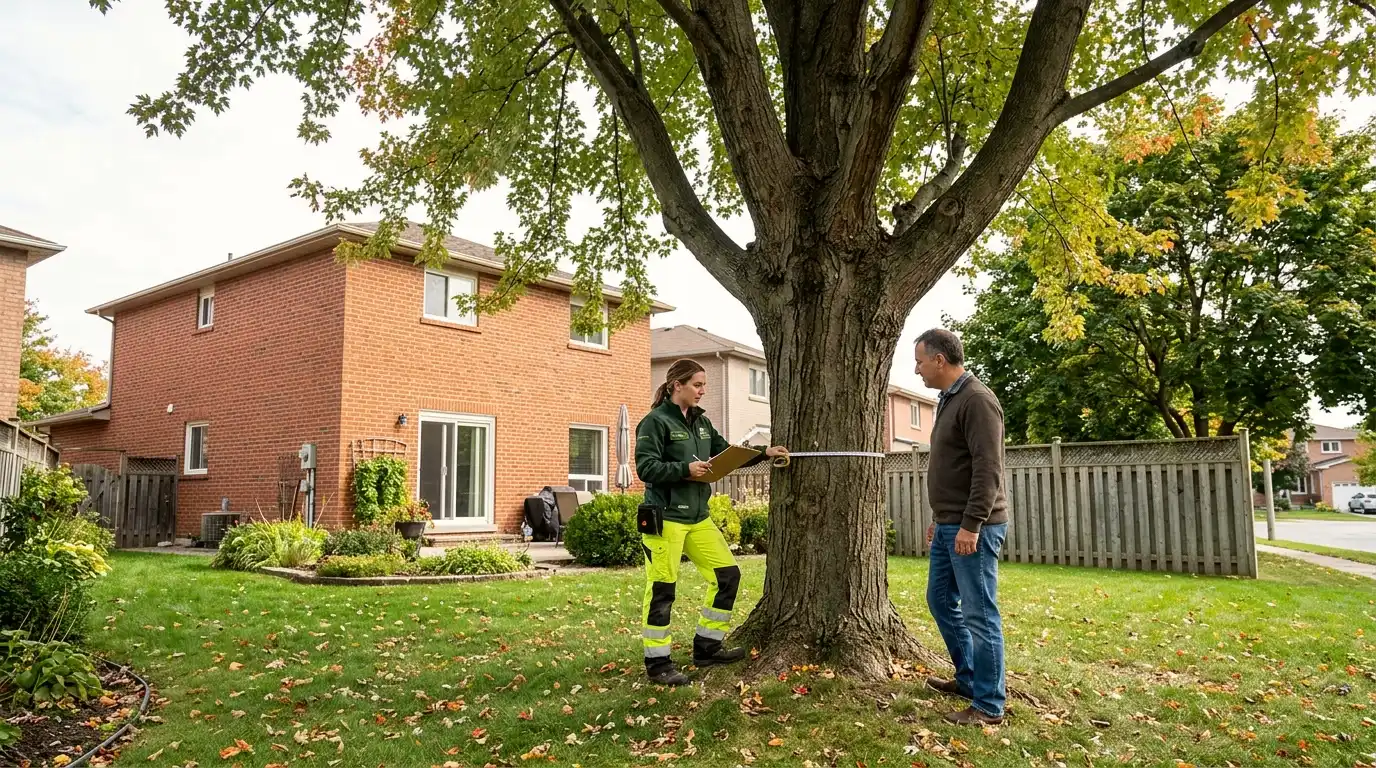
This guide explains the tree removal permit in Brampton, including the approval rules, property conditions and practical steps that can affect the work. Brampton tree removal permit rules can apply when a private tree is large enough, far enough from an occupied building, or part of a woodlot or natural heritage setting. The City says a private tree removal permit is required when the tree is more than 2 metres from an occupied building and has a diameter of 30 centimetres or more measured at 1.37 metres above the ground. Woodlot rules can also apply separately. Before removing, injuring, or arranging work around a mature tree in Brampton, confirm the current City requirements.
Brampton Tree Permit – Quick Reference
- By-law: City of Brampton Tree Preservation By-law
- Private-tree permit trigger: Permit required if the tree is more than 2 metres from an occupied building and 30 cm or more in diameter at 1.37 metres above ground
- Private-tree exemptions noted by the City: Trees within 2 metres of an occupied building and trees with diameter less than 30 cm measured at 1.37 metres above ground
- Woodlot rule: Woodlot alterations may require a separate permit under Brampton’s Woodlot Conservation By-law
- Application requirement: Completed application and picture of the tree must be attached through the City’s submission process
- Official resource: City of Brampton Tree Regulations and Plans
Does Your Tree in Brampton Need a Permit?
Not every private tree in Brampton needs a permit. The City states that a permit is required when the tree is more than 2 metres from an occupied building and the trunk diameter is 30 centimetres or more at 1.37 metres above ground. The City also states that a permit is not required for a tree within 2 metres of an occupied building or for a tree with a diameter of less than 30 centimetres measured at 1.37 metres above ground.
DBH means diameter at breast height. Brampton uses 1.37 metres above the ground for this measurement. If the tree has multiple stems, if the trunk leans, or if the measurement point is unusual, a qualified arborist may help confirm how the tree should be measured.
Tree rules can also change when the property involves a woodlot, natural heritage feature, creek, valley, woodland, development application, or site alteration. If your Brampton property borders a ravine, forested area, stream corridor, valley, or larger treed area, do not assume the private-tree threshold is the only rule to check.
Tree Removal Permit in Brampton: The Brampton Tree Permit Application Process
Step 1: Confirm whether the tree is regulated
Start by confirming the tree’s location and diameter. Measure the diameter at 1.37 metres above ground and check whether the tree is more than 2 metres from an occupied building. Also confirm whether the tree is private, City-owned, hazardous, part of a woodlot, or tied to construction or development.
Step 2: Prepare the application materials
Brampton’s current submission page asks applicants to attach a completed application and a picture of the tree. The City’s Tree Preservation By-law says an arborist report may be required by the Commissioner. Depending on the situation, documentation may also include tree details, location information, site sketches, photos, hazard notes, woodlot documents, or other materials requested by the City.
Step 3: Submit to the City of Brampton
Brampton’s submission process asks applicants to complete the online request, attach the completed application and tree photo, submit the request, and call 311 or 905-874-2000 if outside Brampton to process payment for the tree removal permit fee. Keep copies of the submitted application, photos, payment confirmation, and any reference number.
Step 4: City review and inspection
The City may review the application, request more information, inspect the tree, consider the reason for the request, and decide whether the permit should be issued with conditions. A decision may not be made until required documents are filed, the fee is paid, and any required inspections are completed.
Step 5: Decision and conditions
If a permit is issued, read all conditions before scheduling work. Conditions may address timing, how the work is done, who performs the work, replacement trees, mitigation measures, inspections, or other City requirements.
Brampton’s Growth and Tree Protection
Brampton has grown quickly, and that growth places pressure on mature canopy, woodlots, streetscapes, and residential trees. Tree permit rules are especially important in neighbourhoods where older trees sit close to newer construction, driveways, additions, pools, fences, and landscaping projects.
Areas such as Bramalea, Heart Lake, Downtown Brampton, Springdale, Sandalwood, Castlemore, Mount Pleasant, Bram East, Fletcher’s Meadow, Credit Valley, and Peel Village can include a mix of mature private trees, City trees, and newer subdivision trees. Before removal, heavy pruning, excavation, or grading, confirm whether a permit, City review, or woodlot rule applies.
Need to Check a Brampton Tree Removal Request?
Construction Projects and Tree Protection in Brampton
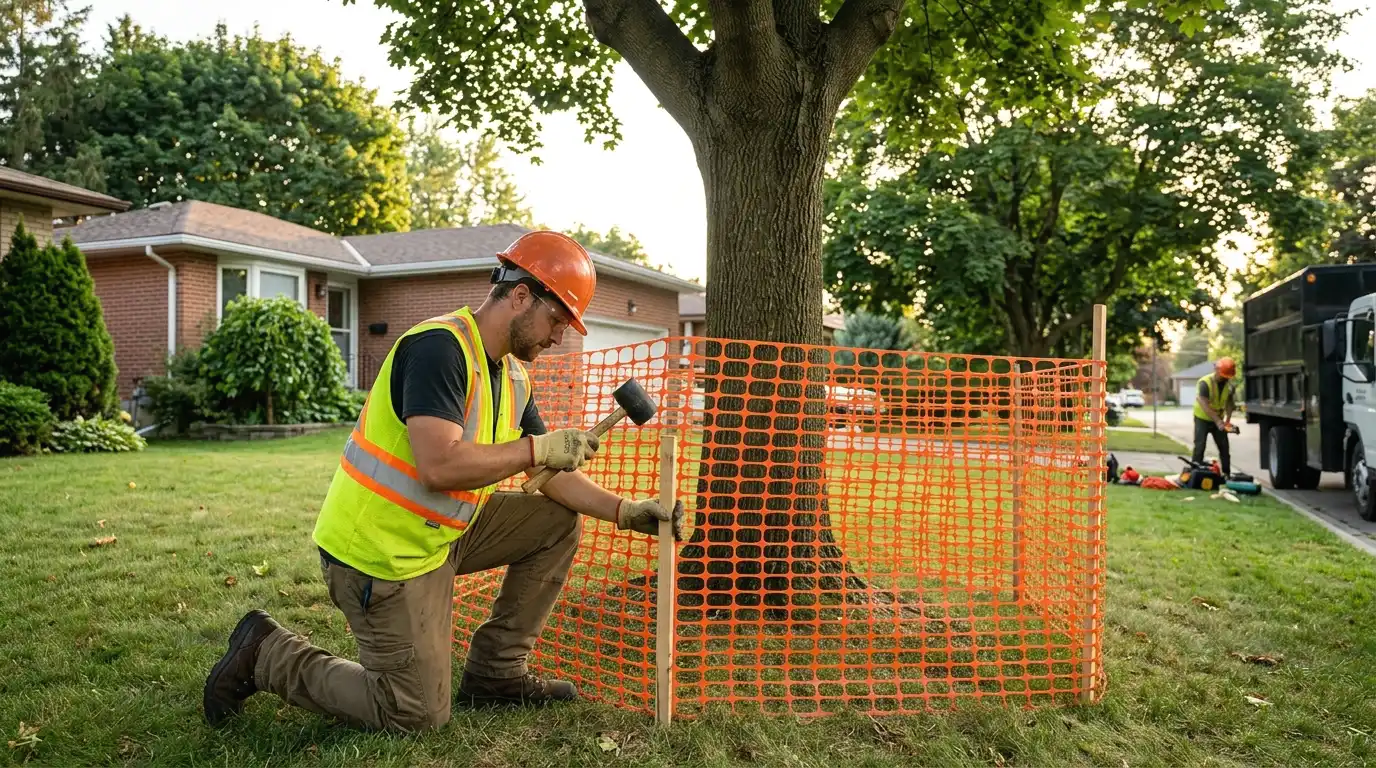
Construction activity can injure a tree even when the tree is not being cut down. Excavation, trenching, grade changes, soil compaction, fill, driveway work, pool installation, retaining walls, additions, and material storage near roots can create tree by-law concerns.
If you are planning construction or major landscaping near a regulated tree, check Brampton’s requirements before work begins. The City may ask for documents or conditions tied to the tree’s protection, replacement, mitigation, or the method of work.
Dead Trees, Hazardous Trees and Emergency Work in Brampton
Brampton’s Tree Preservation By-law lists hazardous trees and emergency work among its exemptions, but that does not mean property owners should make unsupported assumptions when a large tree is dead, dangerous, storm damaged, or structurally compromised. If safety is a concern, confirm the correct City process before work begins where possible.
If a tree creates an immediate danger, contact the City of Brampton or 311 and speak with a qualified arborist or qualified tree care professional. Photos, hazard notes, tree condition details, and location information may be useful if the City asks for documentation.
How Long Does a Brampton Tree Permit Take?
Brampton permit timing depends on whether the application is complete, whether the fee has been paid, whether an inspection is required, whether the City requests more information, and whether the matter involves a woodlot, construction, hazard, or natural heritage issue.
Do not assume the timeline starts in a practical sense until the City has the required documents, the applicable fee, and any required inspection process underway. If the tree decision affects construction, sale timing, safety work, landscaping, grading, or access, start the permit discussion early.
Replacement Planting Conditions in Brampton
Brampton’s Tree Preservation By-law allows the City to impose permit conditions, including conditions related to replacement trees and mitigation measures. If a permit is issued, the conditions may identify the species, size, number, and location of replacement trees to be planted to the City’s satisfaction.
Do not leave replacement planting to the end of the project. If replacement trees are required, confirm acceptable species, size, planting deadline, maintenance expectations, and who is responsible for sourcing, planting, watering, and documenting them.
Brampton’s Woodlot Conservation By-law
Brampton’s Woodlot Conservation By-law protects and conserves woodlands and woodlots. The City says a permit is required when making alterations to a woodland or woodlot outside of the formal development approval process, such as rezoning, plan of subdivision, or site plan.
The City defines a woodlot as a portion of land at least 0.2 hectares in area that meets certain tree-density thresholds. These can include 200 trees of any size per 0.2 hectare, 150 trees measuring over 5 cm DBH per 0.2 hectare, 100 trees measuring over 12 cm DBH per 0.2 hectare, or 50 trees measuring over 20 cm DBH per 0.2 hectare.
Woodlot applications are not the same as ordinary private-tree applications. Brampton says a Silvicultural Prescription must be included with a woodlot application to help ensure good forestry practices during removal. If your property includes a larger treed area, woodlot, valley, creek corridor, or natural heritage feature, confirm the woodlot and natural heritage context before arranging work.
Getting the Permit Right the First Time
The most common mistake is treating a Brampton tree permit as a quick formality. The application can slow down if the tree photo is unclear, the wrong form is attached, payment is missed, the tree location is vague, a required arborist report is missing, or woodlot and natural heritage issues were not checked.
Before work begins, ask these questions:
- Is the tree 30 cm or more in diameter at 1.37 metres above ground?
- Is the tree more than 2 metres from an occupied building?
- Is the tree private, City-owned, hazardous, or part of a woodlot?
- Does the property border a creek, valley, woodland, or natural heritage feature?
- Is an arborist report required by the City for this specific application?
- Who is responsible for documents, payment, scheduling, insurance, WSIB, cleanup, replacement trees, and communication?
Frequently Asked Questions
Do you need a permit to remove a tree in Brampton?
Yes, in many cases. Brampton says a permit is required if the tree is more than 2 metres from an occupied building and has a diameter of 30 cm or more measured at 1.37 metres above ground. Woodlot or natural heritage rules may also apply separately.
What trees are protected in Brampton?
Brampton’s Tree Preservation By-law applies to private property, subject to listed exemptions. The City says permits are not required for trees within 2 metres of an occupied building or trees with diameter less than 30 cm at 1.37 metres above ground. Woodlots are handled under a separate by-law.
How do I apply for a tree removal permit in Brampton?
Brampton asks applicants to complete the online request, attach a completed application and picture of the tree, submit the request, and call 311 or 905-874-2000 if outside Brampton to process the permit fee.
How long does a tree permit take in Brampton?
Timing depends on application completeness, payment, inspections, City workload, document requirements, and whether the file involves a woodlot, construction, hazard, or natural heritage issue. Confirm current timing directly with the City of Brampton.
What is the fine for removing a tree without a permit in Brampton?
Unauthorized tree injury or removal can lead to enforcement, orders, fines, and other penalties. Brampton’s Tree Preservation By-law states that the maximum fine for an offence is $100,000, with additional daily or multiple-offence penalties possible.
Related Guides and Services
- Toronto Permit Guide
- Mississauga Permit Guide
- Vaughan Permit Guide
- Richmond Hill Permit Guide
- Consequences of No Permit
- Arborist Report Requests
- Tree Removal Requests
Brampton Areas Covered by This Guide
Other Permit Guides:
Toronto |
Mississauga |
Vaughan |
Markham |
Richmond Hill