
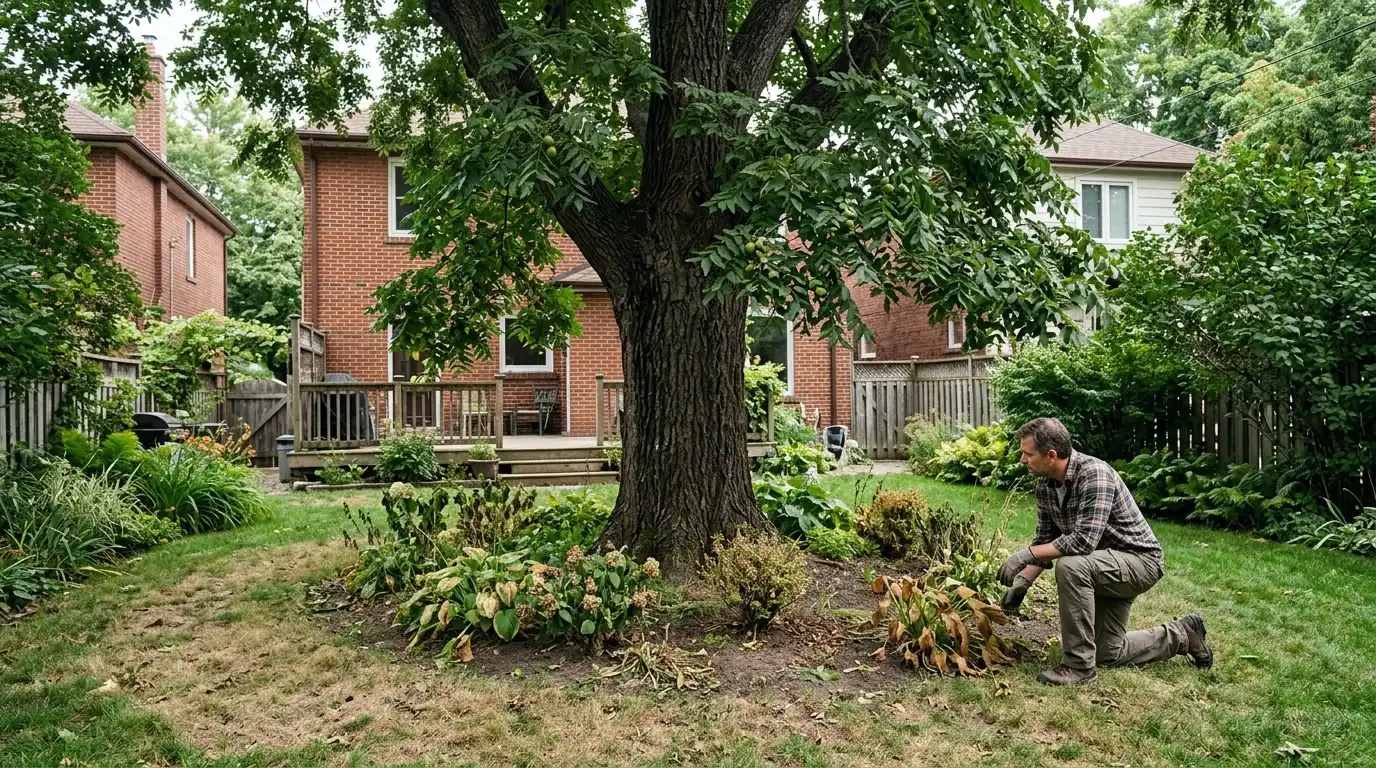
Property owners dealing with black walnut trees in Toronto should first consider tree condition, site constraints and any municipal requirements. If a black walnut tree is growing in your Toronto backyard and certain garden plants keep failing nearby, juglone may be part of the problem. Black walnut is known for producing juglone, a natural compound that can inhibit the growth of sensitive plants. Tomatoes, peppers, eggplant, potatoes, blueberries, rhododendrons, azaleas, and some fruit trees are often mentioned as plants that may struggle near black walnut. That said, garden failure is not always caused by juglone. Shade, drought, compacted soil, drainage problems, pests, disease, and root competition can create similar symptoms.
This guide explains how black walnut can affect Toronto gardens, which plants may be more sensitive, how homeowners can adjust planting plans, and when removal questions may arise.
Black Walnut Trees in Toronto: What Black Walnut Is and How Common It Is in Toronto
Black walnut (Juglans nigra) is native to eastern North America and is found in parts of southern Ontario. It grows best in rich, well-drained soils and full sun, and mature specimens can become large, valuable canopy trees. In Toronto, black walnuts appear in older residential yards, ravine-adjacent neighbourhoods, naturalized edges, and some larger lots where trees were retained through decades of redevelopment.
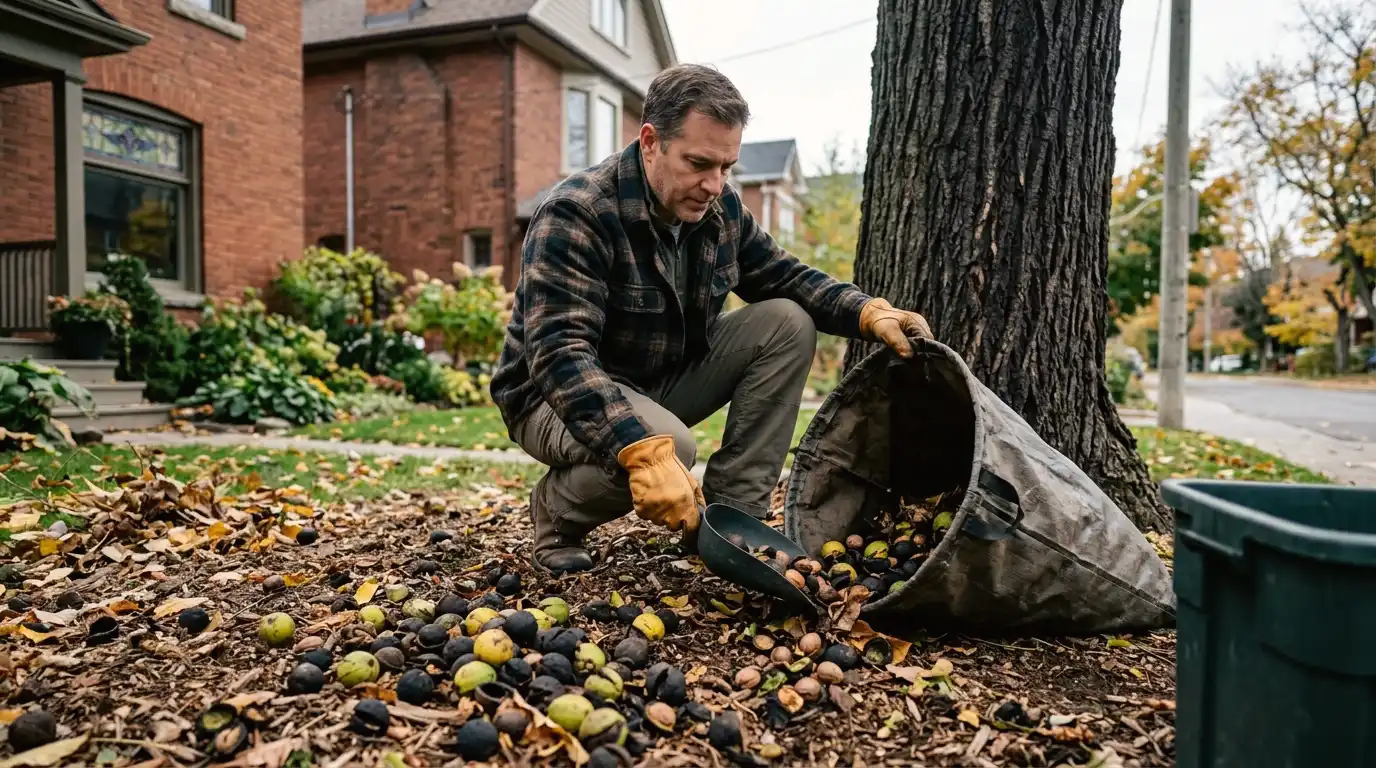
The tree is usually recognizable by its compound leaves, dark ridged bark, broad crown, and green-husked walnuts that drop in late summer or fall. Those husks can stain driveways, patios, shoes, hands, and outdoor surfaces. For some homeowners, the tree is a beautiful native canopy feature. For others, the combination of shade, nuts, root competition, and juglone-sensitive planting problems can make the surrounding yard difficult to use as a vegetable garden or ornamental bed.
Useful official and horticultural resources:
- Ontario: Black Walnut
- Ontario: Walnut Toxicity
- City of Toronto: When to Apply for a Tree or Ravine Permit
- City of Toronto: How to Apply for a Tree or Ravine Permit
- Toronto Municipal Code Chapter 813, Trees
These links are informational only. Property owners should confirm permit requirements directly with the City before injuring or removing a protected tree.
What Juglone Does to Plants
Juglone is a natural allelopathic compound associated with black walnut and some related trees. Ontario notes that black walnut roots release juglone, which can inhibit the growth of other plants. The effect is most noticeable when sensitive plants are placed in or near the black walnut root zone, especially where roots, fallen leaves, nut husks, and other plant material are allowed to break down in garden soil.
Symptoms in sensitive plants can include wilting, yellowing, browning leaf edges, stunted growth, poor establishment, and plant death. The tricky part is that these symptoms overlap with other common Toronto garden problems. A tomato plant failing near a black walnut may be reacting to juglone, but it may also be suffering from insufficient light, poor drainage, compacted soil, disease, drought stress, or nutrient imbalance. Pattern matters. If the same plant grows well farther from the walnut but fails repeatedly in the root zone, juglone becomes a more likely factor.
The affected area is not limited to the visible drip line. Roots can extend beyond the canopy, and leaf litter or nut husks can add organic material to nearby soil. The practical zone of concern depends on the tree’s size, root spread, soil type, slope, drainage, garden layout, and the plants being used. Heavy clay soil, shade, and poor drainage can make the surrounding garden harder to manage even without juglone.
Juglone sensitivity: common planting considerations near Toronto black walnuts
- Often sensitive vegetables: tomato, pepper, eggplant, potato and related crops
- Often sensitive ornamentals: rhododendron, azalea, mountain laurel and some hydrangeas
- Often sensitive fruit plants: blueberry, apple, pear, crabapple and some stone fruits
- Usually more tolerant lawn areas: many turf grasses and established lawn mixes
- Often more tolerant native-style plantings: some native grasses, violets, wild ginger, serviceberry, redbud and other site-suitable species
- Potentially tolerant vegetables in some gardens: corn, beans, squash, onions, beets and carrots
- Tree options to discuss before planting: Ontario identifies maples, oaks, hickories and hemlock as juglone-tolerant species near black walnut
Plant tolerance is not absolute. Soil, drainage, shade, distance from roots, and plant health all affect the outcome.
Practical Management: Living With a Black Walnut
Change what you grow under and near it
The most reliable long-term approach is to design the planting area around what the tree naturally allows. A black walnut root zone is usually not the best place for tomatoes, peppers, blueberries, rhododendrons, or a high-maintenance mixed ornamental bed. A more realistic approach is to use tolerant native-style plants, woodland-edge plantings, mulch paths, lawn, or shade-compatible species that can handle the conditions.
This works especially well in Toronto yards near ravines, mature neighbourhoods, and larger lots where a naturalized planting style fits the property. Instead of fighting the walnut every season, the planting plan works with shade, root competition, nut drop, and the tree’s existing canopy. A qualified garden designer, horticulturalist, nursery specialist, or qualified arborist may be able to discuss plant choices.
Move vegetable gardens away from the root zone
If productive food gardening is the priority, the best solution may be relocation rather than removal. Vegetable beds can often be moved to the sunniest part of the yard farthest from the black walnut, or replaced with containers in a brighter location. This is especially important for tomatoes, peppers, eggplant, and potatoes, which are commonly reported as sensitive near walnut trees.
Raised beds can help in some situations, especially when they use clean imported soil and are placed away from the highest root concentration. They are not magic. If the bed is too close to a large walnut, roots may eventually enter the bed, shade may still be too heavy, and walnut leaves or husks may continue dropping into the growing area. For sensitive crops, more distance is usually better.
Manage leaves, hulls and fallen nuts
Raking black walnut leaves and green hulls out of vegetable beds and sensitive ornamental areas can reduce the amount of walnut material breaking down directly in the garden. This does not eliminate root-related juglone exposure, but it can reduce one recurring source of garden stress. Avoid using black walnut leaves, hulls, or fresh chips as mulch around sensitive plants.
Gardeners often keep black walnut debris out of compost intended for vegetable gardens or sensitive planting beds. If composting is attempted, ask a qualified horticultural source about safe handling and breakdown time. For many homeowners, the simpler option is to collect leaves and hulls from sensitive garden areas and dispose of them separately.
When Removal Might Be Considered
Removal of a mature black walnut is a major decision. These trees can provide canopy, wildlife value, shade, seasonal character, and edible nuts. Garden inconvenience alone may not be enough reason for some homeowners to remove a large, healthy tree. In other cases, the tree may be creating a mix of issues that deserves a closer look: limited yard usability, repeated failure of sensitive planting, heavy nut drop, staining, overhanging limbs, structural concerns, access problems, or conflict with buildings, fences, driveways, or utilities.
In Toronto, the permit question comes first. If a private black walnut is 30 cm DBH or greater, it is generally protected under Toronto’s tree rules and requires a permit before removal or injury. City-owned trees are protected regardless of size. A property owner should confirm requirements directly with Toronto Urban Forestry before arranging removal, pruning, root work, or construction near a protected tree.
If removal is being considered, a qualified arborist may be able to discuss the tree’s condition, location, size, risk factors, permit considerations, and whether documentation is appropriate.
Black Walnut Removal Cost and Process in Toronto
Black walnut removal cost in Toronto depends on the qualified tree contractor’s assessment of trunk size, height, canopy spread, access, lean, obstacles, rigging needs, utility proximity, stump work, debris handling, cleanup terms, and whether permit-related documentation is needed. Mature hardwood removals can be more involved than small ornamental tree removals because of wood weight, access limits, and disposal requirements.
After a Black Walnut Is Removed
Removing the tree does not instantly reset the soil. Remaining roots and organic material may continue to affect the planting area while they break down, and the garden may still have shade, drainage, soil compaction, or nutrient problems that need separate correction. If the goal is to grow sensitive vegetables or ornamentals in the former walnut zone, it may be safer to transition slowly, improve soil structure, remove remaining walnut debris, and test new plantings before investing in a full redesign.
Stump grinding terms should be discussed directly with the qualified tree contractor. Grinding depth, chip handling, backfilling, surface restoration, replanting advice, and whether the remaining chips should be reused or removed can vary by contractor and by property. Property owners should not assume stump grinding includes soil replacement, garden restoration, or guaranteed replanting success unless those terms are written into the contractor agreement.
Insurance, Utilities and Safety
If a black walnut has broken limbs, a split trunk, storm damage, utility conflict, or an immediate safety concern, keep people away from the area and contact the correct authority where needed. For powerline concerns, contact the utility provider first. For public road, sidewalk, boulevard, or City-tree concerns, contact the City or relevant public authority before arranging private work.
Property owners should confirm documentation requirements directly with their insurer if property damage or insurance questions are involved.
Frequently Asked Questions
What is juglone and why does it matter for my Toronto garden?
Juglone is a natural compound associated with black walnut. Ontario notes that black walnut roots release juglone, which can inhibit the growth of other plants. Sensitive plants may wilt, yellow, decline, or die near the root zone, although drainage, shade, drought, pests, disease, and soil problems can cause similar symptoms.
Which plants are most sensitive to black walnut juglone?
Tomatoes, peppers, eggplant, potatoes, blueberries, rhododendrons, azaleas, apples, pears, and some ornamentals are commonly treated as sensitive near black walnut. Tolerance varies by site. Ontario recommends choosing juglone-tolerant species when planting near black walnut.
Does a black walnut tree in Toronto need a Chapter 813 permit to remove?
If the tree is a protected private tree at 30 cm DBH or greater, a permit is generally required before removal or injury. City-owned trees are protected regardless of size.
How far does juglone impact extend from a black walnut tree?
The practical area of concern can extend beyond the canopy because roots may grow past the drip line. The impact depends on tree size, soil, drainage, root spread, leaf litter, nut husks, shade, and plant sensitivity. A site-specific opinion should be discussed with a qualified arborist, horticulturalist, or qualified garden professional.
Can I compost black walnut leaves or wood chips?
Many gardeners avoid using black walnut leaves, hulls, and fresh wood chips in compost or mulch intended for sensitive vegetables and ornamentals. Walnut debris should be handled carefully around garden beds. For a specific composting plan, ask a qualified horticultural source or local garden professional.
Who can assess a black walnut or provide a firm removal quote?
Related Guides and Services
- How to Get a Tree Removal Permit in Toronto
- Signs Your Tree Is Dead or Dying
- Best Native Trees to Plant in Toronto
- Tree Removal Requests
- Arborist Report Requests
Send Your Tree Request
Concerned about a black walnut on your Toronto property, a possible Chapter 813 permit issue, or repeated planting problems near the root zone?