Multiple tree removal cost in Toronto can vary with tree size, access, risk, required approvals and the exact scope of work. Removing several trees from one Toronto property can sometimes reduce the per-tree cost compared with arranging separate visits. The reason is simple: when a qualified tree contractor can handle multiple trees during one scheduled job, some travel, setup, equipment, chipping, hauling, and site logistics may be shared. That does not mean the work becomes simple, cheap, or automatically approved. Each tree still has its own size, condition, access, risk, disposal, stump, and permit context.
This guide explains the cost factors behind multiple tree removal requests in Toronto, how Chapter 813 permit considerations can affect planning, and why property owners should confirm City requirements before authorizing work.
Multiple Tree Removal Cost in Toronto: How the Per-Tree Cost Can Change With Multiple Removals
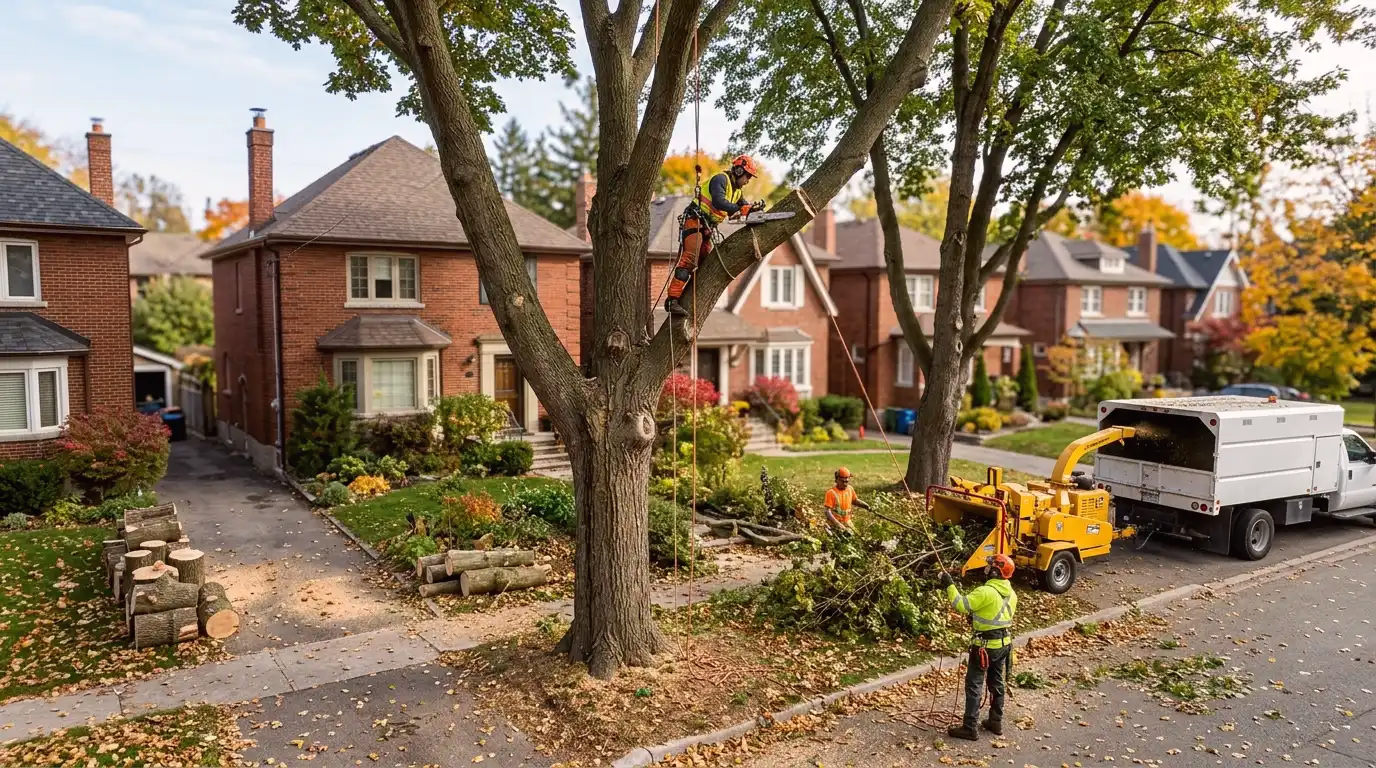
A single tree removal quote usually includes more than cutting and hauling the tree. It may include travel time, equipment setup, chipper access, truck positioning, climbing or lift work, rigging, crew time, wood handling, debris hauling, disposal, and site cleanup terms. When several trees are addressed during one visit, some of those costs may be shared across the project rather than repeated for each separate visit.
The savings are usually stronger on open lots where equipment access is easier. For example, a larger yard in Etobicoke, Swansea, Don Mills, North York, Scarborough, or a wide-lot neighbourhood may allow better truck positioning and faster material handling. A dense Annex, Leslieville, Rosedale, Moore Park, or Forest Hill property with narrow access, close neighbours, fences, pools, garages, or overhead limitations may reduce those efficiencies. The qualified tree contractor determines the actual price after reviewing the trees and site conditions.
| Scenario | General planning note |
|---|---|
| 2 medium trees with open access | May allow shared setup, equipment, chipping, hauling, and travel logistics |
| 3 medium trees with open access | Often more efficient than three separate visits, but pricing depends on tree size, species, and disposal volume |
| 2 large trees near structures | May require rigging, sectional removal, extra crew time, and careful debris handling |
| 3 to 4 trees with constrained access | Narrow gates, pools, decks, fences, garages, or tight side yards can reduce project efficiency |
| 5+ trees on a larger lot | May require staged removal, multiple truck loads, larger disposal planning, and permit-related review where protected trees are involved |
| Stump grinding added to the same request | May be more efficient when the qualified tree contractor can include grinding during the same project, subject to access and equipment |
The Chapter 813 Permit Context for Multiple Trees
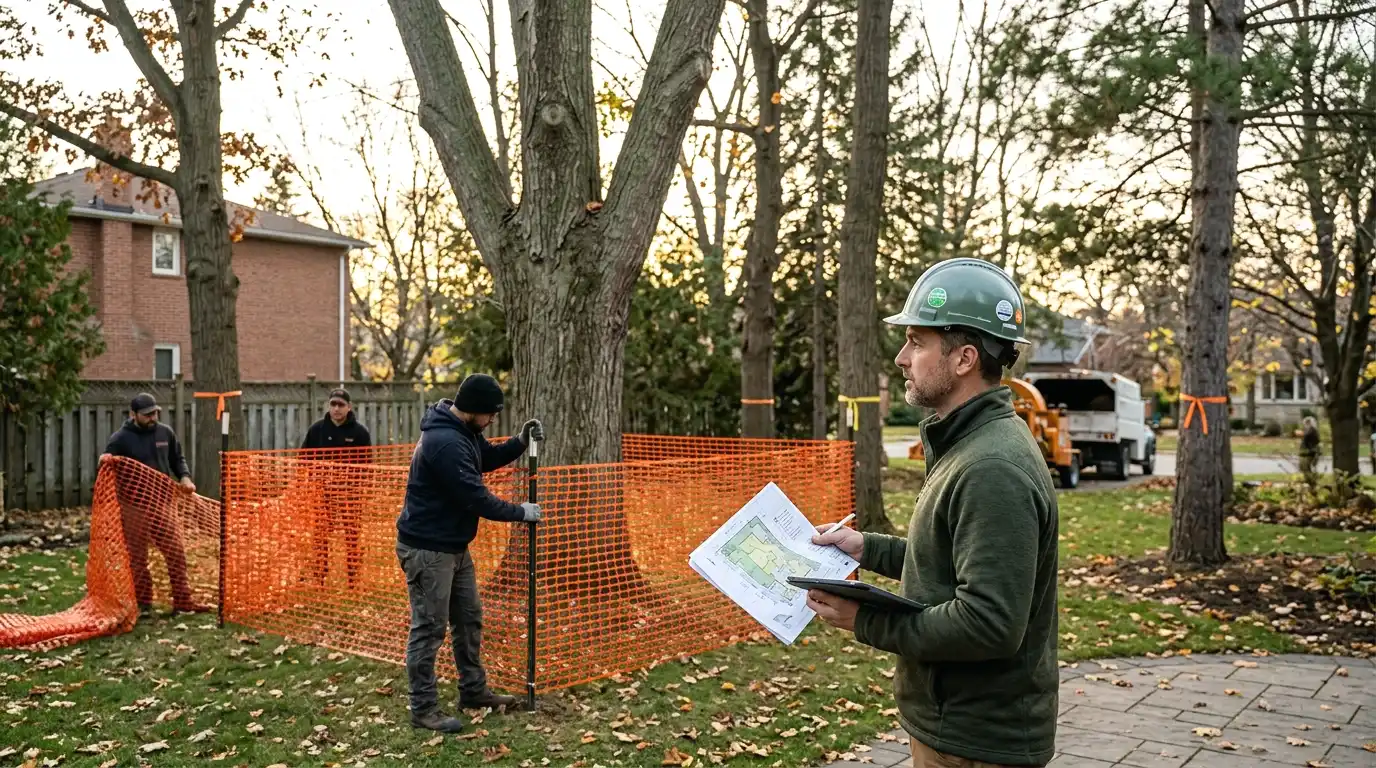
Toronto’s tree protection rules can affect a multi-tree project before any work begins. Many private trees in Toronto are protected once they meet the City’s diameter threshold, and City-owned street trees are protected regardless of size. Ravine and natural feature protection rules may also apply on designated properties. Property owners should confirm requirements directly through the City of Toronto before authorizing the injury or removal of a protected tree.
For multiple protected trees on the same property, each tree may need to be identified, measured, described, and documented. The City may require specific information, fees, supporting documents, replacement conditions, or additional review depending on the tree and property. A qualified arborist may discuss report or permit-related document requirements with the property owner.
Property owners should also be careful with dead, hazardous, diseased, ash, and emergency-related claims. The City has specific exception and permit pathways, and the correct pathway depends on the tree’s condition and the City’s requirements. Do not assume that a tree can be removed without City confirmation simply because it looks unhealthy. Where there is immediate danger, a tree on public property, a tree affecting utility lines, or a tree blocking a public road, contact emergency services, the utility provider, 311, or the relevant public authority first.
Large Lot Clearance Requests: What Changes
A larger tree clearance request involving several trees is different from a simple one-tree removal request. The work may involve more access planning, more equipment, more chip and log volume, more disposal coordination, and more permit-related review where protected trees are involved. It may also raise questions about replacement planting, grading, construction, ravine rules, drainage, neighbouring trees, or property-line trees.
Sequencing and access management
On a multi-tree request, the order of work can matter. Trees near the street may be easier to access than trees deep in the rear yard. Some trees may need to be handled first to create working space, while others may require rigging because they are near a house, garage, fence, pool, shed, or neighbouring property.
Chip volume and wood disposal
Multiple tree removals can generate a large amount of branches, wood, chips, and stump material. Disposal may require one or more truck loads, extra hauling, on-site staging space, or special equipment depending on the site. Property owners should ask the qualified tree contractor what is included in the cleanup terms, whether logs will be hauled away, whether wood can be left in firewood lengths, whether chips can remain on site, and whether additional disposal charges may apply.
Permit timing and project planning
If protected trees are involved, permit timing can affect the entire project schedule. A property owner planning a landscaping project, pool, home addition, garage, laneway suite, garden suite, driveway change, or retaining wall should check tree permit requirements early. The City may review tree impacts as part of construction-related planning, and a protected tree can affect how a project is designed or whether changes are required. Any permit-related timing should be confirmed directly with the City or discussed with a qualified arborist.
Factors That Raise the Cost of Multi-Tree Removals
Constrained access
Toronto lots with narrow side yards, low-clearance gates, steps, pools, decks, garages, tight laneways, or neighbouring structures close to the trees can increase the complexity of a multi-tree job. Dense neighbourhoods often require more manual handling and more careful rigging than open suburban lots. The qualified tree contractor must confirm whether equipment can access the work area and how material will be moved off the property.
Tree proximity to structures
Trees over houses, garages, fences, sheds, pool equipment, hydro lines, or neighbouring yards can require sectional removal and controlled lowering. When several trees need that level of care, the project can require more crew time and more specialized equipment. Property owners should discuss property protection, access, debris handling, and cleanup expectations directly with the qualified tree contractor before approving any work.
Species and wood density
Tree species can also affect pricing. Oak, beech, locust, and other dense hardwoods can take longer to cut, handle, and chip than lighter or softer species of similar size. Decay, cracks, lean, storm damage, weak unions, and deadwood can change how the qualified tree contractor approaches the tree. A multi-tree price should account for the actual trees on the property rather than relying on a flat per-tree assumption.
Combining Removal and Stump Grinding
For multi-tree requests, property owners often ask about stump grinding at the same time. This can be efficient when the qualified tree contractor has the right equipment available and the stumps are accessible. However, stump grinding is not automatically included in every removal agreement. Surface roots, underground utilities, fences, grade changes, rocks, slopes, irrigation, and narrow gates can all affect stump grinding.
Before approving a multi-tree project, property owners should ask the qualified tree contractor whether stump grinding is included, how deep the grinding will go, whether grindings are left on site, whether the area will be backfilled, whether visible roots are included, and whether utility locates are needed. Ontario One Call or other locate requirements may be relevant before grinding, digging, or disturbing the ground.
Frequently Asked Questions
Is removing multiple trees at once cheaper per tree in Toronto?
It can be cheaper per tree when a qualified tree contractor can address multiple trees during one visit, because some travel, setup, equipment, and disposal logistics may be shared. The actual price depends on tree size, access, risk, equipment, disposal, stump work, permit context, and the contractor’s own pricing.
Can multiple Toronto trees be included in one Chapter 813 permit discussion?
Multiple trees on the same property may be discussed together as part of a permit-related review, but each protected tree still needs to be identified and documented according to City of Toronto requirements. City application requirements, fees, exception pathways, replacement conditions, and timelines should be confirmed directly with the City or discussed with a qualified arborist.
How much do multiple tree removals cost in Toronto?
Multiple tree removal pricing in Toronto varies based on the number of trees, diameter, height, species, condition, access, rigging needs, disposal volume, stump grinding, permit context, and whether a qualified arborist report or permit-related documents are required. Any price range should be treated as general planning information only.
What happens to the wood from multiple tree removals?
Wood and branch handling depends on the qualified tree contractor’s equipment, disposal plan, property access, the amount of material, and the property owner’s agreement with the contractor. Branches may be chipped, larger wood may be cut and hauled, and some property owners may ask whether logs or chips can remain on site.
Related Guides and Services
- How to Get a Tree Removal Permit in Toronto
- Tree Removal Cost Toronto
- Large Tree Removal Cost Toronto
- Stump Grinding
- Tree Removal
Send Your Tree Request
Removing multiple trees from one property?