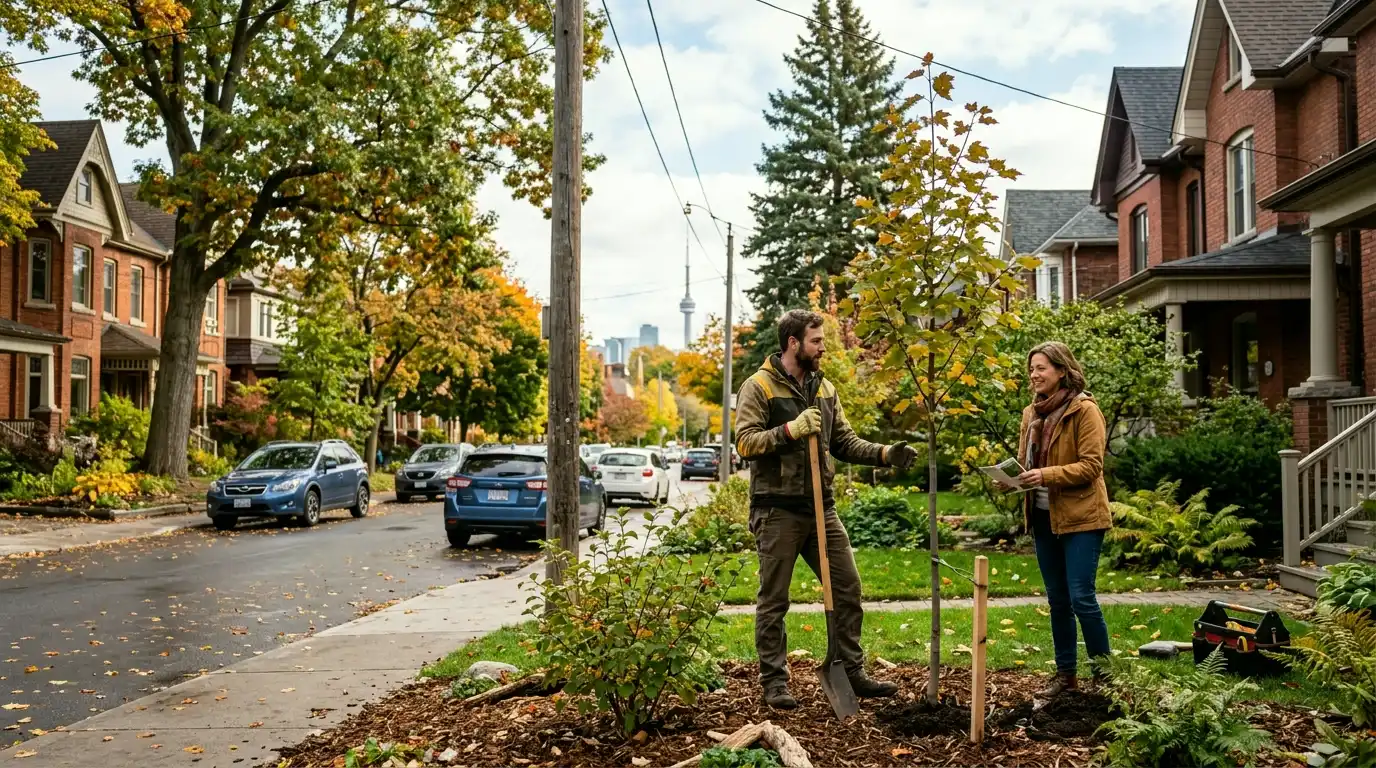
Property owners dealing with native trees in Toronto and the GTA should first consider tree condition, site constraints and any municipal requirements. Choosing a native tree for a Toronto or GTA property is not just a landscaping decision. It affects shade, stormwater, wildlife habitat, long-term maintenance, root conflicts, future pruning needs and how well the tree fits the property decades from now. A tree that looks perfect at planting size can become a problem if it is placed too close to a house, driveway, sewer line, fence, overhead wire or small urban yard.
Species choice should be matched to mature size, light, drainage, soil volume, salt exposure and nearby infrastructure rather than chosen from a generic “native” list. Mature dimensions vary with species, site conditions and management, so use size ranges as planning guidance rather than guarantees.
Why Native Trees Are Worth Considering
Native trees are generally better aligned with local climate, seasonal patterns, wildlife and soil conditions than many purely ornamental choices. The City of Toronto notes that native plants, trees and shrubs are adapted to local conditions and can support pollinators, biodiversity and climate-resilient landscapes. For homeowners, that can mean a tree choice that fits the broader urban forest instead of only filling an empty spot in the yard.
Native does not automatically mean maintenance-free. A bur oak still needs space. A sugar maple still needs suitable soil. A serviceberry still needs the right light and watering during establishment. A silver maple may tolerate wet areas but can create long-term root conflicts if planted in the wrong place. The strongest planting decision comes from matching the species to the site, not from choosing a tree name from a list.
Useful official and local starting points include the City of Toronto Native Plants, Trees and Shrubs page, the City of Toronto private-property tree planting information, LEAF’s species offered page, and Ontario’s Tree Atlas. These links are provided for general information only.
Bur oak (Quercus macrocarpa)
Bur oak is a strong long-term option for larger GTA lots where there is enough room for a broad canopy and future root spread. It is valued for longevity, wildlife value and tolerance of a range of urban conditions once established. It is not a small-yard tree. Homeowners should think carefully about mature height, canopy spread, distance from structures, underground services, driveway edges and property lines before planting.
Sugar maple (Acer saccharum)
Sugar maple is one of Ontario’s best-known native trees and is often chosen for shade and fall colour. It performs best where soil is reasonably good, drainage is suitable and there is enough space for a mature canopy. It is less forgiving on compacted, dry, salty or heavily disturbed urban soils. On the right site, it can become a significant shade tree. On the wrong site, it may struggle.
Red oak (Quercus rubra)
Red oak can be a good choice for homeowners who want a large native canopy tree with strong wildlife value and relatively faster growth than some other oaks. It still needs space and thoughtful placement. Oak pruning should be approached carefully because seasonal disease-risk concerns may affect timing, and major pruning should be discussed with a qualified arborist or tree care professional.
Basswood / American linden (Tilia americana)
Basswood is a native canopy tree known for shade, broad leaves and summer flowers that can support pollinators. It can grow into a large tree and should be placed with mature size in mind. It may suit larger yards, parks, estate properties and properties where a broad shade canopy is desired. It is generally not the first choice for very compact yards or heavily constrained front-yard planting areas.
Native trees for GTA residential properties: quick reference
| Species | Mature height | Best for | Soil preference |
|---|---|---|---|
| Bur oak | 20-25m | Large lots, long-term canopy | Wide range, avoid cramped sites |
| Sugar maple | 18-22m | Good soil, shade, fall colour | Well-drained loam preferred |
| Red oak | 18-22m | Large canopy, wildlife value | Moderate to well-drained |
| Basswood | 15-20m | Shade, pollinator value | Moderate moisture |
| Swamp white oak | 15-20m | Wet or variable drainage | Wet to moderate |
| Black cherry | 12-18m | Wildlife, larger natural yards | Adaptable |
| Serviceberry | 5-8m | Small yards, wires overhead | Adaptable, moist preferred |
| Eastern redbud | 5-8m | Spring colour, small space | Well-drained, sheltered preferred |
Medium Native Trees for Mid-Sized GTA Lots
Swamp white oak (Quercus bicolor)
Swamp white oak is often considered for yards with heavier soil or periodic wetness where some other oaks may struggle. It can still become a substantial tree, so it needs enough space. It may be a strong option for larger residential lots, ravine-adjacent areas, open rear yards and sites where wet-dry cycles are part of the normal condition.
Black cherry (Prunus serotina)
Black cherry can provide wildlife value, flowers, fruit and a more natural woodland character. It may suit larger yards, naturalized areas, ravine-adjacent properties and places where homeowners want a less formal tree. It is not always ideal for highly manicured small front yards because fruit drop, seedlings and wildlife activity may be part of the package.
Red maple (Acer rubrum)
Red maple is a flexible native tree that can tolerate a range of moisture conditions, but it still needs appropriate space and soil. It may be considered where sugar maple is too demanding for the site but a homeowner still wants a native maple with seasonal interest. Site quality matters because compacted urban soil, salt exposure and restricted rooting space can limit performance.
Small Native Trees for Compact Urban Lots
Serviceberry (Amelanchier species)
Serviceberry is one of the most useful small native tree choices for Toronto and GTA yards. It can work in compact front yards, small backyards and locations where a full canopy tree would become too large. It offers spring flowers, berries for birds, fall colour and a softer form than many larger shade trees.
It still needs proper planting and early watering. A small native tree can fail if it is planted too deep, mulched against the trunk, left dry through the first growing seasons or placed where salt, reflected heat or poor soil overwhelms it. If the tree is part of a municipal replacement condition, confirm the required species, size and planting location before buying.
Eastern redbud (Cercis canadensis)
Eastern redbud is valued for early spring flowers and compact size. It may be suitable for sheltered urban yards, garden beds and small spaces where a showier native tree is desired. It prefers well-drained soil and may benefit from protection from harsh exposure in colder or more exposed parts of the GTA.
Pagoda dogwood and native hawthorn
Pagoda dogwood and native hawthorns can also suit smaller properties, depending on the site. Pagoda dogwood has layered branching and works best where soil and light are appropriate. Native hawthorns can offer flowers and wildlife value, but thorns and fruit should be considered before planting near walkways, play areas or tight access routes.
Native Trees for Wet or Poorly Drained Sites
Wet or poorly drained areas need careful species selection. Swamp white oak and red maple may be useful native options for variable drainage. Silver maple is tolerant of wet conditions but should be placed carefully because mature roots can conflict with pavement, sewer lines, foundations and small urban spaces if the tree is planted too close to hardscape or underground infrastructure.
Before planting in a wet area, homeowners should ask whether the wetness is natural, seasonal, caused by grading, caused by drainage failure, connected to a regulated area or located near a foundation. Planting a tree will not fix a grading or drainage problem. If the property is near a ravine, watercourse, wetland, shoreline or regulated feature, conservation authority or municipal requirements may also be relevant.
Replacement Trees After Removal
If a tree was removed under a municipal permit or as part of a development condition, replacement planting may need to follow specific rules. The required species, size, location, timing and inspection process can vary by municipality and permit condition. Do not assume that any native tree will automatically satisfy the requirement.
For Toronto properties, homeowners should confirm replacement requirements directly with the City or with a qualified arborist.
Where Native Trees Can Go Wrong
The most common planting mistake is choosing a good tree for the wrong site. A large canopy tree in a narrow front yard can become a future conflict. A wet-site tree beside a sewer line may create maintenance problems. A delicate small tree in hot reflected sun may struggle. A tree planted too deep may decline slowly even if the species is correct.
Before planting, consider mature size, overhead wires, underground utilities, property lines, sightlines, snow storage, driveway salt, drainage, soil compaction, sun exposure, nearby structures, sewer lines and future pruning access. A native tree is still a living structure that will keep growing long after the planting day is forgotten.
Useful Native Tree Resources
For official and local species guidance, review the City of Toronto Native Plants, Trees and Shrubs page, LEAF’s native tree species list, Ontario’s Tree Atlas, and the City of Toronto street tree species page. These resources can help homeowners compare species, but final selection should still account for the specific property.
Frequently Asked Questions
Why should I consider native trees instead of ornamental trees in Toronto?
Native trees are adapted to local conditions and can support pollinators, birds and local biodiversity. They may also fit replacement planting goals, depending on the property, municipality and permit condition. The best choice still depends on site conditions, mature size and long-term maintenance needs.
What is a good native tree for a small Toronto yard?
Serviceberry is often a strong small-yard option because it stays relatively compact, offers spring flowers, fruit for wildlife and fall colour. Eastern redbud, pagoda dogwood and native hawthorn may also suit compact sites depending on light, soil, overhead wires and available space.
What native trees are suitable for large GTA lots?
Large lots may be suitable for bur oak, red oak, sugar maple, basswood, swamp white oak or other canopy species, depending on soil, drainage, space, light, utilities and long-term maintenance expectations. The right species depends on the site, not only on the tree’s mature beauty.
Are there native trees that tolerate wet or poorly drained soils in the GTA?
Swamp white oak, red maple and silver maple are examples often considered for wetter or variable-drainage sites, but each has different long-term size, root and maintenance considerations. Homeowners should review the site carefully before planting near pipes, pavement, foundations, fences or small yards.
Related Guides and Request Pages
- How to Plant a Replacement Tree in Toronto
- Heritage Tree Protection in Toronto
- Oak Wilt in Ontario
- Black Walnut Trees in Toronto
- Emerald Ash Borer in Toronto
Send Your Tree Request
Considering a native tree, replacement tree or tree-related question in Toronto or the GTA? Species advice, sourcing, planting, estimates, aftercare, pricing, payment, communication, qualifications, insurance, WSIB, warranties and service-related issues should be confirmed in writing with the relevant qualified professional before work begins.