
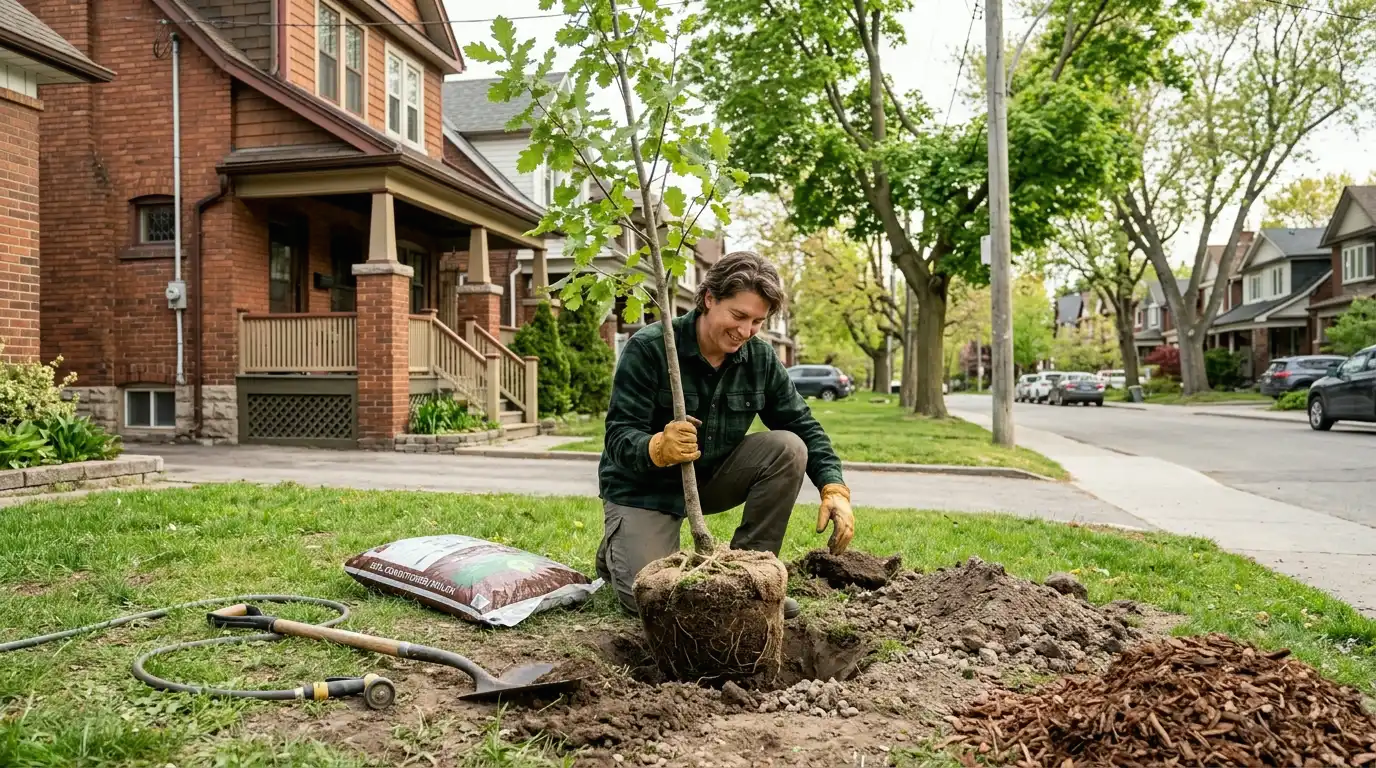
A useful way to approach Toronto replacement tree requirements is to start with property conditions, safety concerns and any local rules that apply. A Toronto tree removal permit can include a replacement planting condition. The permit may specify how many replacement trees are required, the minimum caliper, acceptable species, planting timing, and whether the trees must be planted on the same property. Once planting is complete, the property owner may also need to notify the City so the permit condition can be recorded as completed.
This guide explains what homeowners should review after a permitted tree removal, including species selection, nursery sizing, planting basics, cash-in-lieu considerations and City notification steps.
Understanding Your Permit’s Replanting Condition
When a Chapter 813 permit is issued, the written conditions matter more than general advice found online. The permit may list the required number of replacement trees, minimum caliper, acceptable species, property location requirements, and completion deadline. Read those conditions before scheduling removal or planting. The replanting timeline and documentation expectations should be confirmed through the City of Toronto permit materials or directly with Toronto Urban Forestry.
If a permit requires more replacement trees than your yard can reasonably accommodate, do not ignore the extra planting condition. The safer step is to contact Toronto Urban Forestry and ask about City-approved alternatives, including cash-in-lieu where applicable. The City of Toronto’s permit information states that where there is inadequate space for replanting, the City may accept cash-in-lieu of replanting at the listed amount per tree. The property owner is responsible for confirming the current fee, payment process, and deadline directly with the City.
Species conditions can also vary. Some permits are specific. Others provide a list of acceptable replacement trees. Some leave room for a suitable canopy species based on site conditions. Where a homeowner wants professional input, a qualified arborist or qualified nursery may be able to discuss species options, but the final requirement remains whatever the City has written into the permit conditions.
Useful official Toronto resources:
- City of Toronto Tree & Ravine Protection
- How to Apply for a Tree or Ravine Permit
- Toronto Municipal Code Chapter 813, Trees
Always rely on the written permit condition and current City instructions before buying or planting replacement trees.
Toronto Replacement Tree Requirements: Choosing the Right Replacement Species
The best replacement tree is not just the tree that looks good at the nursery. It is the tree that fits the property once mature. Toronto yards can have compacted soil, limited planting strips, overhead wires, buried utilities, narrow side yards, shared fences, garages, and neighbouring structures. A replacement tree that becomes a conflict in 15 or 20 years can create a new maintenance problem even if it looked like a good choice at planting time.
Full sun, well-drained sites with adequate space
For larger Toronto lots with good sunlight and enough space for mature canopy, native or well-adapted shade trees are often strong candidates. Sugar maple, red oak, bur oak, swamp white oak, basswood, black cherry, and tulip tree may be suitable on certain properties when they match the permit condition and available space. These species can contribute meaningful canopy value, but they need room to mature without crowding structures, wires, or neighbouring properties.
Smaller or more constrained sites
Many Toronto properties do not have room for a large canopy tree. In tighter yards, a smaller native or ornamental tree may be a more realistic fit if the permit allows it. Serviceberry, eastern redbud, American hornbeam, and some hawthorn species may suit compact residential spaces, depending on sunlight, soil, and long-term clearance. The key is to choose for mature height and spread, not just the size of the tree at installation.
What to avoid
Some trees are poor replacement choices because they are invasive, structurally weak, short-lived, or unsuitable for urban planting conditions. Norway maple, tree of heaven, and Manitoba maple are common examples to avoid unless the City provides specific direction otherwise. Fast growth should not be the main decision factor. A slower-growing tree that survives well and fits the site usually provides better long-term value than a fast-growing tree that becomes hazardous, invasive, or difficult to maintain.
Sourcing Replacement Trees at the Required Caliper
If the permit specifies a 50 mm caliper tree or another minimum size, a small garden-centre sapling will usually not satisfy the condition. Larger replacement trees are often sold as balled-and-burlapped stock or large container stock through nurseries that supply landscape contractors. Before buying, confirm the species, caliper, and condition requirements in the permit. Keep the tag, invoice, photographs, and delivery details in case the City asks for documentation.
Larger-caliper replacement stock can be difficult for a homeowner to move without proper equipment. Depending on species and root-ball size, delivery and planting may require equipment, adequate access width and careful handling. Planting methods, equipment, schedule and warranty terms should be confirmed with the landscape contractor, nursery or tree-care professional performing the work.
Timing also matters. Spring and fall are commonly preferred planting windows for larger nursery stock because heat and drought stress are lower than in midsummer. If the permit deadline creates timing pressure, contact Toronto Urban Forestry before assuming a different schedule is acceptable. Do not rely on verbal assumptions from a third party when the written permit condition has a specific deadline.
Planting Correctly: The Basics
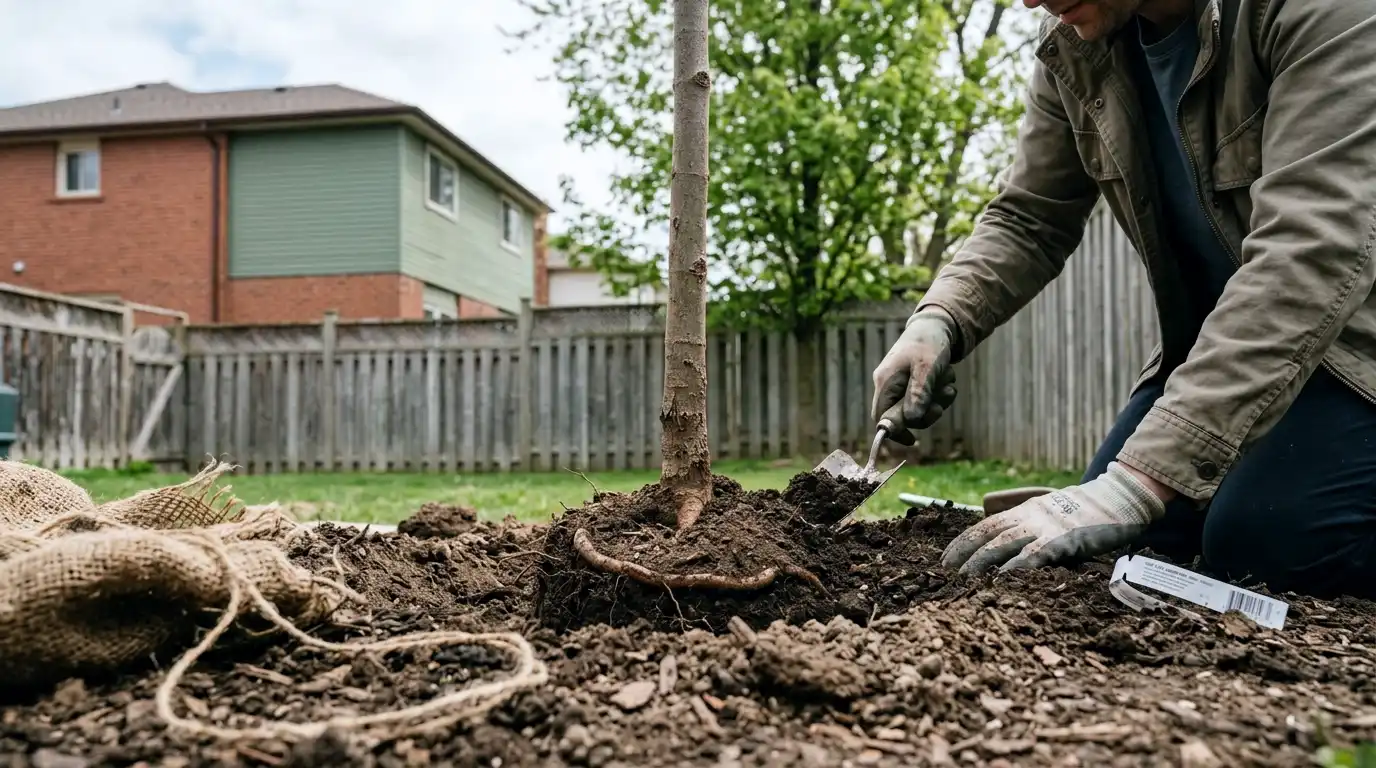
Replacement trees often struggle when they are planted too deep, placed in compacted soil, watered poorly, or mulched incorrectly. Toronto properties may also contain old construction debris, poor drainage, narrow planting beds, and buried utilities. Before planting, the property owner or qualified tree contractor should confirm the location is practical, accessible, and consistent with the permit condition.
The planting hole is commonly prepared wider than the root ball but not deeper than the root ball height. The root flare should sit at or slightly above grade. Planting too deep can slowly weaken a tree and create long-term health problems. Mulch should be placed in a broad ring while keeping mulch away from direct contact with the trunk. Newly planted trees need deep watering through the establishment period, especially during dry weeks in the first two growing seasons.
Homeowners should also think about future conflicts before the tree goes in the ground. Avoid placing a large-maturing tree directly below overhead lines or too close to foundations, fences, driveways, sidewalks, sewer laterals, or neighbouring structures. The right planting location is part of meeting the permit condition in a way that works beyond the first season.
Notifying the City After Planting
After replacement planting is complete, follow the City of Toronto’s instructions for notifying Urban Forestry or documenting completion. The City may require the permit number, planting date, species, caliper, planting location, and photographs showing the tree in place. Keep copies of every submission, photo, invoice, nursery tag, and City confirmation.
Do not leave the notification step until years later. A planted tree is only part of the process if the City also requires proof that the permit condition was completed. Missing documentation can create avoidable complications when selling, renovating, applying for future permits, or responding to City questions about the property.
Planning the Next Step
Replacement planting should follow the written permit conditions and current City instructions. Questions about species suitability, nursery stock, planting method or aftercare can be discussed with an appropriately qualified arborist, nursery or landscape professional, while Toronto Urban Forestry remains the source for permit-condition requirements.
Frequently Asked Questions
How many replacement trees does Chapter 813 require after a removal in Toronto?
The number depends on the City’s permit conditions. A permit may require one or more replacement trees depending on the tree, property, and review. Read the written permit and confirm unclear requirements directly with Toronto Urban Forestry.
What caliper do replacement trees need to be in Toronto?
The written permit controls the required size. Some permit conditions may specify a caliper such as 50 mm, but homeowners should check the actual permit before buying stock. Larger-caliper trees may require delivery and appropriate planting equipment.
Which tree species are suitable for replacement planting?
Suitable species depend on the permit condition and the property. Native or well-adapted species such as oak, maple, basswood, black cherry, serviceberry, redbud, or hornbeam may be suitable in the right location. Avoid invasive or poor long-term candidates unless the City provides different written direction.
How do I notify Toronto that I have planted my replacement trees?
Follow the City of Toronto’s permit instructions. The City may request the permit number, planting date, species, caliper, location, and photographs. Keep the submission confirmation and supporting records.
What happens if I cannot fit replacement trees on my property?
Contact Toronto Urban Forestry before the deadline and ask about City-approved alternatives, including cash-in-lieu where applicable.
Related Guides and Services
- How to Get a Tree Removal Permit in Toronto
- Best Native Trees to Plant in Toronto
- Heritage Tree Rules in Toronto
- Tree Removal Requests
- Toronto Tree Services Overview
Send Your Tree Request
Need help finding the right qualified professional for a Toronto replacement tree, permit-related question, or tree removal request?