
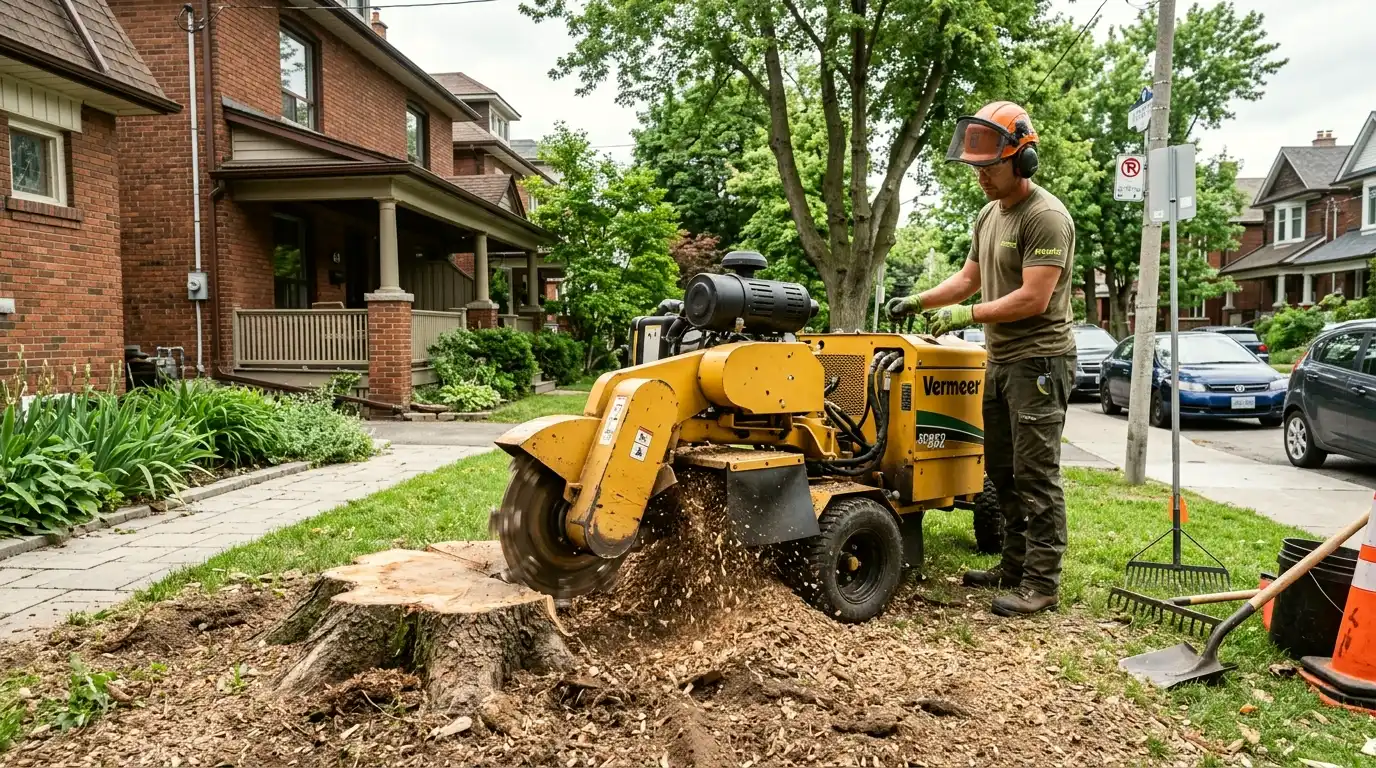
Property owners dealing with stump grinding vs stump removal in Toronto should first consider tree condition, site constraints and any municipal requirements. Stump grinding is what many Toronto homeowners need after a tree has already been lawfully removed. A grinding machine reduces the visible stump and root flare below grade, while much of the lateral root system remains underground and decays over time. Full stump removal is different. It usually means excavating the stump and root ball, disturbing more soil, and using heavier equipment. Knowing the difference helps you ask better questions, compare quotes properly, and avoid paying for more disruption than your property actually needs.
For a method-by-method comparison, see the guide to stump removal methods in Toronto.
What Stump Grinding Actually Does
A stump grinder uses a rotating cutting wheel to grind the visible stump down into wood-chip material. The operator makes repeated passes across the stump area until the agreed depth is reached. The result is usually a below-grade depression containing a mix of wood chips and soil.
The lateral roots normally remain underground. In many cases, those roots decay naturally because they no longer have a living tree above them. Decay timing can vary by species, soil moisture, stump size, and site conditions. Some species may produce suckers or sprouts from remaining roots, so it is worth asking the qualified tree contractor or qualified arborist whether follow-up management could be needed.
Machine Sizes and Access in Toronto
Toronto residential lots vary widely. Some older semi-detached properties have narrow side-yard access, small gates, steps, shared walkways, and tight backyard layouts. Larger properties in North York, Leaside, Rosedale, Forest Hill, Scarborough, Etobicoke, and other areas may allow easier access for bigger equipment.
Access affects the contractor’s quote and method. A stump in an open front yard is not the same job as a stump behind a locked gate, on a slope, beside a retaining wall, close to a fence, or surrounded by garden beds. The qualified tree contractor should confirm machine access before work begins so the correct equipment is used for the property.
Stump grinding depth: what to discuss before work begins:
- Light below-grade grinding: May be suitable where appearance is not a major concern and the area will be left informal.
- Lawn restoration depth: Often discussed where the property owner wants soil and seed over the former stump area.
- Deeper grinding: May be needed if the property owner wants to plant, rework the soil, or prepare the space for future landscaping.
- Hardscape preparation: Requires careful discussion because remaining wood can decay and settle over time.
- Utility and root concerns: Grinding depth should account for buried utilities, irrigation, lighting wires, drainage lines, and nearby protected roots.
When Full Stump Removal May Be Needed
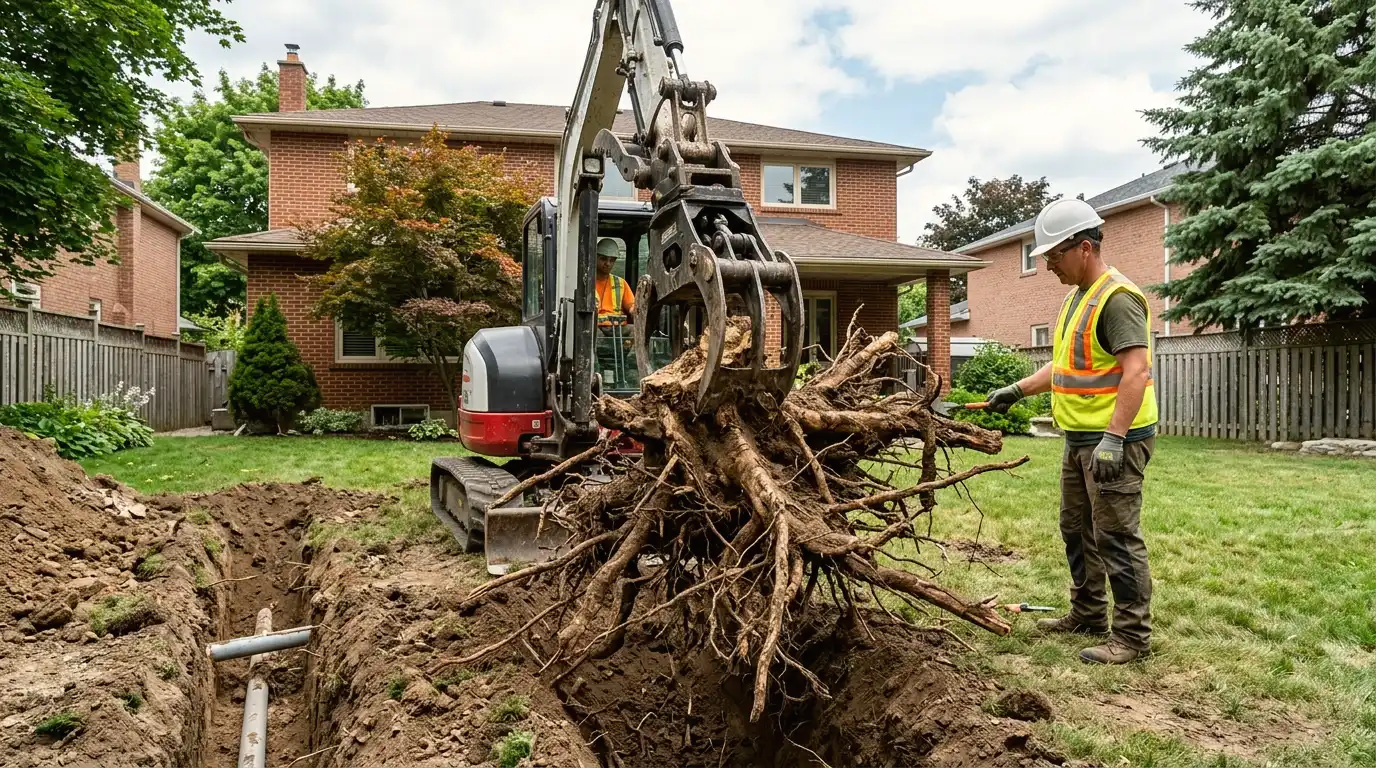
Full stump removal is more invasive than grinding. It can involve excavation around the stump and root ball, removal of more underground material, backfilling with new soil, and repairing the disturbed area afterward. It is usually more disruptive and more expensive than ordinary grinding.
Full stump removal may be discussed when the area is being prepared for construction, structural hardscape, a foundation, utilities, grading changes, or replanting in the exact same location. It may also come up when root disease, drainage, or major root conflict issues need to be reviewed. These are site-specific decisions that should be confirmed directly with the qualified tree contractor or qualified arborist.
For many residential yards, deep grinding is enough. If a contractor recommends full excavation for a simple lawn restoration or garden-bed cleanup, ask why grinding would not be sufficient and get the scope in writing before approving the work.
What Happens to the Chips After Grinding
Grinding produces wood chips mixed with soil. Those chips can be left in place, removed, or partly removed depending on the property owner’s plan and the contractor’s scope. Do not assume cleanup means the same thing in every quote.
If the area will become lawn, thick chip material can settle as it decomposes. Some homeowners choose to remove excess chips and backfill with topsoil before seeding. If the stump is in a low-visibility area, leaving some chips to settle may be acceptable. If the area is being prepared for sod, patio work, a walkway, garden installation, or replanting, discuss chip removal and backfill directly with the qualified tree contractor before work begins.
Ask the contractor to confirm whether the quote includes grinding only, chip raking, chip removal, topsoil, backfill, seed, sod, or site cleanup.
Stump Grinding and Utility Locates in Toronto
Ontario One Call says homeowners must request public utility locates at least five business days before digging at a single civic address, and all notified infrastructure owners must respond before digging begins. Private underground systems such as irrigation, landscape lighting or private drainage may require separate investigation.
Utility locates can help identify public buried infrastructure such as gas, electric, water, or telecommunications lines, depending on the area and notified infrastructure owners. They do not necessarily identify private underground systems installed by a homeowner or previous contractor, such as irrigation lines, landscape lighting, private drainage, invisible dog fencing, or other private wiring.
If private underground systems may be near the stump, tell the qualified tree contractor before work begins.
Send a Stump Grinding Request in Toronto
Does Stump Grinding Require a Toronto Tree Permit?
Ordinary stump grinding after a tree has already been lawfully removed is generally different from the permit process for injuring or removing a protected standing tree. However, Toronto requires permits to injure or remove bylaw-protected trees, ravines, or natural features. That means the surrounding context still matters.
If grinding could affect another protected tree, a City tree, a neighbouring tree, a ravine or natural feature area, or protected roots, confirm the requirements before work begins. If the stump is from a tree removed under a City permit, review any permit conditions tied to replacement planting, timing, restoration, or site work.
The safest approach is to confirm uncertain situations directly with the City of Toronto, 311, or a qualified arborist.
Pricing: What Stump Grinding Costs in Toronto
Stump grinding pricing in Toronto depends on stump diameter, species, root flare, grinding depth, access, slope, machine size, utility-locate concerns, chip handling, backfill and cleanup terms. Because those variables can change the scope substantially, compare written quotes that state the grinding depth and what happens to chips, roots and backfill rather than relying on a generic citywide price.
For more detail on pricing factors, see the complete guide to stump grinding costs in Toronto.
Stump Grinding vs Stump Removal in Toronto: Stump Grinding vs Full Removal: Practical Comparison
For a normal residential yard, stump grinding is usually the more practical option because it reduces the visible stump, lowers the grade, and avoids major excavation. It is commonly used when the homeowner wants to restore lawn, clean up a garden bed, remove a trip hazard, or prepare the area for basic landscaping.
Full stump removal is more disruptive because it pulls out more of the underground root mass. It can make sense when a future structure, utility trench, hardscape base, or exact-location replanting project requires more complete removal of woody material. Even then, the contractor should explain why grinding is not enough.
The best choice depends on what you plan to do with the space afterward. Before approving work, describe the future use clearly: lawn, sod, garden bed, patio, walkway, driveway, retaining wall, new tree, fence, shed, or construction. That helps the qualified tree contractor quote the right method and depth.
Frequently Asked Questions
What is the difference between stump grinding and stump removal?
Stump grinding uses a machine to grind the visible stump and root flare below grade, while most lateral roots remain underground and decay over time. Full stump removal usually excavates the stump and root ball, disturbs more soil, and may require heavier equipment.
Will stump grinding kill the tree’s roots?
Grinding removes the stump and main root flare, but lateral roots often remain underground. For many species, those roots decay over time after the tree is gone. Some species may produce sprouts, so ask the qualified tree contractor or arborist about follow-up.
How deep should a stump be ground in Toronto?
The right depth depends on your plan for the area. Lawn restoration, garden preparation, hardscape work, and replanting can require different depths. Nearby utilities, roots, soil conditions, and access can also affect the safe and practical grinding depth.
Does stump grinding require a permit in Toronto?
Ordinary grinding of a stump left after lawful tree removal is usually different from a tree removal permit issue. However, Toronto requires permits to injure or remove protected trees, ravines, or natural features. If grinding could affect another protected tree, a City tree, protected roots, or a ravine area, confirm requirements before work begins.
How long after tree removal should I wait to grind the stump?
There is usually no required waiting period after lawful tree removal, but timing depends on utility locates, access, soil conditions, weather, future landscaping plans, and the qualified tree contractor’s schedule. Discuss timing directly with the contractor before approving work.
Related Guides
- Stump Grinding Cost Toronto
- Tree Removal Cost Toronto
- How Long Does Tree Removal Take
- Tree Roots Cracking Driveway Toronto
- Stump Grinding Requests