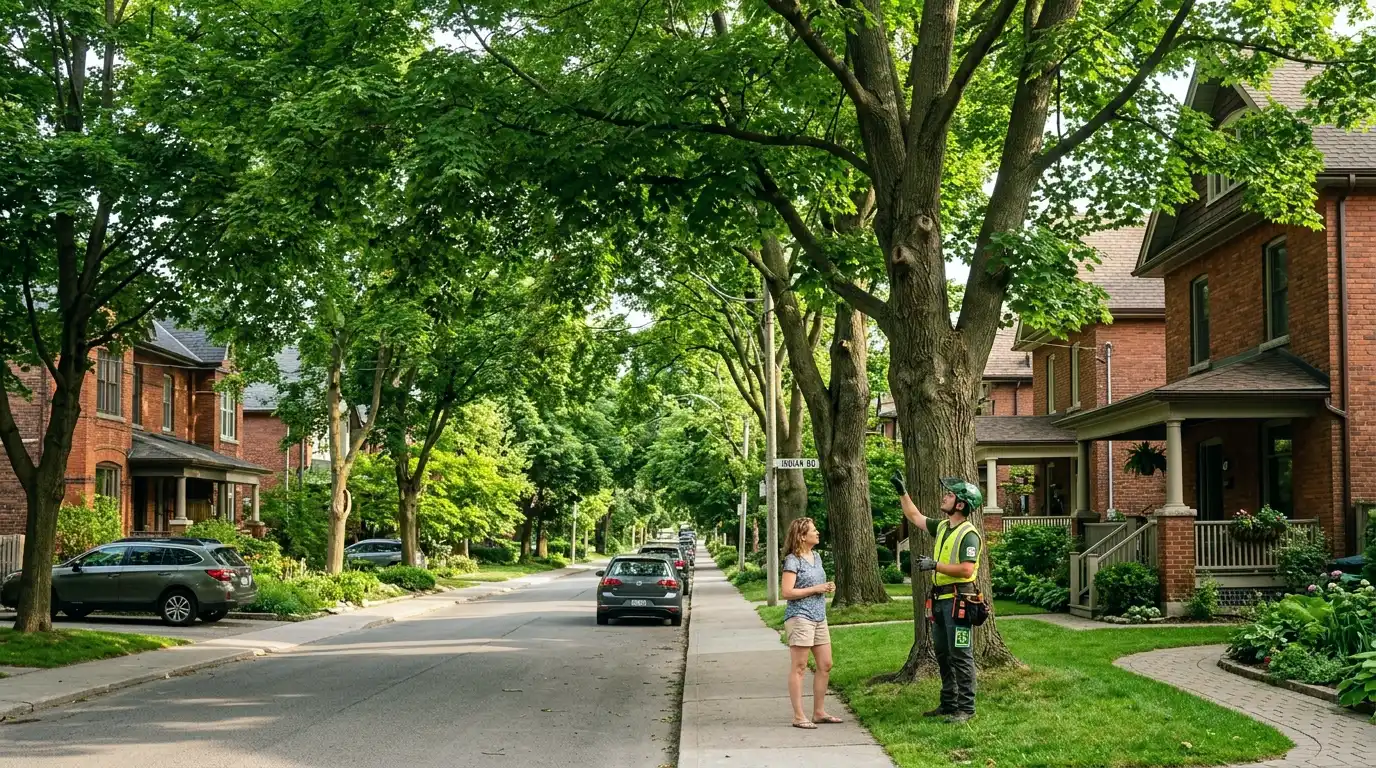
A useful way to approach Toronto tree canopy is to start with property conditions, safety concerns and any local rules that apply. Toronto’s official goal is to reach 40 percent tree canopy cover by 2050. The City’s 2018 Tree Canopy Study estimated average canopy cover at about 28.4 to 31 percent, while current City tree pages commonly describe the existing canopy as about 28 percent. The important point for homeowners is the direction of travel: protecting mature trees and adding suitable new trees are both necessary to reach the 2050 target.
Why Canopy Coverage Matters for a City Like Toronto
Urban tree canopy does work that hard infrastructure cannot easily replace at the same cost. Mature trees intercept rainfall, slow stormwater runoff, shade paved surfaces, cool homes, reduce wind exposure, support wildlife, and improve the experience of walking through a neighbourhood in summer heat.
Shade is especially important in a dense city. Streets, roofs, driveways, parking areas, and hardscaped yards absorb heat and release it back into the air. A healthy canopy softens that heat island effect and makes residential streets more comfortable during hot weather.
Tree canopy also has a property and neighbourhood value. Streets with healthy mature trees often feel more settled, walkable, and attractive. For homeowners, that means the trees on private lots, boulevards, ravines, parks, and neighbouring streets all work together as a shared urban forest, not as isolated plants.
How the 40 Percent Goal Shapes Tree Rules
Toronto’s tree protection rules are part of a larger canopy strategy. The City wants more canopy by 2050, but it cannot reach that target through planting alone if mature private trees continue to disappear without suitable replacement. Protecting existing mature trees is usually more valuable in the short term than planting young replacement trees, because a large canopy tree provides benefits that a young tree will take decades to match.
For private property, Toronto’s tree rules can require a permit before injuring or removing a protected private tree. When a permit is issued, the City may require replacement planting, cash-in-lieu where there is inadequate space for replanting, or other conditions. That is why the permit process often discusses not only whether a tree can be removed, but also what happens to canopy replacement after removal.
How replacement planting and cash-in-lieu can work in Toronto:
- Replacement planting requirements depend on the permit conditions issued by the City.
- Replacement trees must meet the City’s accepted requirements for the specific permit.
- Where there is inadequate space for replanting, Toronto’s current application page says the City will accept cash-in-lieu in the amount of $583 per tree.
- Property owners should confirm current fees, replacement quantities, species, caliper, planting location, and reporting steps directly with the City.
- A qualified arborist may discuss replacement planting options with the property owner.
Canopy Equity: Where Toronto Needs More Shade
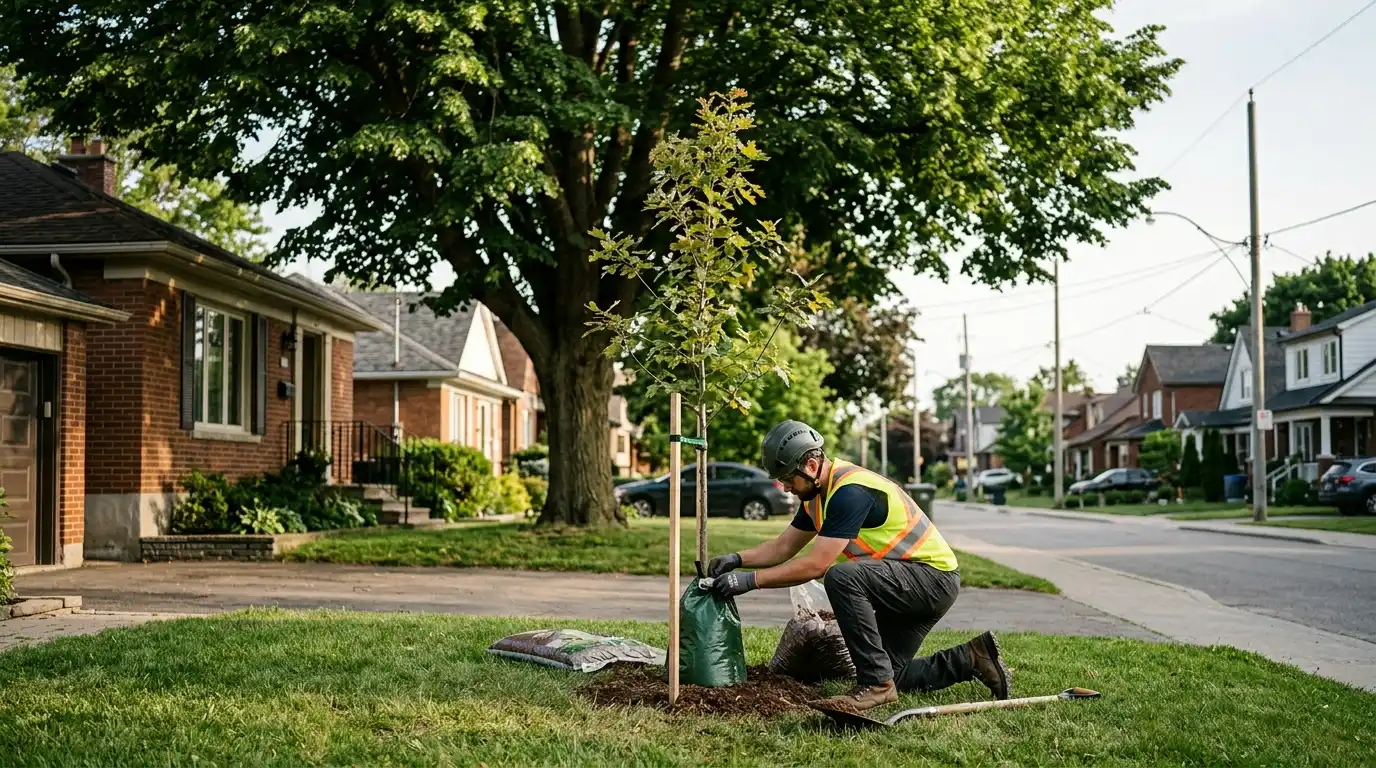
Toronto’s canopy is not evenly distributed. Some older residential neighbourhoods have strong mature canopy, while other areas have much less shade, more hard surface, and higher heat exposure. The City now uses a tree equity approach to help guide canopy expansion at the neighbourhood level.
Tree equity matters because lower-canopy areas often face more summer heat, less shade, less comfortable walking conditions, and fewer urban forest benefits. Planting in those areas can improve climate resilience, public comfort, and local environmental quality.
For homeowners, this means private-property trees still matter even when the City is planting on public land. More than half of Toronto’s land is privately owned, so the City cannot reach canopy goals through street and park planting alone. Residential lots, side yards, front yards, backyards, laneways, and small commercial properties all contribute to the overall canopy picture.
What Homeowners Can Do Beyond Minimum Permit Requirements
The permit process sets a minimum standard where a protected tree is involved. Homeowners can often do more by choosing suitable long-lived species, planting in locations with enough growing space, avoiding poor planting practices, and maintaining young trees during the first several years after planting.
Good replacement planting is not only about putting a tree in the ground. The tree needs enough soil volume, light, water, clearance, and space to grow without immediate conflict with roofs, foundations, fences, hydro lines, driveways, or future construction plans. A poorly placed tree may survive for a few years but fail to become meaningful canopy.
Species selection should be based on site conditions, not just appearance. Soil moisture, sun exposure, drainage, available rooting space, overhead clearance, salt exposure, pests, and future size all matter. A qualified arborist or qualified tree professional may discuss species selection with the property owner. Final permit-related replacement planting requirements should be confirmed directly with the City.
The Connection to Toronto’s Climate Goals
Toronto’s canopy goal sits within broader climate resilience work. More trees can help reduce heat exposure, manage stormwater, improve air quality, support biodiversity, and make neighbourhoods more comfortable during extreme heat events.
For a homeowner, the impact is local and practical. A healthy shade tree can cool a yard, protect outdoor living space, reduce glare, create privacy, and help soften the effect of paved areas. At the neighbourhood level, hundreds of private trees add up to a major piece of Toronto’s urban forest.
When a protected tree is removed, replacement planting helps reduce long-term canopy loss. When a homeowner plants additional suitable trees beyond the minimum, that can support the City’s canopy target and improve the property at the same time.
Questions About Replacement Planting or Permit Conditions?
Tracking the City’s Progress
Toronto publishes information about its urban forest, tree planting, tree equity, and climate-related canopy goals. These public resources help property owners understand why the City protects mature canopy and why replacement planting conditions can be attached to removal approvals.
Useful official resources include:
- City of Toronto Trees
- City of Toronto Tree Planting
- City of Toronto Tree Equity
- How to Apply for a Tree or Ravine Permit
The important takeaway is that the canopy goal depends on two things happening at the same time: preserving healthy mature trees where possible and planting new trees where canopy is missing or has been lost.
The Specific Impact of Emerald Ash Borer on Toronto’s Canopy
Emerald Ash Borer has had a major impact on ash trees across Ontario, including Toronto. Many ash trees on private and public land have declined or died, reducing canopy in yards, streets, parks, and natural areas. A young replacement tree cannot immediately replace the shade of a mature ash, so canopy recovery takes time.
If you have ash trees on your property, a qualified arborist may discuss visible condition, treatment viability, removal concerns, and replacement planting options. The right answer depends on tree condition, canopy dieback, structural risk, location, pest history, and the property owner’s goals.
Frequently Asked Questions
What is Toronto’s tree canopy coverage goal?
Toronto’s official goal is 40 percent canopy cover by 2050. The 2018 Tree Canopy Study estimated average canopy at roughly 28.4 to 31 percent; current City tree pages often summarize existing canopy at about 28 percent. Homeowners contribute by retaining healthy mature trees where practical and planting suitable new trees.
Does the City’s canopy goal affect my tree removal permit?
Yes, indirectly. The canopy goal supports Toronto’s tree protection rules, replacement planting expectations, and cash-in-lieu process. If a protected tree is approved for removal, the City may require replacement planting or other conditions.
What is the City’s cash-in-lieu payment for tree removal in Toronto?
Toronto’s current tree and ravine permit application page states that where there is inadequate space for replanting, the City will accept cash-in-lieu of replanting in the amount of $583 per tree. Property owners should confirm the current fee directly with the City because fees can change.
How does Toronto decide where to plant trees on public land?
Toronto uses a tree equity approach to help prioritize canopy growth at the neighbourhood level. This helps the City identify areas where more shade and urban forest benefits are needed.
Do replacement trees have to be native species in Toronto?
Replacement requirements depend on the permit conditions and City review. Property owners should follow the specific permit conditions and confirm species, caliper, location, soil volume, and planting requirements directly with the City or a qualified arborist.
Related Guides
- Tree Removal Permit Toronto
- Dead Tree Removal Permit Toronto
- What Happens If You Remove a Tree Without a Permit
- Arborist Report Requests
- Tree Pruning Requests