Tree Pruning and Trimming in Pickering, Ontario

Structural pruning, deadwood removal and crown work across all of Pickering  |  ISA Certified  |  Licensed & Insured  |  Free Estimates  |  (437) 367-8733

Pickering's established neighbourhoods contain a mature urban forest that tells the story of how the city developed. In Woodlands and Bay Ridges, trees planted in the postwar period are now 60 to 70 years old and showing the accumulated effects of decades of growth with minimal professional intervention. In Rosebank and Dunbarton, large-lot properties have specimen trees that were here before most of the surrounding houses. In Amberlea and Highbush, the natural heritage systems that define these neighbourhoods have shaped how trees grow on the adjacent residential lots. And in Duffin Heights and Seaton, younger trees are entering the age window where structural pruning makes a permanent difference.

Our arborist does not apply a single approach across all of this. Each tree gets assessed on its own terms: the species, the structure, the history of past work, the site context, and what you are trying to achieve. No prescription is written until the tree has been seen. No topping is done under any circumstances.

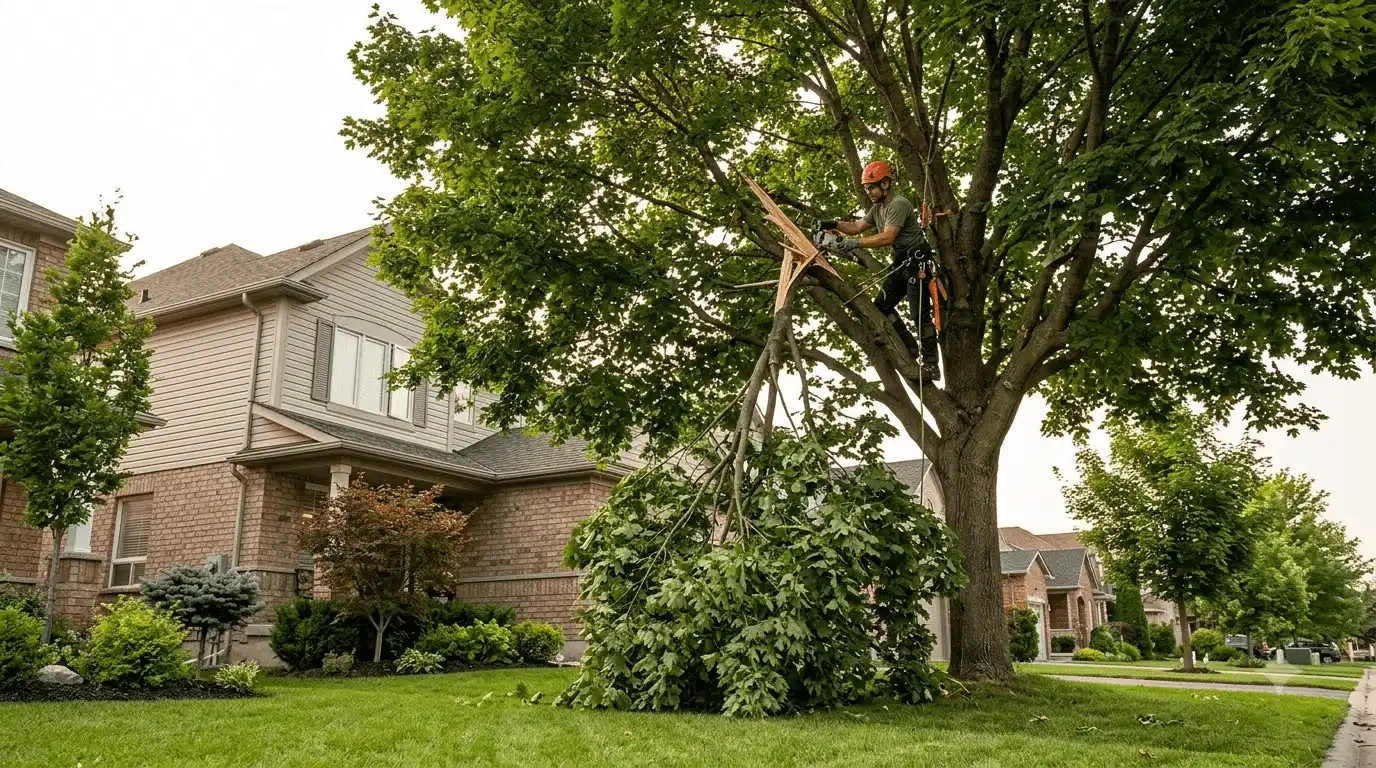
Arborist climber removing a heavy co-dominant stem from a sugar maple in the Highbush neighbourhood of Pickering Ontario

What We Commonly Prune in Pickering

Norway Maple Clearance in Bay Ridges and West Shore

Norway maple is the dominant problem species in Pickering's older waterfront neighbourhoods. It was planted extensively in the 1950s through 1970s because it grew fast and tolerated poor urban conditions. Now those trees are massive, and they were never structurally pruned after planting. The result in Bay Ridges and West Shore is overhang, root interference, and crowns that have grown into roofs, gutters and power service lines over the past 30 years. Crown reduction to appropriate laterals, clearance cuts to defined structures, and deadwood removal are the standard suite of work on these properties. We do not top them. We reduce them correctly, with cuts made to live laterals at least one-third the diameter of the removed branch.

Structural Pruning in Rosebank and Dunbarton

The large-lot properties in Rosebank and Dunbarton often contain white oaks, sugar maples, and in some cases black walnuts that are genuinely significant in size. These trees are not structurally problematic as a rule, but they do accumulate deadwood, and they do benefit from a periodic professional assessment to check for included bark co-dominance, decay indicators and storm damage from past seasons. An arborist who visits a large Rosebank property regularly catches developing issues before they become expensive. The trees in these yards are worth protecting because they are irreplaceable on any reasonable timeline.

Storm Risk Reduction in Highbush

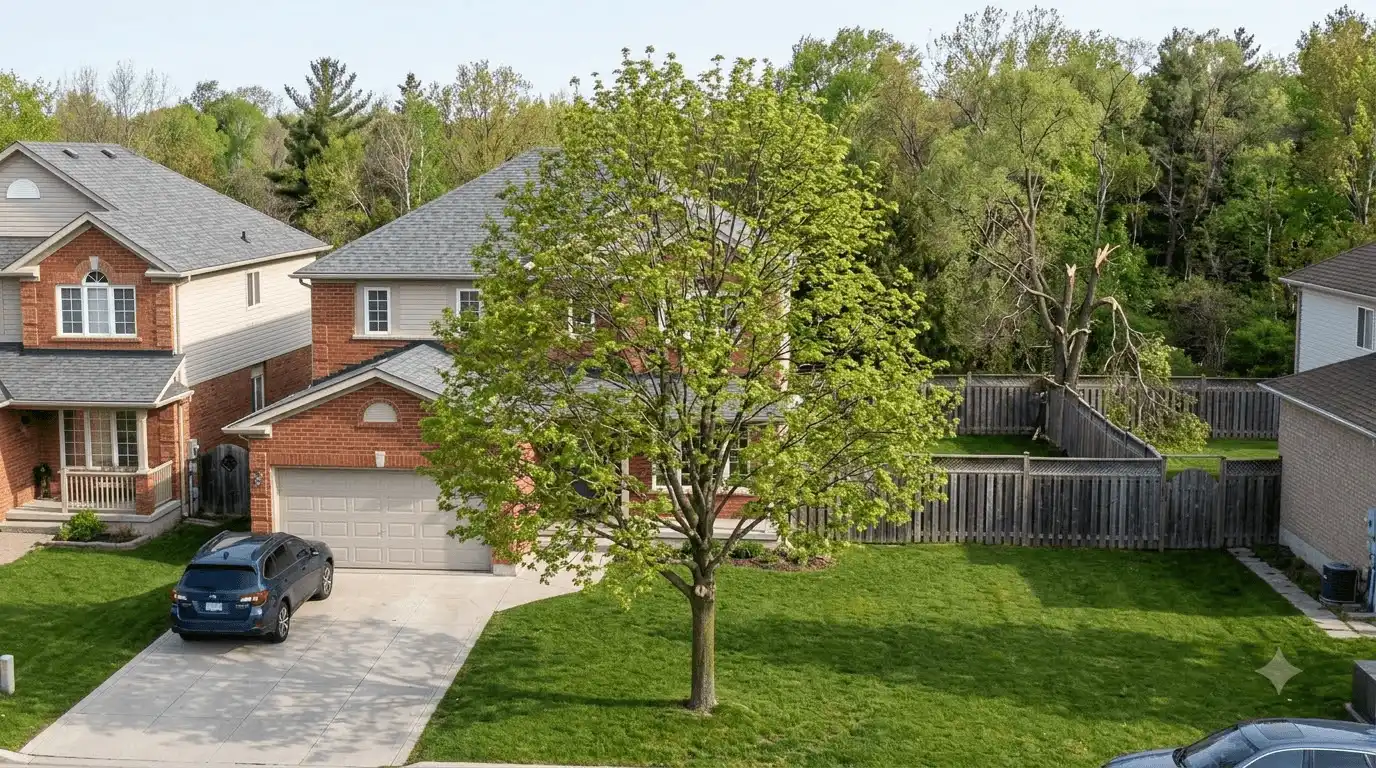
Highbush is bounded by natural heritage systems on multiple sides and many of its backyards directly adjoin the natural heritage buffer. Trees growing on the edge of that buffer often have asymmetric crowns developed toward the interior of the lot, and they accumulate significant sail area in the canopy that is exposed to the wind corridors that run through the valley systems. After every significant storm event, we see increased calls from Highbush specifically because trees with heavy one-sided crown loading in these exposed positions fail. Selective structural pruning to reduce end weight and redistribute the crown is the preventive measure. It does not need to change the character of the tree, it just reduces the load that goes into a single direction.

Early Structural Pruning in Duffin Heights and Seaton

The newer Pickering communities being developed in Duffin Heights and Seaton have young trees in the 10 to 20 year range on many properties. This is the most valuable time window for structural intervention. At this age, removing a co-dominant stem requires a wound of perhaps 4 to 6 centimetres in diameter. Wait another 15 years and the same intervention involves a 15 to 20 centimetre wound, higher infection risk and a much longer recovery. We do this work quickly on young trees, often in less than an hour per tree, and the benefit extends over the entire life of the tree.

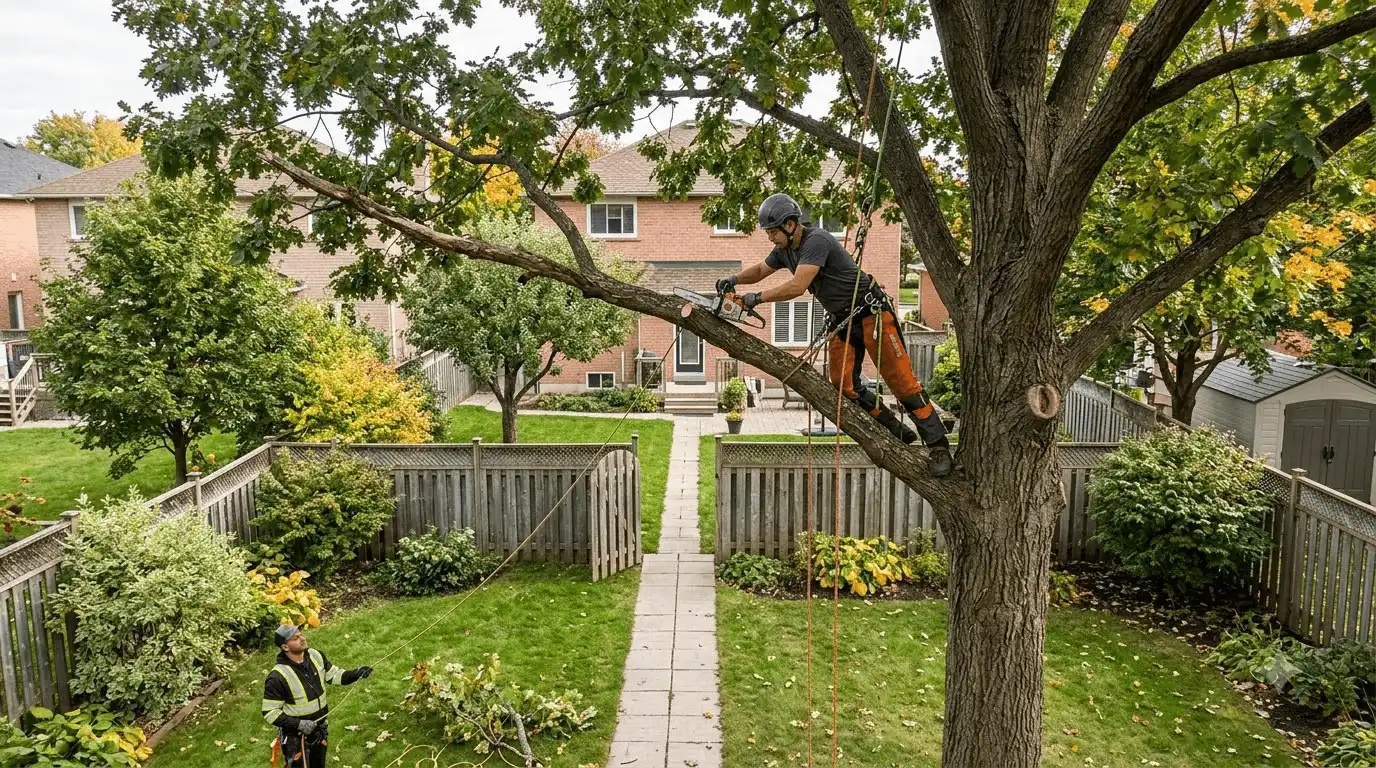
Deadwood pruning on a mature tree at the edge of a Pickering Ontario property bordering Rouge National Urban Park

Pruning Near Pickering's Natural Areas

Properties backing onto Rouge National Urban Park in Highbush and Rougemount, or adjacent to the Altona Forest in Amberlea, sometimes have trees growing with one side of their crown overhanging or growing into the protected forest edge. Pruning the residential-lot side of these trees is straightforward arboriculture with no regulatory complexity. What requires care is any pruning that would involve working beyond the property line into the protected area, which would trigger TRCA or park authorization requirements. We stay on your side of the line and make clearance cuts that are clean, proper and appropriate.

One thing worth knowing for these edge-of-park properties: trees growing at the edge of large forest systems often develop elaborate low branching on the open side because they are not competing with neighbouring trees for canopy space. This branching is part of the tree's structural and ecological adaptation. We assess what is genuinely prunable versus what is part of the tree's natural form before making any recommendations.

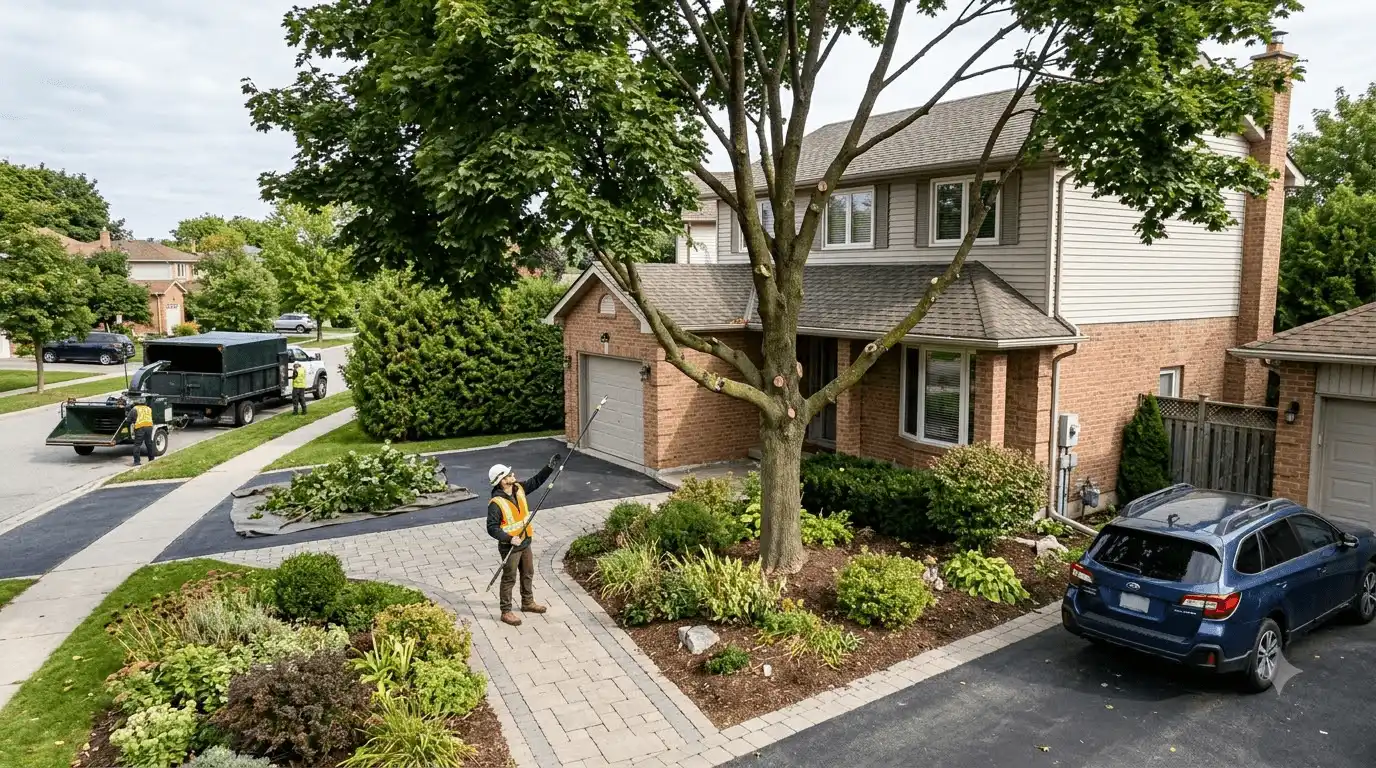
Completed crown clearance pruning on a large Norway maple over a garage roof in Amberlea Pickering Ontario

Tree Pruning vs. Tree Trimming

The two terms are often used interchangeably, but they describe work with different primary goals. Pruning is health and structure focused: removing dead or diseased wood, correcting poor branch attachments, addressing codominant stems, and making decisions about the tree's long-term structural integrity. Trimming is clearance and appearance focused: reducing a branch that is contacting a roof, lifting a canopy above a fence line, or tidying the outline of a tree that has grown unevenly. Most jobs we do involve elements of both. A branch overhanging a driveway may need to come off for clearance reasons, but how it is cut and where the cut is made is a pruning decision governed by tree biology. We don't treat these as separate service categories because in practice they're almost always the same job.

Frequently Asked Questions About Tree Pruning in Pickering

Does pruning require a permit in Pickering?

No. Pruning in accordance with good arboricultural practice is not regulated under Pickering's Tree Protection By-law 8073/24. No permit is required for any pruning work anywhere in Pickering, including within designated Tree Protection Areas. The bylaw applies to removal and destruction of trees, not to maintenance pruning.

I have a large Norway maple in Bay Ridges that is overhanging my roof. What are my options?

Crown reduction is the right tool for this situation. A properly executed crown reduction removes the overhanging material by cutting back to appropriate live laterals, reduces the overall size of the crown while maintaining its natural form, and eliminates the immediate conflict with the structure. It is a slower process than topping and produces better results on every metric: wound size, regrowth vigour, tree longevity and structural integrity. We do not top trees under any circumstances, but we do proper crown reductions on Norway maples in Bay Ridges regularly.

My Pickering property backs onto the Rouge National Urban Park. Can I prune branches that overhang the park?

You can prune branches that originate on your property and extend over the park boundary from your side of the line. Entering the park with equipment or personnel to do the work from the park side would require Parks Canada authorization, which is a very different process. Practically speaking, almost all property-line boundary work can be done from the residential side with the right rigging setup. We assess the access geometry at each property before committing to an approach.

How do I know if my Norway maple needs topping or proper pruning?

If someone quotes you topping, get a second opinion. Topping is never the right answer for any tree situation. If the issue is overhanging branches, the right solution is a clearance cut or a crown reduction to an appropriate lateral. If the issue is the tree being too large for the space, the right solution is a documented crown reduction or, if the tree genuinely cannot be made safe, removal. We will tell you honestly which applies to your situation and why.

When is the best time to prune trees in Pickering?

Dormant season pruning in late fall through early spring is generally preferred for most hardwood species because it minimizes the wound surface exposed to insect and disease vectors, and the tree's energy is directed to wound closure at budbreak in spring. However, dead wood and structural hazards should be addressed whenever they are identified, not held for an ideal seasonal window. We prune year-round in Pickering and plan seasonal scheduling around species-specific considerations where those genuinely apply.

Get a Free Estimate for Tree Work in Pickering

We serve all of Pickering including Rosebank, Dunbarton, Woodlands, Amberlea, Highbush, West Shore, Bay Ridges, Brock Ridge, Liverpool, Duffin Heights and Seaton. Our certified arborist comes out, confirms what Tree Protection Area rules apply to your property, and gives you a firm price before anything starts.

Call (437) 367-8733   or   Email Us