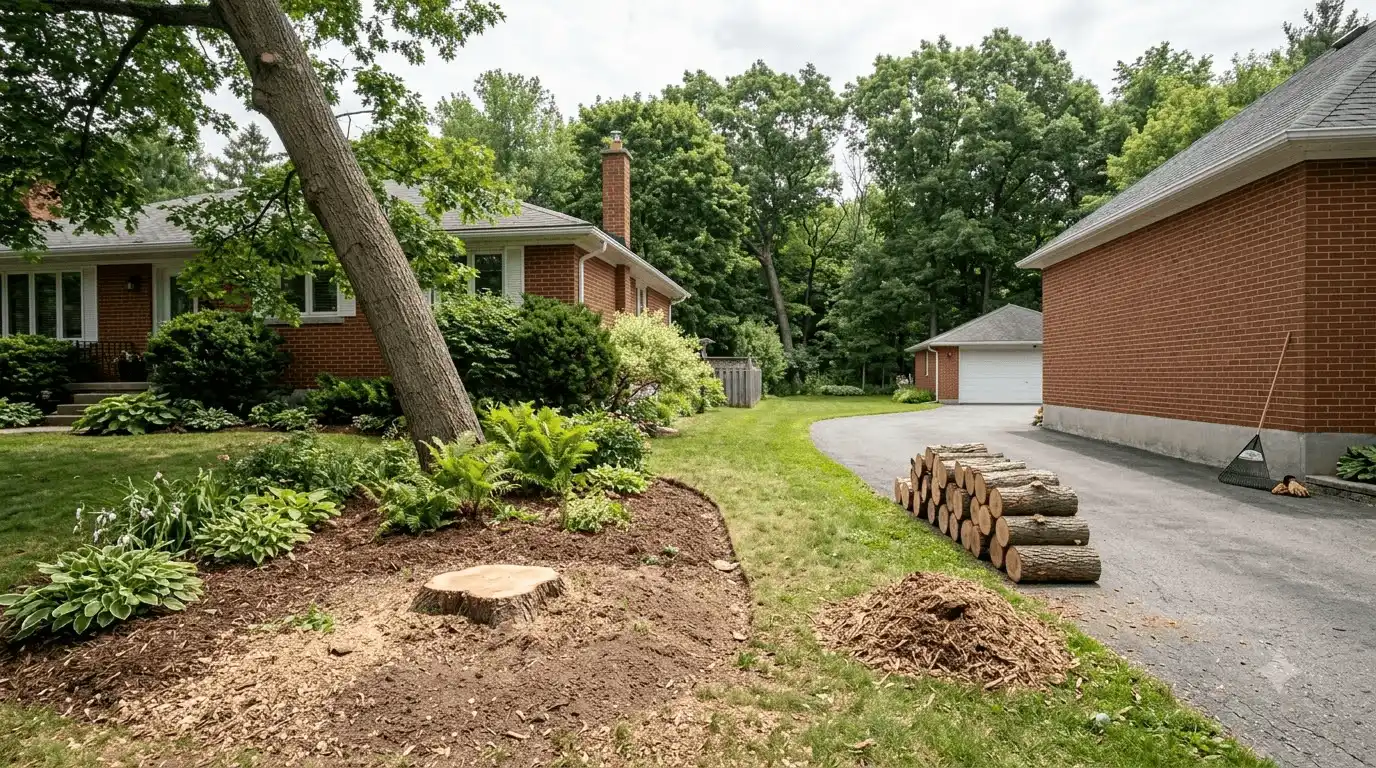
Tree Removal Requests in Pickering, Ontario
Tree removal requests from Rosebank, Dunbarton, Woodlands, West Shore, Bay Ridges, Amberlea, Highbush, Brock Ridge, Liverpool, Duffin Heights, Seaton, Village East, Town Centre, Rougemount, Fairport, Frenchman's Bay, Rouge Park edge areas and nearby Pickering communities | Independent arborist and tree care referral where available | (437) 367-8733
Quick answer: Pickering tree removal requests may involve dead trees, hazardous trees, storm-damaged trees, declining ash trees, large backyard trees, tight-lot removals, trees near roofs or garages, trees blocking access, trees near powerlines, Tree Protection Area questions, TRCA regulated-area context, City-owned tree questions, insurance documentation questions, and post-removal stump grinding discussions.
Toronto Tree Services may forward your tree removal request to an independent arborist or tree care professional where available. Toronto Tree Services is a referral and lead generation service only. The independent contractor is responsible for assessment, estimates, scheduling, tree work performed, cleanup terms, documentation where offered, pricing, payment, communication, warranties, and service-related issues directly with the customer.
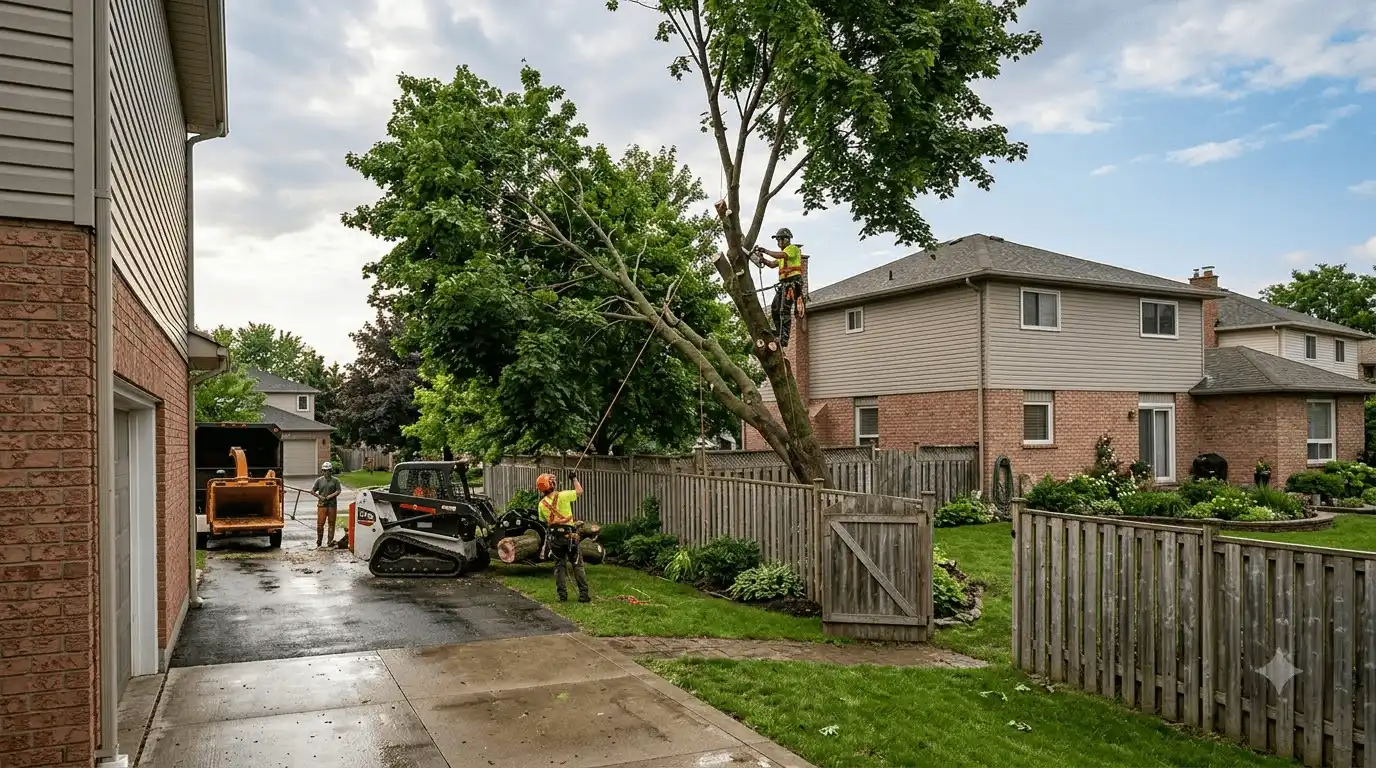
Tree removal in Pickering can involve very different site conditions from one neighbourhood to another. A mature oak in Dunbarton may have room around it, but still require careful review because of size, canopy weight, and surrounding structures. A Norway maple in Bay Ridges or West Shore may sit close to an older roofline, narrow driveway, garage, fence, or service line. A tree in Amberlea, Highbush, or near Altona Forest may be close to green space, protected-area mapping, or conservation authority context. A tree near Frenchman's Bay, Petticoat Creek, Duffins Creek, or a shoreline area may raise questions beyond simple backyard access.
For customers searching for tree removal Pickering, Pickering tree removal, Pickering tree cutting service, hazardous tree removal Pickering, dead tree removal Pickering, ash tree removal Pickering, storm-damaged tree removal Pickering, large tree removal Pickering, or emergency tree removal Pickering, the first step is to identify whether the tree is private, City-owned, public, close to powerlines, inside or near a Tree Protection Area, or close to a TRCA regulated feature.
Pickering Tree Removal and Tree Protection Area Context
City of Pickering guidance says Tree Protection By-law 8073/24 prevents the destruction of healthy trees in specified Tree Protection Areas. The City states that a permit is required to remove any tree in a protected area, and that protected areas usually run through and adjacent to watercourses and green spaces. City guidance also says dead, dangerous, diseased, or severely injured trees in protected areas require permits for removal, with different fee treatment depending on documentation. Customers should confirm current requirements directly with the City of Pickering or an independent arborist before tree removal proceeds.
Before requesting tree removal in Pickering, check:
- Whether the tree is private, City-owned, shared boundary, near a boulevard, close to a road allowance, beside a park, on conservation land, or connected to a previous approval or permit condition.
- Whether the property is in or near a City of Pickering Tree Protection Area, watercourse, green space, wetland, shoreline, valley, wooded area, Altona Forest edge, Petticoat Creek area, Duffins Creek area, Frenchman's Bay area, Rouge Park edge area, or TRCA regulated area.
- Whether the tree is dead, declining, hazardous, storm-damaged, structurally compromised, leaning, cracked, split, uprooted, infected, or interfering with buildings, fences, driveways, utilities, or public access.
- Whether the tree is near overhead powerlines, service wires, transformers, utility poles, gas meters, underground services, drainage systems, retaining walls, structures, fences, pools, patios, or neighbouring property.
- Whether the request may require an arborist report, hazard documentation, City correspondence, TRCA correspondence, utility communication, insurance documentation, or neighbour communication.
- Whether post-removal stump grinding, root work, grading, planting, fence work, drainage work, or excavation may disturb underground utilities.
Toronto Tree Services does not inspect trees, decide by-law requirements, remove trees, prepare arborist reports, submit City of Pickering applications, submit TRCA applications, authorize utility work, authorize work on City-owned trees, request utility locates, collect contractor payments, or guarantee outcomes. Any assessment, estimate, removal method, access plan, cleanup term, documentation where offered, price, timeline, payment, warranty, or service-related issue is handled directly by the independent arborist or tree care professional.
Useful Pickering Tree Removal, Protected Area, TRCA, Utility and Locate Resources
- City of Pickering Trees
- City of Pickering By-laws
- City of Pickering Tree Protection By-law 8073/24
- City of Pickering Tree Protection Areas Map
- City of Pickering Boulevard Maintenance
- City of Pickering Report an Issue
- TRCA Planning and Permits
- TRCA Apply for a Permit
- TRCA Regulated Area Mapping
- TRCA Duffins Creek Watershed
- TRCA Petticoat Creek Watershed
- TRCA Altona Forest
- Elexicon Energy Downed Power Line Safety
- Elexicon Energy Report an Outage
- Ontario One Call Homeowner Locate Guidance
Tree Removal Requests by Pickering Area
Bay Ridges, West Shore and Frenchman's Bay
Tree removal requests in Bay Ridges, West Shore, Frenchman's Bay, Liverpool, and shoreline-adjacent areas often involve older homes, tight lots, lake wind exposure, mature Norway maples, silver maples, spruce, cedar, fences, garages, driveways, and trees that have outgrown the available space around structures.
Woodlands, Dunbarton and Rosebank
Woodlands, Dunbarton, Rosebank, Rougemount, and Fairport often involve larger older trees, mature oaks, sugar maples, ash, spruce, cedar, long property lines, estate-style yards, deadwood history, storm exposure, and removals where access, rigging, debris, and documentation need direct contractor discussion.
Amberlea, Highbush, Brock Ridge and Seaton
Amberlea, Highbush, Brock Ridge, Duffin Heights, Seaton, and northern Pickering properties may involve newer yards, green-space edges, Altona Forest context, compact access, Tree Protection Area questions, creek proximity, development-area trees, and removal requests tied to site planning or safety concerns.
Common Pickering Tree Removal Request Types
Dead or Declining Trees
Dead or declining tree removal requests may involve ash, maple, birch, spruce, cedar, willow, poplar, or oak trees with canopy dieback, brittle limbs, fungal indicators, trunk cracks, bark loss, root problems, or storm damage. Documentation requirements should be confirmed directly with the City, TRCA, or the independent arborist where applicable.
Hazardous Trees Near Structures
Hazardous tree requests may involve trees leaning toward houses, garages, sheds, fences, decks, driveways, walkways, parking areas, or neighbouring property. Immediate danger to people, public areas, or powerlines should be reported to emergency services, the City, Elexicon Energy, or the appropriate public authority first.
Large Backyard Tree Removal
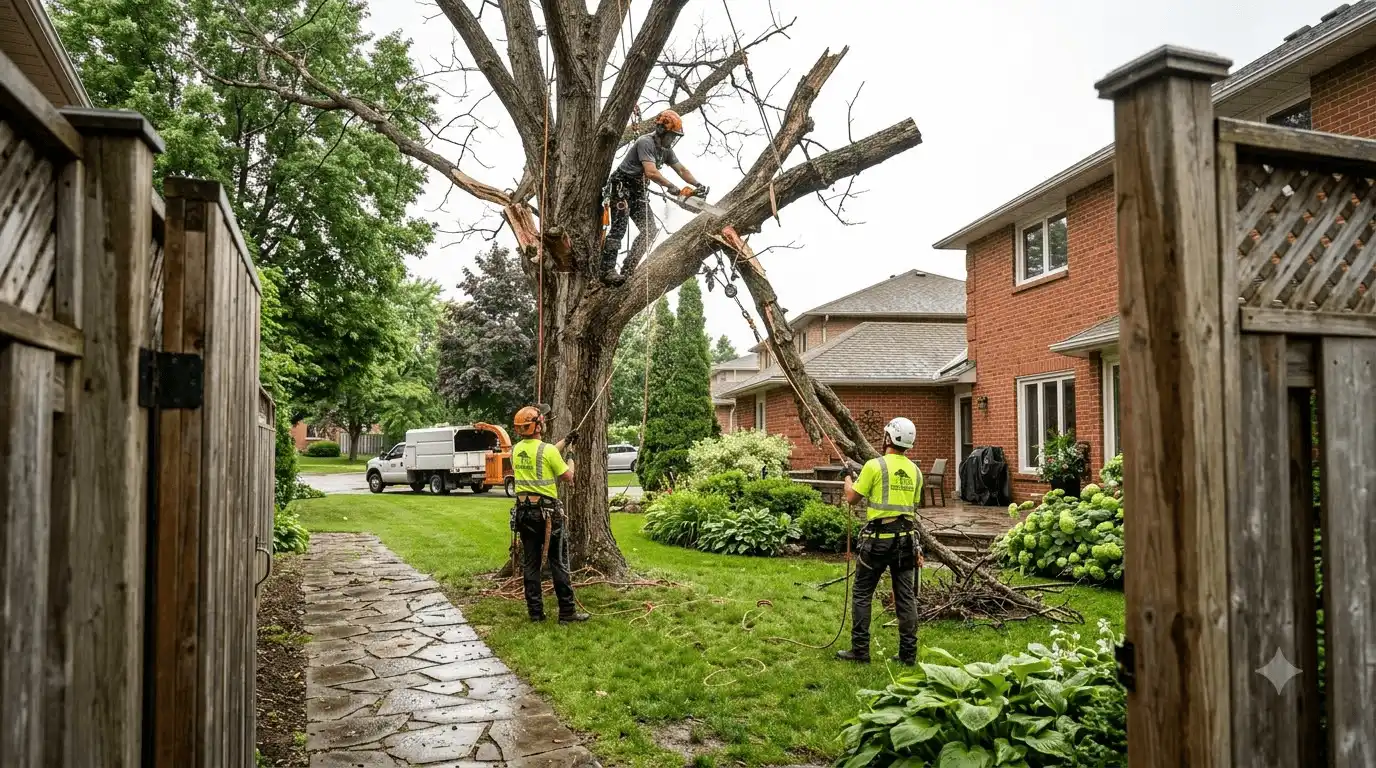
Large backyard tree requests may involve limited access, fences, pools, patios, retaining walls, soft ground, narrow gates, garden beds, and debris removal questions. Customers should send photos of the tree, access route, gate width, surrounding targets, and any visible defects.
Ash Decline and EAB Concerns
Ash decline and emerald ash borer concerns are common across many Ontario communities. Customers should have tree condition and documentation needs reviewed directly by an independent arborist or tree care professional, especially where the tree is in or near a protected area, public land, or regulated feature.
Storm-Damaged Tree Removal
Storm-damaged removals may involve uprooted trees, split trunks, broken leaders, hanging stems, root plate movement, and branches resting on structures or fences. Utility, public-road, City-owned tree, and insurance documentation questions should be handled with the proper authority or independent contractor.
Protected-Area and TRCA Context
Tree removal near watercourses, green spaces, shorelines, wetlands, slopes, Altona Forest, Petticoat Creek, Duffins Creek, Frenchman's Bay, Rouge Park edge areas, or TRCA regulated lands may require extra review before cutting, access work, grading, fill placement, or stump/root disturbance proceeds.
Tree Protection Areas and Pickering By-law Questions
Pickering's Tree Protection Area rules are central to many removal requests. City guidance states that protected areas usually run through and adjacent to watercourses and green spaces, and that permits are required to remove trees in protected areas. The City's by-law listing describes Tree Protection By-law 8073/24 as a by-law to prohibit and regulate the injuring, destruction, or removal of trees in the City of Pickering.
Customers should not rely on assumptions based on neighbourhood name alone. A property in Rosebank, Amberlea, Highbush, Woodlands, West Shore, or Seaton may have different requirements depending on the exact lot location, mapping, watercourse proximity, green-space context, or conservation authority boundary. Toronto Tree Services does not determine protected-area status or provide legal interpretations.
Ash Tree Removal and Decline Concerns in Pickering
Ash trees affected by decline, storm damage, structural weakness, or emerald ash borer concerns may become more difficult to remove as the wood deteriorates. A tree that still appears manageable one year may become more brittle, unpredictable, or hazardous later. This is especially important where the tree is close to a house, driveway, sidewalk, neighbour's yard, public route, or utility area.
Customers should discuss ash condition, documentation, safety, removal method, debris handling, and any City or TRCA context directly with the independent arborist or tree care professional where available. Toronto Tree Services does not diagnose emerald ash borer, decide exemptions, prepare arborist notes, or guarantee municipal acceptance of any document.
Tree Removal Near Duffins Creek, Petticoat Creek and Natural Features
Pickering includes important watercourse and green-space systems, including Duffins Creek, Petticoat Creek, Altona Forest, Frenchman's Bay, Lake Ontario shoreline areas, Rouge Park edge areas, valleys, wetlands, and wooded corridors. TRCA guidance says property is likely regulated if land includes or is adjacent to a watercourse, river or stream valley, wetland, shoreline, or hazardous land such as a steep slope or floodplain.
Tree removal in these settings may involve more than cutting the tree. Access routes, root disturbance, slope stability, fill placement, stump grinding, grading, and cleanup paths may all matter. Customers should confirm property-specific requirements directly with TRCA, the City of Pickering, Durham Region where applicable, or an independent arborist before work proceeds.
West Shore and Bay Ridges Tight-Lot Tree Removal Requests
West Shore and Bay Ridges often involve mature trees on smaller lots, older homes, narrow side yards, fences, detached structures, garages, and lake-exposed conditions. A tree removal request in these areas may need to consider controlled access, roof proximity, driveway protection, debris removal, nearby service wires, and how the work area can be reached safely.
Customers should send clear photos from multiple angles, including the full tree, trunk base, canopy spread, roofline, driveway, side-yard access, nearby wires, and neighbouring property. The independent contractor is responsible for discussing site constraints, method, pricing, cleanup terms, and scheduling directly with the customer.
Powerline and Utility Safety Before Tree Removal
Tree removal near overhead wires, service lines, transformers, utility poles, or electrical equipment is not ordinary private-property work. If a tree or branch is touching or close to powerlines, customers should not approach, cut, pull, climb, or move it. Electrical hazards should be reported to Elexicon Energy, emergency services, or the appropriate utility provider.
Toronto Tree Services does not authorize utility work, inspect electrical hazards, coordinate powerline clearance, or confirm when work near electrical infrastructure is safe. Any tree near powerlines should be treated cautiously until the proper utility or emergency authority has been contacted where needed.
Powerline safety: Do not touch, cut, climb, pull, or approach a tree or branch that may be close to powerlines. Contact Elexicon Energy, emergency services, or the appropriate utility provider where electrical safety may be involved.
City-Owned Trees, Boulevard Trees and Public Property
A tree that appears to be part of a residential lot may still be near a boulevard, road allowance, park edge, public sidewalk, trail, conservation land, or municipal property. Tree ownership matters because private work should not be arranged on City-owned trees, public trees, road allowances, parks, utility corridors, conservation lands, or neighbouring land without proper authorization.
Customers should confirm public-tree, boulevard, road allowance, and public-property questions directly with the City of Pickering, Durham Region, TRCA, or the appropriate public authority. Toronto Tree Services does not authorize work on public property or make ownership decisions.
Insurance Documentation After Tree Damage
Insurance questions often arise after a tree falls on a roof, garage, vehicle, fence, shed, deck, or commercial structure. Customers should ask their insurer what photos, invoices, contractor details, reports, or written documentation may be required before work begins where possible. In urgent safety situations, people and powerline hazards come first.
Toronto Tree Services does not provide insurance advice, prepare claims, negotiate with insurers, confirm coverage, guarantee reimbursement, or decide what an insurer will accept. Any invoice, damage record, report, photo documentation, or work description must be discussed directly with the independent contractor, arborist, insurer, or other relevant party.
After Tree Removal: Stumps, Roots and Utility Locates
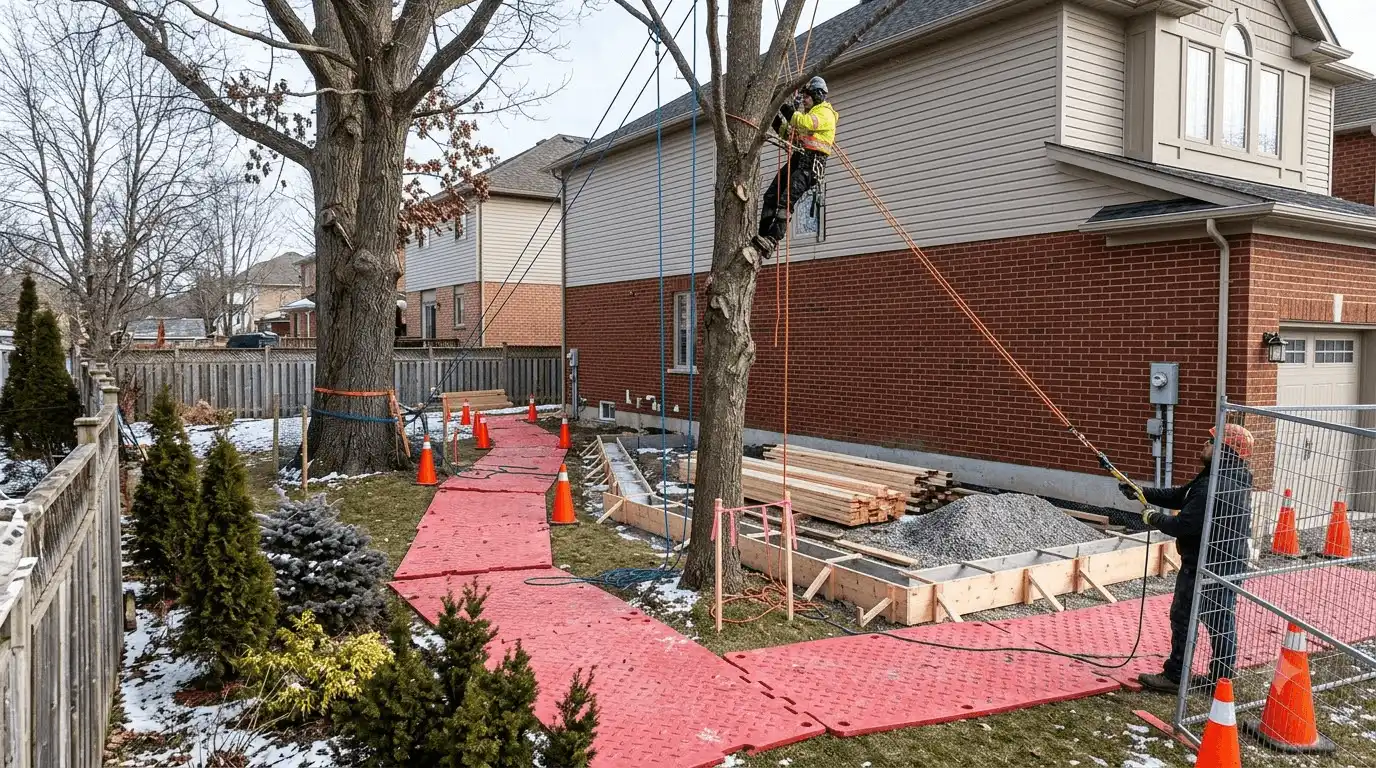
After tree removal, customers may still need to discuss stump grinding, root flare grinding, regrading, sod, planting, fence repair, drainage, interlock, or construction. These follow-up items can change the safety and utility-locate discussion because underground services may be close to the stump or root zone.
Ontario One Call says infrastructure owners are required to complete locates within five business days for a single civic address request, and that notified infrastructure owners must respond before digging is allowed. Customers and independent contractors should confirm locate responsibilities before stump grinding, digging, root removal, grading, planting, or excavation begins.
Post-removal locate note: Stump grinding, root removal, fence work, planting, grading, drainage work, and excavation can disturb underground utilities. Customers and independent contractors should confirm locate responsibilities before ground disturbance begins.
What to Send With a Pickering Tree Removal Request
Helpful details for faster review:
- Property address and nearest major road, such as Kingston Road, Liverpool Road, Brock Road, Whites Road, Finch Avenue, Bayly Street, Rosebank Road, Altona Road, West Shore Boulevard, Valley Farm Road, Taunton Road, or Pickering Parkway.
- Clear photos of the full tree, trunk base, canopy, visible defects, lean direction, root plate, surrounding structures, and access route.
- Approximate tree height, trunk diameter, species if known, and whether the tree is dead, declining, storm-damaged, cracked, split, leaning, uprooted, hollow, fungal, or affected by pests.
- Whether the tree is touching or near powerlines, service wires, transformers, utility poles, buildings, vehicles, fences, roofs, public areas, or neighbouring property.
- Whether the tree may be private, City-owned, shared boundary, on a boulevard, near a park edge, close to a road allowance, on conservation land, or in a public area.
- Whether the property is near Altona Forest, Petticoat Creek, Duffins Creek, Frenchman's Bay, Lake Ontario shoreline areas, Rouge Park edge areas, wooded areas, wetlands, green spaces, stream corridors, or a Tree Protection Area.
- Any City of Pickering, TRCA, Elexicon, Durham Region, insurance, neighbour, property manager, construction, or emergency services correspondence already received.
- Whether stump grinding, debris handling, wood removal, documentation, replacement planting, or follow-up arborist report support should be discussed directly with the independent contractor where available.
Pickering Tree Removal FAQ
Does Toronto Tree Services remove trees in Pickering?
No. Toronto Tree Services is a referral and lead generation service only. It does not remove trees, perform tree work, dispatch crews, manage jobs, inspect trees, prepare arborist reports, submit permits, collect contractor payments, control pricing, guarantee contractors, guarantee insurance, guarantee WSIB, guarantee timelines, guarantee cleanup, or guarantee outcomes.
Can I submit a Pickering tree removal request?
Yes. Pickering tree removal requests may be submitted through Toronto Tree Services. Where available, the request may be forwarded to an independent arborist or tree care professional. The independent contractor is responsible for assessment, estimates, scheduling, work performed, cleanup terms, documentation where offered, pricing, payment, communication, warranties, and service-related issues directly with the customer.
Does tree removal require a permit in Pickering?
Customers should confirm property-specific requirements directly with the City of Pickering or an independent arborist. City guidance says a permit is required to remove any tree in a protected area, and protected areas usually run through and adjacent to watercourses and green spaces.
What if my tree is dead, dangerous, diseased, or severely injured?
City guidance says dead, dangerous, diseased, or severely injured trees in protected areas require permits for removal. Customers should confirm current documentation and fee requirements directly with the City of Pickering or an independent arborist. Toronto Tree Services does not prepare reports or submit permit applications.
How do I check if my property is in a Tree Protection Area?
Customers should use the City of Pickering's official Tree Protection Area resources or contact the City directly. Toronto Tree Services does not determine protected-area boundaries. Where available, an independent arborist may discuss site context and documentation needs directly with the customer.
Can tree removal be requested near Duffins Creek or Petticoat Creek?
Yes, but customers near Duffins Creek, Petticoat Creek, wetlands, valleys, slopes, green spaces, shorelines, or TRCA regulated areas should confirm requirements directly with TRCA, the City of Pickering, or an independent arborist before removal, access work, stump grinding, grading, or root disturbance proceeds.
Can an ash tree with emerald ash borer concerns be removed?
Possibly, but customers should confirm tree condition, protected-area status, public-property context, utility context, and documentation requirements directly with the City of Pickering or an independent arborist. Toronto Tree Services does not diagnose EAB, decide exemptions, or guarantee approval outcomes.
What should I do if the tree is near powerlines?
Do not approach, cut, climb, pull, or move a tree or branch that may be near powerlines. Contact Elexicon Energy, emergency services, or the appropriate utility provider where electrical safety may be involved. Toronto Tree Services does not authorize utility work or confirm electrical safety.
Can a City-owned tree or boulevard tree be removed privately?
Customers should confirm City-owned tree, boulevard tree, park tree, road allowance, trail, conservation land, and public-property issues directly with the City of Pickering, Durham Region, TRCA, or the appropriate public authority. Toronto Tree Services does not authorize work on public trees or public property.
Can stump grinding be included after tree removal?
Stump grinding may be discussed directly with the independent contractor where available. If stump grinding, root removal, grading, planting, fence repair, drainage work, or excavation is planned, customers and independent contractors should confirm utility locate responsibilities before ground disturbance begins.
How much does tree removal cost in Pickering?
Pricing is provided directly by the independent contractor. Cost may depend on tree size, height, species, condition, access, slope, powerline proximity, structure contact, equipment needs, debris handling, stump grinding, documentation needs, protected-area context, TRCA context, urgency, and site constraints. Toronto Tree Services does not control pricing or collect contractor payments.
Who is responsible after a tree removal request is forwarded?
The independent arborist or tree care professional is responsible for assessment, estimates, scheduling, work performed, cleanup terms, documentation where offered, pricing, payment, communication, warranties, insurance, WSIB, qualifications, and service-related issues directly with the customer. Toronto Tree Services is a referral and lead generation service only.
More Pickering Tree Service Requests
Related Toronto Tree Services Pages
Send Your Tree Removal Request in Pickering, Ontario
Tree removal requests may be submitted from Pickering areas including Rosebank, Dunbarton, Woodlands, West Shore, Bay Ridges, Amberlea, Highbush, Brock Ridge, Liverpool, Duffin Heights, Seaton, Village East, Town Centre, Rougemount, Fairport, Frenchman's Bay, Rouge Park edge areas, and nearby communities.
Toronto Tree Services may forward your request to an independent arborist or tree care professional where available. The independent contractor is responsible for assessment, estimates, scheduling, tree work performed, cleanup terms, documentation where offered, pricing, payment, communication, warranties, and service-related issues directly with the customer.