Tree Pruning and Trimming in Pickering, Ontario

Tree pruning and trimming requests from Rosebank, Dunbarton, Woodlands, West Shore, Bay Ridges, Amberlea, Highbush, Brock Ridge, Liverpool, Duffin Heights, Seaton, Village East, Town Centre, Rougemount, Fairport, Frenchman's Bay, Rouge Park edge areas and nearby Pickering communities  |  Independent arborist and tree care referral where available  |  (437) 367-8733

Quick answer: Pickering tree pruning and trimming requests may involve deadwood removal, clearance pruning, branches over roofs or garages, structural pruning, crown-reduction discussions, storm-damaged limbs, neighbour-facing branches, young-tree structure, mature canopy review, Tree Protection Area questions, Rouge Park edge properties, Altona Forest edge properties, TRCA regulated-area concerns, City-owned tree questions, and powerline safety.

Toronto Tree Services may forward your tree pruning or trimming request to an independent arborist or tree care professional where available. Toronto Tree Services is a referral and lead generation service only. The independent contractor is responsible for assessment, estimates, scheduling, pruning or trimming work performed, cleanup terms, pricing, payment, communication, warranties, and service-related issues directly with the customer.

Pickering tree pruning is shaped by the city's mix of older lake-area streets, mature suburban neighbourhoods, Rouge Park edge properties, ravine-side homes, and newer growth communities. In Bay Ridges, West Shore, Woodlands, Dunbarton, and Rosebank, many trees are now mature enough that branch weight, roof clearance, deadwood, storm damage, and past pruning decisions matter. In Amberlea, Highbush, Brock Ridge, Duffin Heights, and Seaton, the work may involve younger trees, forest-edge properties, compact lots, or trees close to green-space boundaries.

For customers searching for tree pruning Pickering, tree trimming Pickering, Pickering tree cutting service, Pickering branch removal, Pickering deadwood pruning, Pickering crown reduction, Pickering roof clearance pruning, or Pickering storm-damage tree pruning, the first step is to describe the tree, the pruning concern, the access, the nearby targets, and whether the tree is private, City-owned, close to powerlines, near a Tree Protection Area, or close to TRCA-regulated features.

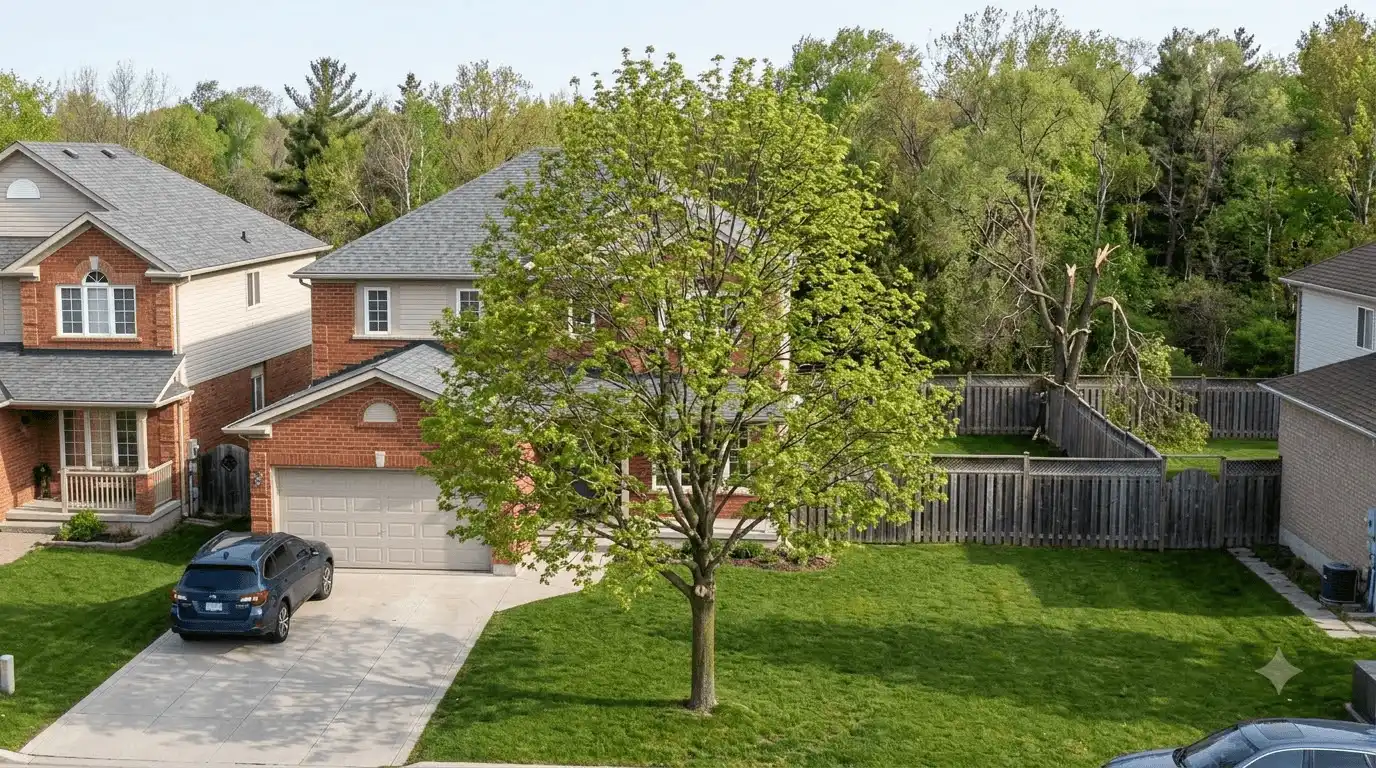
Tree pruning request involving a mature sugar maple in the Highbush neighbourhood of Pickering Ontario

Pickering Pruning, Trimming and Tree Protection Area Context

City of Pickering guidance says Tree Protection By-law 8073/24 prevents the destruction of healthy trees in specified Tree Protection Areas. The City states that a permit is required to remove any tree in a protected area, and that protected areas usually run through and adjacent to watercourses and green spaces. Customers should confirm current requirements directly with the City of Pickering or an independent arborist before heavy pruning, major limb removal, crown reduction, tree injury, removal, access work, or related disturbance proceeds near protected areas, public land, conservation lands, or uncertain property boundaries.

Before requesting tree pruning or trimming in Pickering, check:

  • Whether the tree is private, City-owned, shared boundary, near a boulevard, close to a road allowance, beside a park, on conservation land, or connected to a previous approval or permit condition.
  • Whether the request is routine pruning, deadwood removal, clearance pruning, structural pruning, crown reduction, storm-damage pruning, or heavy cutting that could affect tree health.
  • Whether branches are near overhead powerlines, service wires, streetlights, utility poles, buildings, garages, roofs, fences, driveways, sidewalks, pools, patios, or neighbouring property.
  • Whether the property is in or near a City of Pickering Tree Protection Area, watercourse, green space, wetland, shoreline, valley, wooded area, Altona Forest edge, Petticoat Creek area, Duffins Creek area, Frenchman's Bay area, Rouge Park edge area, or TRCA regulated area.
  • Whether work would require access from park land, conservation land, a neighbouring property, a road allowance, or public property.
  • Whether the tree has visible cracks, dead branches, fungal growth, weak unions, included bark, storm damage, root movement, canopy dieback, heavy lean, or previous topping cuts.

Toronto Tree Services does not inspect trees, decide by-law requirements, prune trees, trim trees, prepare arborist reports, submit City of Pickering applications, submit TRCA applications, authorize utility work, authorize work on City-owned trees, collect contractor payments, or guarantee outcomes. Any assessment, estimate, pruning method, trimming scope, cleanup term, permit-related document support where offered, price, timeline, or service-related issue is handled directly by the independent arborist or tree care professional.

Tree Pruning Requests by Pickering Area

Bay Ridges, West Shore and Frenchman's Bay

Tree pruning requests in Bay Ridges, West Shore, Frenchman's Bay, Liverpool, and shoreline-adjacent areas often involve lake wind exposure, branches over roofs and driveways, mature maples, spruce, cedar, birch, older fences, tighter lots, and storm-broken limbs after high winds or wet soil conditions.

Woodlands, Dunbarton and Rosebank

Woodlands, Dunbarton, Rosebank, Rougemount, and Fairport often involve larger older trees, mature canopies, white oak, sugar maple, Norway maple, ash, spruce, cedar, long property lines, estate-style yards, driveway clearance, deadwood, and branches near roofs, garages, sheds, and neighbouring properties.

Amberlea, Highbush, Brock Ridge and Seaton

Amberlea, Highbush, Brock Ridge, Duffin Heights, Seaton, and northern Pickering properties may involve younger trees, structural pruning requests, compact backyards, green-space edges, Altona Forest context, Rouge Park edge context, Tree Protection Area questions, and storm-exposed canopy edges near natural features.

Common Pickering Tree Pruning Request Types

Deadwood Removal

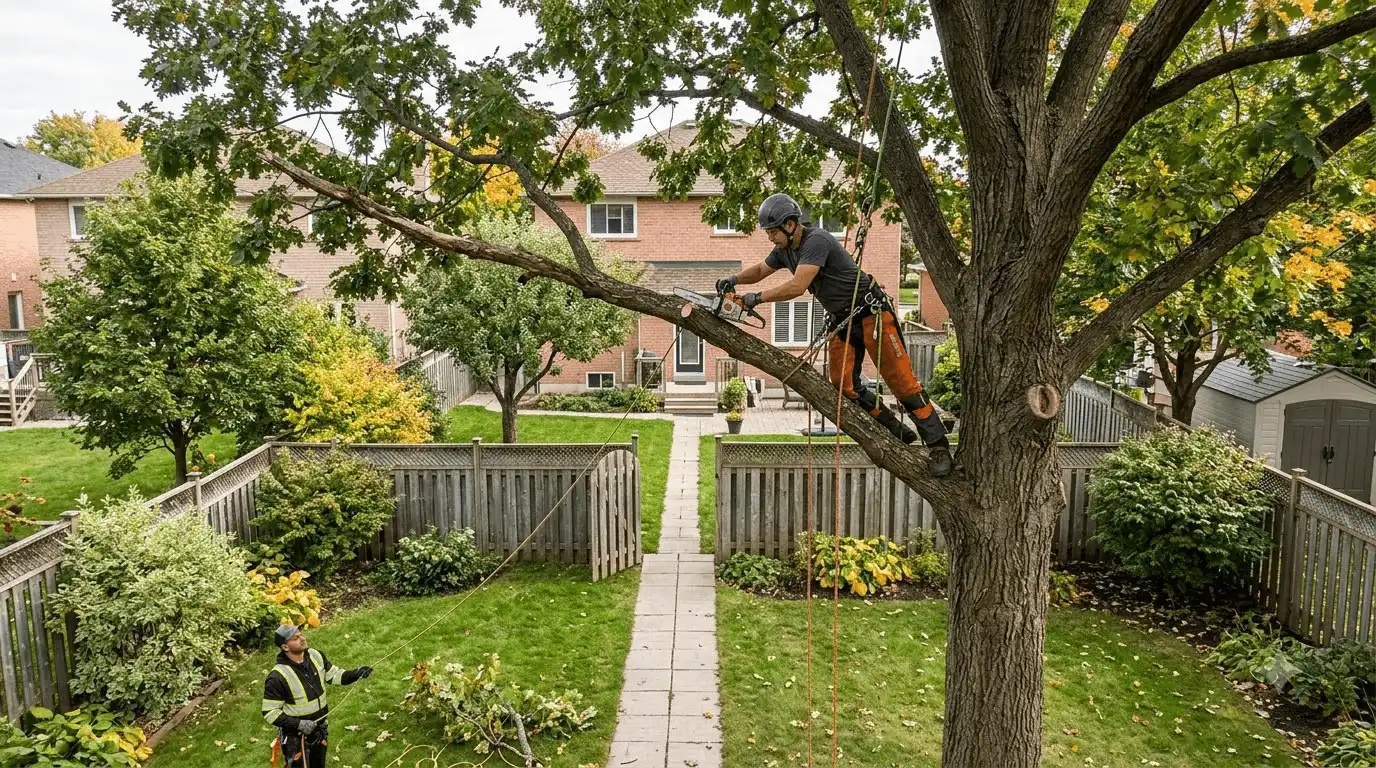
Deadwood removal requests may involve dead branches over patios, lawns, driveways, sidewalks, decks, garages, pools, play areas, or parking spots. Mature maple, oak, ash, birch, spruce, and cedar trees can develop dead branches after drought stress, age, pests, shade pressure, storm damage, or root disturbance.

Clearance Pruning

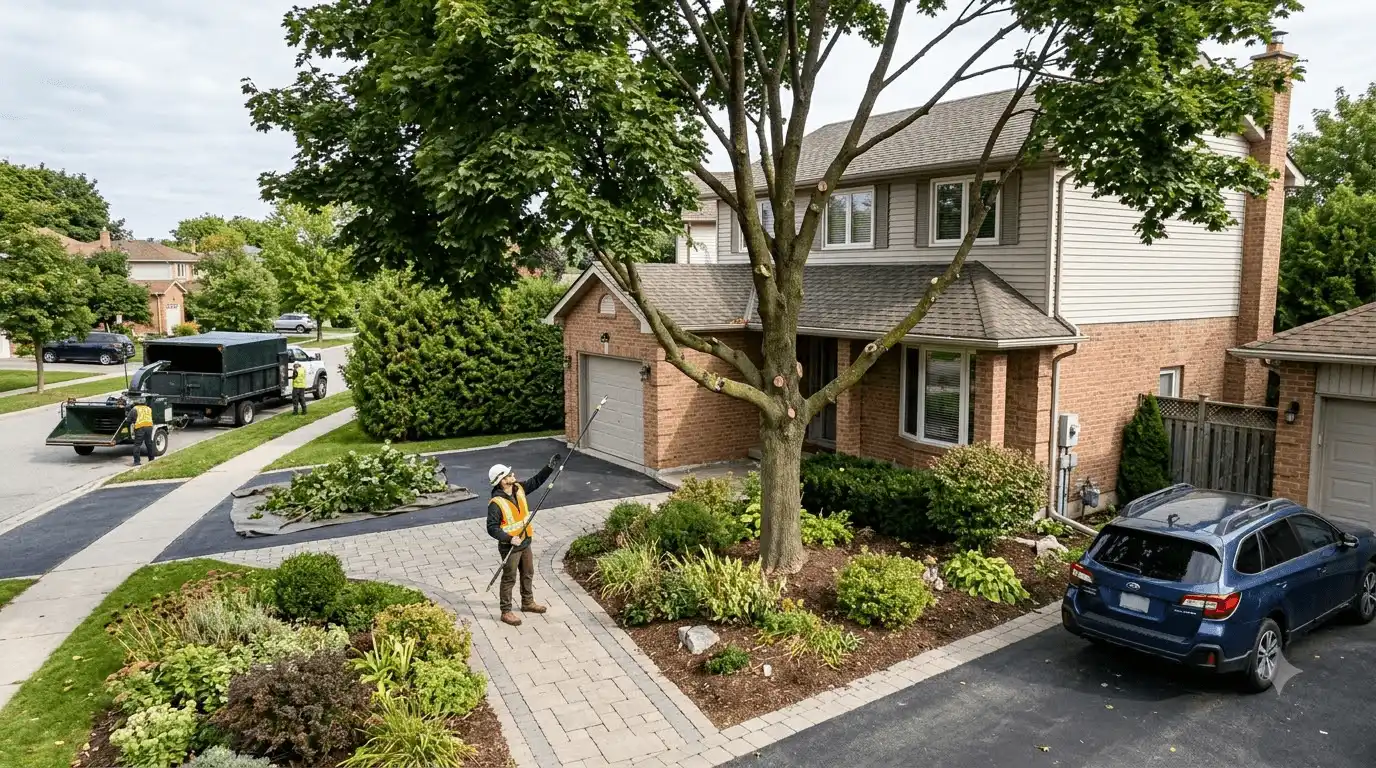
Clearance pruning requests may involve branches near roofs, eaves, siding, windows, walkways, driveways, fences, sheds, balconies, signs, or neighbour-facing areas. If branches are close to overhead wires, customers should contact Elexicon Energy or the appropriate utility provider before arranging private work.

Crown Reduction Discussion

Crown reduction may be discussed where branches have outgrown a space, overhang a structure, or carry excessive end weight. The independent arborist or tree care professional is responsible for assessing whether reduction is appropriate for the tree species, condition, branch structure, and site context.

Young-Tree Structural Pruning

Young-tree structural pruning requests are common in Duffin Heights, Seaton, Brock Ridge, and newer Pickering communities where planted trees are developing branch structure. Early review may help address crowded limbs, weak attachments, crossing branches, and low clearance before branches become much larger.

Storm-Damage Branch Cleanup

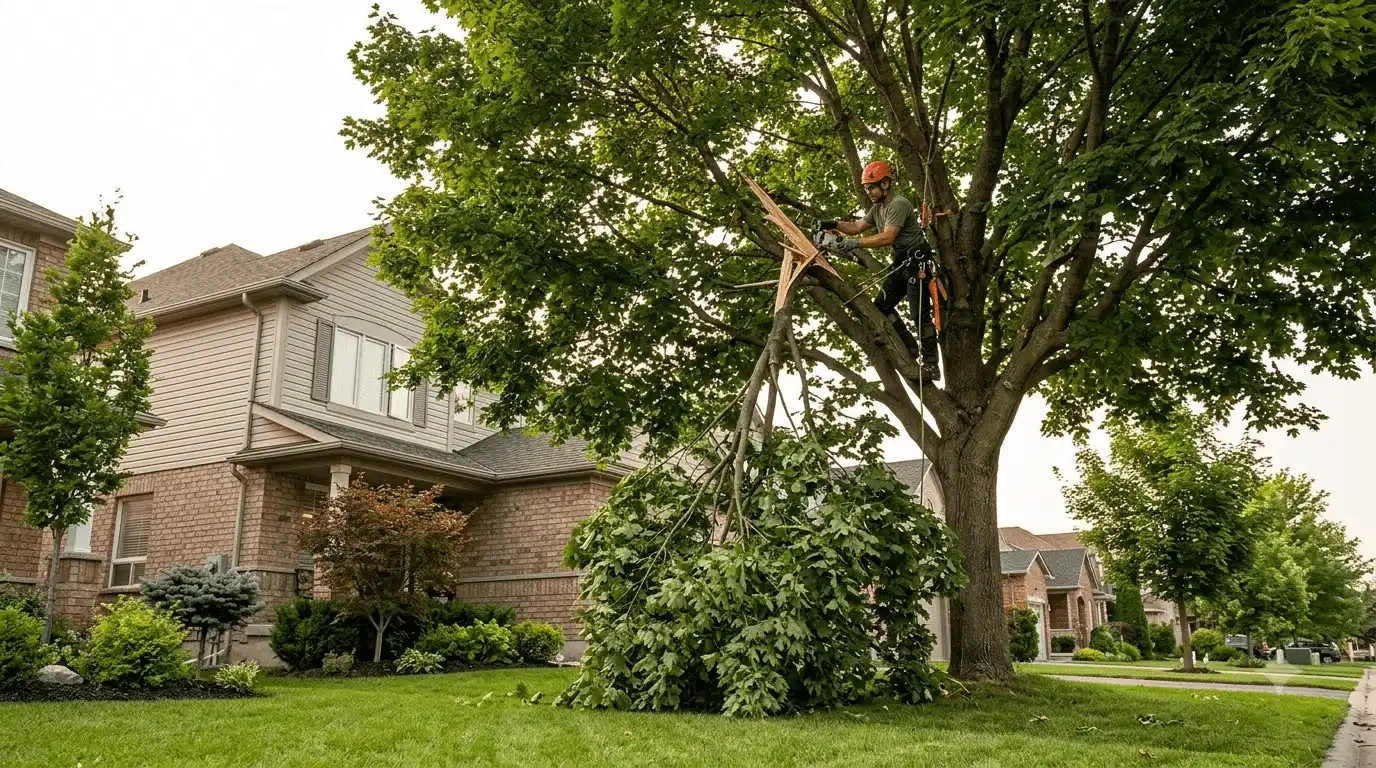
Storm-damage pruning requests may involve broken limbs, hanging branches, torn bark, split unions, cracked stems, or branches dropped into yards, driveways, roofs, and fences. Immediate danger to people, roads, public areas, or powerlines should be reported to the proper authority first.

Natural-Edge Tree Pruning

Properties near Rouge National Urban Park, Altona Forest, Petticoat Creek, Duffins Creek, Frenchman's Bay, shorelines, wooded areas, wetlands, or TRCA regulated areas may require extra care where pruning, access, or vegetation disturbance approaches public, conservation, or protected lands.

Norway Maple and Mature Canopy Pruning in Pickering

Norway maple is common in older Pickering neighbourhoods, especially around Bay Ridges, West Shore, Woodlands, Dunbarton, and other established residential areas. These trees can create roof clearance issues, dense shade, heavy lateral limbs, and branch conflict with garages, driveways, fences, and service lines. Customers often ask whether a tree should be topped, reduced, cleared, or removed. Those are not the same decision.

The independent arborist or tree care professional is responsible for assessing the tree and explaining whether deadwood removal, clearance pruning, crown reduction, selective branch removal, or another recommendation is appropriate. Toronto Tree Services does not provide arborist opinions, pruning prescriptions, or guarantees about tree response after pruning.

Structural Pruning in Rosebank, Dunbarton and Woodlands

Large-lot properties in Rosebank, Dunbarton, Woodlands, and Rougemount often include mature oaks, sugar maples, spruce, cedar, walnuts, and other significant trees. These trees may not need heavy work, but they may need review for deadwood, crossing branches, included bark, storm cracks, weak unions, or branch weight over targets. The goal of a pruning request should be clearly stated before the independent contractor discusses scope.

Customers should send photos of the full canopy, trunk base, problem branches, nearby structures, driveway, fence lines, and access route. The independent contractor is responsible for discussing the tree's condition, limitations, work method, price, schedule, cleanup terms, and any follow-up recommendations directly with the customer.

Pruning Near Rouge National Urban Park and Altona Forest

Some Pickering properties back onto Rouge National Urban Park, Altona Forest, wooded edges, green spaces, or natural heritage systems. Branches may grow toward the residential lot, over a fence, or across a property boundary. The important issue is not only the tree limb. It is also access, ownership, public land, conservation land, and whether work would involve entering or disturbing land outside the customer's property.

Customers should confirm property boundaries before requesting pruning near park or conservation lands. Toronto Tree Services does not authorize entry onto Rouge National Urban Park, TRCA lands, City lands, conservation lands, neighbouring land, or public property. Any work that may require access from outside the customer's property should be confirmed with the appropriate authority before work proceeds.

Tree pruning request for deadwood on a mature tree near a Rouge Park edge property in Pickering Ontario

Tree Pruning Near Roofs, Garages and Fences

Branches near roofs, eaves, gutters, siding, windows, garages, fences, sheds, patios, and driveways are among the most common Pickering pruning requests. A branch may be rubbing a roof in Amberlea, leaning over a garage in Bay Ridges, crowding a fence in Woodlands, or hanging over a driveway in West Shore. The requested result should be practical and tree-aware.

Customers should explain whether the goal is clearance, deadwood removal, storm-risk reduction, shade reduction, roof access, insurance documentation, or general maintenance. The independent contractor is responsible for explaining what can be pruned, what should not be cut, what the finished result may look like, and what cleanup terms apply.

Tree Pruning Near Powerlines and Utility Areas

Tree pruning near powerlines is not ordinary yard work. Branches, ladders, pole tools, ropes, and equipment can create serious electrical risk when they are close to overhead wires or electrical equipment. If a branch is near service wires, transformers, poles, or overhead conductors, customers should contact Elexicon Energy, emergency services, or the appropriate utility provider where safety may be involved.

Toronto Tree Services does not authorize utility work, inspect electrical hazards, coordinate powerline clearance, or confirm when work near electrical infrastructure is safe. If electrical danger may be present, customers should contact the utility or emergency authority before any private pruning request is discussed.

Powerline safety: Do not prune, trim, climb, cut, or approach trees near overhead powerlines. Contact Elexicon Energy, emergency services, or the appropriate utility provider where electrical safety may be involved.

Tree Protection Areas, TRCA Regulated Areas and Heavy Pruning

Routine tree pruning is not the same as tree removal, but heavy cutting near protected areas should still be approached carefully. Pickering's Tree Protection Areas usually run through and adjacent to watercourses and green spaces. TRCA review may also be relevant near valleys, streams, wetlands, slopes, Lake Ontario shoreline areas, and regulated features.

Customers near Altona Forest, Petticoat Creek, Duffins Creek, Frenchman's Bay, Rouge Park edge areas, wetlands, green spaces, shorelines, or wooded valleys should confirm whether the proposed work is ordinary maintenance pruning or something more significant. Toronto Tree Services does not determine protected-area boundaries, TRCA requirements, or City approval requirements.

Tree Pruning vs. Tree Trimming

Homeowners often use pruning and trimming as interchangeable terms. In practical tree care, pruning usually refers to tree-health and structure decisions, such as deadwood removal, correcting poor branch attachments, reducing weak limbs, and managing damaged branches. Trimming often refers to clearance and appearance, such as branches touching a roof, blocking a walkway, or growing toward a fence.

Most real jobs contain both. A branch over a driveway may be a clearance issue, but where the cut is made and whether the tree can tolerate the cut are pruning questions. The independent arborist or tree care professional is responsible for deciding how the work should be assessed, priced, scheduled, performed, and cleaned up directly with the customer.

Tree pruning request for crown clearance over a garage roof in Amberlea Pickering Ontario

Seasonal Pruning Timing in Pickering

Tree pruning timing can depend on species, condition, branch size, objective, pest pressure, weather, and urgency. Dead, broken, hanging, or hazardous branches may need faster attention than cosmetic or routine pruning. Some non-urgent pruning requests are easier to review during dormant season when branch structure is visible, while storm-damage and clearance concerns may be reviewed when the issue is active.

The independent arborist or tree care professional is responsible for advising on timing, species-specific considerations, pruning intensity, limitations, and risk directly with the customer. Toronto Tree Services does not provide professional arborist opinions or guarantee the suitability of any pruning schedule.

Property-Line Branches and Neighbour Concerns

Neighbour-facing branch concerns are common in Pickering, especially where mature trees grow near fences, rear lot lines, driveways, garages, and shared side yards. These requests may involve overhanging limbs, shade, leaves, deadwood, property-line uncertainty, tree ownership, access, debris, and communication with the neighbour.

Toronto Tree Services does not provide legal advice, boundary decisions, survey interpretation, or neighbour-dispute resolution. Customers should discuss property-line limits, access, debris handling, and communication directly with the independent contractor or appropriate advisor.

What to Send With a Pickering Tree Pruning Request

Helpful details for faster review:

  • Property address and nearest major road, such as Kingston Road, Liverpool Road, Brock Road, Whites Road, Finch Avenue, Bayly Street, Rosebank Road, Altona Road, West Shore Boulevard, Valley Farm Road, Taunton Road, or Pickering Parkway.
  • Clear photos of the full tree, problem branches, trunk base, canopy, roofline, fence, driveway, access route, wires, and nearby structures.
  • The reason for pruning: deadwood, roof clearance, driveway clearance, neighbour-facing branches, storm damage, canopy thinning, branch weight, young-tree structure, or general trimming.
  • Whether the tree may be private, City-owned, shared with a neighbour, on a boulevard, near a park edge, close to a road allowance, on conservation land, or near public property.
  • Whether overhead wires, service lines, utility poles, gas meters, fences, patios, pools, sheds, garages, or neighbouring property are close to the pruning area.
  • Approximate tree height, trunk diameter, species if known, and whether the tree has visible cracks, dead branches, fungus, cavities, pests, lean, broken limbs, old topping cuts, or root movement.
  • Any City of Pickering, TRCA, Elexicon, Parks Canada, neighbour, insurance, property manager, or construction-related correspondence already received.
  • Whether the property is near Altona Forest, Rouge National Urban Park, Petticoat Creek, Duffins Creek, Frenchman's Bay, Lake Ontario shoreline areas, wooded areas, wetlands, green spaces, stream corridors, or a Tree Protection Area.

Pickering Tree Pruning and Trimming FAQ

Does Toronto Tree Services prune or trim trees in Pickering?

No. Toronto Tree Services is a referral and lead generation service only. It does not perform pruning, trimming, tree work, dispatch crews, manage jobs, inspect trees, prepare arborist reports, submit permits, collect contractor payments, control pricing, guarantee contractors, guarantee insurance, guarantee WSIB, guarantee timelines, guarantee cleanup, or guarantee outcomes.

Can I submit a Pickering tree pruning request?

Yes. Pickering tree pruning and trimming requests may be submitted through Toronto Tree Services. Where available, the request may be forwarded to an independent arborist or tree care professional. The independent contractor is responsible for assessment, estimates, scheduling, work performed, cleanup terms, pricing, payment, communication, warranties, and service-related issues directly with the customer.

Does pruning require a permit in Pickering?

Customers should confirm property-specific requirements directly with the City of Pickering or an independent arborist. City guidance says a permit is required to remove any tree in a protected area. Routine maintenance pruning may be different from removal, but heavy pruning, major limb removal, crown reduction, work near protected areas, City-owned trees, or work that may injure a tree should be checked before work proceeds.

Can a large Norway maple over a roof be reduced?

It may be possible, but the tree should be assessed directly by the independent arborist or tree care professional. Options may include clearance pruning, selective branch reduction, crown-reduction discussion, or another recommendation depending on tree condition, branch structure, target area, species response, and safety concerns.

Can branches over Rouge National Urban Park or public land be pruned?

Customers should confirm property boundaries and authorization before any work near public land, park land, conservation land, or Rouge National Urban Park. Toronto Tree Services does not authorize entry onto park land, conservation land, public property, or neighbouring property. Work that requires access beyond the customer's property should be confirmed with the proper authority first.

Can pruning be done near Altona Forest or TRCA regulated areas?

It may be possible, but customers near Altona Forest, Petticoat Creek, Duffins Creek, Frenchman's Bay, shorelines, wetlands, valleys, green spaces, or TRCA regulated areas should confirm whether City or TRCA requirements apply before heavy cutting, access work, vegetation disturbance, or related activity proceeds.

What if branches are close to overhead powerlines?

Do not prune, trim, climb, cut, or approach branches near overhead powerlines. Electrical hazards should be reported to Elexicon Energy, emergency services, or the appropriate utility provider. Toronto Tree Services does not authorize utility work or confirm electrical safety.

Can pruning help with storm-damaged branches?

It may. Storm-damage pruning requests may involve broken limbs, hanging branches, cracked unions, torn bark, split stems, or branches over structures and access areas. Immediate danger to people, roads, public areas, structures, or powerlines should be reported to emergency services, the City of Pickering, Elexicon Energy, Durham Region where applicable, or the appropriate authority first.

Can overhanging neighbour branches be trimmed?

Neighbour-facing branch issues should be discussed carefully with the independent arborist or tree care professional. Customers should consider property-line limits, tree ownership, access, debris handling, tree health, and neighbour communication. Toronto Tree Services does not provide legal advice or boundary decisions.

When is the best season to prune trees in Pickering?

Timing depends on species, condition, objective, branch size, urgency, and risk. Dead, broken, or hazardous branches may need attention sooner, while non-urgent pruning may be better discussed around species-specific timing. The independent arborist or contractor is responsible for advising on timing directly with the customer.

How much does tree pruning cost in Pickering?

Pricing is provided directly by the independent contractor. Cost may depend on tree size, height, branch condition, access, equipment, risk, powerline proximity, protected-area context, debris handling, urgency, and scope. Toronto Tree Services does not control pricing or collect contractor payments.

Who is responsible for the pruning work after referral?

The independent arborist or tree care professional is responsible for assessment, estimates, scheduling, work performed, cleanup terms, pricing, payment, communication, warranties, insurance, WSIB, and service-related issues directly with the customer. Toronto Tree Services is a referral and lead generation service only.

Send Your Tree Pruning Request in Pickering, Ontario

Tree pruning and trimming requests may be submitted from Pickering areas including Rosebank, Dunbarton, Woodlands, West Shore, Bay Ridges, Amberlea, Highbush, Brock Ridge, Liverpool, Duffin Heights, Seaton, Village East, Town Centre, Rougemount, Fairport, Frenchman's Bay, Rouge Park edge areas, and nearby communities.

Toronto Tree Services may forward your request to an independent arborist or tree care professional where available. The independent contractor is responsible for assessment, estimates, scheduling, pruning or trimming work performed, cleanup terms, pricing, payment, communication, warranties, and service-related issues directly with the customer.

Call (437) 367-8733   or   Send Your Tree Request