
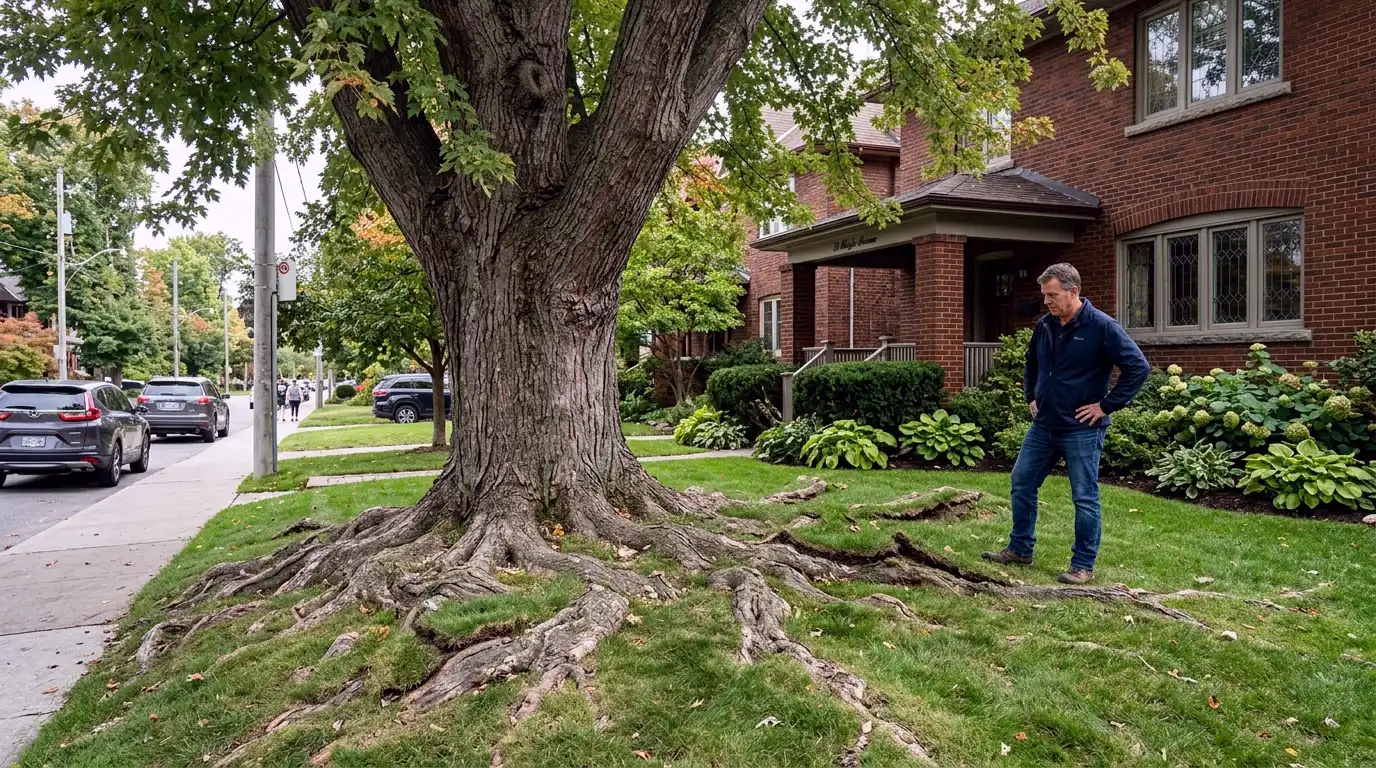
A useful way to approach tree surface roots in Toronto is to start with property conditions, safety concerns and any local rules that apply. Surface roots spreading across your lawn, lifting sections of driveway, or creating trip hazards beside a walkway are among the most common concerns Toronto homeowners have with mature trees. The first reaction is often to cut the roots back. In many cases, that can create a bigger problem. Surface roots usually develop because of soil conditions, tree species, moisture patterns, and long-term urban compaction. The better decision is to understand why the roots are there before disturbing them.
Tree Surface Roots in Toronto: Why Surface Roots Develop
Tree roots grow where the soil lets them survive. In deep, loose, well-aerated, consistently moist soil, many roots can spread below the surface without becoming obvious. Toronto residential soil is often very different. Years of foot traffic, driveway use, grading, additions, patio work, and construction can compact the ground until oxygen and water movement are restricted. In many parts of the GTA, dense clay subsoil adds another barrier that roots struggle to penetrate efficiently.
When deeper soil is tight, low in oxygen, or poorly drained, roots stay closer to the upper soil layer because that is where conditions are more favourable. Over many years, those roots increase in diameter and become visible. That does not mean the tree is defective. It usually means the tree is adapting to the actual site conditions around it.
Species also matter. Silver maple, Norway maple, willow, poplar, and cottonwood are more likely to create noticeable shallow root systems. These trees are common in older Toronto neighbourhoods, ravine-edge properties, and residential lots with mature canopy coverage. Other species, such as oak, ginkgo, tuliptree, and some conifers, may show less surface rooting when soil depth and drainage are suitable.
What Cutting Surface Roots Actually Does
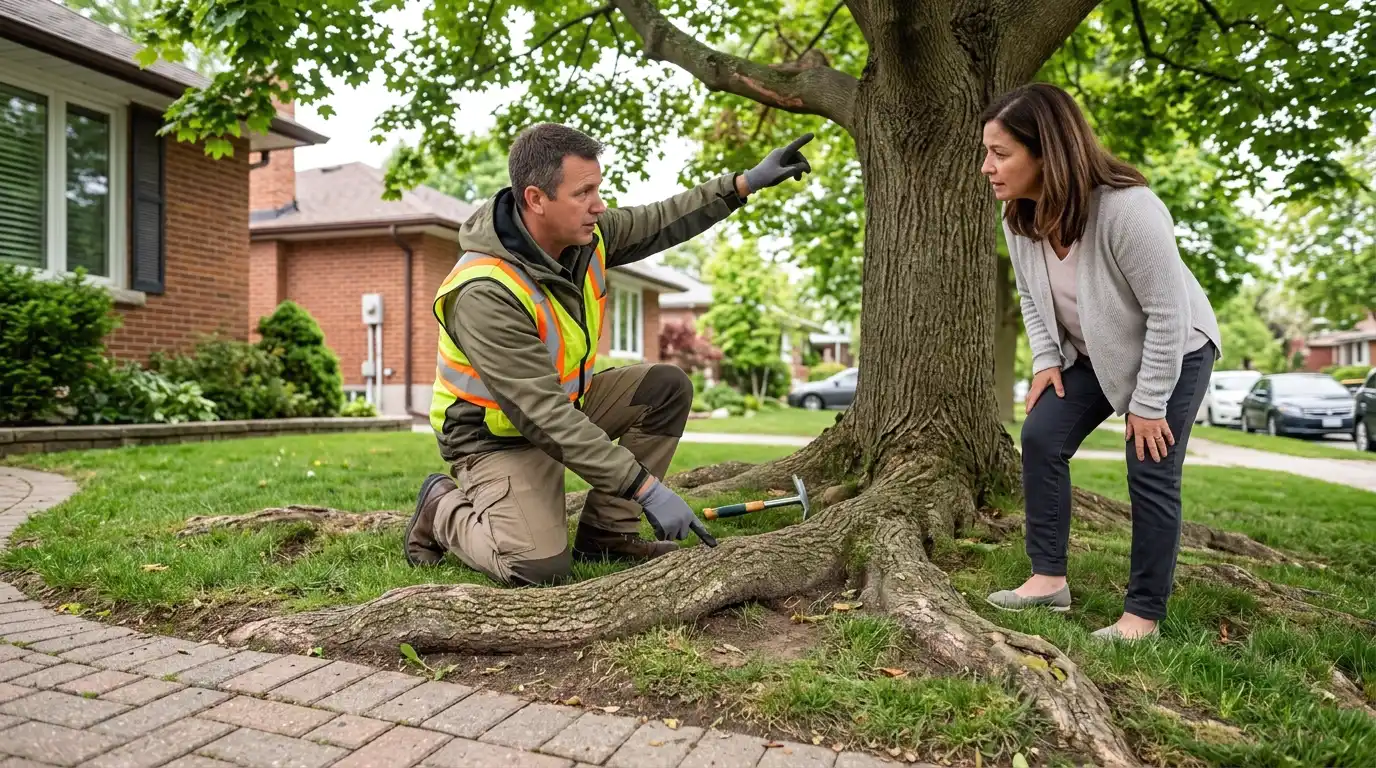
Cutting surface roots can look like a simple fix, but it can injure the tree and create structural concerns. A cut root is a wound. That wound can become an entry point for fungal decay, especially on older trees already stressed by compacted urban soil, restricted rooting space, drought, or hardscape pressure.
Root cutting can also trigger replacement growth. A tree may respond by producing new roots in the same general area, so the original issue can return after a few growing seasons. Cutting does not correct the compacted soil, poor drainage, or species tendency that caused the surface roots in the first place.
The biggest concern is stability. Some visible roots are also important anchoring roots. Removing several large roots on one side of a mature tree can reduce support, especially where the tree is close to a house, driveway, retaining wall, fence, or high-use area. Any significant root disturbance near the trunk or within the root protection area should be reviewed with a qualified arborist.
What usually works vs what usually creates more risk:
- Often works well: Converting the surface root zone from lawn to a properly mulched bed. This avoids root cutting, reduces mowing damage, limits soil compaction, and gives the root zone a cleaner appearance.
- May help with driveways and walks: A qualified professional may discuss hardscape adjustment, bridging, selective root work, or root barrier installation during resurfacing. The right option depends on the tree, root location, hardscape condition, and site constraints.
- Use cautiously: Disturbing individual roots farther from the trunk only after a qualified arborist or qualified professional has reviewed whether the root is likely to affect stability or tree health.
- Avoid: Cutting multiple large roots near the trunk, burying surface roots under heavy soil or gravel, paving directly over active roots, or cutting roots and then trying to force lawn grass back over the same area.
The Mulch Bed Approach
For lawn areas affected by surface roots, converting the problem zone into a mulched bed is often the most practical long-term approach. Instead of fighting the roots, the area is managed around them. A typical mulch bed uses a moderate layer of coarse wood chips across the affected root zone while keeping mulch away from the trunk flare so moisture is not held against the bark.
This approach solves several issues at once. It removes the difficult mowing area, reduces repeated mower and trimmer damage to exposed roots, helps retain soil moisture, and creates a cleaner visual transition between the tree and the surrounding lawn. It can also reduce competition from grass, which often struggles under mature trees anyway because of shade, dry soil, and root competition.
A properly maintained mulch bed will not make large surface roots disappear, but it can make the area safer, easier to manage, and less visually disruptive. For many mature Toronto trees, that is a more realistic and tree-friendly solution than repeated cutting.
Surface Roots and Chapter 813
For private trees 30cm DBH or more in Toronto, significant root cutting or disturbance may raise issues under the City of Toronto private tree by-law. Roots are part of the tree, and work that injures a protected tree can create by-law concerns. Property owners should be cautious before cutting, trenching, excavating, paving, or grinding near a protected tree’s root system.
Surface Root Concern on a Toronto Property?
Frequently Asked Questions
Why do some Toronto trees have so many surface roots?
Surface roots often develop when a tree cannot access adequate water, oxygen, and nutrients at deeper soil levels. In Toronto’s urban environment, soil compaction from foot traffic, vehicles, past grading, and construction can push roots toward the upper soil layer where oxygen and moisture are more available. Heavy clay soils common across parts of the GTA can also limit deep root penetration. Species predisposition matters too. Silver maple, Norway maple, poplar, willow, and similar species are more likely to develop shallow surface root systems, while oaks, ginkgo, and some conifers may develop deeper root patterns when soil conditions allow.
Can I cut the surface roots of a tree in Toronto?
Cutting surface roots on a protected Toronto tree requires caution and may involve City of Toronto private tree by-law considerations. Roots are part of the tree, and significant root disturbance can injure or destabilize a tree. Root cutting close to the trunk, inside the root protection area, or near hardscape repairs should be reviewed with a qualified arborist.
Will surface roots eventually damage my house foundation?
Tree roots follow water, oxygen, and nutrients. They generally do not break through sound, intact concrete by force alone. Problems are more likely when roots enter existing cracks, gaps, old clay drainage systems, deteriorated weeping tiles, or older sewer laterals and then expand over time. Homes with older foundation materials, existing cracks, moisture issues, or clay pipe infrastructure may be more vulnerable. Silver maple and willow are commonly associated with root conflict complaints because they are vigorous, moisture-seeking species.
How do I stop surface roots from damaging my Toronto lawn and driveway?
For lawn areas, the safest long-term approach is often to stop fighting the roots and convert the affected area into a properly mulched bed. Cutting roots can injure the tree, create decay entry points, and encourage replacement growth. Piling soil or hard material over roots can suffocate the root system. For driveway or walkway conflicts, a qualified arborist, tree care professional, or qualified hardscape contractor may discuss whether selective root work, hardscape adjustment, bridging, or root barrier installation is appropriate. Any work plan, risk discussion, pricing, and responsibility should be handled directly with the qualified professional.
Do surface roots mean the tree is likely to fall over?
Not automatically. A tree with visible surface roots may still have adequate anchoring roots. The concern is not surface roots by themselves, but whether the main root plate has been damaged, cut, decayed, waterlogged, or disturbed. Trees with heaving soil, recent construction disturbance, fungal growth near the trunk base, leaning changes, or large root cuts should be reviewed by a qualified arborist.
Related Guides
- Tree Roots Cracking Driveway Toronto
- Tree Root Rot Toronto
- How Deep Do Tree Roots Go Toronto
- Tree Removal Permit Toronto
- Stump Grinding Requests