
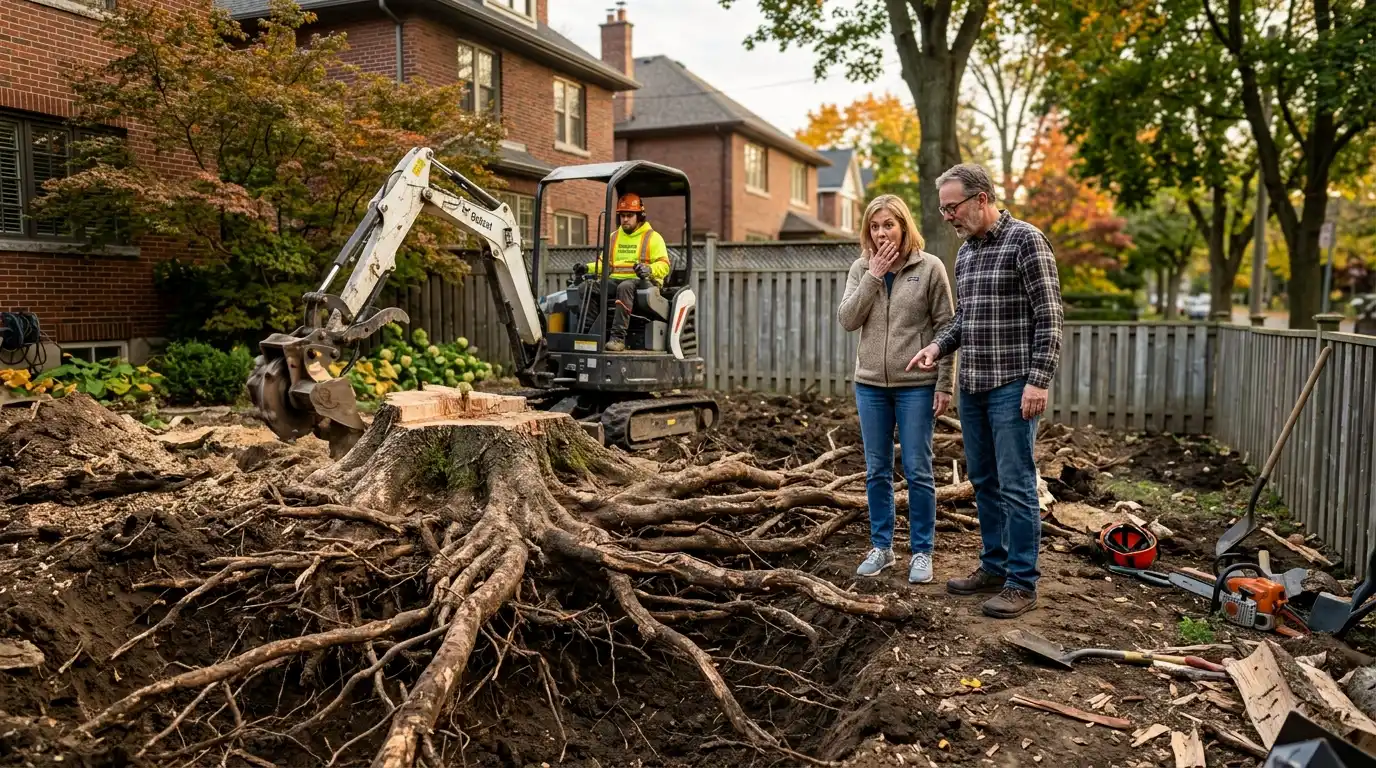
For property owners researching how deep tree roots go in Toronto, the key issues are the applicable rules, site conditions and realistic next steps. Many Toronto homeowners assume tree roots grow straight down several metres below the trunk. In most urban yards, that picture is misleading. Tree roots usually spread outward through the upper soil layers because that is where oxygen, water and nutrients are most available. In compacted Toronto clay, older subdivision fill, narrow side yards, paved lots and heavily altered residential soils, roots often stay much closer to the surface than people expect.
This matters for construction, trenching, grading, driveway work, pipe repairs, patio installation, fence posts, stump grinding and tree removal decisions. It also matters legally because Toronto’s tree and ravine protection rules may apply if work could injure or remove a bylaw-protected tree or natural feature.
Why Toronto Tree Roots Are Usually Shallow
Tree roots need oxygen to function. They are living tissue, not passive underground pipes. In many Toronto residential soils, especially compacted clay fill or disturbed urban soil, oxygen is most available near the surface. Below the better-aerated layer, soil can become dense, poorly drained and difficult for roots to use. That is why many active roots grow laterally rather than deeply.
In natural forest soil with good structure, organic matter and open pore space, some species can send roots deeper. But most residential lots are not undisturbed forest soils. Backyards may have been graded, compacted, filled, paved, trenched, landscaped, irrigated, drained or disturbed many times. The practical result is that roots often concentrate in the upper 30 to 60 centimetres, with many fine feeder roots even closer to the surface.
Root Depth and Spread by Species
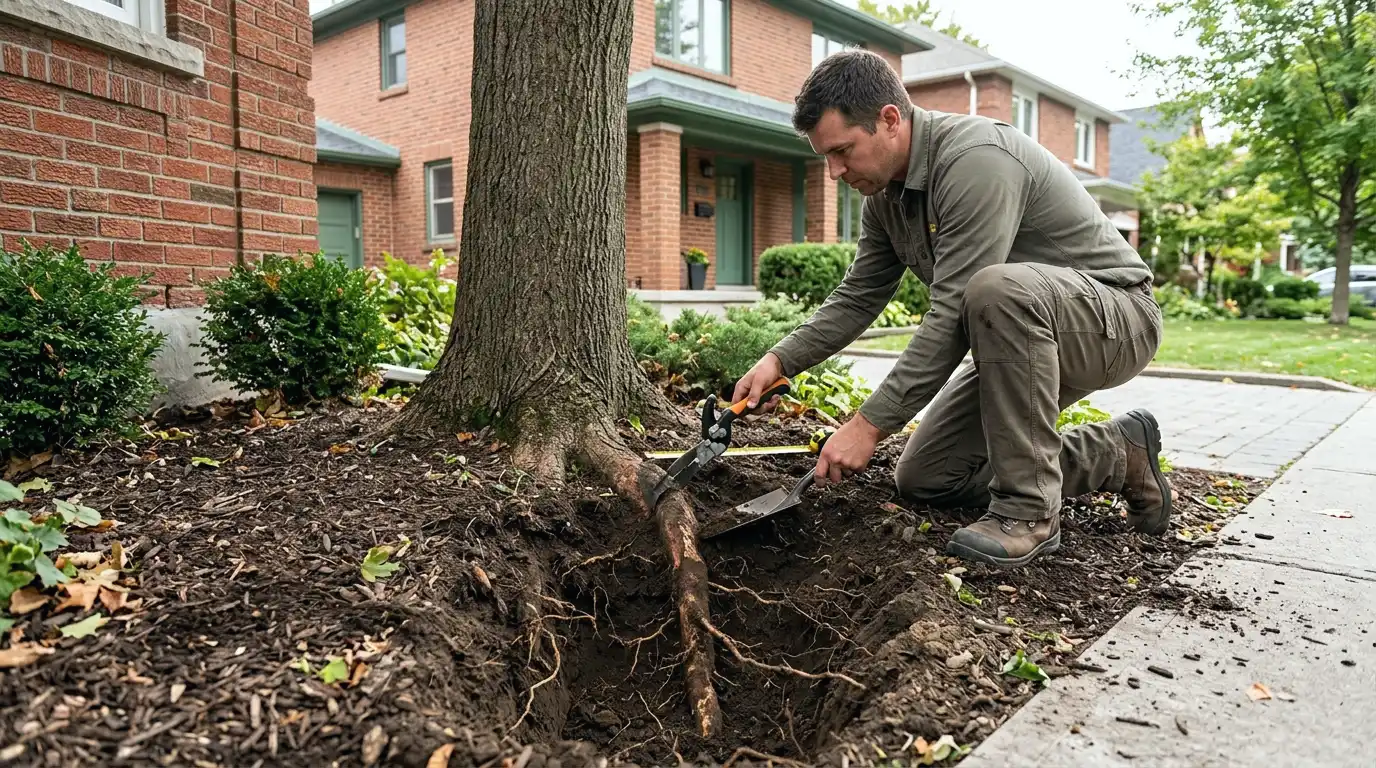
Tree species matters, but site conditions often matter more. Silver maple, Norway maple and Manitoba maple are known for shallow, spreading root systems in many urban settings. These roots may appear at the surface, interfere with lawn maintenance, lift pavement or conflict with hardscaping where soil volume is limited. In Toronto’s older neighbourhoods, large silver maples are especially associated with wide lateral root spread and surface-root conflicts.
Oaks, hickories and some other species can develop deeper structural roots in better soil, especially when young and growing in open, well-drained conditions. Even then, many of the fine absorbing roots that collect water and nutrients still occupy the upper soil layers. A deep-rooting reputation does not mean excavation near the surface is harmless.
For any property-specific decision, the root zone should be reviewed directly by a qualified arborist or qualified professional. A table can help with planning, but it cannot replace site-specific review because soil compaction, drainage, grade changes, prior trenching, pavement, utilities, slope and tree health all influence root location.
Approximate root depth and spread in Toronto urban soils
| Species | Common active root zone | Possible lateral spread | Surface root tendency |
|---|---|---|---|
| Silver maple | Often shallow, commonly within the upper 30 cm to 60cm | Can extend well beyond the canopy dripline on mature trees | Very high |
| Norway maple | Often shallow in compacted urban soil | Can spread widely through lawns and garden beds | High |
| Sugar maple | Often concentrated in upper soil layers in urban settings | Can extend beyond the dripline where soil permits | Moderate |
| Red oak / bur oak | May root deeper than many maples, but fine roots still use upper soil | Can spread widely as trees mature | Low to moderate |
| Basswood | Often concentrated in the upper 30 cm to 60cm | Can spread through usable soil beyond the canopy edge | Moderate |
| White pine | Variable, depending heavily on soil drainage and compaction | Can spread widely in open soil | Low to moderate |
Why Root Depth Matters for Construction and Renovation
Knowing that many active roots are near the surface changes how homeowners should think about construction near trees. A shallow trench, new fence line, driveway replacement, patio base, pool excavation, foundation repair, utility trench or grade change can affect roots even when the work is several metres from the trunk. The tree may not show stress immediately. Symptoms such as thinning canopy, reduced leaf size, branch dieback, early fall colour or decline may appear over later growing seasons.
The City of Toronto regulates injury or removal of bylaw-protected trees and work in protected ravine or natural-feature areas. Construction that cuts roots, compacts soil, changes grade, stores materials in a protection zone or otherwise injures a protected tree can trigger City requirements. Property owners should review the City’s Tree & Ravine Protection information and confirm the site-specific requirements with the City and an appropriately qualified arborist or other relevant professional before work begins.
Root Depth and Pipe Intrusion
Shallow, wide-spreading roots can become relevant when older pipes have defects. Silver maple roots, Norway maple roots and other aggressive urban tree roots may encounter older clay tile sewer laterals, cracked joints, poor seals, moisture leaks or damaged service lines. Roots generally seek water and oxygen. They commonly exploit existing gaps, cracks or weak points rather than breaking sound modern piping on their own.
That distinction matters. A tree root problem around a sewer line is often both a plumbing issue and a tree-location issue. A qualified plumber or drain specialist should inspect the pipe condition, material, joint integrity and repair options. A qualified arborist or qualified tree care professional can discuss tree condition, root impacts, removal considerations where appropriate, and any bylaw or permit-related concerns with the property owner.
What to Do With This Information
If construction, grading, trenching or pipe work is planned near a mature tree, assume the root zone may extend much farther than the trunk suggests. A mature tree can have roots well beyond the canopy edge, especially where soil, water and oxygen are available. Avoid storing materials, driving equipment, cutting roots or changing grade near trees until the situation has been reviewed by qualified professionals.
If the tree may be protected under Toronto bylaw, check the rule before work starts. If the tree is near a property line, public boulevard, ravine, slope, shared boundary, utility corridor or neighbouring structure, ownership and authority should also be confirmed. For public trees, boulevard trees, utility conflicts or immediate hazards, contact the City of Toronto, 311, the utility provider or the relevant public authority first.
Related information: see the stump grinding service page for stump and root-related project considerations.
Frequently Asked Questions
How deep do tree roots typically grow in Toronto?
Most active tree roots are usually concentrated in the upper soil layers where oxygen, water and nutrients are available. In many Toronto residential settings, especially compacted clay or modified urban fill, much of the active root system may be within the top 30 to 60 centimetres of soil. Exact depth depends on species, soil structure, drainage, compaction, available oxygen, grade changes, construction history and site conditions. Property owners should speak directly with a qualified arborist or qualified professional before making construction or removal decisions near tree roots.
Why do tree roots grow horizontally rather than downward in Toronto?
Tree roots grow where conditions support root function. Oxygen, water and nutrients are usually more available near the surface, while compacted clay, poor drainage and low oxygen can limit deeper root growth. This often produces a wide, shallow root system rather than a deep mirror image of the tree canopy. Site-specific conditions should be reviewed directly by a qualified arborist or qualified professional where construction, excavation or tree stability is a concern.
Does knowing root depth help with Toronto construction projects?
Yes. Excavation, trenching, grading, equipment movement and soil compaction can affect active roots even when the work is not directly beside the trunk. Toronto’s tree and ravine protection rules may require permits or supporting documents before injuring or removing a bylaw-protected tree or natural feature. Property owners should confirm requirements directly with the City of Toronto, a qualified arborist, contractor or relevant public authority.
Do silver maple roots cause pipe problems in Toronto?
Silver maple roots are often shallow and wide-spreading, which can increase the chance that roots encounter older sewer laterals, clay tile joints, cracked pipes or poorly sealed pipe connections. Roots usually exploit existing moisture, defects or gaps rather than breaking sound modern pipes on their own. Property owners should discuss pipe condition with a qualified plumber or drain specialist and discuss tree-related concerns with a qualified arborist or qualified tree care professional where appropriate.
Related Guides and Services
- Tree Root Damage to Driveways Toronto
- Tree Root Pipe Intrusion Toronto
- Protect Trees During Construction Toronto
- Tree Growing Into House Foundation
- Arborist Reports
Send Your Tree Request
Planning construction, trenching, grading, driveway work or pipe repairs near a large Toronto tree?