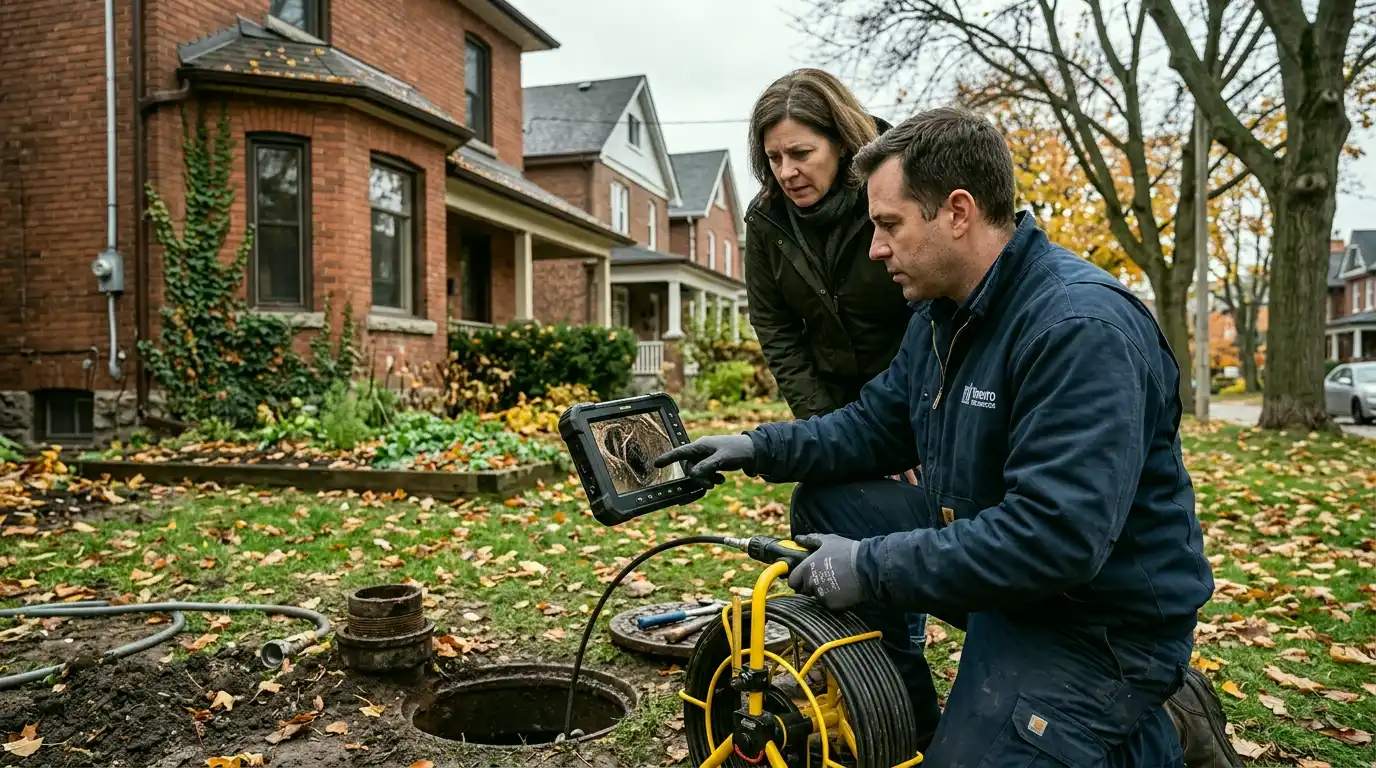
For property owners researching tree root intrusion into pipes in Toronto, the key issues are the applicable rules, site conditions and realistic next steps. Tree root intrusion into sewer and drain pipes is a common concern in older Toronto neighbourhoods, especially where mature trees, clay tile laterals, cast iron pipes, older joints and aging underground infrastructure share the same space. Slow drains, recurring basement backups, gurgling toilets and seasonal sewer odours can have several causes, and roots are only one possibility. The correct starting point is usually a sewer camera inspection by a licensed plumber, followed by a careful review of the tree, pipe condition, City requirements and repair options.
Tree roots usually enter pipes through existing weaknesses rather than crushing intact pipe walls from the outside. Common entry points include older clay pipe joints, cracks in cast iron, separated joints, offset sections, settled pipe, damaged cleanouts or pipe defects that allow moisture and nutrients to escape. Once a small root tip finds the opening, it can grow toward the water inside the pipe and slowly create a larger root mass.
As roots grow inside the line, they can catch paper, grease, soil, wipes and debris. The pipe may still drain for a while, then slow again after each cleaning. This is why a homeowner may experience the same basement drain or sewer backup more than once. The tree itself may look healthy above ground, and the plumbing issue may not be obvious without camera footage.
Older Toronto homes are more likely to have clay, cast iron or older sewer infrastructure that has shifted, cracked or separated over time. A licensed plumber can identify whether the main problem is root intrusion, pipe collapse, bellies in the line, grease buildup, improper slope, joint failure or another plumbing defect.
Which Trees Are Often Associated With Root Intrusion
Large trees with wide-spreading, moisture-seeking roots are often discussed when root intrusion is found near a sewer or drain line. Silver maple is commonly associated with these concerns in Toronto because mature silver maples can develop broad root systems across older residential lots. Norway maple and Manitoba maple may also be involved, depending on tree size, soil, distance from the pipe and pipe condition.
Other large trees, including oaks, elms, lindens and willows, can also be relevant where a pipe already has defects. The key point is that the pipe condition matters. Removing a nearby tree without confirming the plumbing diagnosis can be an expensive mistake, especially if the true issue is a collapsed pipe, failed joint, grease blockage or improperly sloped line.
A qualified arborist may discuss tree species, approximate root-zone context and whether a tree-related report is appropriate. A licensed plumber should handle the pipe diagnosis. The strongest documentation usually starts with camera footage showing exactly where roots or pipe defects are located.
Practical steps for suspected root pipe intrusion in Toronto
- Book a sewer camera inspection with a licensed plumber before assuming the tree is the cause
- Ask for video footage or still images showing the pipe condition and problem location
- Confirm whether the issue is root intrusion, pipe collapse, joint separation, grease buildup, pipe belly or another defect
- Ask the plumber to explain repair options, including cleaning, hydro-jetting, relining, replacement or maintenance cleaning
- If tree removal is being considered, confirm whether the tree may be protected under Toronto’s private tree rules
- Speak directly with a qualified arborist where a tree report or permit-related document may be needed
- Confirm insurance, municipal, plumbing and contractor documentation requirements before work begins
Diagnosis Starts With a Sewer Camera Inspection
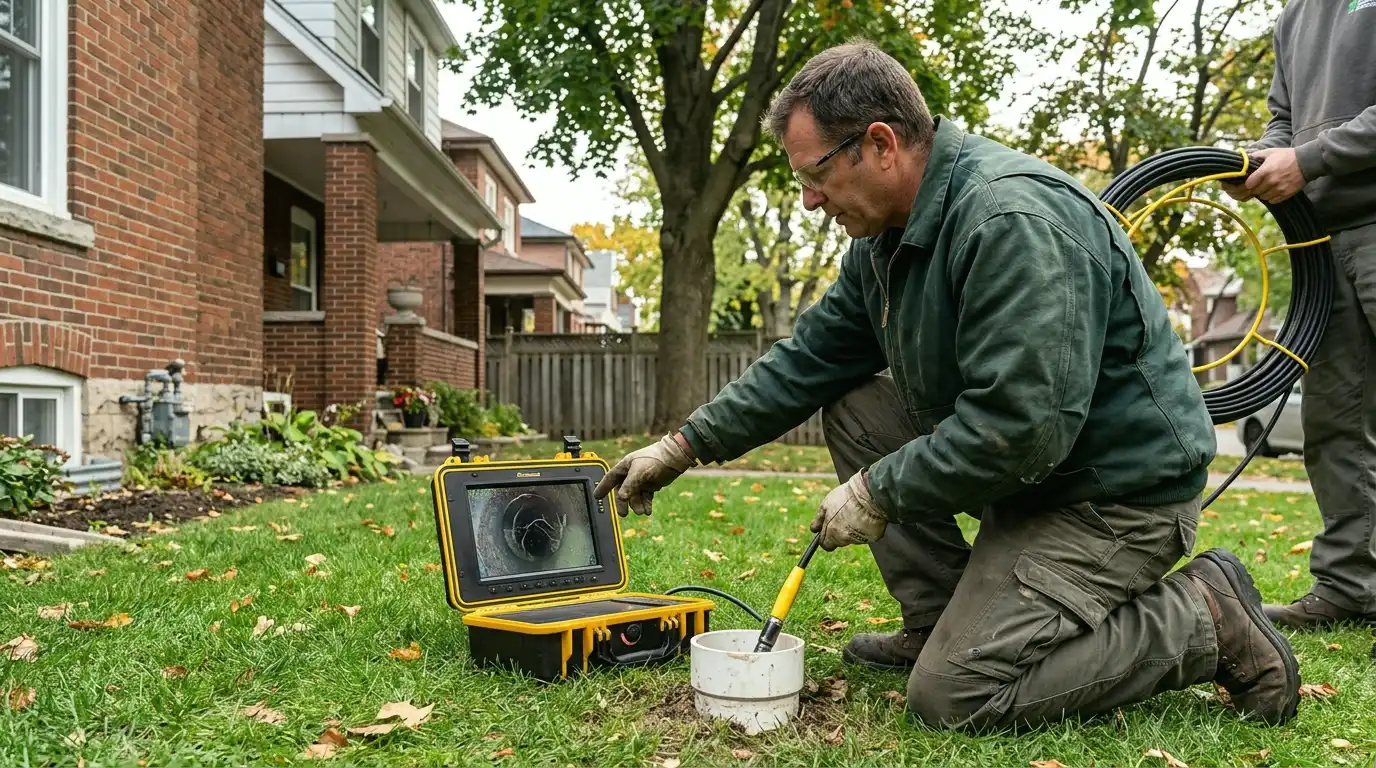
A sewer camera inspection is usually the most reliable way to confirm what is happening inside the pipe. A licensed plumber can run a camera through the cleanout and record the condition of the line. The footage may show root entry, cracks, joint separation, pipe offsets, pipe bellies, grease, debris, collapsed sections or other defects.
Ask the plumber to provide a video file, still photos, written notes or a report identifying the location and nature of the problem. This documentation may be useful for insurance conversations, pipe repair quotes, contractor discussions, qualified arborist review or a City permit inquiry where a protected tree is involved.
Options That May Avoid Tree Removal
Mechanical clearing and hydro-jetting
Mechanical clearing or snaking may remove an immediate blockage, but it may not fix the pipe defect that allowed roots to enter. Hydro-jetting may clean more of the pipe wall and root mass, depending on the pipe condition and the plumber’s equipment. If the pipe is otherwise structurally sound, a plumber may recommend a maintenance schedule instead of immediate excavation or tree removal.
Any cleaning method, interval, cost and risk should be discussed directly with the plumber. Older or fragile pipes may not be suitable for every cleaning approach, and aggressive cleaning can be risky if the pipe is already cracked, offset or partially collapsed.
Pipe relining or pipe replacement
Pipe relining may create a new inner pipe surface without full open excavation where the existing pipe condition allows it. Pipe replacement may be needed where sections are collapsed, severely offset, heavily deteriorated or not suitable for lining. These decisions are plumbing decisions, not tree-service decisions.
If excavation near tree roots is needed, a qualified arborist may be asked to discuss tree-related concerns. Root cutting, trenching, grade changes and soil disturbance can affect tree stability and health, especially near large protected trees.
Root-control treatments and maintenance
Some plumbers may discuss root-control treatments after cleaning. The suitability of any chemical or maintenance product depends on the pipe, location, product label, environmental rules and plumbing professional’s judgment. Homeowners should ask the plumber what is being applied, how often, what it is intended to do, and whether it affects the surrounding tree, soil or pipe materials.
Do not pour unapproved chemicals into drains or around tree roots. Improper chemical use can damage pipes, harm trees, create environmental issues or fail to solve the actual problem.
When Tree Removal May Be Considered
Tree removal may be considered when the plumbing evidence and tree context point to a recurring, serious or unavoidable conflict. Examples may include repeated root intrusion at multiple pipe locations, a pipe replacement that cannot reasonably be completed around major roots, a tree with separate structural or health concerns, or a situation where the pipe and tree conflict cannot be managed through maintenance or repair alone.
Removal should not be treated as the default answer. Removing a tree does not remove the roots already inside the pipe. It also does not repair cracked, collapsed, offset or deteriorated pipe. A plumber should explain the pipe solution, and a qualified arborist may discuss the tree-related implications.
If the tree is protected under Toronto’s private tree rules, City requirements may apply before removal or injury. Toronto protects qualifying private trees at the current Chapter 813 threshold. Plumbing documentation and qualified arborist documentation may be relevant, but the City determines what is required for the tree-permit process. Confirm current requirements before removal or significant root cutting.
City-Owned Trees, Private Trees and Responsibility Questions
Root intrusion can raise ownership and responsibility questions. The tree may be private, City-owned, a boundary tree or located near a boulevard. The pipe may be fully private, partly private, or connected to municipal infrastructure. Do not assume responsibility based only on where branches or roots appear to be growing.
If you believe a City-owned tree may be involved, contact 311 or the appropriate City channel for direction before arranging work that could affect the tree. If the issue involves a private protected tree, review the City’s tree permit rules. If the concern involves an immediate dangerous tree, blocked public access, powerline contact or public safety, contact emergency services, the utility provider, the municipality or the relevant public authority first.
Useful official starting points include the City of Toronto blocked or backed-up basement drain page, the City of Toronto tree and ravine permit guidance, and the City of Toronto dangerous private trees information. These links are provided for general information only.
Insurance and Documentation
Insurance coverage for sewer backups, drain repairs, excavation, tree-related damage or cleanup depends on the homeowner’s policy, endorsements, exclusions, deductibles and insurer documentation requirements. Property owners should confirm documentation requirements directly with their insurer before cleanup, excavation, tree removal or major pipe repair where possible.
Related professional service: See the stump grinding service information for stump and root-related requests.
Frequently Asked Questions
Which trees are often associated with pipe intrusion in Toronto?
Large moisture-seeking trees near older sewer or drain lines may be associated with root intrusion, especially where joints, cracks or defects already exist. Silver maple, Norway maple and Manitoba maple are common Toronto trees with broad root systems, but a licensed plumber’s camera inspection is needed to confirm whether roots are actually inside the pipe.
How do I know if tree roots are in my sewer or drain pipes?
Slow drains throughout the home, recurring basement backups, gurgling toilets or floor drains, sewer odours and repeated blockages can be warning signs. A sewer camera inspection by a licensed plumber is the practical way to confirm root intrusion, pipe cracks, joint separation, pipe collapse or another plumbing issue.
Do I need to remove the tree to solve a root pipe intrusion problem?
Not necessarily. A plumber may discuss mechanical clearing, hydro-jetting, maintenance cleaning, root-control treatments, pipe relining or pipe replacement. Tree removal may be considered in some cases, but it does not remove roots already inside the pipe and may require City review if the tree is protected.
Does removing a Toronto tree because of pipe problems require a permit?
It can. A protected private tree may still require City authorization before removal or significant root injury. Pipe problems do not automatically create an exemption, so confirm the current Chapter 813 process with the City and provide plumbing or arborist documentation if requested.
Related Guides and Request Pages
- Tree Root Damage to Driveways in Toronto
- Tree Growing Into My House or Foundation
- Tree Removal Permit Toronto
- Tree Removal Requests
- Arborist Reports