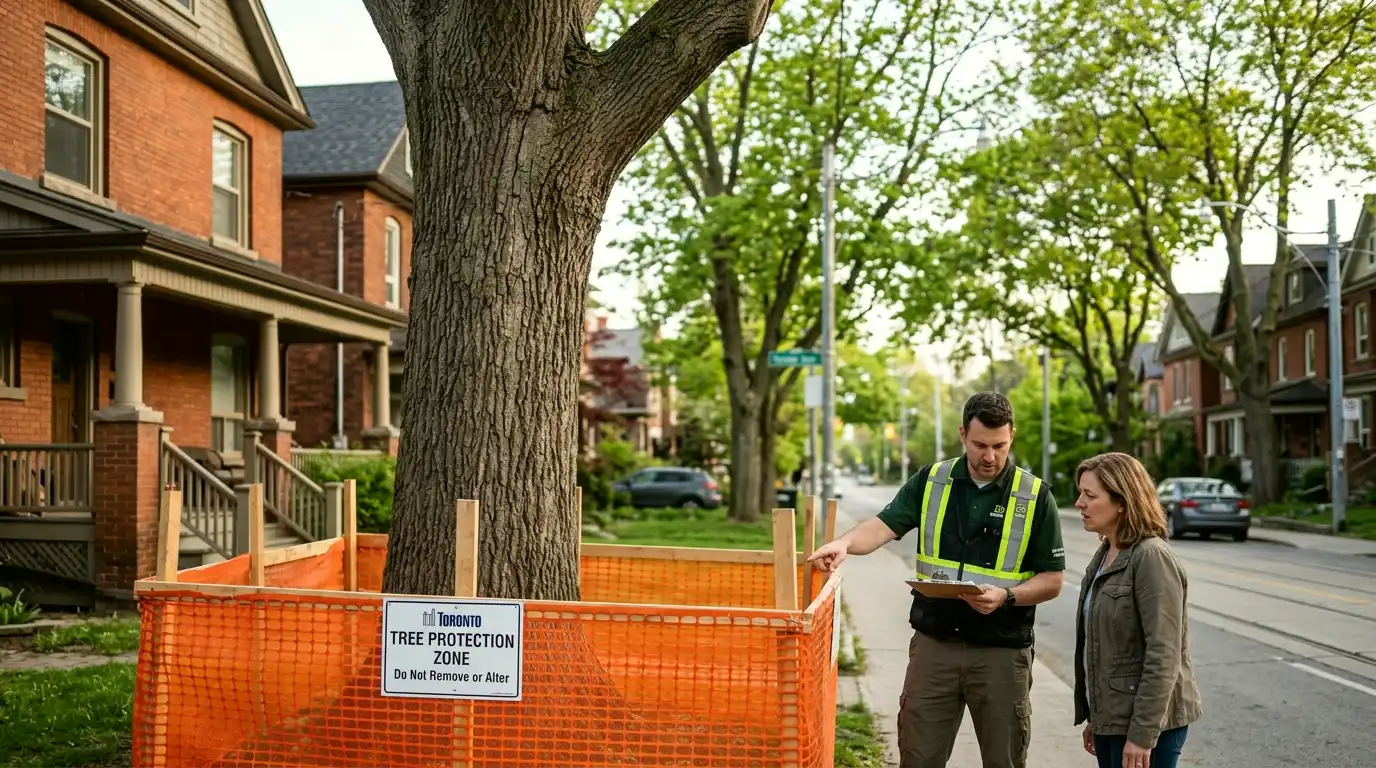
A useful way to approach heritage tree protection in Toronto is to start with property conditions, safety concerns and any local rules that apply. If you are searching for information about heritage trees in Toronto and whether you need special permission to deal with a large or old tree on your property, the answer to your actual question is almost certainly simpler than the term “heritage tree” suggests. The overwhelming majority of large protected trees in Toronto are protected under Chapter 813 of the Municipal Code, which is a dimensional threshold bylaw covering any tree with a diameter of 30 cm or more at breast height. True heritage designation of individual trees in Toronto, meaning formal inclusion as a cultural heritage attribute under the Ontario Heritage Act, is rare and applies to a very small number of sites. Understanding the difference between these two things affects what permit process you need to follow and what level of protection actually applies to the tree in question.
Two Different Things People Call Heritage Trees
When someone in Toronto asks about a heritage tree, they usually mean one of two different things, and the answer is completely different depending on which they mean.
The first meaning is a tree that is just very old and significant, perhaps a large oak that predates the neighbourhood, an elm that has survived Dutch elm disease, or a beech that locals know by name. In this colloquial sense, many large trees in Toronto neighbourhoods are heritage trees. But this colloquial sense does not carry any legal weight. A tree is not protected under any heritage legislation simply because it is old, rare, or beloved by the community. What protects this tree is Chapter 813, which protects it not because it is special but simply because it exceeds 30 cm in diameter.
The second meaning is a tree that has been formally designated as a cultural heritage attribute under the Ontario Heritage Act, typically as part of the designation of a heritage property. Under Section 29 of the Ontario Heritage Act, the City can designate a property as being of cultural heritage value or interest, and the designation bylaw identifies the specific heritage attributes of the property. For some designated properties, a mature tree or grove of trees has been identified as part of what gives the property its heritage significance. These trees carry heritage protection that is different from and in addition to Chapter 813.
How Chapter 813 Actually Works for Large Trees
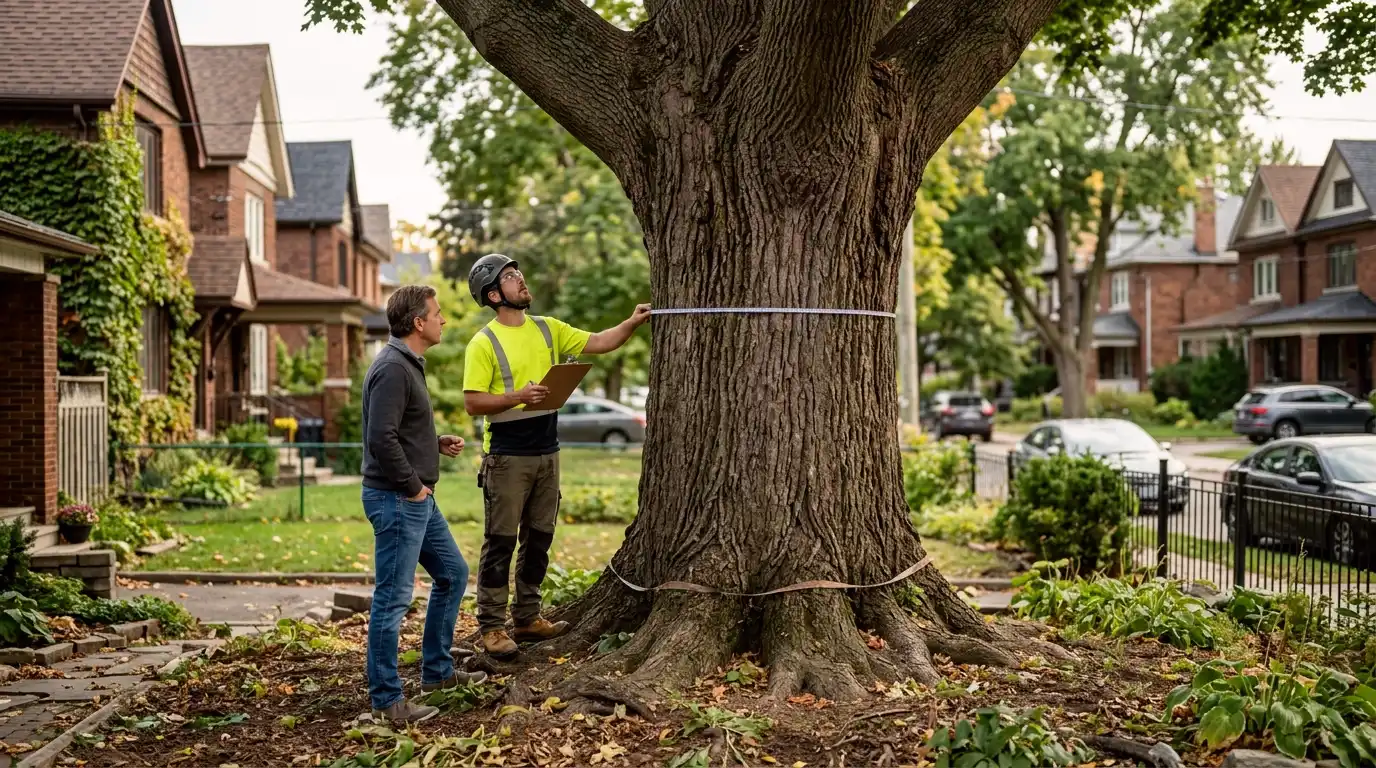
Chapter 813 is the workhorse of Toronto’s tree protection framework. It applies uniformly to all trees meeting the threshold on private residential property regardless of species, age, or heritage significance. The 30 cm DBH threshold means that a significant proportion of mature trees in Toronto’s established neighbourhoods are captured. Rosedale, Forest Hill, Leaside, High Park, and the older sections of Etobicoke and Scarborough have extraordinary concentrations of large trees, many of them over 60 or even 90 cm DBH, all of which require Chapter 813 permits before removal.
For genuinely significant large trees, Chapter 813 provides real protection because the review process is substantive. The Urban Forestry staff who review permit applications bring professional judgment to the decision. A healthy 90 cm red oak that a homeowner wants to remove to expand a deck will receive very different treatment from a dead 35 cm Norway maple. The former will likely require a thorough arborist report, may result in a site visit by City staff, and may not receive a permit if the tree is healthy and the proposed removal is not strongly justified. The latter will be processed routinely as the kind of dead tree removal the bylaw’s permit-exception pathway was designed to handle.
Chapter 813 vs Heritage designation: Which applies?
| Your tree’s situation | Which protection applies? |
|---|---|
| 30cm+ DBH on private residential lot, no heritage designation | Chapter 813 only. Standard permit process. |
| Under 30cm DBH on private residential lot | Neither. No permit required. |
| On a Heritage Register-listed property and identified as a heritage attribute | Chapter 813 PLUS Ontario Heritage Act. Both may apply. |
| In a Ravine or Natural Feature Protection area (Chapter 658) | Chapter 658 in addition to Chapter 813. |
| On City-owned land or in a public park | City-tree protections under Chapter 813 and related City rules; private-tree Article III does not apply in the same way. |
| Old, large, beloved tree but no designation | Chapter 813 only if 30cm DBH or more. |
What True Heritage Designation Means in Practice
Toronto’s Tree By-law defines a heritage tree as a tree designated under Part IV of the Ontario Heritage Act or recognized through the Ontario Heritage Tree Program referenced by the by-law. Chapter 813 also gives heritage-tree status special weight when the City considers a permit.
A property appearing on Toronto’s Heritage Register is not automatically the same as an individually designated property. The City distinguishes listed, non-designated properties from properties formally designated under the Ontario Heritage Act. If a tree is claimed as a heritage attribute of a designated property, read the property’s designation by-law and consult Heritage Planning before work that could affect that attribute.
Heritage review and tree-by-law review can therefore overlap, but they answer different questions. Do not assume that every old tree on a listed property is formally designated, and do not assume that a Chapter 813 permit by itself resolves an Ontario Heritage Act issue.
Big Trees in Toronto’s Historic Neighbourhoods
The neighbourhoods in Toronto with the highest concentration of landmark-scale trees are the pre-war estate neighbourhoods: Rosedale, Forest Hill, the Bridle Path, Teddington Park, Lawrence Park, Swansea, Riverside, and parts of the Beach. These neighbourhoods were developed with large lots and intensive planting of native oaks, maples, and beeches that are now among the largest urban trees in the country.
When a very large tree in one of these neighbourhoods needs to come down, Chapter 813 provides the regulatory framework. A well-prepared arborist report documenting the tree’s condition, the reason for the proposed removal, and the proposed replacement planting gives the Urban Forestry review the information it needs to make a sound decision. Where the tree is genuinely unhealthy or structurally compromised, permits are issued. Where the tree is healthy and the justification is convenience rather than necessity, applications are more likely to face scrutiny or denial. That is exactly how a functioning tree protection bylaw should work.
For a thorough walkthrough of the Chapter 813 permit process itself, see the complete Toronto tree removal permit guide.
Heritage Tree Protection in Toronto: Large or Historic Tree on Your Toronto Property
Where professional documentation is required, a qualified arborist meeting Toronto’s definition can prepare Chapter 813 materials and confirm whether heritage or other protections affect the process. Tree-service requests are available across Toronto neighbourhoods.
The Permit Process for Toronto’s Largest Trees
For the largest trees in Toronto, those in the 80 to 100 cm DBH range that have been growing since before the city existed, the Chapter 813 permit process is the same administratively but different in practice. Urban Forestry reviewers take the size and condition of the tree being removed seriously, and applications for large healthy trees require a stronger justification than applications for stressed or declining trees. An arborist report for a 95 cm DBH red oak in good condition needs to clearly document why removal is the appropriate outcome rather than an alternative management approach. A well-prepared report that honestly addresses condition, structure, and the specific reason removal is proposed gives the application its best chance. A thin report asserting removal without substantive documentation is more likely to trigger a site visit request or a denial.
For truly exceptional trees, some Toronto homeowners have explored whether voluntary heritage designation might provide additional recognition and protection for a tree they want to preserve rather than remove. Heritage Preservation Services can advise on whether a specific tree might be eligible for recognition as part of a cultural heritage landscape designation on the property. This is a relatively uncommon path but one worth knowing exists for the most significant trees.
Frequently Asked Questions
What is the difference between a heritage tree and a significant tree in Toronto?
These terms are often used loosely, but they describe different legal situations. Chapter 813 defines a heritage tree through formal heritage designation or the heritage-tree program referenced by the by-law. Separately, Toronto’s Heritage Register includes both designated properties and listed, non-designated properties; being listed is not the same as formal designation. Most mature private trees are protected because of Chapter 813 or site context, not because they are heritage-designated.
Can I remove a tree that is listed on the Toronto Heritage Register?
The Toronto Heritage Register includes designated properties and may include listed, non-designated properties. If a tree is identified as a heritage attribute in a property’s designation by-law, work affecting that attribute may require Heritage Planning review in addition to any tree permit. A listed property is not automatically subject to the same alteration rules as a formally designated property, so check the property’s actual status and designation documents.
What makes a tree qualify as a significant tree in Toronto?
Under Toronto’s Chapter 813, a tree qualifies as a protected significant tree on private residential property if it has a DBH (diameter at breast height, measured at 1.4 m above the ground) of 30 cm or more. There is no assessment of the tree’s age, species, historical significance, ecological value, or aesthetic importance: the protection threshold is purely dimensional. A 31 cm Norway maple that was planted 20 years ago is as protected as a 90 cm red oak that has been growing since 1850. The protection level under Chapter 813 is the same regardless of the tree’s heritage significance.
Are there any trees in Toronto with stronger protection than Chapter 813?
Yes, in specific circumstances. Trees and natural features in protected ravine areas are regulated under Chapter 658. City-owned street trees are protected under Chapter 813 Article II and other City rules. A tree that is a heritage attribute of a formally designated property can also raise Ontario Heritage Act requirements. These layers are separate from the ordinary private-tree rules in Chapter 813 Article III.
I want to remove a very large, very old tree in my Toronto yard. Is the process different for old-growth trees?
The Chapter 813 process is the same regardless of the tree’s age or historical significance. You apply for a permit, the application is reviewed by Urban Forestry staff, and the decision is based on the criteria in Chapter 813 including the tree’s condition, the reason for removal, and the ability to accommodate required replacement trees. What changes with very large, very old trees is the complexity of the assessment and the strength of justification required. A healthy 120 cm DBH oak will receive more scrutiny than a stressed 35 cm Norway maple. Urban Forestry reviewers are more likely to request additional documentation, request a site visit, or propose alternative solutions such as crown reduction for large trees in good condition. Having a thorough arborist report with honest condition assessment and clear justification for removal is even more important for landmark-scale trees.
Related Guides