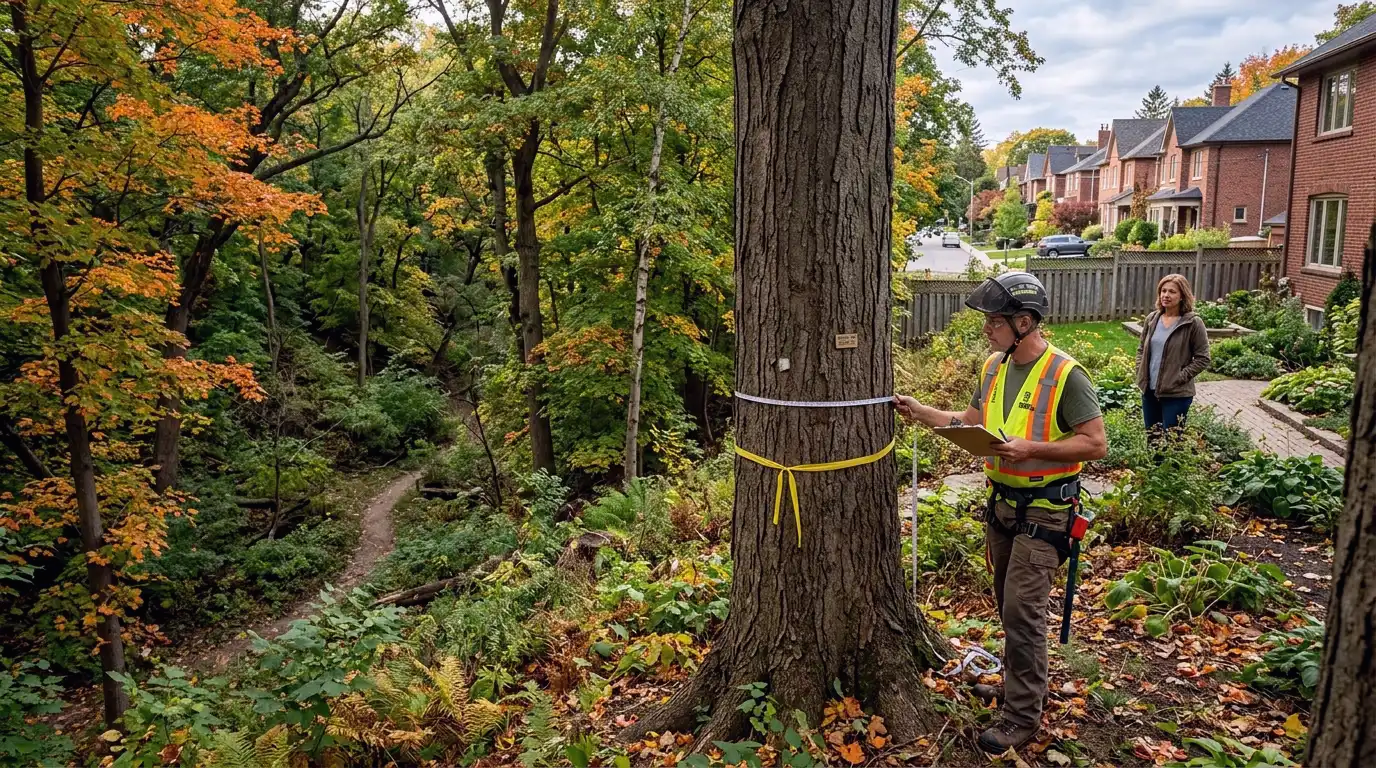
This guide explains the Toronto ravine tree permit, including the approval rules, property conditions and practical steps that can affect the work. Toronto’s Ravine and Natural Feature Protection By-law, Chapter 658, can apply when work is proposed within a designated ravine or natural feature protection area. The important difference is that ravine rules are driven by location, not just tree size. If your property backs onto a ravine, valley, creek corridor, slope, wooded edge, or mapped natural feature in Toronto, removing vegetation, injuring trees, changing grade, placing fill, excavating, or building may require authorization before work begins.
Toronto Ravine By-law – Chapter 658 Key Facts
- By-law: Toronto Municipal Code Chapter 658, Ravine and Natural Feature Protection
- Applies based on: Location within a designated ravine or natural feature protection area
- What it can cover: Tree or vegetation injury/removal, grade changes, fill, dumping, excavation, construction, and other disturbance
- Can overlap with: Chapter 813 if a protected private tree is also involved
- How to check: Use Toronto’s ravine by-law mapping layer or contact the City for help interpreting the boundary
- Other possible authority: TRCA may also be relevant if the property is within a TRCA Regulated Area
Chapter 658 vs Chapter 813: Two Different Rules
Most Toronto property owners hear about Chapter 813 first because it protects private trees based on size and protects City trees. Chapter 658 is different. It focuses on ravine and natural feature areas, so the mapped location of the work matters.
Chapter 658 can restrict injury or removal of trees and natural vegetation within a designated ravine or natural feature protection area. It can also apply to land disturbance such as grading, filling, dumping, excavation, and construction activity within the protected area.
A tree can be affected by more than one rule. For example, a private tree may be large enough to fall under Chapter 813 and also be located within a Chapter 658 ravine protection area. In that situation, property owners should confirm the correct process directly with the City of Toronto or a qualified arborist before arranging work.
How to Know If Your Property Is in a Ravine Area
Toronto provides online mapping that lets property owners check whether a property falls within a Ravine and Natural Feature Protection By-law area. The City advises using the map on a computer, entering the address, and selecting the Ravine and Natural Feature Protection By-law layer from the boundary menu.
Ravine-related properties are common along the Don River valley system, Humber River valley, Rouge River valley, Mimico Creek, Black Creek, Highland Creek, Scarborough Bluffs, and many smaller tributaries and slopes across the city. Neighbourhoods where ravine questions often come up include Rosedale, Moore Park, Forest Hill, Lawrence Park, Leaside, East York, Don Mills, the Beaches, Scarborough, Etobicoke near the Humber, and parts of North York.
If the mapping is unclear, do not rely on a visual guess from the backyard. The protected boundary may extend beyond the obvious slope, treeline, or top-of-bank. Confirm with the City of Toronto, 311, or a qualified arborist before cutting, clearing, grading, dumping, digging, or building.
What Activities May Require Authorization Under Chapter 658
Within a designated ravine or natural feature protection area, City authorization may be required before work starts. Activities that can raise concerns include:
- Removing, cutting, uprooting, killing, or injuring trees or woody vegetation
- Clearing shrubs, undergrowth, or natural vegetation in a protected area
- Cutting roots, damaging bark, or carrying out work that can cause decline over time
- Grading, filling, dumping soil, dumping refuse, or changing land topography
- Excavating, trenching, building, hardscaping, or installing structures in the protected zone
- Construction or landscaping activity that may disturb a ravine or natural feature area
Even work that seems minor on ordinary private property may be regulated if it takes place inside a Chapter 658 area. Before doing yard work, landscaping, or construction near a ravine, confirm whether the mapped protection area applies.
Important: The visible ravine edge is not always the legal boundary. Work on apparently flat residential land can still fall within the protected zone. Check the mapping and confirm requirements before starting work.
The TRCA and Chapter 658
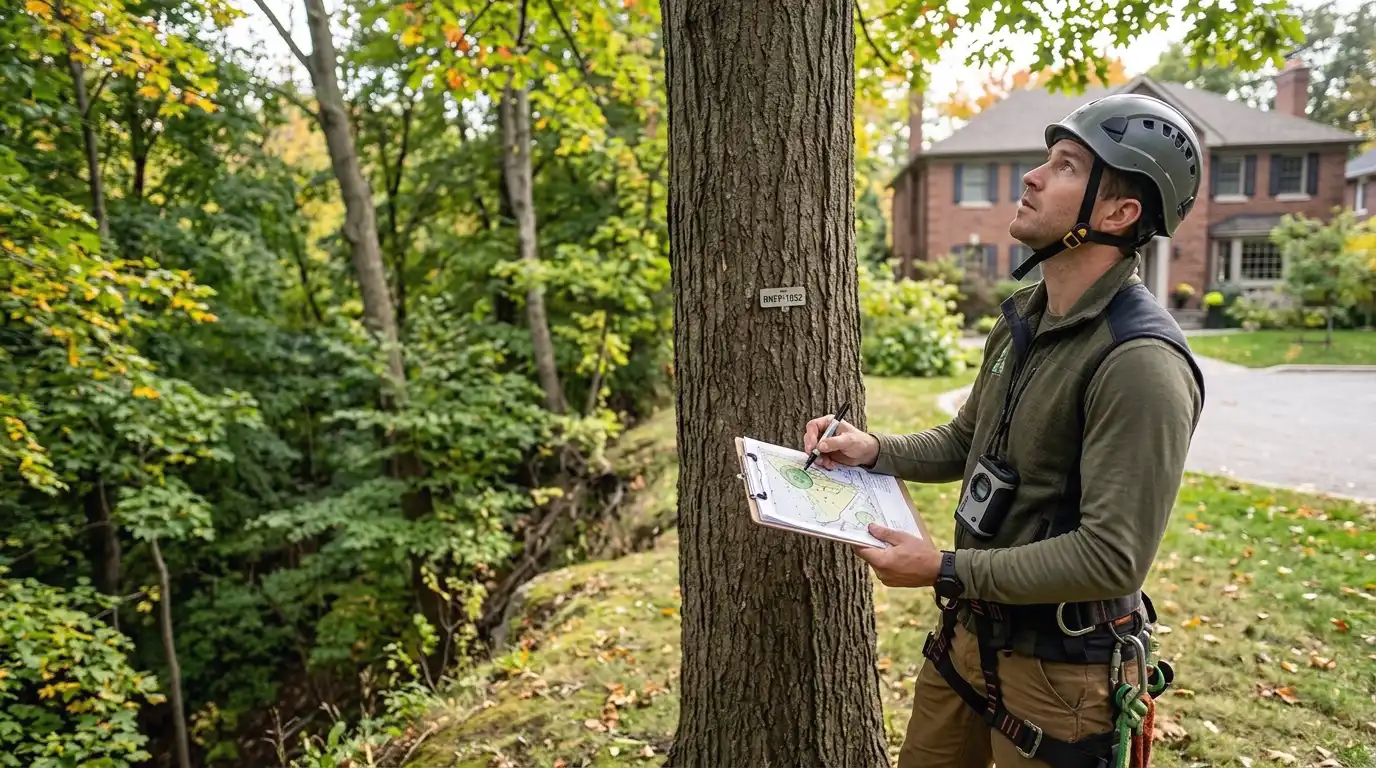
Some Toronto ravine properties also fall within a Toronto and Region Conservation Authority regulated area. Under Ontario Regulation 41/24, TRCA permission can be required for regulated development activities such as filling, grading or building within regulated areas. A Chapter 658 ravine permit and a TRCA permit are separate reviews, so check the proposed activity and mapped area rather than assuming one approval covers both.
City of Toronto Chapter 658 authorization and TRCA permits are not the same thing. Depending on the property and proposed work, both may need to be checked. If your project involves a ravine lot, watercourse, slope, retaining wall, pool, deck, addition, excavation, grading, or fill, review both the City and TRCA context before moving forward.
You can start with the City’s tree and ravine permit guidance and TRCA’s permit application information.
The Authorization Process Under Chapter 658
Ravine-related applications can be more complex than routine private-tree questions because the City may need to consider ecological context, slope stability, erosion, drainage, vegetation, restoration, and land disturbance. The exact process depends on the property, proposed work, documents submitted, and whether other permits or reviews are involved.
Step 1: Confirm the applicable rules
First, confirm whether Chapter 658 applies, whether Chapter 813 may also apply, and whether TRCA or another authority must be checked. This should happen before plans are finalized and before any contractor begins cutting, digging, grading, or moving material.
Step 2: Discuss documentation needs
Ravine-related files may require supporting documents such as an arborist report, site plan, photos, drawings, proposed work description, restoration information, or other materials requested by the City. A qualified arborist or qualified professional may discuss these requirements with the property owner.
Step 3: Submit to the City where required
If City authorization is required, the applicant submits the required materials through the City’s process.
Step 4: Check TRCA if the property is regulated
If the work also falls within a TRCA Regulated Area, a separate TRCA review or permit may be required. TRCA has its own process, fees, review timelines, and document requirements.
Step 5: Follow any conditions before work begins
If authorization is issued, read the conditions carefully before scheduling work. Conditions may deal with timing, access, restoration, erosion control, vegetation, inspections, or other site requirements.
Toronto Ravine Tree Permit: Have a Tree or Project Near a Toronto Ravine
Which Toronto Neighbourhoods Are Most Affected by Chapter 658
Chapter 658 can affect properties across Toronto wherever the city’s ravine, valley, creek, slope, and natural feature systems run close to residential land. Many property owners know they are near a ravine. Others only discover the mapped boundary when planning a deck, retaining wall, addition, pool, fence, grading change, or tree removal.
Neighbourhoods where ravine and natural feature questions often arise include Rosedale and Moore Park near the Rosedale Valley system; Forest Hill, Lawrence Park, and Leaside near tributaries of the Don system; East York and Taylor-Massey Creek areas; Scarborough near Highland Creek, the Bluffs, and Rouge-connected areas; Etobicoke near the Humber River and Mimico Creek; and Don Mills, Thorncliffe Park, and North York properties close to ravine corridors.
Ravine relevance is not based only on what the backyard looks like. The mapped boundary controls whether Chapter 658 may apply, so always check the official map or ask the City for help interpreting the boundary.
Restoration Orders and Why They Matter
Unauthorized work in a ravine or natural feature protection area can create more than a simple replacement planting issue. The City may require restoration of the affected area, and restoration can involve native trees, shrubs, groundcover, erosion control, monitoring, and other site-specific requirements.
The exact restoration scope depends on what was disturbed, where the work happened, and what the City requires. Property owners should not assume that replacing one removed tree with one new tree will satisfy a ravine-related enforcement situation. Ravine restoration is often about ecological function, slope stability, vegetation layers, and long-term establishment.
Consequences of Unauthorized Work in a Ravine Area
Unauthorized cutting, clearing, dumping, grading, excavation, or construction in a Chapter 658 area can lead to enforcement, fines, restoration requirements, project delays, stop-work issues, and added professional costs. The risk is higher because ravine areas are environmentally sensitive and may also involve TRCA or other regulatory review.
The practical rule is simple: confirm before you start. It is easier to check the map, ask the City, and speak with a qualified arborist than to repair damage after unauthorized work has already happened.
Frequently Asked Questions
What is a ravine tree permit in Toronto?
It refers to City authorization that may be required before injuring or removing trees, vegetation, ravines, or natural features within a designated protection area under Chapter 658. Chapter 658 is location-based, so the mapped boundary matters.
How do I know if my property is in a Toronto ravine area?
Use Toronto’s Ravine and Natural Feature Protection By-law map and turn on the ravine by-law boundary layer. If the boundary is unclear, contact the City of Toronto, 311, or a qualified arborist before arranging work.
Can Chapter 658 and Chapter 813 both apply to the same tree?
Yes. A tree can be within a Chapter 658 ravine or natural feature protection area and also be a protected private tree under Chapter 813. Confirm the correct process directly with the City before work begins.
What activities are restricted in a Toronto ravine area?
Activities may include tree or vegetation injury/removal, clearing, grading, filling, dumping, excavation, construction, and other disturbance within the mapped protection area. The exact requirements depend on the property and proposed work.
What happens if you remove a tree in a Toronto ravine without authorization?
The City may take enforcement action, including fines, restoration requirements, and other directions. If TRCA-regulated-area rules also apply, additional review or consequences may be relevant.
Related Guides and Services
Other Permit Guides:
Toronto Chapter 813 |
Richmond Hill |
Markham |
Aurora and Newmarket |
Mississauga