Burlington Tree Rules, Costs and Conservation Halton
Tree services in Burlington can involve pruning, removal, permit checks, hazard assessment and other work depending on the property. Tree work in Burlington can involve more than a simple cut-and-remove decision. The city has private-tree rules, public-tree rules, mature neighbourhood canopy, waterfront properties, creek corridors, conservation authority regulated areas and older residential streets where access can be tight. Removal, pruning, stump grinding or arborist documentation should be considered with those local factors in mind.
Burlington Private Tree Rules in Practice
Burlington homeowners should check the City’s private tree rules before arranging the injury or removal of a tree. The City’s current Forest Protection and Tree Permits guidance identifies private trees under 20 cm in diameter as exempt from private tree permit requirements, while protected private trees may require a permit before injury or removal. Public trees are handled separately and should not be treated as private trees just because they are near a home, driveway, boulevard or sidewalk.
Because by-law details, fees, exemptions and replacement requirements can change, the safest starting point is the City of Burlington Forest Protection and Tree Permits page. Homeowners should confirm whether the tree is private or public, whether the property falls within the applicable planning area, whether the tree diameter triggers permit review, and whether any exemption applies.
If a qualified arborist report, permit-related document or professional opinion is needed, those details must be discussed directly with the qualified arborist.
Burlington’s Tree Diversity
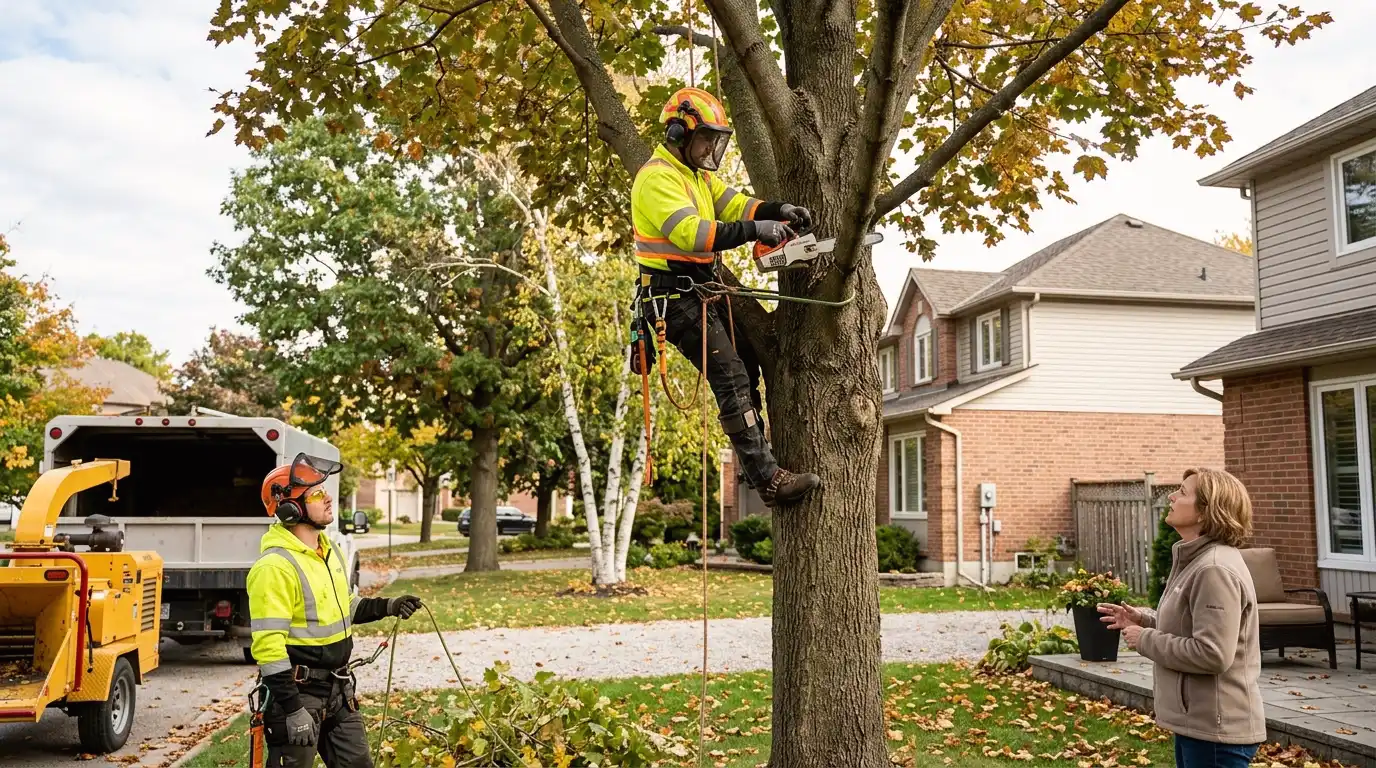
Burlington’s established neighbourhoods include a wide mix of mature trees. Older streets near downtown Burlington, Aldershot, Roseland, Shoreacres, Mountainside and the lakeside areas may include silver maple, Norway maple, red oak, sugar maple, basswood, eastern hemlock, white pine and occasional older American elm specimens. Larger trees in these areas can create shade, privacy and character, but they may also raise concerns about storm damage, dead limbs, roof clearance, root conflict, decay or difficult access.
Tree requests in Burlington’s newer areas, including Alton Village, Orchard, Millcroft and north Burlington subdivisions, can look different. Homeowners may be dealing with builder-planted trees, smaller backyards, tighter side gates, newer fences, pool projects, patio work, drainage issues and stump grinding after a recent removal. In these cases, access and cleanup expectations can affect the qualified tree contractor’s scope and pricing as much as the tree itself.
Conservation Halton in Burlington
Conservation Halton may be relevant for Burlington properties near regulated natural features. Its permitting guidance explains that permission is required for most works in and adjacent to watercourses, flood plains, steep slopes, valleylands, wetlands and shorelines. In Burlington, this can matter near Bronte Creek, Grindstone Creek, Sixteen Mile Creek, Burlington Bay, Lake Ontario shoreline areas, ravine edges and other regulated features.
A conservation authority check is separate from a City tree permit check. A property owner may need to consider both, depending on the tree location, the work proposed and the site’s regulated-area status. The Conservation Halton permitting page is the official starting point for regulated-area questions.
Tree Services in Burlington: Tree Pruning in Burlington
Routine Burlington tree pruning may be requested for deadwood, low limbs, roof clearance, driveway clearance, storm-damaged branches, structural defects or branches growing toward neighbouring property. Pruning still needs judgment. Heavy crown reduction, improper topping, excessive live-branch removal or cutting near the trunk can damage a tree and may create by-law, neighbour or insurance concerns depending on the situation.
Before arranging major pruning of a large protected tree, a boundary tree, a public tree, a tree near power lines or a tree inside a regulated area, homeowners should confirm the applicable requirements. Oak pruning should also be handled carefully because seasonal disease-risk considerations may affect timing. A qualified arborist or tree care professional can discuss the appropriate pruning scope.
Burlington Neighbourhoods and Property Types
Burlington tree requests may come from downtown Burlington, Aldershot, Roseland, Shoreacres, Mountainside, Brant Hills, Headon Forest, Palmer, Tyandaga, Bayview, Millcroft, Longmoor, Tansley, Orchard, Alton Village, Bronte Village, Clearview, Elizabeth Gardens and waterfront properties along Lakeshore Road. Each area has different tree age, lot size, access, utility, conservation and by-law considerations.
For urgent tree concerns, powerline contact, blocked public roads, public-safety issues or immediate danger, contact emergency services, the utility provider, the municipality or the relevant public authority first.
Burlington Tree Removal Cost Factors
Burlington tree removal pricing can vary widely. A small accessible backyard tree is very different from a large mature maple over a roof, a pine with limited access in Aldershot, a tree near hydro lines, a waterfront tree near a regulated feature or a removal that also needs stump grinding. Size, species, lean, decay, rigging needs, drop zone, crane access, driveway access, side gate width, wood disposal, cleanup expectations and site safety all affect the qualified tree contractor’s estimate.
Permit-related costs and qualified arborist documentation costs may also apply where needed. Burlington’s official fee schedule should be checked directly because municipal fees can change. Conservation Halton or other authority-related costs may also be relevant for regulated-area properties. Those items should be confirmed directly with the authority, the qualified arborist or the qualified tree contractor before any work begins.
When Arborist Documentation May Be Needed in Burlington
Arborist documentation in Burlington may be relevant for permit questions, insurance records, neighbour disputes, hazardous-tree concerns, construction planning, conservation authority questions, public-tree clarification or property transactions. The required qualifications and report scope depend on the purpose and the authority requesting the document.
Related service area: See the Service Areas tree service area information for local request coverage.
Frequently Asked Questions
Does Burlington have a private tree by-law?
Yes. Burlington has private tree rules that may require a permit before injuring or removing a protected private tree. The City currently identifies private trees under 20 cm in diameter as exempt from private tree permit requirements, subject to by-law details and official City guidance. Always confirm current requirements directly with Burlington before arranging removal or injury of a tree.
How much does tree removal cost in Burlington?
Pricing depends on tree size, access, condition, hazards, powerline proximity, rigging needs, disposal, stump grinding, site restrictions and whether qualified arborist documentation or permit-related documents are needed.
Can Conservation Halton affect tree work in Burlington?
Yes. Conservation Halton may require permits for certain works in or near watercourses, flood plains, steep slopes, valleylands, wetlands and shorelines. Burlington properties near Bronte Creek, Grindstone Creek, Sixteen Mile Creek, Burlington Bay, Lake Ontario or other regulated features should be checked carefully.
What tree species are common in Burlington’s established neighbourhoods?
Established Burlington neighbourhoods may include silver maple, Norway maple, red oak, sugar maple, basswood, white pine, eastern hemlock and occasional older American elms. Species, condition, size, access and local site restrictions can all affect whether pruning, removal, stump grinding or a qualified arborist report is appropriate.
Related Guides and Request Pages
- Tree Removal Permit in Burlington
- Tree Services in Oakville
- Tree Services in Milton
- Arborist Reports
- Tree Removal Requests