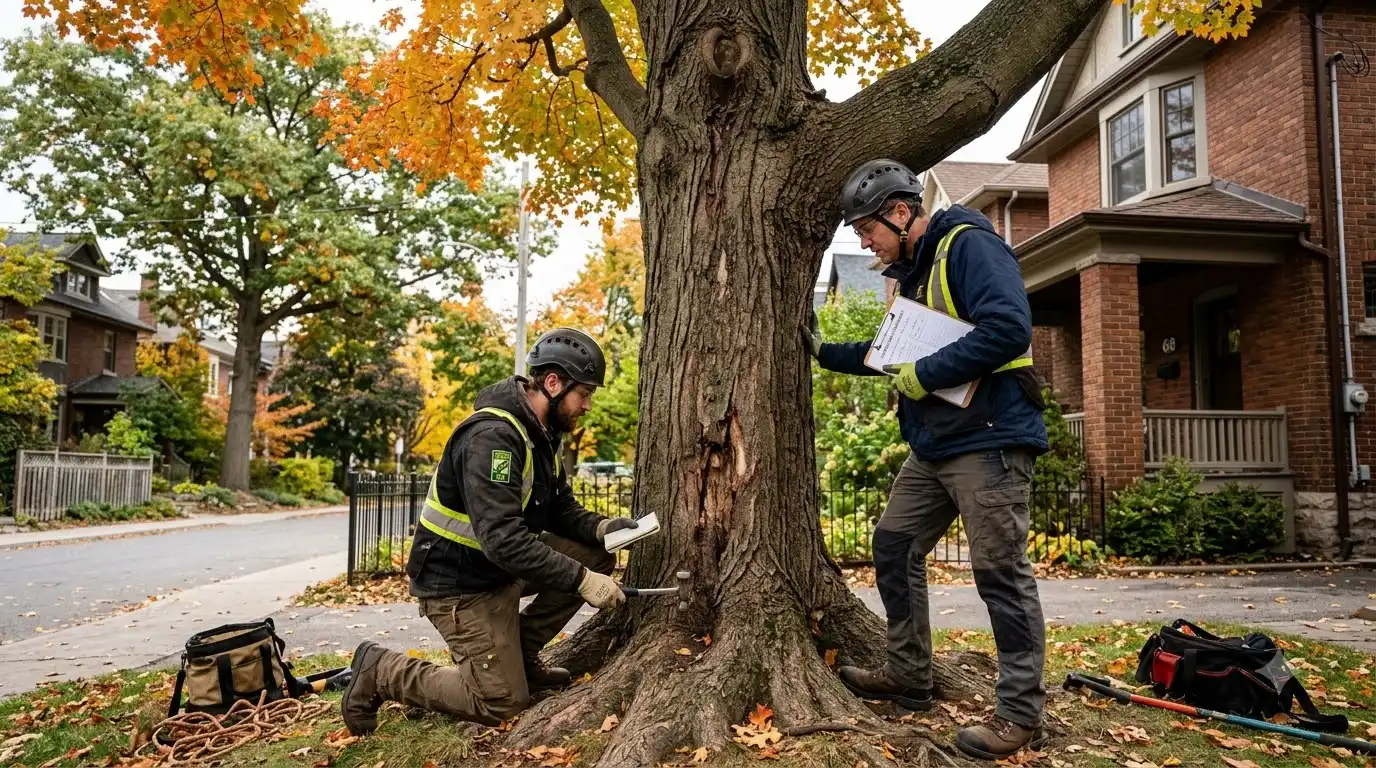
Questions about second opinion on tree removal in Toronto usually come down to the rules, site conditions, risks and practical options for the property. Getting a second opinion on a tree removal quote in Toronto is straightforward and can be valuable when the scope, risk, or price is unclear. Tree removal decisions are often significant and sometimes irreversible: if a tree is removed unnecessarily, it cannot be un-removed. If a genuinely hazardous tree is not removed because the cost seemed high relative to the quoted amount, the consequences can be serious. A second qualified arborist assessment helps you understand whether the first recommendation and price reflect the actual situation, and gives you the confidence to act on the recommendation or appropriately challenge it.
The key to a useful second opinion is obtaining a genuinely separate assessment. If the goal is to compare professional judgments, consider withholding the first quote or recommendation until the second assessor has examined the tree and documented their own findings. Afterward, the two assessments can be compared point by point: tree condition, risk, proposed treatment, scope and assumptions.
After both independent assessments are complete, share both with each arborist and have a follow-up conversation about points of difference. A credible arborist will be able to explain their recommendation with specific reference to what they observed, not just assert that their position is correct. The reasoning behind the recommendation is at least as important as the recommendation itself.
Why Quotes for the Same Tree Differ
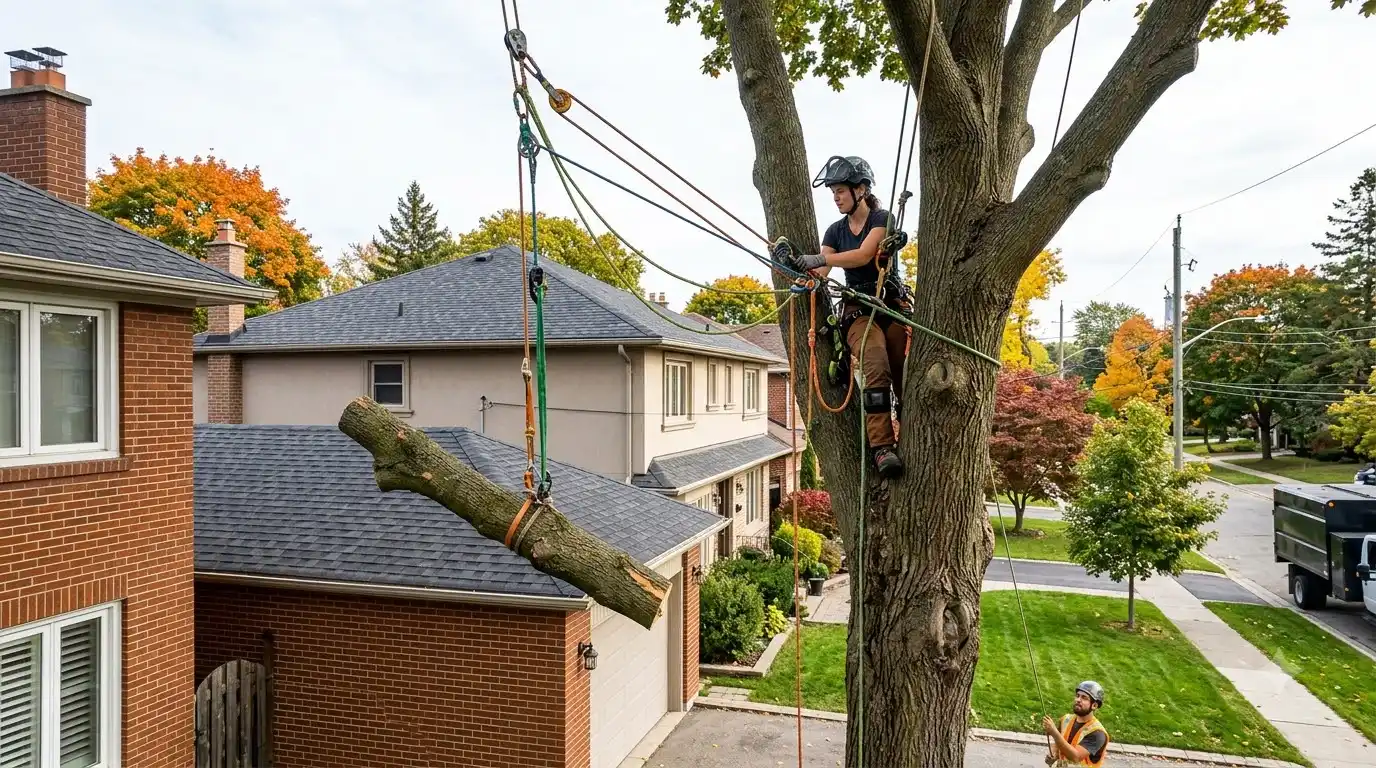
Price differences between two Toronto tree quotes for the same job can have several legitimate explanations. Equipment differences matter: a company with a large aerial lift might complete a crown-pruning job more efficiently and therefore less expensively than a company that would need to use climbing ropes for the same work, or vice versa for a confined space where the lift cannot access. Chip truck capacity affects how many loads a job generates, which affects cost. Crew size and experience affect the job day length. Insurance costs, which are significant for tree work, vary between companies and are absorbed differently into pricing.
Less legitimate sources of price difference include underpricing by omitting scope (leaving the stump, not hauling away wood, not including the permit cost), or overpricing by recommending removal of a tree that can be effectively retained through pruning. Understanding which source of difference applies requires asking specific questions about what each quote includes and why.
What to Compare Between Two Quotes
When two quotes arrive for the same tree job, comparing them effectively requires looking at five specific dimensions. First, confirm whether each arborist addressed the Chapter 813 permit requirement: if one quote includes permit management and one does not, the total project cost comparison is already distorted. Second, review the detailed scope: is stump grinding included, what happens to the wood and chips, are there conditions or assumptions that affect the price? Third, review the recommended approach: climbing rope versus aerial lift, sectional removal versus felling, access route assumptions. Fourth, review insurance documentation: both quotes should be accompanied by CGL and WSIB certificates. Fifth, compare the rationale: both arborists should be able to explain specifically why they recommended what they did based on what they observed.
When Recommendations Disagree
When two qualified arborists assess the same tree and one recommends removal and the other recommends retention with pruning, the appropriate response is to seek the reasoning behind each position, not simply to accept the cheaper or more convenient conclusion. Ask each arborist: what specific structural or health conditions did you observe that support your recommendation? What are the risks of the alternative approach? What would change your recommendation?
For high-consequence trees, where failure would damage a house, injure a person, or create significant liability, the prudent approach when qualified arborists disagree is to commission a formal TRAQ (Tree Risk Assessment Qualification) assessment by a third qualified arborist. A TRAQ assessment follows a standardized ISA methodology and produces a formal risk rating that is more defensible than a standard visual opinion. It costs more, typically $450 to $700, but for a tree over a house that two arborists cannot agree on, the TRAQ assessment is the most reliable path to a documented, defensible conclusion.
Red Flags in Tree Quotes
Several patterns in tree quotes warrant careful scrutiny. A quote that is dramatically lower than others without a clear explanation of why the scope is cheaper should be examined for what is excluded. A quote that recommends removal of every tree assessed without ever recommending retention or pruning as an alternative suggests an assessment approach that is not calibrated to actual tree conditions. A quote provided without a site visit, based only on photographs, is not adequate for any complex tree situation. A company that cannot provide ISA certification numbers and current insurance certificates before the work begins should not be hired regardless of price.
Conversely, a higher price is not automatically a sign of quality or a reason for suspicion. Complex jobs with difficult access, high-consequence targets, or rigging requirements that less equipped companies cannot handle are legitimately more expensive. The price comparison should always be grounded in an understanding of what the scope actually is.
Documenting and Prioritizing After a Toronto Storm
After any Toronto storm event, documentation is the most important immediate action beyond addressing genuine emergencies. Photograph every tree that has visible damage before any work begins. These photographs establish the pre-work condition for insurance purposes, for the Urban Forestry certificate submission, and for your own records. For trees where the situation is ambiguous, a professional assessment visit gives you a clear recommendation on whether immediate action is needed or whether monitoring is appropriate, which avoids both the cost of unnecessary emergency work and the risk of delaying necessary intervention.
Related professional service: Review the Toronto tree removal service information if removal may be part of the next step.
Frequently Asked Questions
How do I get a second opinion on a Toronto tree removal quote?
Contact a second ISA certified arborist independently and book a separate site visit. Do not show the first quote before their independent assessment. After both assessments, compare recommendations, reasoning and prices. If conclusions fundamentally disagree, a third TRAQ assessment resolves the question with a standardized, documented risk rating.
Why would two Toronto arborists give different opinions on the same tree?
Legitimate professional disagreement on tree risk assessment is common because it involves judgment applied to incomplete information. Degree of internal decay, failure probability, and acceptable risk all involve judgment calls where qualified professionals can reasonably differ. Each should be able to articulate specific, evidence-based reasoning for their recommendation.
Is it worth paying for a formal TRAQ tree risk assessment in Toronto?
Yes, for high-consequence situations: large trees over houses, insurance or legal documentation, or disputed assessments between two arborists. A TRAQ assessment follows the ISA’s standardized methodology and produces a formal risk rating that is more defensible than a standard visual opinion. Typically $450 to $700 for a single-tree assessment.
What should I look for when comparing two Toronto tree quotes?
Five things: whether the Chapter 813 permit is included in scope, the detailed work scope, the equipment and access approach, insurance documentation for both companies, and the specific reasoning behind the price and recommendation. Price alone is a poor guide. A dramatically cheaper quote usually omits scope. The reasoning behind the recommendation matters as much as the price.
Related Guides and Services
- ISA Certified Arborist vs General Tree Company
- Hiring a Tree Service in Toronto
- How to Read a Tree Removal Quote Toronto
- Hazardous Tree Identification Toronto
- Arborist Reports
Get a Free Estimate
For a second opinion, ask for a separate site assessment with the findings, assumptions and recommended next steps documented clearly enough to compare with the original quote or report.