
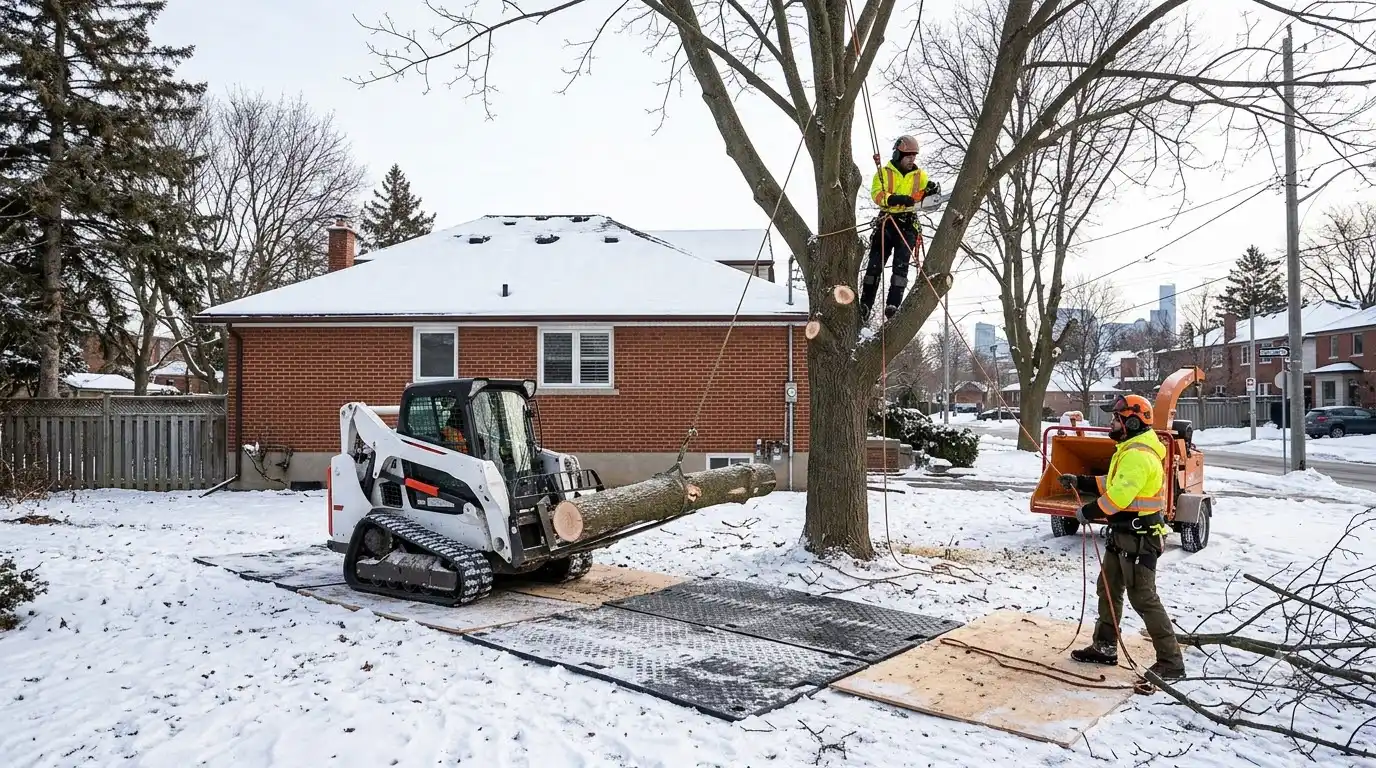
The practical issues around winter tree removal in Toronto include tree condition, property context and any rules that affect the work. Tree removal can take place in Toronto during winter when a qualified tree care professional determines that the site, weather, access, and safety conditions are suitable. Winter is not automatically a bad time for removal. In some cases, frozen ground may help protect soft lawns, bare deciduous canopies can make structure easier to see, and lower seasonal demand may make scheduling conversations easier with qualified tree contractors.
The Frozen Ground Advantage
Many Toronto yards have clay-heavy or compacted residential soils, especially in older parts of North York, Etobicoke, Scarborough, East York, and midtown neighbourhoods. During wet spring or fall conditions, repeated foot traffic, dragging brush, moving wood, or positioning equipment can increase the risk of lawn rutting and soil disturbance. In colder winter weather, firm frozen ground may provide better support and reduce surface damage, depending on the depth of frost and the actual site conditions.
This is one reason some homeowners prefer winter timing for tree removal requests on lawn-sensitive properties. A frozen yard may be easier to protect than a wet spring yard, but it is not a guarantee. Snow cover, thaw cycles, ice, drainage, slope, underground services, access routes, and the contractor’s equipment choices all matter. Property owners should ask the qualified tree contractor to explain the proposed access route, lawn protection plan, wood handling, cleanup terms, and any areas that could still be affected.
In Toronto, the most reliable frozen-ground conditions often occur in mid-winter rather than early winter. Late November and December can still bring wet or partially thawed ground, while March can shift quickly into soft thaw conditions. Property owners who care most about lawn protection should discuss winter timing directly with the qualified tree contractor before approving the work.
The Bare Canopy Advantage
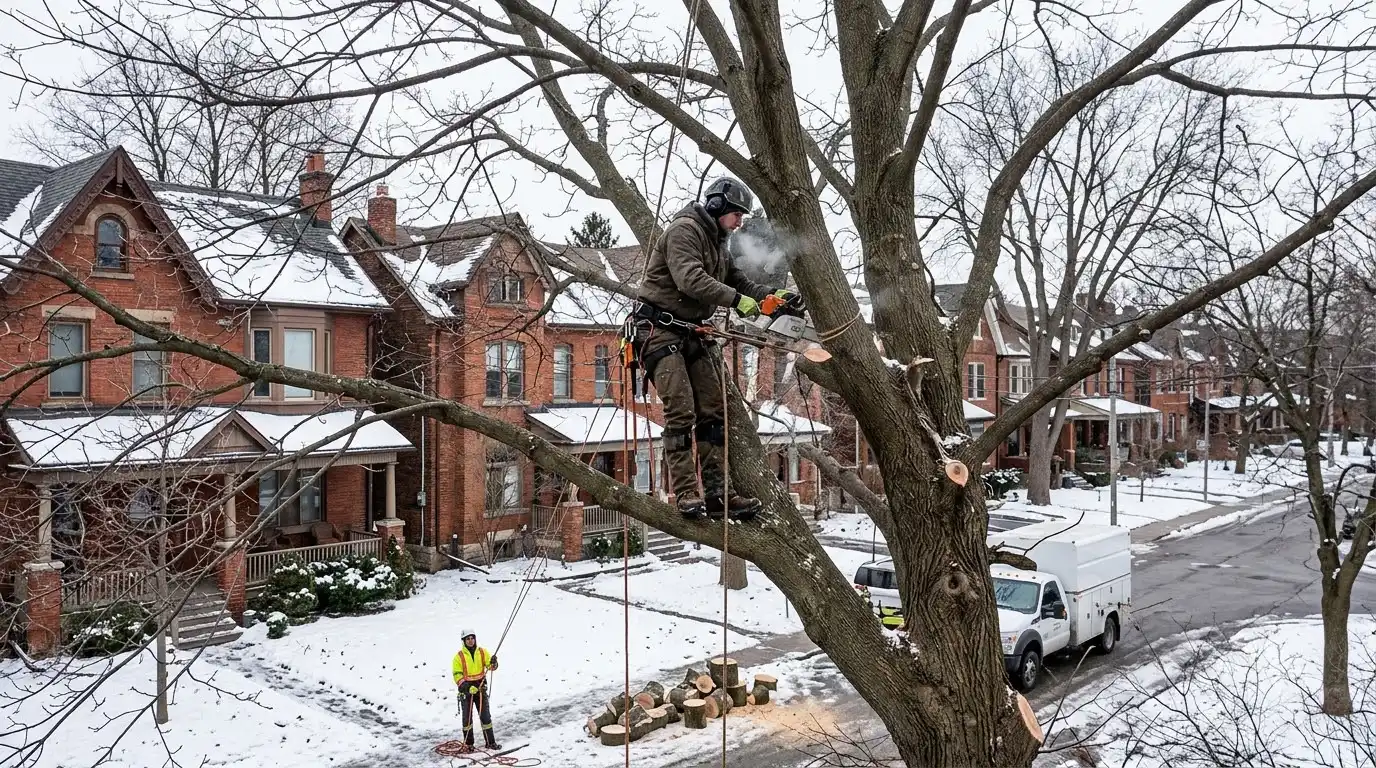
Winter leaf drop can make deciduous trees easier to view. Without leaves, large limbs, branch unions, hangers, decay openings, included bark, broken limbs, and clearance issues may be more visible. This can help a qualified arborist or qualified tree care professional explain the likely work approach, access limitations, and safety considerations more clearly during a site review.
Bare branches can also reduce the amount of leafy material that must be handled compared with summer. That may affect debris volume, job planning, and cleanup conversations. It does not automatically mean the job will be cheaper or easier, because every tree is different. Height, trunk diameter, lean, nearby structures, overhead lines, fences, sheds, garages, pools, garden beds, access width, snow, ice, and temperature can all influence the work plan and contractor pricing.
Winter tree removal in Toronto: advantages and considerations
- Frozen ground may reduce rutting risk when the frost is firm enough to support activity.
- Bare deciduous canopies can make branch structure and defects easier to see.
- Lower seasonal demand may make it easier to discuss scheduling with qualified tree contractors.
- Toronto Chapter 813 permit rules still apply to protected private trees year-round.
- Oak trees require special care because oak wilt risk is connected to fresh wounds during the active season.
- Stump grinding may be possible in winter, but frozen ground, snow, ice, access, and utility marking can affect timing and results.
- Extreme cold, ice loading, snowstorms, and unsafe access can delay work at the qualified tree contractor’s discretion.
The Oak Wilt Consideration
Oak trees deserve extra caution. The City of Toronto advises against pruning oak trees during the growing season from April 1 to October 31, and the Canadian Food Inspection Agency advises not pruning oak trees between April and November because fresh wounds can increase oak wilt risk. Even though removal is different from routine pruning, oak work should still be discussed carefully with an ISA Certified Arborist.
If an oak tree is dead, hazardous, storm-damaged, or interfering with an approved project, the timing and documentation should be reviewed directly with a qualified arborist, the City of Toronto, and any other relevant authority where applicable.
Chapter 813 in Winter
Toronto’s private tree protection rules do not pause in winter. The City of Toronto explains that a permit is required to remove a private tree that is 30 cm in diameter or greater. That requirement should be checked before any removal is approved, regardless of whether the work is planned for January, April, July, or November.
Property owners should review the City’s tree and ravine permit application information and confirm whether their tree is protected. Where an arborist report or permit-related document is needed, an ISA Certified Arborist may offer that service directly to the property owner.
For trees that appear dead, diseased, hazardous, or storm-damaged, property owners should still confirm the correct pathway directly with the City of Toronto or a qualified arborist. In urgent situations involving powerlines, blocked public roads, immediate danger, or public property, property owners should contact emergency services, the utility provider, the municipality, or the relevant public authority first.
What Changes in Winter Operations
Winter tree work can involve different site and safety conditions than warm-weather work. Cold starts, snow cover, ice, wind, frozen gates, slippery paths, shorter daylight, and equipment limitations may affect how a qualified tree contractor schedules and performs the work. A safe work plan may need different timing, access preparation, or cleanup expectations than the same tree would require in summer.
Snow on the ground is not always a problem, but ice on branches, heavy snow loading, and freeze-thaw conditions can change the risk profile. If a winter storm has damaged a tree, the property owner should keep clear of hanging limbs, cracked trunks, leaning trees, and any area near wires. For utility conflicts or public hazards, the utility provider, City of Toronto, emergency services, or the relevant public authority should be contacted before any private contractor is asked to attend.
Stump Grinding in Winter
Stump grinding may be possible in winter, but the result depends on site access, snow cover, frost depth, stump size, root flare, nearby hardscaping, and underground utility concerns. Frozen ground can make surface access cleaner in some yards, but it can also make grinding, cleanup, backfilling, and restoration more difficult. Property owners should ask the qualified tree contractor whether stump grinding is included, how deep the stump will be ground, whether chips are removed, whether backfill is included, and whether the area is suitable for replanting afterward.
Frequently Asked Questions
Can trees be removed in winter in Toronto?
Yes, tree removal work can take place in winter in Toronto when a qualified tree contractor determines that site, weather, access, and safety conditions are suitable. Winter may offer practical advantages such as frozen-ground support, reduced leaf volume on deciduous trees, and clearer branch visibility. Toronto’s Chapter 813 private tree permit rules still apply in winter.
Does tree removal damage my lawn in winter in Toronto?
It depends on the actual ground conditions. Firm frozen ground may reduce rutting risk, while wet, thawing, or partially frozen soil may still be vulnerable to lawn damage. Any lawn protection plan, equipment route, ground protection method, cleanup terms, and restoration responsibility must be discussed directly with the qualified tree contractor before work is approved.
Is it harder to grind stumps in winter in Toronto?
Winter stump grinding may be possible, but deeply frozen soil, snow cover, ice, access limits, and underground utility concerns can affect timing, grinding depth, equipment use, and cost. Property owners should confirm timing, depth, cleanup, utility marking, pricing, and site conditions directly with the qualified tree contractor.
Are there species that should be handled in a specific season in Toronto?
Oak trees require special care because oak wilt can spread through fresh wounds during the growing season. Official guidance warns against pruning oak trees during the active risk period. If an oak tree requires removal or urgent work, property owners should discuss timing, risk, and proper handling directly with an ISA Certified Arborist or the relevant public authority where applicable.
Related Guides and Services
- Late Fall Tree Removal in Toronto
- Fall Tree Pruning in Toronto
- Tree Removal Permit Toronto
- Oak Wilt in Ontario
- Tree Removal Requests