
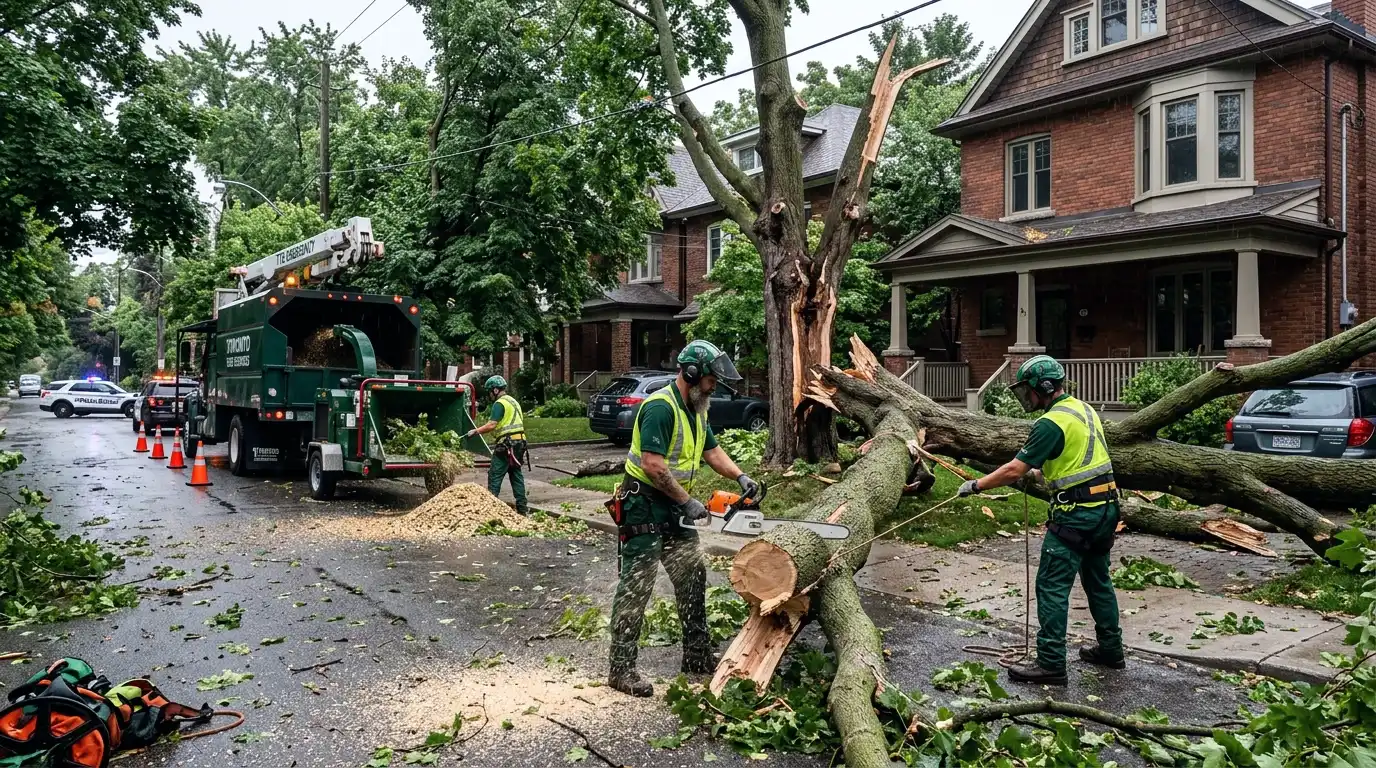
For property owners researching emergency tree removal in Toronto, the key issues are the applicable rules, site conditions and realistic next steps. When a tree falls in Toronto, the first priority is not cleanup. It is safety. Keep people, pets, and vehicles away from the tree, especially if branches are near wires, the tree is resting on a roof, or the trunk is suspended under tension. Once the area is safe enough to document from a distance, take photos for insurance and contact the right authority or qualified professional based on the situation.
Step One: Assess the Immediate Hazard
Before anything else, look for power lines, blocked access, structural contact, hanging limbs, or a tree that is still shifting. If the fallen tree is touching or near electrical lines, do not approach it, do not touch the tree, and do not let anyone walk near the area. A wet tree, wet ground, metal fence, vehicle, or ladder can become dangerous if electricity is involved. If there is immediate risk to life, call 911 first.
If the issue involves a City-owned tree or a fallen tree blocking a public sidewalk or road, contact 311. For a dangerous private tree, keep people away, advise the property owner where relevant, and arrange assessment by a qualified arborist; Toronto says 311 can investigate dangerous private-tree concerns, but private-tree maintenance remains the property owner’s responsibility.
Step Two: Document Before Cleanup
Insurance documentation is often easiest before branches are cut and moved. If it is safe to do so, photograph the full scene from multiple angles before cleanup begins. Include the full fallen tree, the root plate or break point, visible damage to structures, fences, vehicles, sheds, garages, walkways, and the surrounding area.
If the tree came from a neighbouring property, document the origin point from your side where safely visible and record the date and time of discovery. Do not trespass or argue at the scene. Contact your insurer directly and ask what documentation they want before major cleanup begins. If there is structural damage, your insurer may want to inspect or advise before the site changes.
Emergency documentation checklist:
- Photographs of the full fallen tree from several safe angles
- Close-up photos of the root ball, trunk failure, or break point where visible
- Photos of damage to structures, fences, vehicles, landscaping, sheds, or garages
- Date and time the damage was discovered
- Weather notes or storm details if relevant to an insurance claim
- 311 service request number if the City is contacted
- Copies of any contractor estimate, invoice, work record, or arborist documentation where provided
- Insurer instructions before major cleanup where safe and practical
Step Three: Request Qualified Tree Help Where Needed
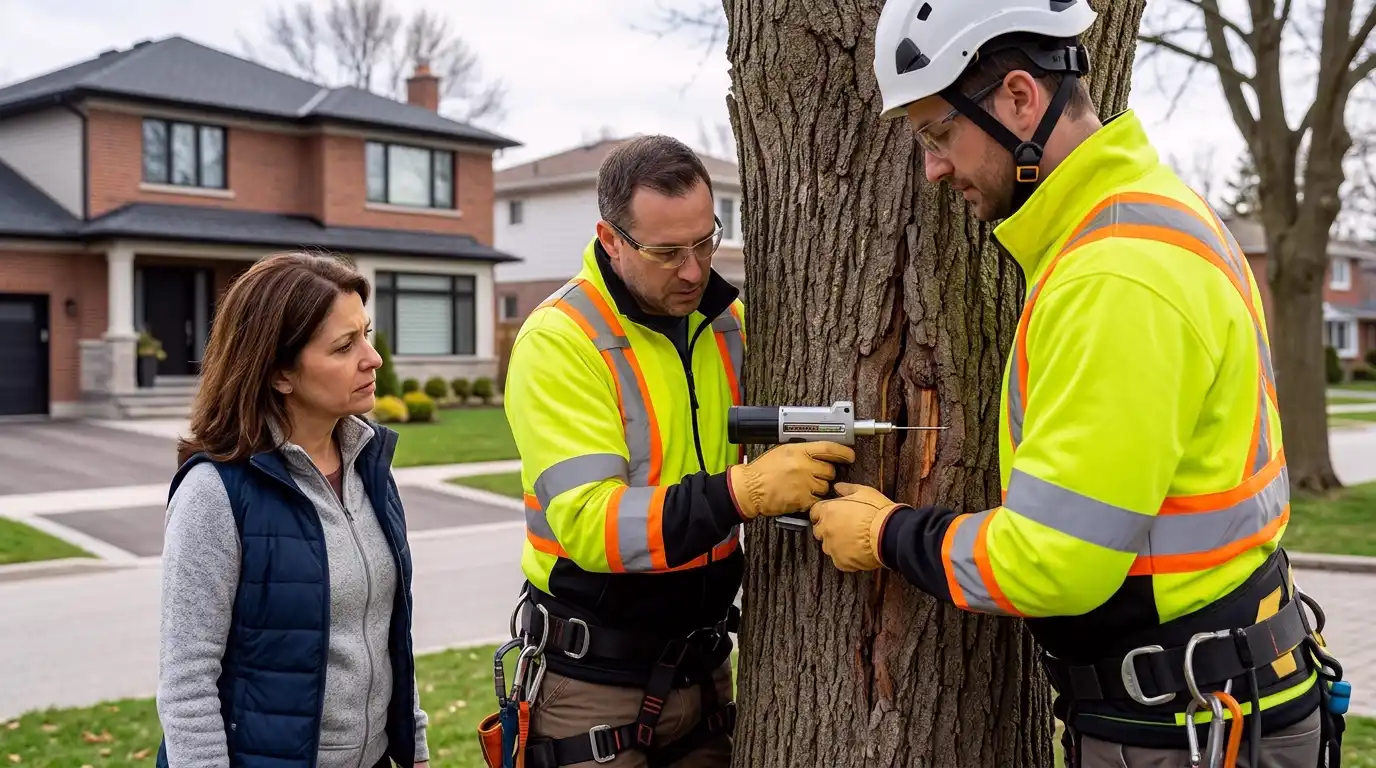
Once immediate power-line and life-safety issues have been addressed, the next step is to describe the private-tree situation clearly. Useful details include the approximate size of the tree, what it fell on, whether the driveway or entrance is blocked, whether there are hanging limbs, whether the root plate lifted, and whether access for equipment is limited.
During major storms, qualified tree contractors may prioritize active hazards first, such as trees on homes, blocked access, suspended limbs, trees on vehicles, or trees creating public-safety concerns. A tree that is fully on the ground and not touching a structure may still need cleanup, but it may not be as urgent as an unstable tree still under load.
Emergency Tree Removal in Toronto: Toronto Emergency Tree Permit Rules
Toronto’s storm-damage guidance says an imminently hazardous private tree may be removed without a standard permit and asks owners or arborists to photograph the condition and advise 311. The City’s general permit page also uses a permit-exception confirmation process and says confirmation should be received before work unless immediate tree work is required to eliminate a dangerous situation. In a true immediate hazard, safety comes first; otherwise, use the current City exception process before removal.
If the tree is damaged but not an imminent hazard, normal tree and ravine permit requirements may still apply. Toronto generally requires a permit to injure or remove a bylaw-protected private tree, City tree, ravine, or natural feature. A fallen or unstable tree in a ravine or natural feature area can also raise separate restoration or authorization questions.
For more on Toronto’s general tree permit process, see the tree removal permit Toronto guide. For damaged but still-standing trees, see the storm tree damage guide.
After the Emergency: What Comes Next
Once the immediate hazard is cleared, there may still be follow-up steps. If a stump remains, stump grinding may be discussed later once the site is safe and any utility-locate or access issues are clear. If the fallen tree created a hole, damaged landscaping, or affected drainage, the qualified tree contractor may discuss cleanup or site restoration terms with the property owner.
If the tree provided major shade, privacy, wind protection, or cooling, replacement planting is worth considering early. Replacement requirements depend on City rules, hazard status, property location, permit conditions, and whether the tree was protected. If the tree was in a ravine or natural feature area, restoration requirements may also need to be checked.
A qualified arborist may discuss replacement planting options.
Tree Down or Blocking Access?
Power Lines, Roads, and Public Access
If a tree or branch is in contact with power lines, stay back and contact the appropriate electrical utility before anyone approaches. Do not attempt to cut, pull, lift, or move the tree. Do not assume the line is inactive because the lights are still on or because the branch looks dry.
If a fallen tree blocks a public road, sidewalk, or other public access, contact 311. If the hazard is on private property and affects only private access, the property owner may need to arrange cleanup with a qualified tree contractor. During large storm events, public hazards and active life-safety situations should be treated first.
Neighbour Tree and Liability Questions
If a neighbour’s tree fell onto your property, or your tree fell onto a neighbour’s property, document the condition and contact your insurer. Responsibility can depend on whether the tree was healthy, visibly dead, previously reported as dangerous, storm-damaged, or negligently maintained. These are insurance and legal questions, not tree-service promises.
Keep communication calm and written where possible. Take photos, record the date and time, avoid moving evidence until it is safe and properly documented, and speak with your insurer before major cleanup if there is damage.
Frequently Asked Questions
Does emergency tree removal in Toronto require a permit?
For a true imminent hazard, Toronto’s storm guidance says the tree may be removed without a standard permit and asks owners or arborists to photograph the condition and advise 311. The City’s general permit page also provides a permit-exception confirmation process and requires confirmation before work unless immediate action is necessary to eliminate a dangerous situation. If the tree is not an imminent hazard, normal tree and ravine rules may apply.
My tree fell on my neighbour’s property. Who is responsible?
Responsibility can depend on the tree’s condition, ownership, prior warnings, damage location, and insurance coverage. Contact your insurer directly and document the scene before cleanup where safe.
How quickly can emergency tree removal happen in Toronto?
Timing depends on qualified tree contractor availability, storm volume, access, electrical hazards, tree size, equipment needs, and site risk.
Should I call Toronto Hydro or 911 before requesting tree help?
If there is immediate danger to life, call 911 first. If a fallen tree is touching or near power lines, stay away and contact the electrical utility before anyone approaches. Do not touch branches, vehicles, fences, ladders, or wet ground near possible energized lines.
What should I document for an insurance claim after emergency tree damage?
Take photos from multiple angles showing the tree, root plate or break point, damage to structures, vehicles, fences, and surrounding property. Note the date and time, keep receipts, and contact your insurer directly to confirm what documentation they require.
Related Guides
- Storm Tree Damage Toronto: Pruning vs Removal
- Dangerous Tree Assessment Toronto
- Home Insurance Tree Removal Toronto
- Tree Removal Permit Toronto
- Urgent Tree Requests