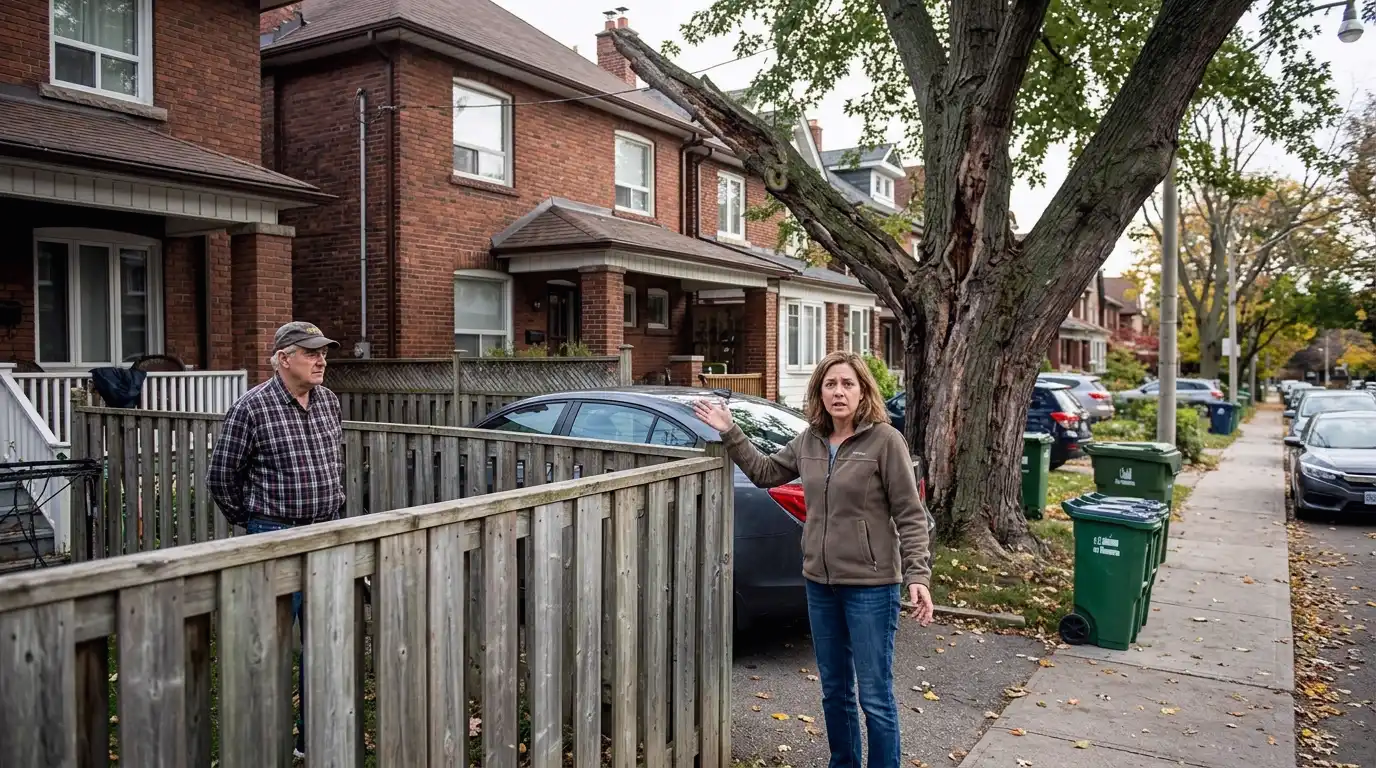
The practical issues around dangerous neighbour tree in Toronto include tree condition, property context and any rules that affect the work. A dangerous tree on a neighbouring property in Toronto can put a homeowner in a difficult position. You may see a dead limb, a heavy lean, a cracked union, decay near the base, or branches hanging over your roof or yard, but the tree belongs to someone else. The issue can involve neighbour communication, municipal tree rules, insurance concerns, civil liability questions and practical safety decisions. This guide is general information, not legal advice. It explains the usual steps homeowners consider when a neighbour will not deal with a potentially hazardous tree.
A tree located on your neighbour’s private property is generally controlled by that neighbour, not by you. The City of Toronto may have regulatory authority where protected private tree rules or hazardous-tree concerns apply, but that does not mean the City will remove a neighbour’s tree simply because another homeowner requests it. Your options are usually a mix of neighbour communication, documentation, 311 reporting, insurance discussion and legal advice where the risk is serious.
The key distinction is whether the tree is merely unwanted or genuinely hazardous. A large, messy, shaded or inconvenient tree is not the same thing as a structurally defective tree. A stronger concern may exist where there are visible signs such as major dead limbs, open cracks, root heaving, fungal growth at the base, severe lean with soil movement, split unions, storm damage, or obvious decay. A qualified arborist can help document those visible conditions.
Step 1: Professional Documentation First
Before escalating the issue, consider arranging documentation from an ISA Certified Arborist. Where a formal risk review is needed, a TRAQ-qualified arborist may be appropriate. The arborist may be able to assess visible conditions from your property, from a public area, or from another lawful viewing point without entering the neighbour’s property.
A qualified arborist’s written assessment may help clarify whether the concern is minor, moderate, serious or urgent. It may also help when speaking with your neighbour, contacting 311, discussing documentation with your insurer, or seeking legal advice.
Pricing for any qualified arborist assessment should be confirmed directly with the arborist before booking.
Step 2: Written Notice to Your Neighbour
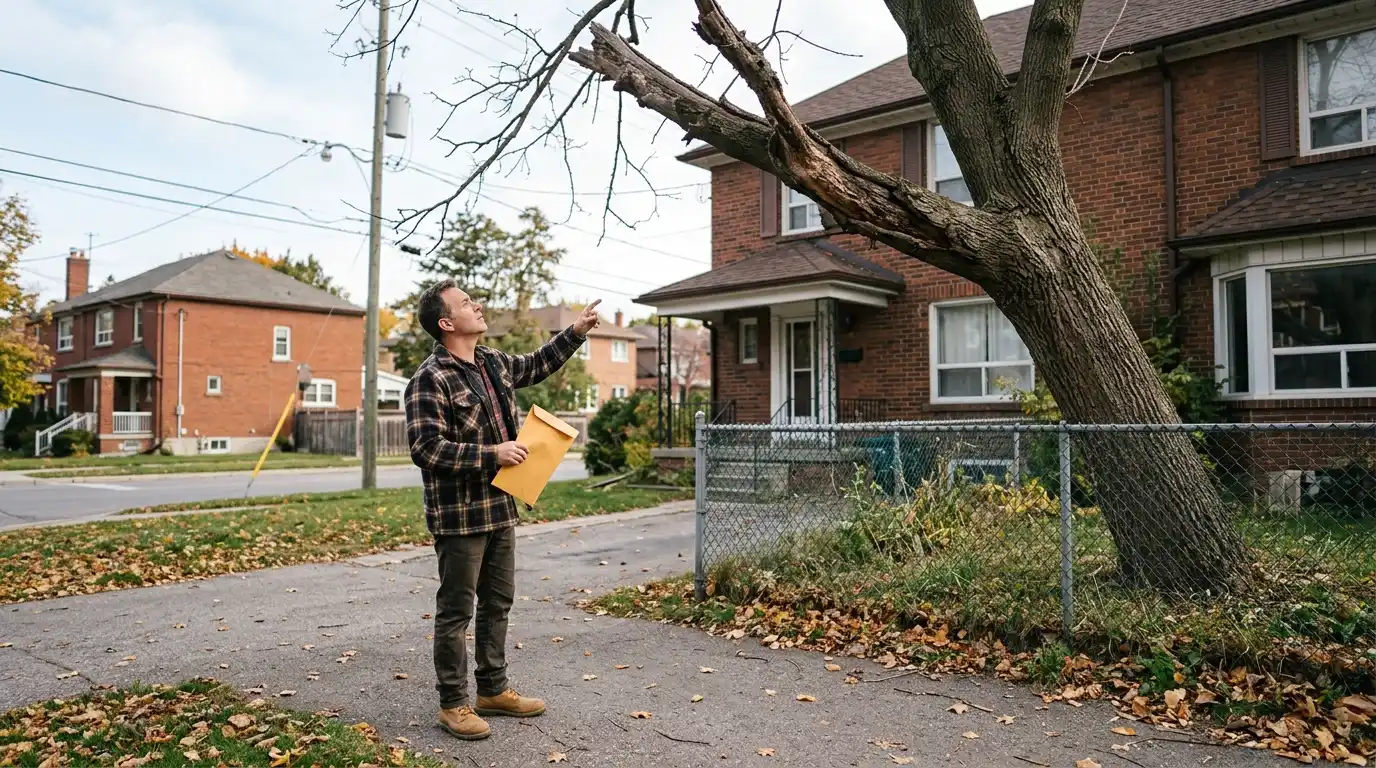
Once you have photos or qualified professional documentation, a written notice to your neighbour is often the next practical step. Keep the message factual and calm. Identify the tree, explain the visible concern, attach any qualified arborist documentation, and ask the neighbour to review the matter. Email can create a dated record, and some homeowners also choose registered mail when they need a stronger record of delivery.
This step matters because neighbour-tree disputes often turn on what was known, when it was known, and whether reasonable action was taken. Written communication can create a clearer record than a verbal conversation at the fence. Avoid threats, exaggeration or emotional language. A short, specific, documented request usually works better than a long argument.
Give the neighbour a reasonable time to respond unless the situation appears immediately dangerous. If the tree is actively failing, resting on a structure, touching wires, blocking public access, or creating an immediate safety concern, contact emergency services, the utility provider, the municipality or the relevant public authority first.
Step 3: Filing a 311 Complaint with Toronto
If written communication does not lead to action, a 311 complaint may be appropriate for a potentially hazardous private tree in Toronto. When filing the complaint, provide specific information: the property address where the tree is located, the approximate location of the tree on the lot, what you can see from your property or a public area, and why you believe the tree may be hazardous. Dated photographs and qualified arborist documentation may help support the complaint.
A 311 complaint does not guarantee immediate inspection, enforcement, removal, pruning, a City order or any particular result. The City controls the permit process, review timing, and final outcome. If a qualified arborist report or other documentation is needed, that must be discussed directly with the qualified arborist.
Step 4: Civil Legal Options
If the City process does not resolve the concern, or if the issue involves property damage, negligence, nuisance, boundary rights, costs or future risk, speak with an Ontario lawyer who handles property disputes. Tree disputes can turn on facts that are hard to judge without legal advice, including the tree’s condition, prior written notice, expert documentation, property boundaries, foreseeability, insurance terms and the exact type of remedy being requested.
Small Claims Court may be relevant for certain monetary claims, while more complex remedies may require a different legal path. Do not rely on a tree service website as a substitute for legal advice. If you believe your neighbour ignored a known hazard, or if damage has already happened, a lawyer can explain your options and the evidence you should preserve.
Managing Your Own Risk While the Process Plays Out
While you are waiting for a neighbour response, a 311 review, insurer instructions or legal advice, reduce avoidable risk on your own property. Keep people away from the likely failure zone. Do not park vehicles under the tree if there is a serious concern. Avoid placing children’s play equipment, patio seating or storage under large defective limbs. Continue taking dated photographs if the condition changes.
Do not cut, pull, climb, cable, brace, remove or otherwise interfere with a neighbour’s tree unless you have confirmed your legal rights and any applicable tree by-law requirements. If trimming overhanging branches is being considered, speak with a qualified arborist first and get legal advice where the situation is contentious. Improper cutting can damage the tree, worsen the neighbour dispute, or create liability.
If the Tree Has Already Fallen
If a neighbour’s tree has already fallen onto your property, start with safety. Stay away from downed wires, broken limbs under tension, unstable trunks and damaged structures. Contact emergency services, the utility provider, the municipality or the relevant public authority first where there is immediate danger, powerline contact, blocked public access or public-safety risk.
For property damage, contact your insurer directly and ask what photos, invoices, reports or records they need before cleanup where possible. Property owners should confirm documentation requirements directly with their insurer.
Frequently Asked Questions
Can I call 311 about my neighbour’s dangerous tree in Toronto?
Yes. Toronto residents may contact 311 about a potentially hazardous private tree. Provide the property address, tree location, visible defects, dated photographs and qualified arborist documentation.
Is my neighbour legally responsible if their tree falls on my property?
Not automatically. Responsibility depends on the tree’s condition, prior notice, evidence, insurance wording and the facts of the incident. If you believe the neighbour knew or should have known the tree was hazardous, speak with an Ontario property dispute lawyer for advice specific to your situation.
What documentation should I prepare before approaching my neighbour or 311 about a dangerous tree?
Useful documentation may include dated photographs, notes of visible defects, copies of messages to the neighbour and an assessment from an ISA Certified Arborist.
Can I trim branches from my neighbour’s tree that overhang onto my property?
You may have limited rights to trim overhanging branches to the property line, but the work must not trespass, damage the tree or create a by-law issue. Speak with a qualified arborist and, where needed, a lawyer before arranging significant trimming of a neighbour’s tree.
What if my neighbour’s tree has already fallen on my property?
Contact emergency services, the utility provider, the municipality or the relevant public authority first if there is immediate danger, powerline contact or public-safety risk. For property damage, contact your insurer directly and document the damage before cleanup where possible.
Related Guides and Request Pages
- How to Identify a Hazardous Tree Before Winter
- ISA Certified Arborist vs General Tree Company
- Emergency Tree Requests
- Tree Removal Permit Toronto
- Arborist Reports