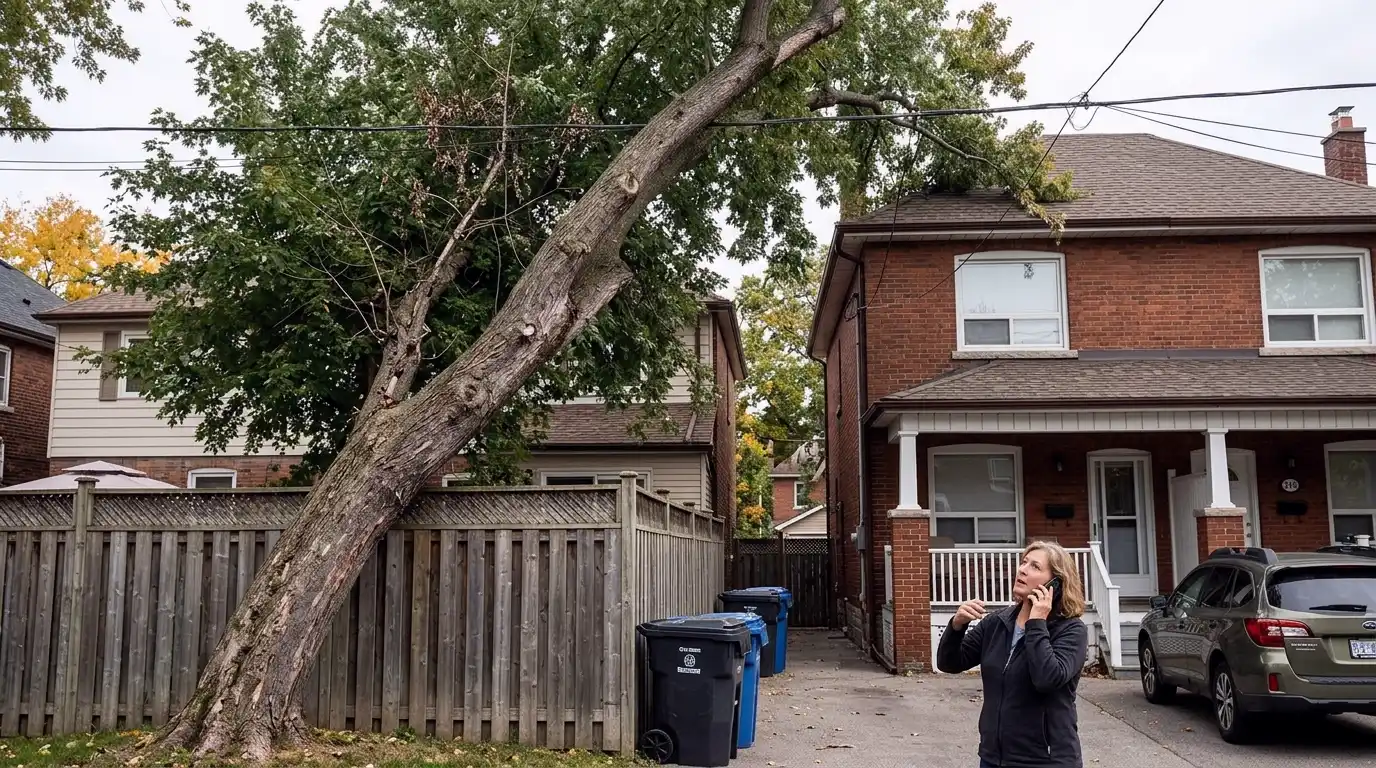
For property owners researching neighbour’s tree falling on my property in Toronto, the key issues are the applicable rules, site conditions and realistic next steps. When a neighbour’s tree appears to threaten your house, fence, driveway, garage, or yard, the safest response is to document the concern, communicate in writing, avoid damaging the tree yourself, and use the proper City, insurance, legal, or qualified arborist channels where needed. This guide explains practical steps Toronto homeowners can take when a neighbouring tree looks dangerous, overhangs the property line, or has already caused damage.
First: Treat This as a Documentation Issue
If the tree has not fallen yet, documentation matters. Take dated photos from your own property where it is safe to do so. Record what you can see: a major lean, dead limbs, broken branches, fungal growth at the base, trunk cracks, root plate movement, soil lifting, or branches hanging over a structure. Do not enter your neighbour’s property without permission.
Send a calm written note to your neighbour explaining the specific concern and asking them to have the tree reviewed by a qualified arborist or qualified tree care professional. Keep a copy of the message, the date sent, and any reply. Written communication can help show that the concern was raised before damage occurred.
This article is general information, not legal advice. Neighbour tree disputes can involve property rights, insurance coverage, boundary-tree rules, municipal by-laws, and civil liability. If the dispute is serious or damage has occurred, contact your insurer and consider speaking with a lawyer.
What You May Be Able to Do Without Your Neighbour’s Permission
Toronto states that pruning trees on neighbouring private property affects private property rights and is a civil issue between private property owners. The City says it is best for property owners to reach agreement about trees overhanging property lines, and that anyone unsure of their legal rights should contact a lawyer.
In practical terms, many neighbour tree disputes involve branches or roots that cross the property line. Before cutting anything, consider the risk carefully. Improper pruning or root cutting can injure or destabilize a tree, especially if large roots or major branches are involved. If the tree is protected by a municipal by-law, a City-owned tree, a boundary tree, or located in a ravine or natural feature area, additional rules may apply.
If you are considering pruning branches or roots close to the property line, speak with a qualified arborist or qualified tree care professional. The qualified professional can discuss pruning risk, tree health, structural concerns, and whether the proposed work could seriously injure the tree. Legal rights should be confirmed with a lawyer where needed.
Boundary Trees Need Extra Caution
A tree near the property line may be a boundary tree. In Ontario, the Forestry Act states that a tree whose trunk is growing on the boundary between adjoining lands is common property of the owners of the adjoining lands. It is also an offence to injure or destroy a boundary tree without the consent of the landowners.
That means a tree is not always “your neighbour’s tree” just because most of the canopy appears to be on their side. If the trunk crosses the property line, ownership and consent issues can become more complicated. Before cutting, removing, or authorizing work on a tree close to the boundary, confirm the property line and get proper advice.
Practical options when a neighbour’s tree concerns you:
- Document the issue: Take dated photos and notes from your own property where it is safe.
- Write to your neighbour: Clearly describe the concern and ask them to arrange a professional assessment.
- Use 311 for immediate danger: Toronto says dangerous private tree concerns can be reported through 311 for investigation.
- Contact your insurer: If damage has occurred or appears likely, ask what documentation they need.
- Get legal advice where needed: Property-line, liability, boundary-tree, and neighbour disputes are legal issues.
- Speak with a qualified arborist: A qualified arborist may assess visible tree condition, risk indicators, and documentation options.
- Do not DIY high-risk work: Avoid cutting large limbs, roots, or branches under tension, especially near structures, wires, or property lines.
Notifying Your Neighbour: What to Include
Your written note should be specific and calm. Avoid threats. Include the tree’s approximate location, the issue you observed, why you are concerned, and what you are asking the neighbour to do. If you have photos, mention that you have documented the concern. Ask them to have the tree reviewed by a qualified arborist or tree care professional where appropriate.
A simple message may say:
Hello, I wanted to raise a concern about the large tree near the shared property line. From my side, I can see several large dead branches and what appears to be a crack near one of the main unions. Because part of the canopy extends over my driveway/roof/fence, I am concerned about possible failure during wind, snow, or ice. Could you please have the tree assessed by a qualified arborist and let me know the next step?
Keep the tone practical. The goal is to create a clear record and encourage action before damage occurs. If your neighbour refuses to respond and the tree appears to present an immediate danger, contact 311 and consider getting legal advice.
The 311 Complaint Process in Toronto
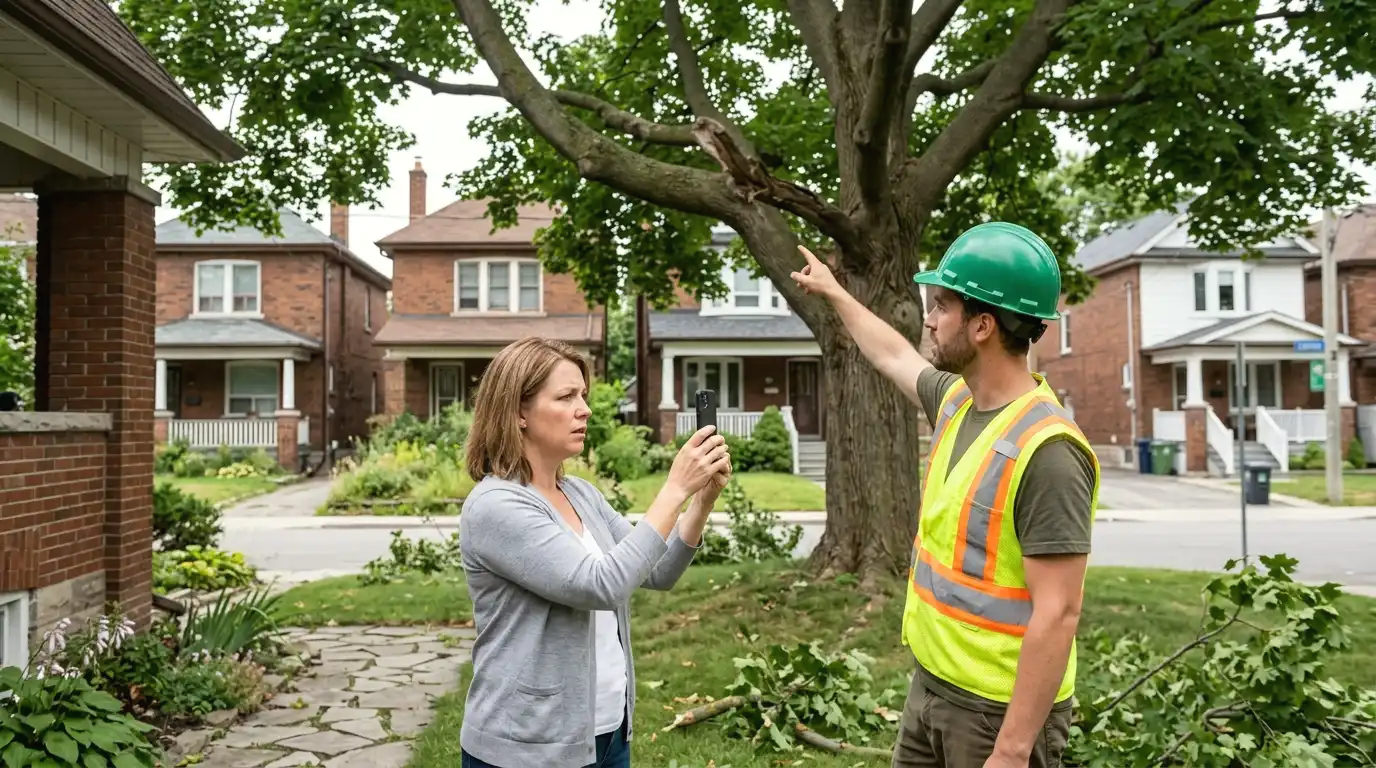
Toronto allows concerns about privately owned trees that present an immediate danger to be reported by contacting 311. City staff may investigate dangerous private tree concerns. If the City confirms that a tree poses an immediate danger, the City may notify the property owner and issue an Order to Comply.
This process is useful when the concern is serious enough to involve the City. However, it may not resolve every neighbour dispute. The City may determine that the tree does not meet its immediate-danger threshold, or the issue may remain a private civil matter between neighbours. Keep copies of 311 request numbers, photos, written neighbour communication, and any City response.
If there is immediate danger to life, call 911 first. If branches are touching or near power lines, stay away and contact the appropriate electrical utility. Do not attempt to cut, pull, or move branches near wires.
When Your Neighbour Agrees to Address the Tree
The best outcome is often a cooperative one. If your neighbour agrees that the tree should be assessed, the next step may be a qualified arborist review. If pruning, removal, or documentation is recommended, the neighbour and affected property owner can discuss access, timing, cost-sharing, cleanup terms, and permit-related responsibilities directly.
If the tree is protected under Toronto’s tree by-laws, permit requirements may need to be confirmed before removal or injury. If the tree is a boundary tree, consent from both owners may be required. If the tree is City-owned or located in a ravine or natural feature area, separate City rules may apply.
After Damage Happens: Insurance and Claims
If a neighbour’s tree or branch has already fallen onto your property, document the scene before cleanup where it is safe. Take photos from several angles showing the full tree, branch, break point, property damage, and where the tree appears to have originated. Contact your insurer directly and ask what documentation they need before major cleanup begins.
Toronto’s 311 information says a fallen tree or tree limb that has fallen onto a neighbouring property is the responsibility of the property owner where the tree or limb has fallen. Insurance and liability questions can still depend on the facts, including prior knowledge, visible defects, written warnings, ownership, and policy coverage.
Concerned About a Neighbour’s Tree?
Neighbour Tree Roots and Property Damage
Roots can be more complicated than branches because root cutting can affect tree stability and health. If roots from a neighbouring tree appear to be affecting a fence, driveway, walkway, retaining wall, drain, or foundation area, document the damage before cutting. Consider speaking with a qualified arborist and, where damage is significant, your insurer or legal advisor.
Cutting large structural roots can destabilize a tree, especially if the tree is mature, leaning, already stressed, or close to a structure. If the tree is protected by municipal by-law or is a boundary tree, additional requirements may apply. Do not assume that root cutting is risk-free just because the roots are on your side of the property line.
A qualified arborist may discuss visible root conflict, tree stability concerns, and possible pruning risk.
What Counts as a Hazardous or Dangerous Tree?
A tree may be concerning because it looks unhealthy, but not every unhealthy tree is an immediate danger. Warning signs that may justify urgent review include a sudden lean, major trunk split, root plate movement, large hanging limbs, advanced decay at the base, fungal conks, large dead scaffold branches, or major branches over a high-use target.
Toronto allows dangerous private tree concerns to be reported through 311 when a privately owned tree presents an immediate danger. Whether a tree meets that threshold depends on the facts. A qualified arborist may also assess visible defects, tree condition, and risk indicators with the property owner.
If the tree presents immediate danger to life, call 911. If the concern is urgent but not life-threatening, keep people away from the target area, contact 311 where appropriate, document the issue, and speak with a qualified arborist or qualified tree care professional.
Frequently Asked Questions
If my neighbour’s tree falls on my house in Toronto, who pays?
Responsibility can depend on tree ownership, visible condition before failure, prior written notice, insurance coverage, and the facts of the loss. Document everything, contact your insurer directly, and seek legal advice if liability is disputed.
Can I force my neighbour to remove a dangerous tree in Toronto?
You generally cannot personally force removal. Practical options include documenting the concern in writing, asking your neighbour to obtain a qualified arborist assessment, contacting 311 if the tree appears to present an immediate danger, and seeking legal advice if the matter remains unresolved.
What counts as a dangerous private tree in Toronto?
Toronto allows dangerous private tree concerns to be reported through 311 when a privately owned tree presents an immediate danger. Possible warning signs include major trunk cracking, advanced decay, root plate movement, large hanging limbs, major scaffold failure, or a sudden lean. The final assessment depends on the facts.
How do I document a concern about my neighbour’s tree?
Take dated photos from your property, write down what you observed, send a calm written note to your neighbour, keep proof of communication, save 311 reference numbers, and keep copies of any qualified arborist notes or reports where provided.
Can I cut my neighbour’s tree roots or branches at the property line?
Tree pruning across property lines is a civil/private-property issue in Toronto. Seek agreement with your neighbour where possible and get legal advice if you are unsure of your rights. Cutting roots or branches can injure or destabilize a tree, and boundary trees may require consent from both owners.
Related Guides
- Neighbour’s Tree Overhanging My Property Toronto
- Dangerous Tree Assessment Toronto
- Home Insurance Tree Removal Toronto
- Tree Removal Permit Toronto
- Arborist Report Requests