Toronto Tree Permit Exemptions: Chapter 813 Rules Explained
The full Chapter 813 bylaw text and current City tree permit information are available through Toronto’s Tree and Ravine Protection resources.
If an exemption does not apply, the next step is usually the standard permit process; see how to apply for a Toronto tree permit online and the main Toronto tree removal permit guide.
The question “do I need a permit to remove this tree?” depends on more than trunk size alone. Toronto generally protects private trees with a diameter at breast height of 30 cm or more, but the rules also distinguish good-practice pruning, dead or terminally diseased trees, imminently hazardous trees, emergency work, City trees, ravine areas and certain site-specific conditions. Fruit production or nursery status should not be assumed to create a general Chapter 813 exemption.
Chapter 813 Exemptions and Exception Pathways
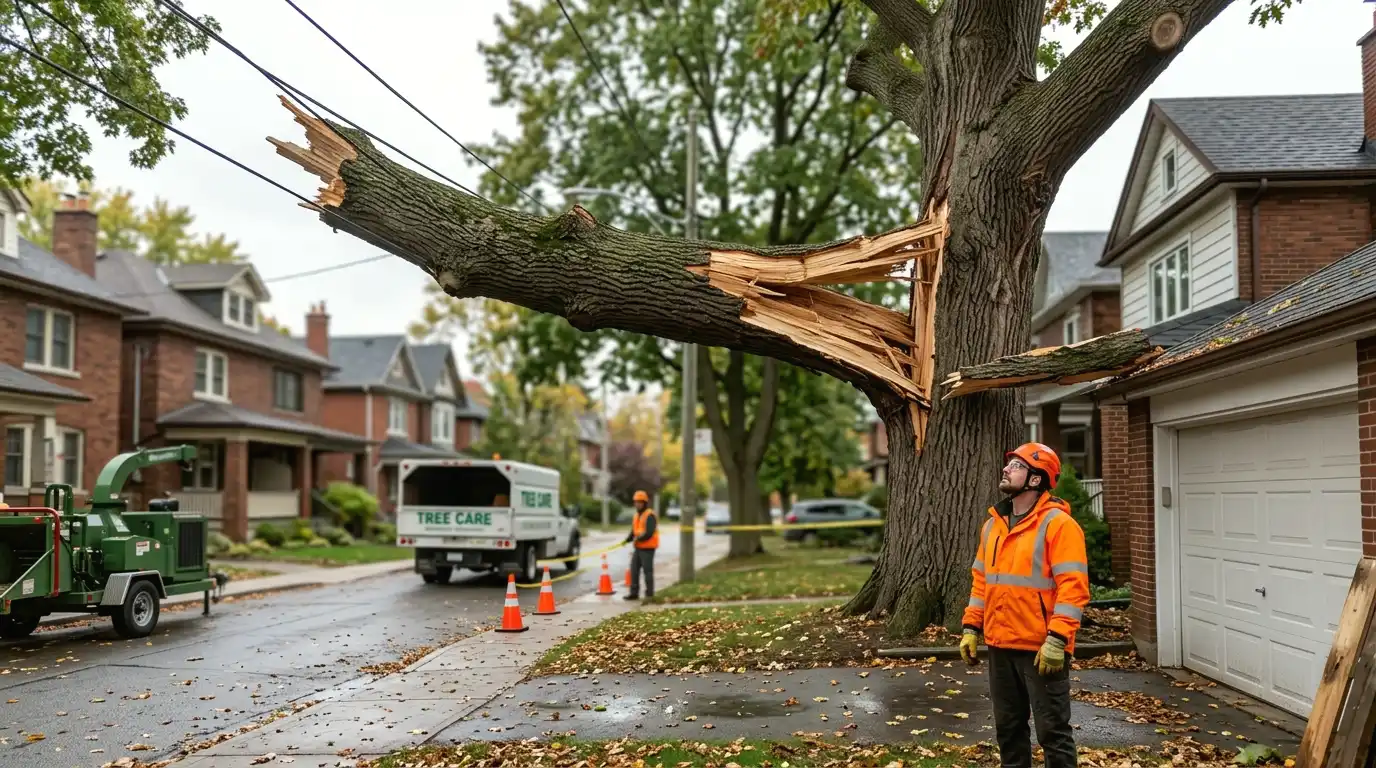
Toronto’s rules are easiest to understand by separating three ideas: trees that fall outside the ordinary private-tree diameter trigger, activities that Chapter 813 expressly exempts, and situations where the City requires permit-exception confirmation.
1. Private trees below the ordinary 30 cm DBH trigger
A private tree with no stem reaching 30 cm DBH is generally below the ordinary Article III diameter trigger. That is not the same as saying every smaller tree is unprotected. Trees planted as permit or planning conditions, City-owned trees, ravine trees and other site-specific protections can apply regardless of the ordinary private-tree threshold.
2. Good-practice maintenance pruning
Chapter 813 expressly exempts pruning performed according to good arboricultural practice. Topping, excessive root cutting or other work that injures a protected tree is different.
3. Dead, terminally diseased and imminently hazardous trees
Toronto’s current public guidance uses a permit-exception confirmation process for these situations. A 100 percent dead tree, a terminally diseased tree that is no longer maintainable, or an imminently hazardous tree can qualify. The City says exception confirmation should be received before work unless immediate work is required to eliminate a dangerous situation.
4. Utility-conductor pruning and certified emergency work
Chapter 813 contains narrow exceptions for pruning branches that interfere with utility conductors and for emergency work where the required City certification applies. These are not blanket permissions for a homeowner to perform unsafe electrical or emergency tree work.
5. Rooftop gardens, interior courtyards, solariums and elevated podiums
The current Chapter 813 exception list also covers specified trees in rooftop gardens, qualifying interior courtyards, solariums and elevated podium settings. These are narrow site-specific categories rather than ordinary backyard exemptions.
6. Trees in ravine protection areas follow Chapter 658
Chapter 813 Article III does not replace Toronto’s Ravine and Natural Feature Protection rules. Trees and site work in a Chapter 658 protected area can require ravine authorization regardless of ordinary private-tree diameter.
Important correction: fruit trees and nursery/tree-farm stock are not listed as general current Chapter 813 Article III exemptions in Toronto’s published Municipal Code. Do not remove a protected tree on that assumption.
The Grey Areas
Real trees do not always fit neatly into one category. A tree that appears dead from a distance may still have living tissue. A declining tree may not be terminally diseased. A leaning tree may or may not be imminently hazardous depending on root stability, recent movement, trunk defects and the target area.
For dead, terminally diseased or imminently hazardous trees, use Toronto’s current permit-exception process and keep clear photographs and tree details. If immediate work is necessary to eliminate a dangerous situation, safety takes priority, but document the condition from a safe distance where possible.
What Happens Outside Chapter 813
Chapter 813 is only one regulatory layer. A tree that does not require a Chapter 813 private-tree permit may still be affected by other rules. Trees in ravine and natural feature protection areas may fall under Chapter 658. Trees in or near TRCA regulated areas may require conservation authority review for certain work. Trees on City property are handled separately. Heritage properties, development applications, building permits, site alteration, and construction-related work can also create separate requirements.
Before arranging removal, confirm whether the property is near a ravine, watercourse, valley, slope, natural feature, City-owned tree, road allowance, heritage designation, or active development file. A simple DBH measurement does not answer every regulatory question.
Not Sure Whether Your Tree Needs a Permit?
How Enforcement Questions Can Arise
Tree by-law questions often arise after a neighbour complaint, visible stump, sudden canopy loss, construction work, or emergency removal. If a tree was removed without a standard permit because the owner believed an exemption or exception applied, documentation becomes important. Dated photos, written notes, 311 reference numbers, qualified arborist documentation where provided, and City correspondence can help explain why the work proceeded.
The practical message is that an exemption is not the same as having no record. For a clearly under-threshold private tree, documentation may be simple. For a dead, terminally diseased, hazardous, emergency, ravine-adjacent, or boundary situation, keep better records and confirm the correct pathway before work begins where possible. If the situation is an imminent hazard, keep people away, document from a safe distance, and contact 311 as Toronto requests.
If a property owner is unsure, they should not rely only on a contractor’s verbal statement. Confirm with the City, 311, or a qualified arborist before authorizing work.
Frequently Asked Questions
Is every private tree under 30 cm DBH exempt from Toronto tree rules?
No. A tree below the ordinary 30 cm private-tree diameter trigger may still be protected because it is City-owned, in a ravine or natural-feature area, or was planted as a permit, enforcement or planning condition. Confirm the site context.
Are fruit trees automatically exempt from Chapter 813?
No general fruit-tree exemption appears in the current Chapter 813 Article III exception list. Do not rely on the fact that a tree produces edible fruit as permission to remove an otherwise protected tree.
Do dead trees require a standard Toronto tree-removal permit?
Toronto’s current guidance handles a 100 percent dead tree through its permit-exception process rather than the ordinary permit application. The City says exception confirmation should be received before work unless immediate work is required to eliminate a dangerous situation.
Does normal pruning require a Toronto private-tree permit?
No permit is required for pruning performed according to good arboricultural practice. Work that injures a protected tree, including damaging root or crown work, is different.
Are nursery or tree-farm trees automatically exempt?
Do not assume so. The current Chapter 813 Article III exception list does not provide a general nursery/tree-farm exemption for an otherwise protected private tree.