
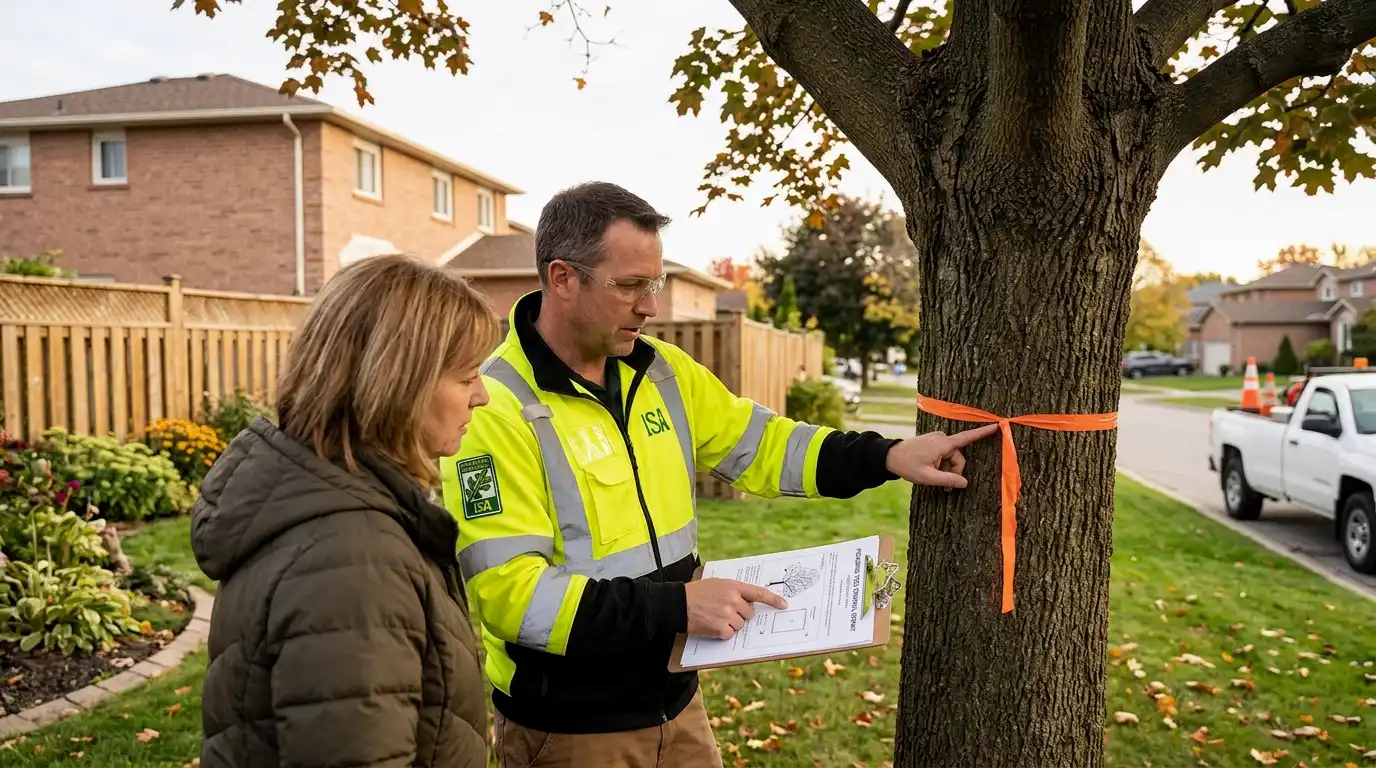
This guide explains the tree removal permit in Pickering, including the approval rules, property conditions and practical steps that can affect the work. Tree removal rules in Pickering are not the same as Toronto, Mississauga, Richmond Hill, or Markham. The key issue is location. A tree on one residential lot may be outside the City’s mapped Tree Protection Areas, while a similar tree nearby may fall inside a protected area, a conservation-authority regulated area, or a Durham Region woodland.
For broader local context, see tree services in Pickering and the Pickering service area. Nearby Durham permit guidance is also available for Ajax.
That is why Pickering homeowners should avoid relying on general GTA tree permit advice. Before removing a tree, the practical question is not only “how big is the tree?” It is also “where is the tree located, what feature is nearby, and which public authority has jurisdiction over that part of the property?”
The Real Regulatory Picture in Pickering
Pickering has designated Tree Protection Areas
The City of Pickering lists Tree Protection By-law 8073/24, which applies to trees located in designated Tree Protection Areas. These areas generally relate to significant natural features, watercourse corridors, green spaces, shorelines, wetlands, and valley areas. The City states that a permit is required to remove trees located in a protected area, while permits are not required for trees not located in the designated protection area.
This is different from a simple citywide diameter rule. In Toronto, the private tree by-law is built around trees of a certain diameter on private property. In Pickering, the first question is whether the tree is inside a mapped protected area. A large tree outside the mapped area may be treated differently from a smaller tree inside the mapped area.
TRCA or CLOCA Can Add a Separate Site-Review Layer
Pickering spans two conservation-authority jurisdictions. Most of the municipality, including the Rouge, Petticoat, Duffins, Carruthers and much of the Lake Ontario waterfront drainage, is within Toronto and Region Conservation Authority (TRCA) jurisdiction. The Lynde Creek portion of Pickering is within Central Lake Ontario Conservation Authority (CLOCA) jurisdiction.
Conservation-authority regulation is not a second citywide tree-removal by-law. Under Ontario Regulation 41/24, the relevant authority regulates specified development activities in regulated areas and activities that may interfere with wetlands or watercourses. A tree project can become relevant where it also involves stump excavation, grading, fill, access, construction, shoreline or valley work, or other regulated disturbance.
Pickering properties that deserve an extra mapping check include lots near the Rouge, Petticoat, Duffins or Carruthers systems, Lynde Creek, wetlands, valleylands, flood or erosion hazards, and the Lake Ontario shoreline. Use the exact property address and proposed work to identify whether TRCA, CLOCA, or neither authority has a regulatory role.
- City Tree Protection Area: check Pickering’s Schedule A map and current Tree Protection By-law 8073/24.
- TRCA-regulated area: check the applicable TRCA mapping and current permit guidance.
- CLOCA-regulated area: check CLOCA mapping for the Lynde Creek portion of Pickering.
- Woodland: check the Durham Region Woodland Conservation and Management By-law where the property contains a qualifying woodland.
What Triggers a Permit Question in Pickering
The clearest City trigger is whether the tree is inside a mapped Tree Protection Area. Pickering’s current Tree Protection By-law 8073/24 requires a permit to remove a tree in a protected area, including dead, dangerous, diseased or severely injured trees; the City publishes different fee treatment depending on documentation and inspection.
Outside a City Tree Protection Area, other rules can still matter. A qualifying Durham woodland can fall under the Regional Woodland By-law. Work near a regulated watercourse, wetland, valley, shoreline or hazard area may need TRCA or CLOCA review when the proposed activity falls within Ontario Regulation 41/24. Public trees, utilities, subdivision conditions and property ownership can create separate constraints.
The Durham Region Woodland By-law: Does It Apply to You?
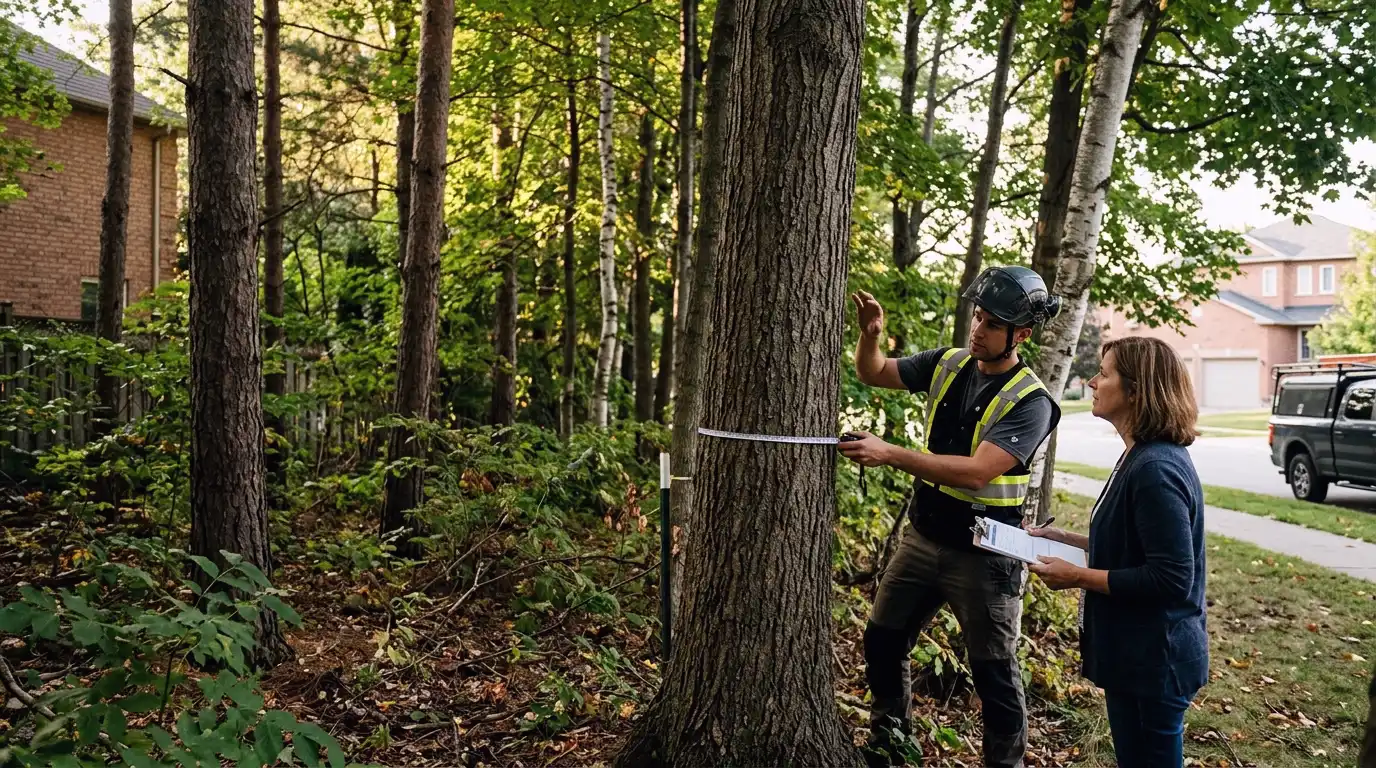
The Durham Region Regional Woodland By-law is another layer that can affect some Pickering properties. It applies to woodlands in Durham Region that are generally one hectare, or 2.5 acres, in size and greater. The Region states that if you plan to cut down or remove trees within a woodland or sensitive natural area, you may need a permit from Durham Region.
For many standard urban residential lots in neighbourhoods such as Bay Ridges, Liverpool, Dunbarton, Brock Ridge, or Rosebank, the Durham woodland rule may not be the main issue. For rural, agricultural, estate, or heavily wooded properties north of Highway 407, near Claremont, around Brougham, or near larger natural areas, it becomes much more relevant. If there is a woodland, hedgerow, or larger tree stand on the property, confirm with Durham Region before clearing trees.
What Happens on Rural and Estate Pickering Properties
Rural and estate properties in north Pickering can include qualifying woodlands, agricultural land, hedgerows, drainage features, wetlands, valley corridors or mapped natural heritage areas. Those conditions can involve the City, Durham Region, TRCA or CLOCA depending on the exact location and proposed work.
Do not assume that private ownership alone answers the permit question. Check the City Tree Protection Area map, the Regional woodland rules and the applicable conservation-authority mapping before clearing multiple trees or disturbing land near a natural feature.
By-laws, maps, fees and application methods can change. Confirm the current rule with the public authority that actually has jurisdiction over the property before work starts.
Practical Advice for Pickering Homeowners
Start with the City of Pickering’s Tree Protection Area map. If the tree is outside that mapped area, check whether the property contains a qualifying Durham woodland or whether associated site work falls in a TRCA- or CLOCA-regulated area. The conservation authority depends on the watershed; do not use CLOCA as a default for all Pickering addresses.
Have the property address, tree location, photos and a simple description of any stump excavation, grading, fill, access or construction work ready. Written confirmation from the relevant public authority can be useful where mapping or jurisdiction is unclear.
Tree Removal Permit in Pickering
When You Should Still Talk to Someone Before You Remove
Even where a permit does not appear to be required, removing a large tree is permanent. A few Pickering situations deserve extra caution. If the tree is on or near a property line, confirm ownership before cutting. If the tree is near a sidewalk, boulevard, road allowance, utility line, park boundary, valley, wetland, shoreline, or watercourse, confirm which authority has jurisdiction. If the property is rural, wooded, or agricultural, check Durham Region woodland rules. If the property is close to Rouge National Urban Park, confirm whether park boundary or natural heritage considerations apply before vegetation removal.
For powerline contact, road obstruction, immediate public danger, active storm damage, or emergency safety concerns, contact emergency services, the utility provider, the municipality, or the relevant public authority first.
Frequently Asked Questions
Do I need a permit to remove a tree on private property in Pickering?
It depends on location. Pickering’s Tree Protection By-law 8073/24 requires a permit for trees in designated Tree Protection Areas. Trees outside those areas can still be affected by Durham Region woodland rules, public ownership, planning conditions, or conservation-authority regulation tied to associated development or site disturbance.
Which conservation authority applies in Pickering?
Pickering spans both TRCA and CLOCA jurisdiction. Rouge, Petticoat, Duffins, Carruthers and much of the waterfront drainage are in TRCA jurisdiction; the Lynde Creek portion is in CLOCA jurisdiction. Check the exact property rather than assuming one authority applies citywide.
Does being in a TRCA or CLOCA regulated area automatically mean I need a permit just to cut a tree?
No. Conservation authorities regulate specified development activities and interference with wetlands or watercourses under Ontario Regulation 41/24. A tree project may need review when it also involves regulated grading, fill, excavation, access, construction, shoreline, valley, wetland or watercourse work. Ask the applicable authority about the exact proposed activity.
Does the Durham Region woodland by-law affect Pickering?
It can. The Regional Woodland Conservation and Management By-law applies to qualifying woodlands in Durham Region, so larger wooded or rural properties should be checked separately from the City’s Tree Protection Area rules.
What should I check before scheduling tree removal?
Confirm tree ownership, the City Tree Protection Area map, Regional woodland status where relevant, and any TRCA or CLOCA regulated-area issue associated with the proposed work. Utilities, road allowance, subdivision or planning conditions can also matter.