
Hedge Trimming and Cedar Removal in Pickering, Ontario
Cedar hedge trimming in Pickering reflects the city's residential development history in a very direct way. The oldest and most mature hedges are in Woodlands, Bay Ridges, West Shore and Dunbarton, where homes built in the 1950s through 1970s installed cedar hedges along property lines that are now 40 to 50 years old. In the 1980s and 1990s subdivisions of Amberlea, Highbush and Brock Ridge, hedges from that period are now reaching the age where problems start to compound. And in the newer Duffin Heights properties, freshly planted cedar hedges are just starting to establish and need the early training work that will determine their shape for the next 20 years.
We trim hedges across all of Pickering, and we are honest about when a hedge has passed the point where trimming is a good investment. The two questions that matter most when someone calls about a Pickering cedar hedge are whether the interior is still green and healthy, and whether the hedge has been maintained at a reasonable size or allowed to grow unchecked for years. The answers to those two questions largely determine whether the right advice is trim it, reduce it significantly, or take it out and start fresh.
The Rosebank Hedge Situation
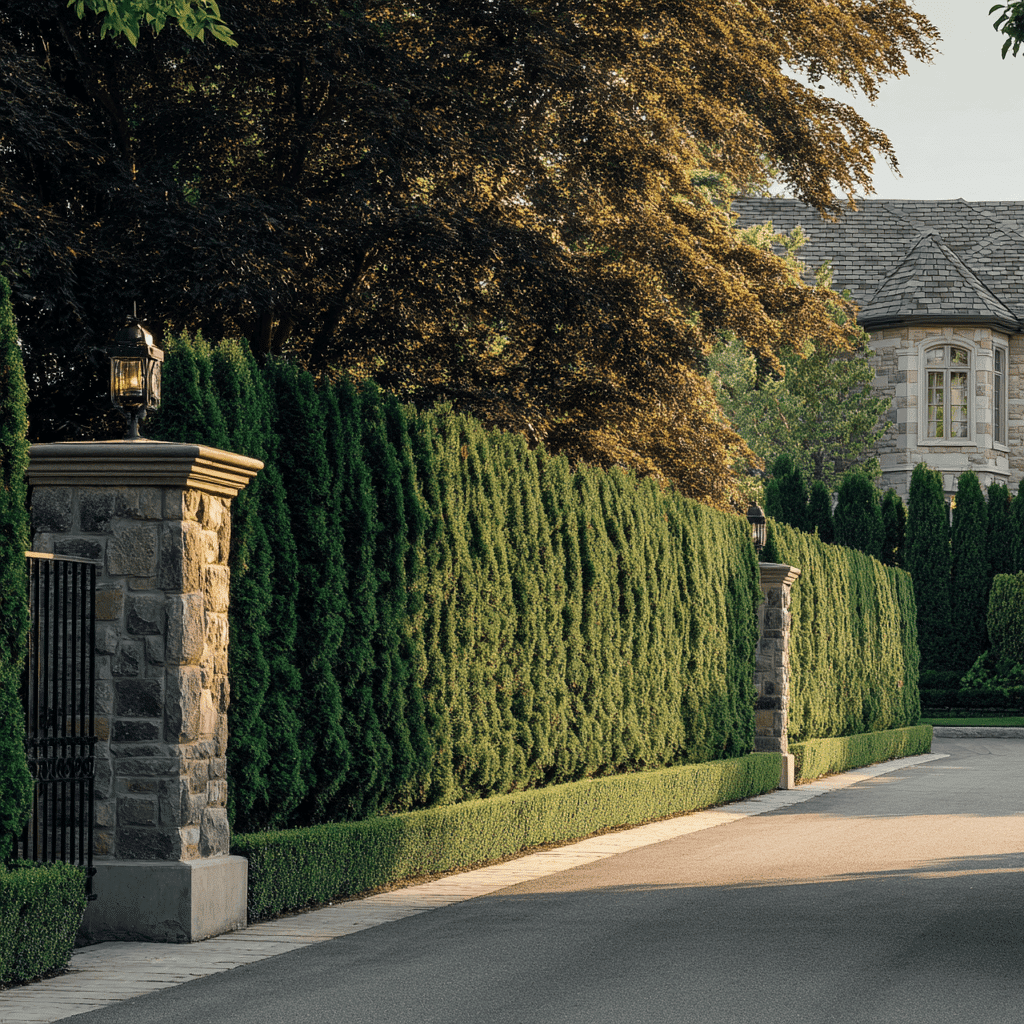
Rosebank is Pickering's premium estate area, with some of the largest residential lots in Durham Region along Rougemount Drive and the surrounding streets. Cedar hedges in Rosebank function differently than in standard suburban neighbourhoods. These hedges are often boundary plantings on 150-foot or 200-foot lot lines that have grown to significant widths and heights over decades. The sheer length of these hedges means a maintenance trim is a full day of work for a crew, and the standards expected on these properties are higher. We time the trimming correctly for each hedge, cut to a consistent flat face and proper taper, and clean up completely. Rosebank hedges are not a quick drive-by job and we do not treat them as one.
Cedar Hedges Near the Altona Forest in Amberlea
Amberlea's western boundary is the Altona Forest, and several properties along that edge have cedar hedges running along the back of the lot. These hedges occupy an interesting ecological position: they sit between the managed residential yard and the unmanaged forest edge. In some cases the cedar hedge has grown into the forest margin and is technically rooted partially outside the property line. We assess the boundary situation on these properties before quoting any significant work, and we avoid any activity that would cause disturbance to the Altona Forest edge. For standard maintenance trimming on the residential side, there is no regulatory concern.
Hedge Removal in Woodlands and Bay Ridges
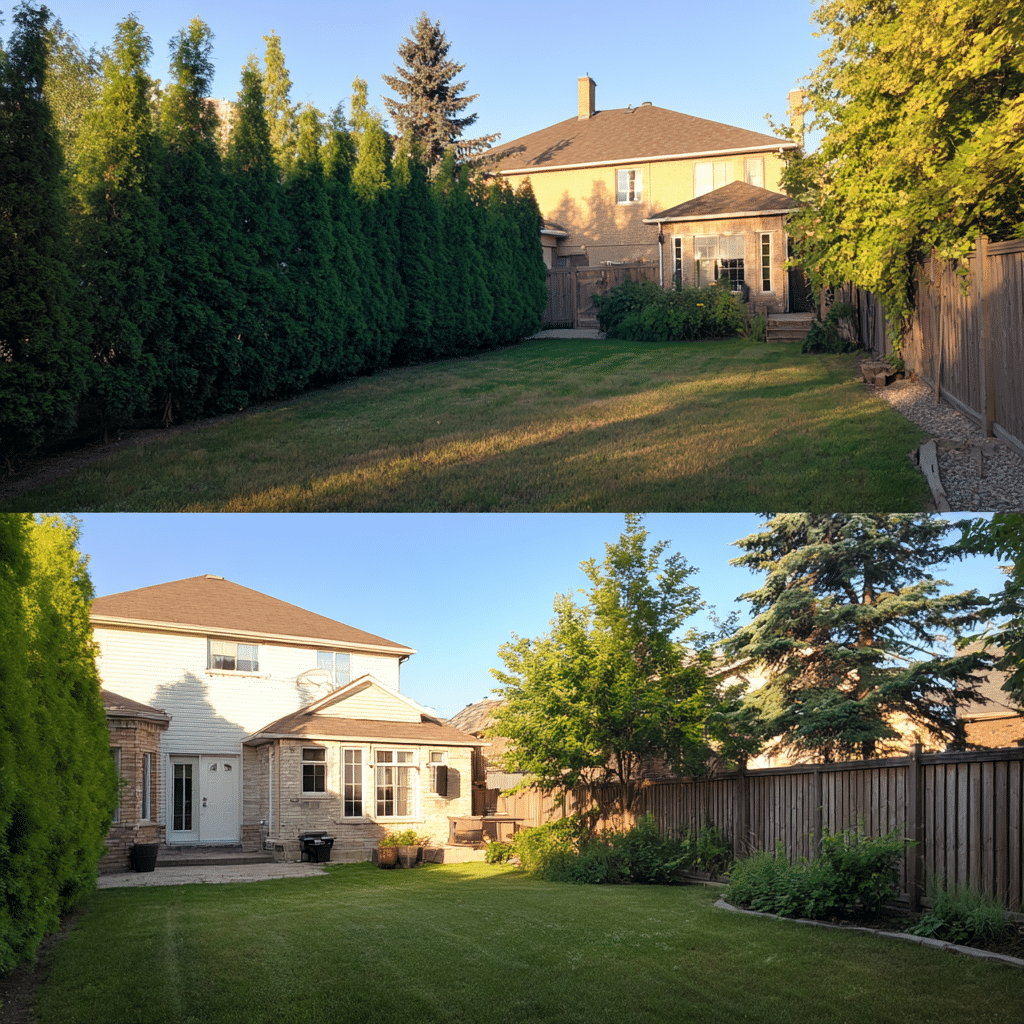
The oldest hedges in Pickering are in Woodlands and Bay Ridges, where some cedars date back to the 1950s and 1960s. Many of these hedges have exceeded the lifespan where they can be maintained effectively. The common indicators are: interior wood that is 80 percent or more dead brown, a live zone that has retreated to a shell of a few inches of green on the outside, multiple dead sections that have been patched with neighbouring growth, and a height and width that has grown so far beyond the original intent that meaningful reduction is no longer feasible. When all of these are present, the honest advice is removal and replacement rather than continued investment in trimming.
Cedar hedge removal in Pickering does not require any permit regardless of where the hedge is located. The ornamental hedge exemption in By-law 8073/24 covers maintained cedar rows across all of Pickering, including within designated Tree Protection Areas. We remove the cedars, grind the stumps, clean the area, and have the site ready for whatever comes next.
Training New Hedges in Duffin Heights
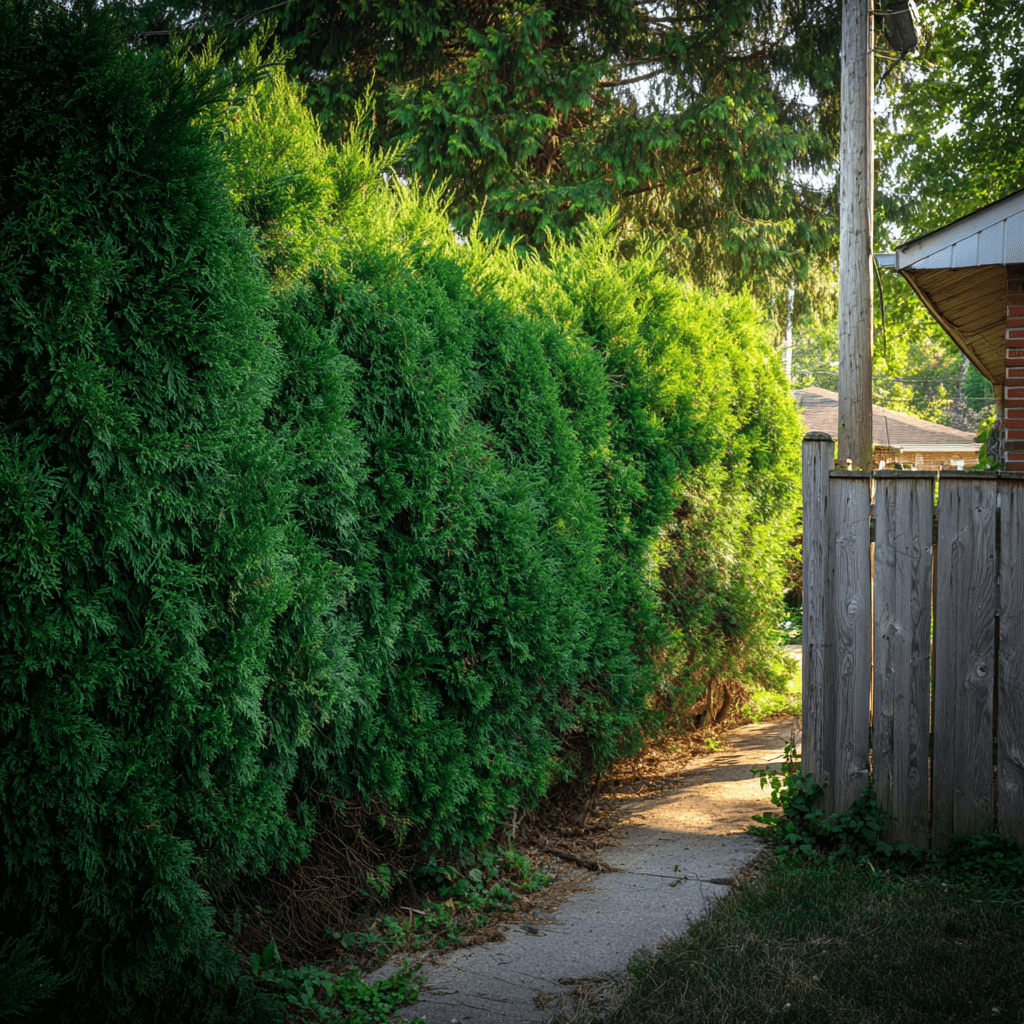
Duffin Heights and Seaton properties with newly planted cedar hedges have a narrow window to establish good growth habits before the hedge develops its permanent form. The most common mistake with new cedar hedges is allowing them to grow freely in the first two or three years without any shaping, in the belief that this encourages faster growth. It does encourage faster growth, but in a loose, irregular pattern that is much harder to correct into a formal hedge shape later. A light annual trim in the first few years, maintaining the proper taper and a consistent face, trains the hedge into the form you want before the structure becomes fixed. We do this work on new Duffin Heights hedges and the results are dramatically better than letting them go and trying to correct the shape later.
Frequently Asked Questions About Hedge Trimming in Pickering
Do I need a permit to remove my cedar hedge in Pickering?
No. Maintained ornamental hedges including cedar rows are explicitly exempt from Pickering's Tree Protection By-law 8073/24. No permit is required to trim or remove cedar hedges anywhere in Pickering, including within designated Tree Protection Areas and near stream corridors. This exemption applies regardless of the size or age of the hedge.
When is the right time to trim cedar hedges in Pickering?
Late spring, once new growth has pushed out and begun to firm up, is the best primary trim window for cedars in Pickering. This is typically late May through June depending on the season. A light follow-up trim in late July is fine for hedges that grow quickly. Avoid heavy trimming in late August or September as it removes the protective outer layer before winter, increasing susceptibility to desiccation and browning on exposed surfaces.
My cedar hedge in Dunbarton has a large dead section in the middle. Can it be saved?
It depends on how large and how dead. If the dead section is contained to one or two cedars with live growth on either side, the adjacent cedars can be allowed to grow laterally to fill the gap over two to four seasons. If the dead zone spans several consecutive plants and the interior of those cedars is fully brown, the odds of that section recovering are very low. We assess the specific situation honestly and tell you whether filling in is realistic or whether partial or full replacement is the more practical path.
My property in Amberlea backs onto the Altona Forest. Can you trim my rear cedar hedge?
Yes. Trimming the cedar hedge on your residential side of the property line requires no authorization. We avoid any disturbance to the Altona Forest edge and do all the work from within your property. If the hedge has grown into or over the forest boundary, we assess the extent of that encroachment before trimming to make sure the cuts we make are on the correct side of the line.
How much does cedar hedge trimming cost in Pickering?
Pricing is based on the length of the hedge, its current height and width, how accessible it is from both sides, and the complexity of any shaping required. A standard maintained hedge in Amberlea or Brock Ridge typically runs between $150 and $500 depending on length. Larger estate hedges in Rosebank run higher due to the length and the time required to do the work properly. We quote by the job after seeing the hedge, not by the linear foot, because two hedges of the same length can differ dramatically in the work they require.
More Pickering Tree Services
Get a Free Estimate for Tree Work in Pickering
We serve all of Pickering including Rosebank, Dunbarton, Woodlands, Amberlea, Highbush, West Shore, Bay Ridges, Brock Ridge, Liverpool, Duffin Heights and Seaton. Our certified arborist comes out, confirms what Tree Protection Area rules apply to your property, and gives you a firm price before anything starts.