Arborist Report Requests in Pickering, Ontario
Quick answer: Pickering arborist report requests may involve Tree Protection Area questions, hazardous tree documentation, storm-damage records, construction-related tree review, TRCA regulated-area concerns, insurance documentation, neighbour tree concerns, real estate records, EAB ash condition questions, powerline safety issues, and City of Pickering tree by-law context.
Toronto Tree Services may forward your Pickering arborist report request to an independent arborist or tree care professional where available. Toronto Tree Services is a referral and lead generation service only. The independent arborist is responsible for assessment, report preparation, findings, recommendations, timelines, pricing, payment, communication, revisions, submission support where offered, and service-related issues directly with the customer.
An arborist report request in Pickering should start with the purpose of the document. A report connected to a Tree Protection Area question is different from a hazardous tree record, a storm-damage note, a construction-related tree review, a neighbour issue, a real estate file, an insurance request, or a TRCA regulated-area concern. The location of the tree can matter as much as the tree itself because Pickering properties may sit near watercourses, green spaces, wooded areas, conservation lands, shoreline areas, or protected-area boundaries.
For customers searching for arborist report Pickering, Pickering arborist report, Pickering tree permit report, Pickering hazardous tree report, Pickering tree risk assessment, Pickering construction tree report, Pickering TRCA arborist report, Pickering Tree Protection Area report, or Pickering insurance tree report, the best first step is to identify who is asking for the document and what they need it to show.
Pickering Arborist Report and Tree Protection Area Context
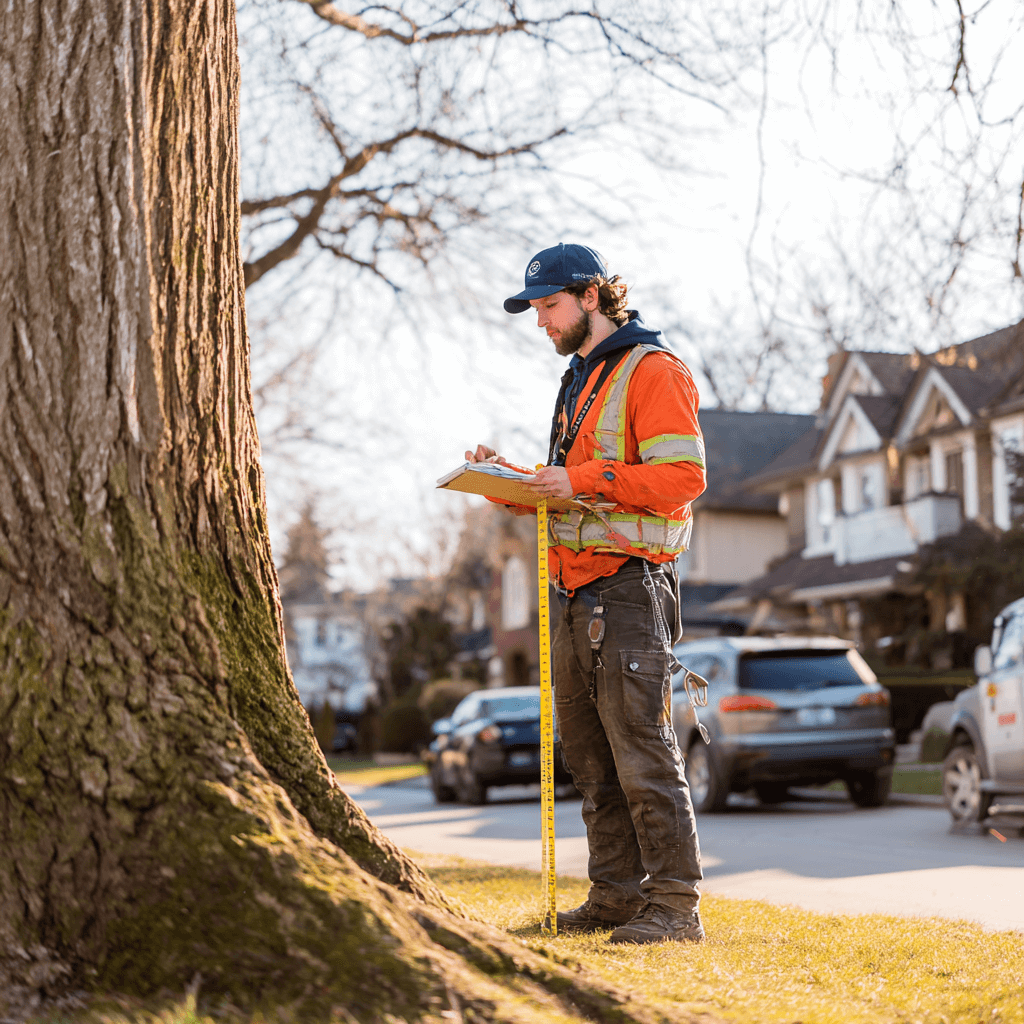
City of Pickering guidance says Tree Protection By-law 8073/24 prevents the destruction of healthy trees in specified Tree Protection Areas. The City also states that a permit is required to remove any tree in a protected area, and that protected areas usually run through and adjacent to watercourses and green spaces. Customers should confirm current requirements directly with the City of Pickering or an independent arborist before tree injury, tree removal, construction, grading, access work, or related disturbance proceeds.
Before requesting a Pickering arborist report, check:
- Whether the report is for a Tree Protection Area question, hazardous tree documentation, construction-related tree review, insurance documentation, neighbour concern, real estate record, TRCA regulated-area issue, or general tree condition review.
- Whether the tree is private, City-owned, shared boundary, near a boulevard, close to a road allowance, beside a park, on conservation land, or connected to a previous approval or permit condition.
- Whether the property is in or near a City of Pickering Tree Protection Area, watercourse, green space, wetland, shoreline, valley, wooded area, Altona Forest edge, Petticoat Creek area, Duffins Creek area, Frenchman's Bay area, Rouge Park edge area, or TRCA regulated area.
- Whether TRCA, the City of Pickering, Durham Region, Elexicon Energy, an insurer, a property manager, a lawyer, a neighbour, or a project consultant has already provided written instructions.
- Whether photos, surveys, grading plans, site plans, building drawings, permit letters, conservation authority correspondence, insurance letters, neighbour letters, or past reports are available for the independent arborist to review.
- Whether the tree is near overhead powerlines, service wires, utility poles, transformers, underground utilities, gas services, drainage features, retaining walls, structures, fences, or public access areas.
Toronto Tree Services does not inspect trees, decide by-law requirements, prepare arborist reports, submit City of Pickering applications, submit TRCA applications, prepare insurance documents, communicate professional findings to reviewers, collect contractor payments, or guarantee outcomes. Any assessment, report, findings, recommendations, revision, submission support where offered, pricing, timing, payment, or service-related issue is handled directly by the independent arborist where available.
Pickering Arborist Report Requests by Area
Rosebank, Rougemount and Fairport
Arborist report requests in Rosebank, Rougemount, and Fairport often involve mature residential trees, larger lots, long property lines, private tree condition questions, storm-damage documentation, neighbour concerns, estate-style landscapes, and trees close to structures, driveways, fences, or natural-edge features.
Woodlands, Dunbarton and West Shore
Woodlands, Dunbarton, Bay Ridges, West Shore, and Frenchman's Bay areas may involve older neighbourhood canopies, shoreline exposure, mature maples, ash decline concerns, trees near roofs and garages, insurance documentation questions, and public or utility safety concerns after storms.
Amberlea, Highbush, Brock Ridge and Seaton
Amberlea, Highbush, Brock Ridge, Duffin Heights, Seaton, Liverpool, and northern Pickering properties may involve Tree Protection Area context, Altona Forest edge questions, creek or green-space proximity, developing subdivision trees, construction-related review, and TRCA-related report discussions.
Common Pickering Arborist Report Request Types
Tree Protection Area Report Questions
Tree Protection Area report questions may involve proposed tree removal, hazardous tree documentation, protected-area boundaries, watercourse or green-space context, City of Pickering instructions, and supporting documentation requested before cutting or removal proceeds.
TRCA Regulated-Area Review Questions
TRCA-related report requests may involve valleys, streams, wetlands, Lake Ontario shoreline areas, Duffins Creek, Petticoat Creek, Rouge River features, Altona Forest, slope areas, floodplains, access work, grading, vegetation clearing, or construction near regulated features.
Hazardous Tree Documentation
Hazard-related reports may involve cracked trunks, root movement, fungal decay indicators, storm damage, dead canopy, weak unions, split stems, branches over targets, trees near structures, or documentation requested by a property owner, insurer, property manager, neighbour, or reviewer.
Construction-Related Tree Review
Construction-related report requests may involve additions, garages, pools, decks, driveway work, grading, excavation, drainage work, retaining walls, demolition, or access routes close to private trees, City-owned trees, neighbouring trees, protected areas, or TRCA regulated features.
Insurance and Property Records
Insurance and property-record report requests may involve storm damage, tree failure, visible defects, damage documentation, buyer or seller records, property management files, or written notes requested by a third party. The required report format should be confirmed before booking.
Neighbour and Boundary Tree Concerns
Neighbour-facing tree requests may involve roots, branches, leaning stems, shared boundary trees, overhang, damage concerns, access questions, and written condition records. Toronto Tree Services does not provide legal advice or boundary decisions.
Tree Protection Area Report Requests in Pickering
Pickering's Tree Protection Area context is one of the main reasons a property owner may ask for an arborist report. The issue may be a proposed removal, a dead or declining tree, a hazardous tree concern, construction near trees, or a request from the City for additional documentation. Customers should not assume that a report is required in every case, and they should not assume that no report is required either. The correct step is to confirm what the City or independent arborist needs for the specific property.
Where available, Toronto Tree Services may forward a Tree Protection Area report request to an independent arborist. The independent arborist is responsible for reviewing the tree, site context, photos, measurements, visible defects, available documents, and any City instructions before explaining the appropriate scope, price, timing, and submission support where offered.
TRCA and Natural-Feature Report Requests
TRCA's planning and permits role includes development regulation in or near valleys, streams, wetlands, and the Lake Ontario shoreline. Pickering properties near Duffins Creek, Petticoat Creek, Frenchman's Bay, Altona Forest, Rouge Park edge areas, wetlands, floodplains, slopes, or valley systems may require additional review before tree work, construction, grading, fill placement, access work, or vegetation disturbance proceeds.
Customers should confirm whether TRCA, the City of Pickering, Durham Region, or another reviewer needs to be contacted before work proceeds. Toronto Tree Services does not determine regulated-area boundaries, prepare TRCA submissions, or guarantee conservation authority acceptance. Any TRCA-related report discussion must be handled directly with the independent arborist where available.
Construction and Site-Work Arborist Report Requests
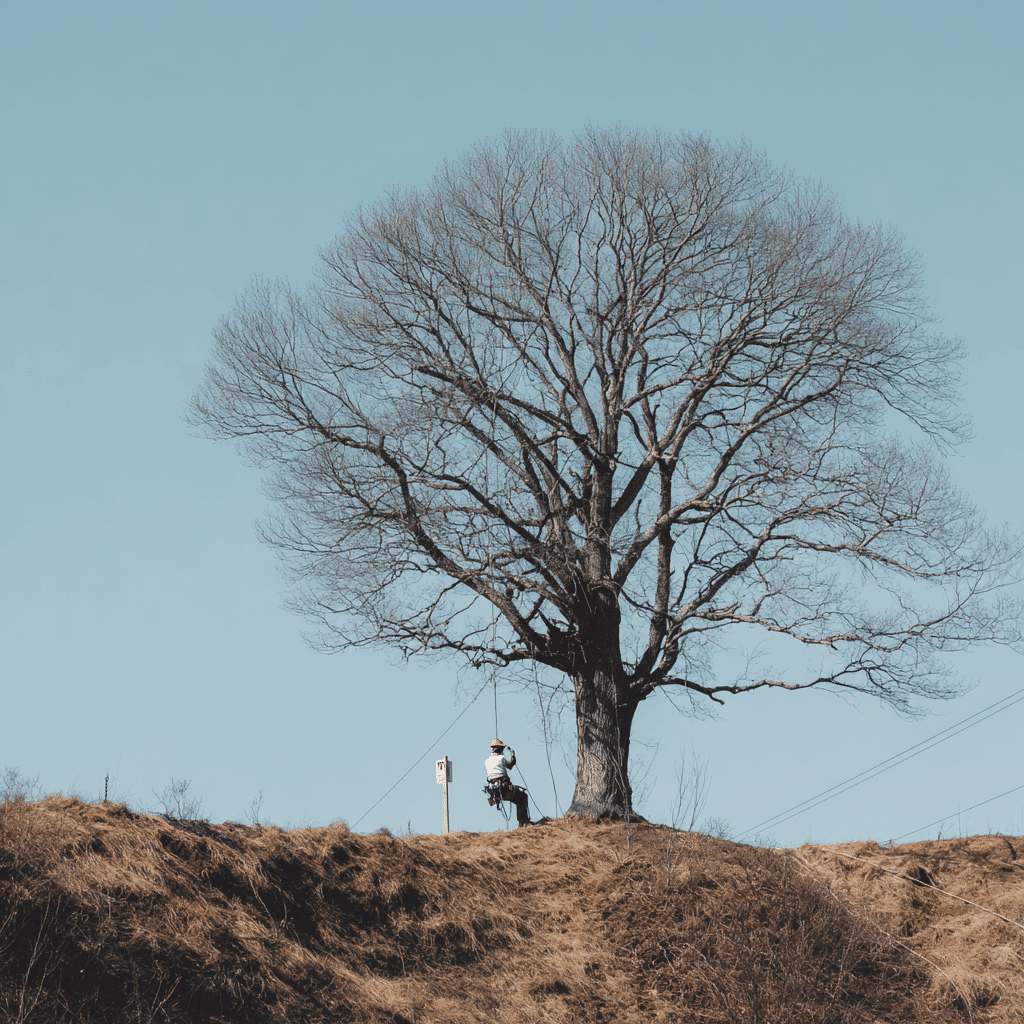
Construction-related arborist report requests in Pickering may involve additions, pools, garages, decks, driveway changes, retaining walls, grading, excavation, drainage work, demolition, or access routes near trees. In established areas such as Rosebank, Dunbarton, Woodlands, West Shore, and Bay Ridges, mature trees may be close to homes and driveways. In Duffin Heights, Seaton, Highbush, Amberlea, and Brock Ridge, the issue may be a mix of newer development, natural-edge properties, and green-space boundaries.
Customers should provide surveys, site plans, building drawings, grading information, driveway plans, permit letters, and any City or TRCA correspondence already received. Toronto Tree Services does not review drawings, prepare reports, submit applications, or communicate professional findings to reviewers.
Hazardous Tree and Storm-Damage Documentation
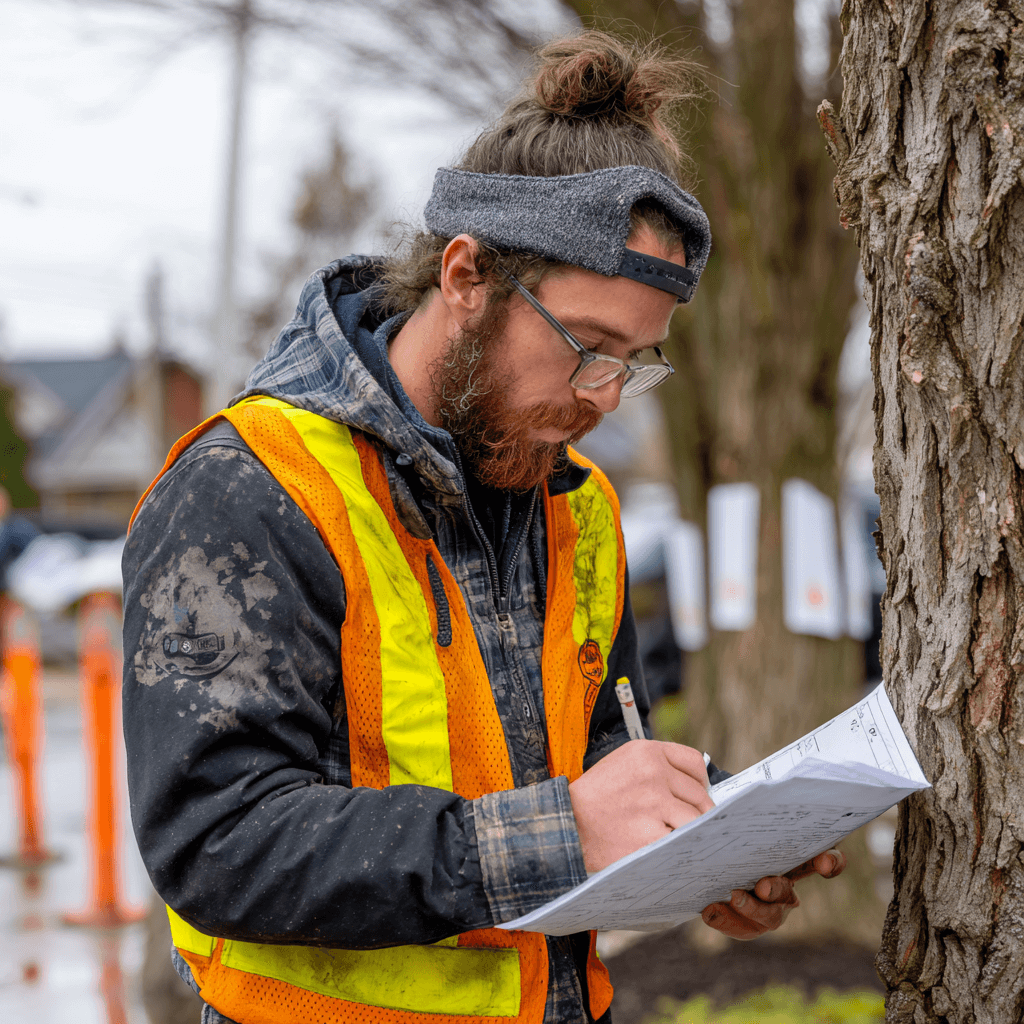
Hazardous tree report requests may follow wind, ice, saturated soil, root movement, branch failure, storm damage, trunk cracking, visible decay, dead canopy, or sudden lean. A tree near a house in Bay Ridges, a storm-damaged maple in Woodlands, a declining ash in Dunbarton, a leaning conifer in Rosebank, or a broken limb over a driveway in Amberlea may all require different documentation depending on who is asking for the report.
The independent arborist is responsible for observing the tree, documenting visible defects, explaining limitations, and providing any professional opinion they agree to provide directly with the customer. If there is immediate danger to people, powerlines, roads, public access, or structures, customers should contact emergency services, Elexicon Energy, the City of Pickering, Durham Region where applicable, or the appropriate public authority first.
Powerline safety: Elexicon Energy advises people to treat downed powerlines as live and dangerous and to stay well back from them. If a tree or branch is touching or close to overhead powerlines, do not approach it or attempt pruning. Contact Elexicon Energy, emergency services, or the appropriate utility provider where electrical danger may exist.
EAB Ash and Declining Tree Documentation
Emerald ash borer and general ash decline can be relevant to arborist report requests in Pickering, especially where an ash tree is dead, brittle, storm-damaged, close to a target, or located near a protected area. A customer may want documentation for their own records, a City question, an insurance matter, a property manager, a neighbour, or a safety decision.
Toronto Tree Services does not diagnose EAB, recommend treatment, prepare documentation, or decide whether a tree is exempt from any requirement. The independent arborist is responsible for assessment, findings, recommendations, report wording, limitations, pricing, and communication directly with the customer.
Insurance, Real Estate and Property Management Report Requests
Some Pickering arborist report requests are not permit-related. A buyer may want a condition record before closing. A property manager may need documentation after a storm. An insurer may ask for photos, invoices, condition notes, or a professional opinion after tree-related damage. A landlord may want a written tree record before approving removal or pruning.
Customers should ask the third party exactly what document is required before requesting a report. The independent arborist is responsible for confirming whether they can provide the requested format. Toronto Tree Services does not decide what an insurer, lawyer, buyer, seller, lender, City reviewer, TRCA reviewer, or property manager will accept.
Neighbour, Boundary and Shared Tree Report Requests
Neighbour tree concerns in Pickering may involve overhanging limbs, leaning stems, root concerns, fence damage, boundary uncertainty, storm damage, shade, debris, or a tree that appears to sit close to a property line. In these situations, a written arborist record may help clarify tree condition, visible defects, or recommended next steps, but it does not replace legal advice or a boundary survey.
Toronto Tree Services does not provide legal advice, boundary decisions, survey interpretation, property-line opinions, or dispute resolution. The independent arborist is responsible only for the professional tree-related scope they agree to provide directly with the customer.
What a Pickering Arborist Report May Document
The exact contents of an arborist report depend on why the report is being requested. A Tree Protection Area report, TRCA-related report, hazardous tree report, construction-related report, insurance document, and neighbour concern record may all require different emphasis. Customers should not assume one report format fits every purpose.
Depending on the assignment, the independent arborist may document tree species, approximate size, trunk diameter, visible condition, defects, canopy observations, root-zone context, site constraints, targets, photos, location notes, and recommendations. The independent arborist is responsible for the report content, limitations, findings, pricing, timeline, and communication directly with the customer.
Utility Locates and Ground-Disturbance Follow-Up
Some arborist report requests lead to later work such as stump grinding, root investigation, planting, grading, fence repair, drainage work, trenching, or excavation. Once ground disturbance is involved, underground utilities should be considered. Ontario One Call provides homeowner locate guidance for digging-related projects.
Toronto Tree Services does not request locates, mark underground utilities, verify locate accuracy, or guarantee that a work area is clear of buried infrastructure. Customers and independent contractors should confirm locate responsibilities before any digging, root work, stump grinding, or excavation begins.
Locate safety: Arborist reporting may be above-ground documentation, but later work such as stump grinding, root removal, planting, grading, fence work, drainage work, or excavation can disturb underground utilities. Confirm locate responsibilities before ground disturbance begins.
What to Send With a Pickering Arborist Report Request
Helpful details for faster review:
- Property address and nearest major road, such as Kingston Road, Liverpool Road, Brock Road, Whites Road, Finch Avenue, Bayly Street, Rosebank Road, Altona Road, West Shore Boulevard, Valley Farm Road, Taunton Road, or Pickering Parkway.
- Clear photos of the full tree, trunk base, canopy, visible defects, surrounding structures, and access route.
- Approximate trunk diameter and whether the tree may be private, City-owned, shared boundary, replacement-planted, near a protected area, close to a road allowance, or near a conservation authority feature.
- The report purpose: Tree Protection Area question, hazardous tree documentation, construction-related review, TRCA regulated-area question, neighbour concern, insurance documentation, real estate record, or general tree condition review.
- Any available documents, such as surveys, site plans, building drawings, municipal letters, TRCA correspondence, insurance letters, photos from previous seasons, or past permit documents.
- Whether the property is near Altona Forest, Petticoat Creek, Duffins Creek, Frenchman's Bay, Lake Ontario shoreline areas, Rouge Park edge areas, wooded areas, wetlands, green spaces, stream corridors, or a Tree Protection Area.
- Any urgent concerns such as cracked trunks, hanging branches, leaning stems, trees near structures, trees near powerlines, or recent storm damage.
Arborist Report Requests in Pickering, Ontario
Pickering Arborist Report Requests
Pickering arborist report requests may involve Tree Protection Area questions, hazardous tree documentation, construction-related tree review, TRCA regulated-area concerns, neighbour issues, insurance documentation questions, property records, storm-damaged trees, and tree condition review. Toronto Tree Services may forward your inquiry to an independent arborist where available. The independent arborist is responsible for assessment, report preparation, findings, recommendations, pricing, timing, payment, revisions, and service outcomes directly with the customer.
Pickering Tree Permit Report Questions
Tree permit report questions may involve protected areas, dead or declining trees, proposed tree injury, construction near trees, or supporting documentation requested by the City of Pickering. Customers should confirm current City requirements before relying on any assumption about what is required. Toronto Tree Services does not submit permit documents or prepare professional opinions.
Pickering Hazardous Tree Report Requests
Hazardous tree report requests may involve decay indicators, dead canopy, split stems, trunk cracks, weak branch unions, root movement, fungal growth, storm damage, heavy lean, or a tree located near a structure, walkway, driveway, parking area, public sidewalk, or neighbouring property. The independent arborist is responsible for the report and recommendations directly with the customer.
Pickering Construction Tree Report Requests
Construction-related arborist report requests may involve additions, garages, pools, decks, driveway work, grading, excavation, drainage work, retaining walls, demolition, or site access close to private trees, City-owned trees, neighbouring trees, creek corridors, wooded areas, shorelines, or regulated-area features. The independent arborist is responsible for document review, site review, report preparation, pricing, timelines, and communication directly with the customer.
Pickering TRCA and Natural-Feature Report Questions
Properties near Altona Forest, Petticoat Creek, Duffins Creek, Frenchman's Bay, Lake Ontario shoreline areas, Rouge Park edge areas, valleys, wetlands, floodplains, slopes, watercourses, wooded areas, or TRCA regulated areas may require additional review before tree work, construction, grading, fill placement, or vegetation disturbance proceeds. Customers should confirm the correct process directly with TRCA, the City of Pickering, Durham Region where applicable, or an independent arborist.
Pickering Arborist Report FAQ
Does Toronto Tree Services prepare arborist reports in Pickering?
No. Toronto Tree Services does not prepare arborist reports, inspect trees, submit City of Pickering applications, submit TRCA applications, submit insurance documents, or provide professional arborist opinions. Arborist report requests may be forwarded to an independent arborist where available.
When might I need an arborist report in Pickering?
An arborist report may be requested for Tree Protection Area questions, hazardous tree documentation, construction-related tree review, TRCA regulated-area concerns, neighbour issues, insurance documentation questions, property records, or general tree condition documentation.
Does Pickering require permits for tree removal in Tree Protection Areas?
City of Pickering guidance says a permit is required to remove any tree in a protected area, and protected areas usually run through and adjacent to watercourses and green spaces. Customers should confirm current requirements directly with the City of Pickering or an independent arborist before tree removal, tree injury, or related disturbance proceeds.
Is an arborist report required for every Pickering tree permit question?
Customers should confirm current documentation requirements directly with the City of Pickering or the independent arborist. Requirements can depend on tree condition, tree ownership, protected-area context, permit purpose, construction activity, conservation authority context, and any instructions already provided by the City or TRCA.
Can an arborist report help with a dead or hazardous tree?
It may. A hazardous tree report may document visible defects, decline, storm damage, root movement, fungal decay indicators, branch failure, target areas, and recommended next steps. The independent arborist is responsible for the assessment, findings, and report wording directly with the customer.
What is the difference between a tree permit report and a construction-related tree report?
A tree permit report may focus on tree condition and the reason for proposed removal or injury. A construction-related report may need to consider drawings, grading, excavation, access routes, nearby private trees, City-owned trees, neighbouring trees, root-zone impacts, protected areas, and conservation authority context. The independent arborist should confirm the correct report scope directly with the customer.
Can TRCA review apply to a Pickering arborist report request?
It may. Properties near valleys, streams, wetlands, floodplains, slopes, shorelines, watercourses, Altona Forest, Duffins Creek, Petticoat Creek, Frenchman's Bay, Rouge Park edge areas, or TRCA regulated areas may involve conservation authority review before tree work, construction, grading, fill placement, access work, or vegetation disturbance proceeds.
Can an arborist report be requested for insurance documentation?
Yes. Customers may request documentation after tree damage, limb failure, trunk cracking, storm damage, or a tree-related property concern. Toronto Tree Services does not provide insurance advice or guarantee claim outcomes. Customers should ask their insurer what documentation is required before requesting a report.
Can Toronto Tree Services submit reports to the City of Pickering, TRCA, or an insurer?
No. Toronto Tree Services does not submit City applications, conservation authority applications, insurance documents, arborist reports, permit documents, or professional opinions. Any submission support must be discussed directly with the independent arborist where available.
How long does a Pickering arborist report take?
Timing is determined directly by the independent arborist. It may depend on the number of trees, report purpose, site complexity, access, photos, measurements, available documents, urgency, and whether City, TRCA, insurance, neighbour, or construction-related information must be reviewed.
Who handles revisions if a reviewer asks for more information?
Any revision, clarification, supplemental note, or follow-up communication must be handled directly by the independent arborist and customer. Toronto Tree Services does not prepare revisions or communicate professional findings to reviewers.
What should I send before an arborist report visit?
Helpful items include the property address, clear tree photos, approximate trunk diameter, reason for the report, any City, TRCA, insurance, neighbour, or construction correspondence, surveys, drawings, photos of defects, and notes about whether the tree is near a creek, slope, wetland, woodland, shoreline, structure, neighbour boundary, or powerline.
How much does an arborist report cost in Pickering?
Pricing is provided directly by the independent arborist. Cost may depend on report purpose, number of trees, site complexity, travel, urgency, document review, municipal requirements, conservation authority requirements, insurance-related context, construction-related details, and whether follow-up support is requested.
More Pickering Tree Service Requests
Related Toronto Tree Services Pages
Send Your Arborist Report Request in Pickering, Ontario
Arborist report requests may be submitted from Pickering areas including Rosebank, Dunbarton, Woodlands, West Shore, Bay Ridges, Amberlea, Highbush, Brock Ridge, Liverpool, Duffin Heights, Seaton, Village East, Town Centre, Rougemount, Fairport, Frenchman's Bay, Rouge Park edge areas, and nearby communities.
Toronto Tree Services may forward your inquiry to an independent arborist or tree care professional where available. The independent arborist is responsible for assessment, report preparation, findings, recommendations, scheduling, pricing, payment terms, communication, revisions, submission support where offered, qualifications, and service outcomes directly with the customer.